The Ultimate B2B Marketing Strategies Guide for 2026: Navigating the Future of Business Growth
The B2B landscape is in a constant state of flux, driven by technological advancements, evolving buyer behaviors, and an ever-intensifying competitive environment. What constituted best practice yesterday may well be obsolete tomorrow. As we look towards 2026, the imperative for B2B marketers is not just to adapt, but to proactively innovate and redefine their approach to growth.
This comprehensive guide is designed for professionals, entrepreneurs, and B2B marketers who are ready to future-proof their strategies. It cuts through the noise to deliver actionable frameworks, data-backed insights, and real-world tactics that will equip you to not only survive but thrive in the years ahead. We’ll delve into the foundational shifts and cutting-edge techniques that will define success, from hyper-personalization powered by AI to building resilient communities and mastering performance analytics. Prepare to transform your marketing efforts into a powerful engine for sustainable business growth.
Foundational Pillar: Deepening Customer Understanding and Hyper-Personalization
In the increasingly crowded B2B marketplace, generic outreach is dead. The cornerstone of any successful B2B marketing strategy for 2026 must be an unparalleled understanding of your customer and the ability to deliver hyper-personalized experiences at every touchpoint. Buyers, now more than ever, expect consumer-like relevance and bespoke solutions to their unique challenges.
Refining Your Ideal Customer Profile (ICP) and Buyer Personas
Start by revisiting and rigorously refining your Ideal Customer Profile (ICP) and buyer personas. This isn’t a one-time exercise; it’s a continuous process. For 2026, your ICP should extend beyond basic firmographics (industry, size, revenue) to include technographics (tech stack used), psychographics (company culture, risk aversion), and most importantly, intent signals. Who are they researching? What problems are they actively trying to solve? Similarly, buyer personas must evolve to capture not just job titles and pain points, but their digital footprint, preferred communication channels, and decision-making drivers within their organization.
The 3D Customer Insight Framework
To achieve this depth, we recommend the 3D Customer Insight Framework:
- Demographics & Firmographics: Traditional data points like industry, company size, revenue, location, employee count.
- Desires & Drivers: Pain points, goals, motivations, challenges, key initiatives, budget cycles, and the specific outcomes they seek. This includes understanding the political landscape within their organization.
- Digital Footprint & Intent: Online behavior (website visits, content consumption, search queries), social media activity, engagement with competitors, third-party intent data (e.g., G2, Bombora), and technographic data.
Leverage advanced tools and data sources to gather these insights. Your CRM (e.g., Salesforce, HubSpot) is invaluable, but augment it with dedicated intent data platforms (e.g., ZoomInfo, Clearbit, Demandbase) and AI-driven analytics tools that can predict buyer behavior and identify emerging needs. Data shows that B2B companies that excel at personalization see 5-15% higher revenue growth and 10-30% higher marketing ROI.
Executing Hyper-Personalization at Scale
Once you have deep insights, the challenge is to personalize at scale. This is where AI becomes indispensable:
- AI-Driven Content Recommendations: Dynamic website content that adapts based on visitor behavior, industry, or persona.
- Tailored Outreach: Crafting email sequences, LinkedIn messages, and even ad copy that speaks directly to the individual’s role, company challenges, and expressed intent.
- Personalized Product Demos & Trials: Customizing initial product experiences based on identified needs and use cases.
- Dynamic Landing Pages: Optimizing landing page content and calls-to-action based on the source of the lead and their specific interests.
Tools like Optimizely, Mutiny, and HubSpot’s smart content features enable this level of dynamic personalization. Remember, personalization isn’t just about using a prospect’s name; it’s about demonstrating a profound understanding of their world and offering genuinely relevant value.
Content Marketing: From Volume to Value-Driven, Conversational Experiences
Content remains the lifeblood of B2B marketing, but its role and form are evolving dramatically for 2026. The era of churning out generic blog posts for SEO is over. The focus must shift from volume to delivering exceptional value, establishing undeniable authority, and fostering conversational, interactive experiences.
The CORE Content Strategy: Curate, Optimize, Repurpose, Engage
For sustainable content success, adopt the CORE Content Strategy:
- Curate & Create: Prioritize deep-dive, thought leadership content that addresses complex B2B challenges with unique insights and data. This includes original research, comprehensive guides, benchmark reports, and expert interviews. Consider AI tools like Jasper or Copy.ai for ideation and drafting, but always ensure human oversight for quality and authenticity.
- Optimize for E-E-A-T & Semantic Search: Google’s E-E-A-T (Experience, Expertise, Authoritativeness, Trustworthiness) guidelines are paramount. Your content must demonstrate genuine expert experience. SEO for 2026 moves beyond keywords to semantic search, understanding user intent, and answering complex questions comprehensively. Focus on long-form content, pillar pages, and topic clusters that establish your domain authority. Tools like SEMrush and Ahrefs are critical for identifying semantic gaps and optimizing for intent.
- Repurpose & Reformat: Maximize the value of your core content by repurposing it across multiple formats and channels. A comprehensive guide can become a webinar, a series of LinkedIn posts, an infographic, a podcast episode, or even a short video series. This extends reach and caters to diverse consumption preferences.
- Engage & Interact: Move beyond static content. Incorporate interactive elements like quizzes, calculators, polls, virtual events, and live Q&A sessions. Embrace video and audio content (podcasts, webinars, short-form video for social platforms) as primary engagement drivers. Look into headless CMS platforms like Storyblok or Contentful for flexible content delivery across various interfaces.
A recent study indicated that B2B buyers consume 13+ pieces of content before making a purchase decision. Your content strategy must cater to this journey, providing value at every stage, from awareness to decision.
Embracing Conversational AI in Content
AI-powered chatbots and virtual assistants are no longer just for customer service. Integrate them into your content strategy to provide immediate answers, guide users through complex topics, and personalize the content experience. Imagine a chatbot on your pillar page that can answer specific questions about a sub-topic, or recommend related content based on the user’s interaction. This creates a more dynamic, “choose-your-own-adventure” content journey that enhances engagement and qualification.
Account-Based Marketing (ABM): Hyper-Targeting for High-Value Growth
While content marketing casts a wide net, Account-Based Marketing (ABM) is the precision strike weapon for B2B organizations pursuing high-value accounts. For 2026, ABM isn’t just a tactic; it’s a strategic imperative for efficient growth, especially in an environment where every marketing dollar needs to deliver measurable ROI. The evolution of ABM involves more sophisticated, AI-driven identification, orchestration, and measurement.
Why ABM is Critical for 2026
- Higher ROI: ABM consistently delivers a higher return on investment compared to traditional demand generation, with 87% of marketers reporting higher ROI from ABM.
- Sales & Marketing Alignment: ABM forces tight collaboration between sales and marketing, focusing their efforts on a unified set of target accounts.
- Personalized Experiences: By definition, ABM allows for deeply personalized messaging and campaigns tailored to the specific needs and challenges of each target account.
- Reduced Waste: Marketing resources are concentrated on accounts most likely to convert and yield significant revenue.
The TRIPLE A ABM Playbook: Align, Analyze, Activate, Accelerate
Implement a robust ABM strategy using the TRIPLE A ABM Playbook:
- Align Sales & Marketing (A1 – Align): This is non-negotiable. Define your target account list collaboratively, ensuring both teams agree on what constitutes an ideal high-value account. Establish clear roles, communication protocols, and shared KPIs.
- Analyze & Discover (A2 – Analyze): Deeply research each target account. Go beyond public information to understand their organizational structure, key decision-makers (economic buyer, technical buyer, champion), current challenges, strategic initiatives, tech stack, and recent news. Leverage intent data platforms (e.g., 6sense, Demandbase) to identify accounts actively researching solutions like yours. Tools like LinkedIn Sales Navigator are invaluable for uncovering key contacts and their networks.
- Activate Personalized Campaigns (A3 – Activate): Develop highly personalized content and multi-channel campaigns for each account or cluster of similar accounts. This could include:
- Customized landing pages with account-specific messaging.
- Personalized email sequences and direct mail.
- Targeted social media ads (LinkedIn is paramount for B2B).
- Tailored content assets (case studies, whitepapers referencing their industry).
- Account-specific webinars or virtual events.
- Dedicated sales outreach with relevant insights.
Orchestration platforms like Terminus or Demandbase can help manage and automate these multi-channel plays.
- Accelerate & Optimize (A4 – Accelerate): Continuously monitor engagement metrics (website visits from target accounts, content downloads, email opens, meeting requests) and sales pipeline progression. Use these insights to refine your messaging, adjust campaign tactics, and identify accounts ready for sales engagement. The feedback loop between sales and marketing is crucial here for accelerating deals.
Remember, ABM is not just about generating leads; it’s about generating opportunities and closing deals with your most valuable prospects. It requires patience, precision, and continuous optimization.
The Power of AI & Automation: Efficiency, Insights, and Scalability
Artificial intelligence (AI) and automation are no longer buzzwords; they are foundational technologies reshaping B2B marketing. For 2026, embracing AI and automation is not optional – it’s a competitive necessity for improving efficiency, extracting deeper insights, and scaling personalized experiences without linearly scaling resources. Companies leveraging AI gain a significant competitive advantage, with many reporting 2x to 3x improvements in lead conversion rates.
AI Across the Marketing Funnel
AI’s impact spans the entire marketing funnel:
- Top of Funnel (Awareness & Lead Generation):
- Predictive Analytics: Identifying potential high-value leads based on historical data and behavioral patterns.
- Content Generation & Optimization: Assisting with blog post outlines, social media copy, ad headlines, and optimizing existing content for better performance.
- Ad Optimization: AI-powered algorithms in platforms like Google Ads and LinkedIn Ads automatically optimize bidding, targeting, and creative elements for maximum ROI.
- Middle of Funnel (Nurturing & Qualification):
- Lead Scoring: Dynamically scoring leads based on engagement, firmographics, and intent signals, helping sales prioritize.
- Personalization Engines: Delivering hyper-relevant content and product recommendations on websites and in emails.
- Chatbots & Virtual Assistants: Engaging prospects 24/7, answering FAQs, qualifying leads, and routing them to the right sales representative.
- Bottom of Funnel (Conversion & Retention):
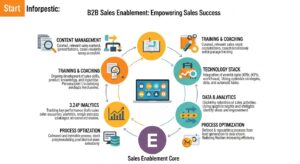
- Sales Enablement: Providing sales teams with AI-generated insights on prospect needs and optimal talking points.
- Churn Prediction: Identifying at-risk customers, allowing proactive intervention.
- Customer Service Automation: Streamlining support interactions and enhancing satisfaction.
The A-GAME Automation Strategy
To effectively integrate AI and automation, follow the A-GAME Automation Strategy:
- Analyze Current Processes: Identify repetitive, data-heavy, or time-consuming tasks that can benefit from automation (e.g., data entry, lead assignment, email follow-ups).
- Generate Use Cases: Brainstorm specific areas where AI can enhance decision-making or personalization (e.g., predictive lead scoring, dynamic content, sentiment analysis).
- Automate Workflows: Implement marketing automation platforms (HubSpot, Marketo, Pardot) to create automated email sequences, lead nurturing paths, and internal alerts. Integrate AI tools for specific functions like content generation or ad optimization.
- Monitor & Measure: Continuously track the performance of your automated workflows and AI outputs. Focus on metrics like efficiency gains, lead quality, conversion rates, and ROI.
- Evolve & Experiment: The AI landscape is rapidly changing. Stay updated on new tools and capabilities. Experiment with new AI applications and iterate based on results.
While AI offers immense power, remember that human oversight remains critical. AI should augment human intelligence, not replace it, especially when it comes to strategic thinking, creative direction, and building genuine customer relationships.
Building Robust B2B Communities and Strategic Partnerships
In an increasingly digital and often transactional B2B world, the human element, trust, and shared value have become paramount. For 2026, successful B2B marketers will move beyond mere customer acquisition to focus on building robust communities and forging strategic partnerships. These initiatives cultivate loyalty, generate organic advocacy, and unlock new avenues for growth that traditional marketing channels often miss.
The Power of Community
A B2B community isn’t just a group of customers; it’s a vibrant ecosystem of users, advocates, partners, and thought leaders who share common interests and derive value from interacting with each other and your brand. The benefits are profound:
- Enhanced Trust & Credibility: Peer-to-peer interaction and shared experiences build far more trust than traditional marketing messages.
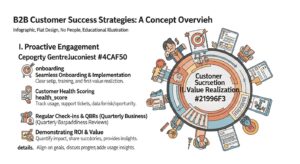
- Reduced Churn & Increased Loyalty: Engaged community members are more loyal and less likely to churn. Data suggests community engagement can reduce churn by up to 20%.
- Organic Referrals & Advocacy: Satisfied community members become your most effective brand ambassadors.
- Product Insights & Co-creation: Communities provide invaluable feedback for product development and innovation.
- Market Intelligence: A direct pulse on customer needs, challenges, and emerging trends.
The CONNECT Community & Partnership Blueprint
To establish and nurture these vital networks, follow the CONNECT Blueprint:
- Cultivate a Shared Purpose: Define what unites your community members. Is it a specific industry challenge, a shared passion for a technology, or a common goal?
- Open Dedicated Platforms: Create a space for interaction. This could be a private Slack channel, a LinkedIn group, a dedicated forum (e.g., Mighty Networks), or a customer portal.
- Nurture Engagement: Actively facilitate discussions, organize virtual meetups, host exclusive webinars, share valuable content, and recognize active contributors. Have community managers dedicated to this role.
- Network with Influencers & Experts: Identify industry thought leaders and micro-influencers who align with your brand. Invite them to contribute, participate in events, or share their expertise within your community.
- Engage in Strategic Partnerships: Look for non-competitive businesses that serve the same ICP but offer complementary solutions. This could involve co-marketing (joint webinars, content, events), technology integrations, or referral programs. PartnerStack is an excellent tool for managing partnership programs.
- Collaborate on Content & Events: Joint ventures with partners and community members amplify your reach and credibility. Co-hosted webinars, guest blog posts, and shared research reports are powerful.
- Trust & Transparency: Operate with authenticity. Be genuinely helpful, listen to feedback, and be transparent in your communications.
Building a community and fostering partnerships is a long-term play, but the compounding returns in terms of brand equity, customer loyalty, and sustainable growth are immense.
Performance Measurement & Optimization: Data-Driven Agility
In the dynamic B2B landscape of 2026, guesswork is not a strategy. Every marketing initiative must be meticulously measured, analyzed, and optimized. The focus has shifted from vanity metrics to tangible business outcomes: pipeline generation, customer acquisition cost (CAC), customer lifetime value (CLTV), and overall marketing ROI. Data-driven marketing significantly improves ROI, with top-performing companies reporting 15-20% higher efficiency.
Beyond Vanity Metrics: Focusing on Business Impact
Stop tracking likes and impressions as primary success indicators. Instead, prioritize metrics that directly correlate with revenue and growth:
- Marketing Qualified Leads (MQLs) to Sales Qualified Leads (SQLs) Conversion Rate: How effectively are your marketing efforts generating sales-ready prospects?
- Pipeline Contribution & Velocity: The direct impact of marketing on the sales pipeline and how quickly leads move through it.
- Customer Acquisition Cost (CAC): The total cost of acquiring a new customer, broken down by channel and campaign.
- Customer Lifetime Value (CLTV): The total revenue a customer is expected to generate over their relationship with your company. Marketing’s role in nurturing and retaining customers directly impacts this.
- Marketing ROI: The revenue generated from marketing efforts relative to the cost.
- Attribution Modeling: Understanding which touchpoints (content, ads, emails, events) contribute to a conversion. Move beyond first-touch or last-touch to multi-touch attribution models that assign credit across the entire buyer journey. Google Analytics 4 offers advanced data-driven attribution capabilities.
The LOOP Optimization Cycle
To ensure continuous improvement and agility, implement the LOOP Optimization Cycle:
- Learn: Gather data from all marketing channels and CRM. Use analytics tools (e.g., Google Analytics 4, Salesforce/HubSpot dashboards, BI tools like Tableau) to understand what’s working and what isn’t. Identify trends, anomalies, and areas for improvement.
- Optimize: Based on your learnings, formulate hypotheses for improvement. This could involve A/B testing ad copy, refining landing page designs, adjusting email subject lines, or targeting different segments.
- Observe: Implement your changes and closely monitor their impact. Don’t make too many changes at once, making it difficult to attribute results.
- Perfect: Analyze the results of your optimizations. If successful, integrate the changes permanently. If not, learn from the experiment and iterate back to the “Optimize” stage. This continuous loop ensures your strategies remain agile and effective.
Regularly scheduled performance reviews with sales and leadership are crucial. These meetings should focus on shared KPIs and discuss how marketing efforts are directly contributing to business objectives. Transparency and a shared understanding of success metrics will foster stronger alignment and drive collective growth.
FAQ Section
Q1: What’s the single most important B2B marketing trend for 2026 that I should focus on?
A1: The most impactful trend for 2026 is the convergence of AI-driven personalization with deep customer understanding. It’s about leveraging AI to not just automate, but to truly understand individual buyer needs and deliver hyper-relevant experiences at scale. This underpins success in content, ABM, and overall engagement.
Q2: How can small B2B businesses compete with larger enterprises in 2026 with limited resources?
A2: Small B2B businesses should focus on precision over breadth. Implement a highly targeted Account-Based Marketing (ABM) strategy to concentrate resources on high-value accounts. Develop niche, authoritative content that solves very specific problems for a clearly defined audience. Building a strong, engaged community around your expertise can also create disproportionate influence and loyalty.
Q3: Is traditional SEO still relevant for B2B in 2026, or is it being replaced by other channels?
A3: SEO is absolutely still relevant, but it has evolved significantly. For 2026, it’s less about keyword stuffing and more about demonstrating E-E-A-T (Experience, Expertise, Authoritativeness, Trustworthiness) and optimizing for semantic search and user intent. Focus on creating comprehensive, high-quality content that genuinely answers user questions and establishes your brand as a trusted resource. Voice search and AI-driven search will also play a larger role.
Q4: How do I effectively measure B2B marketing ROI, beyond basic lead numbers?
A4: To measure B2B marketing ROI effectively, shift your focus to pipeline contribution, customer acquisition cost (CAC), and customer lifetime value (CLTV). Implement multi-touch attribution models to understand the true impact of each marketing touchpoint across the entire buyer journey. Integrate your marketing and sales data systems (CRM, marketing automation, analytics) for a holistic view of the customer lifecycle and revenue generation.
Q5: What’s the biggest mistake B2B marketers should avoid in 2026?
A5: The biggest mistake would be clinging to outdated strategies and failing to adapt to the rapid technological shifts, particularly concerning AI and personalization. Neglecting to invest in understanding your customer deeply, resisting the adoption of AI for efficiency and insights, or failing to align marketing efforts tightly with sales objectives will severely hinder growth in the competitive landscape of 2026.
Conclusion: The Future Belongs to the Agile and Data-Savvy
The B2B marketing landscape for 2026 is one of immense opportunity for those willing to embrace change and strategically leverage new technologies. The core tenets remain: a deep understanding of your customer, delivering exceptional value, and building trust. However, the tools and methodologies for achieving these goals have evolved dramatically.
Success in the coming years will hinge on your ability to deploy hyper-personalized experiences, driven by sophisticated AI and robust data analytics. It will require a commitment to creating value-driven content that establishes undeniable authority, and the strategic precision of Account-Based Marketing for your most critical accounts. Furthermore, fostering vibrant communities and forging meaningful partnerships will unlock organic growth and unparalleled brand advocacy.
This isn’t a passive journey; it demands continuous learning, agile adaptation, and a relentless focus on measurable business outcomes. Start implementing these frameworks and adopting these tools now. The future of B2B growth belongs to the marketers who are proactive, data-savvy, and unafraid to innovate. Your competitive edge for 2026 starts today.
“`json
{
“@context”: “https://schema.org”,
“@graph”: [
{
“@type”: “Article”,
“mainEntityOfPage”: {
“@type”: “WebPage”,
“@id”: “https://kacerr.com/b2b-marketing-strategies-guide-2026”
},
“headline”: “The Ultimate B2B Marketing Strategies Guide for 2026: Navigating the Future of Business Growth”,
“image”: [
“https://kacerr.com/images/b2b-marketing-2026-hero.jpg”,
“https://kacerr.com/images/b2b-marketing-ai.jpg”,
“https://kacerr.com/images/b2b-marketing-abm.jpg”
],
“datePublished”: “2023-10-27T09:00:00+08:00”,
“dateModified”: “2023-10-27T09:00:00+08:00”,
“author”: {
“@type”: “Person”,
“name”: “Kacerr Editorial Team”
},
“publisher”: {
“@type”: “Organization”,
“name”: “Kacerr”,
“logo”: {
“@type”: “ImageObject”,
“url”: “https://kacerr.com/logo.png”
}
},
“description”: “Unlock the future of B2B marketing with our comprehensive guide for 2026. Learn actionable strategies for hyper-personalization, AI integration, ABM, content, and performance measurement to drive business growth.”,
“keywords”: “B2B marketing strategies, 2026, business growth, marketing guide, AI in B2B, account-based marketing, content marketing B2B, marketing automation, B2B personalization, marketing performance”
},
{
“@type”: “FAQPage”,
“mainEntity”: [
{
“@type”: “Question”,
“name”: “What’s the single most important B2B marketing trend for 2026 that I should focus on?”,
“acceptedAnswer”: {
“@type”: “Answer”,
“text”: “The most impactful trend for 2026 is the convergence of AI-driven personalization with deep customer understanding. It’s about leveraging AI to not just automate, but to truly understand individual buyer needs and deliver hyper-relevant experiences at scale. This underpins success in content, ABM, and overall engagement.”
}
},
{
“@type”: “Question”,
“name”: “How can small B2B businesses compete with larger enterprises in 2026 with limited resources?”,
“acceptedAnswer”: {
“@type”: “Answer”,
“text”: “Small B2B businesses should focus on precision over breadth. Implement a highly targeted Account-Based Marketing (ABM) strategy to concentrate resources on high-value accounts. Develop niche, authoritative content that solves very specific problems for a clearly