Email Newsletter Best Practices Guide 2026: Master Your Strategy for Unrivaled Engagement & Growth
This comprehensive guide cuts through the clutter, offering you the authoritative, practical advice of a seasoned business advisor. We’ll equip you with actionable frameworks, essential tools, and real-world tactics to transform your email newsletter from a mere communication channel into a high-performing revenue driver. Prepare to elevate your email marketing, dominate the inbox, and secure your competitive edge.
1. Building Your Foundation: Audience Segmentation & List Growth for Strategic Impact
The days of ‘spray and pray’ email marketing are long over. In 2026, the bedrock of a successful newsletter strategy is intelligent audience segmentation and a robust, ethical list growth methodology. Sending generic messages to a diverse audience is akin to whispering in a hurricane – ineffective and wasteful. Research consistently shows that segmented and personalized campaigns can drive significantly higher open rates and revenue compared to non-segmented campaigns. Your first mission is to understand precisely who you’re talking to and why they’re listening.
Mastering Segmentation
- Demographic Segmentation: Basic but vital. Age, location, job title (for professionals), industry (for B2B).
- Behavioral Segmentation: This is where the magic happens. Track user actions like website visits, content downloads, past purchases, email engagement (opens, clicks), and feature usage within your product/service.
- Intent-Based Segmentation: Identify where subscribers are in their customer journey. Are they new leads, active customers, or lapsed users? Are they interested in specific product categories or solution types?
- Firmographic Segmentation (B2B): For B2B marketers, segment by company size, industry, revenue, technology stack, and decision-maker roles. Tools like ZoomInfo or Apollo.io can enrich your lead data for precise targeting.
Framework: The Progressive Profiling Loop
- Start with basic information at initial signup (email, name).
- Over time, ask for more details through polls, surveys, or by observing behavior (e.g., “Did you read our latest article on AI in marketing?”).
- Use this evolving profile to refine segments and personalize content dynamically.
Strategic List Growth
Growing your list isn’t just about quantity; it’s about quality. You want engaged subscribers who genuinely value your content. Focus on permission-based strategies:
- High-Value Lead Magnets: Offer exclusive content like eBooks, whitepapers, templates, industry reports, webinars, or free mini-courses. Ensure these directly address pain points or aspirations of your target audience.
- Website Opt-in Forms: Implement strategic pop-ups (exit-intent, scroll-based), embedded forms, and dedicated landing pages. Tools like OptinMonster or Sumo can help you A/B test different designs and triggers for optimal conversion.
- Content Upgrades: Within your blog posts, offer a downloadable, enhanced version of the content (e.g., a checklist accompanying a “how-to” article) in exchange for an email.
- Social Media & Partnerships: Promote your newsletter and lead magnets on relevant social channels. Collaborate with complementary businesses for cross-promotion to reach new, qualified audiences.
- Events & Webinars: Leverage sign-ups from virtual or in-person events to grow your list, ensuring clear opt-in language.
2. Crafting Irresistible Content: Value, Voice & Format That Resonates
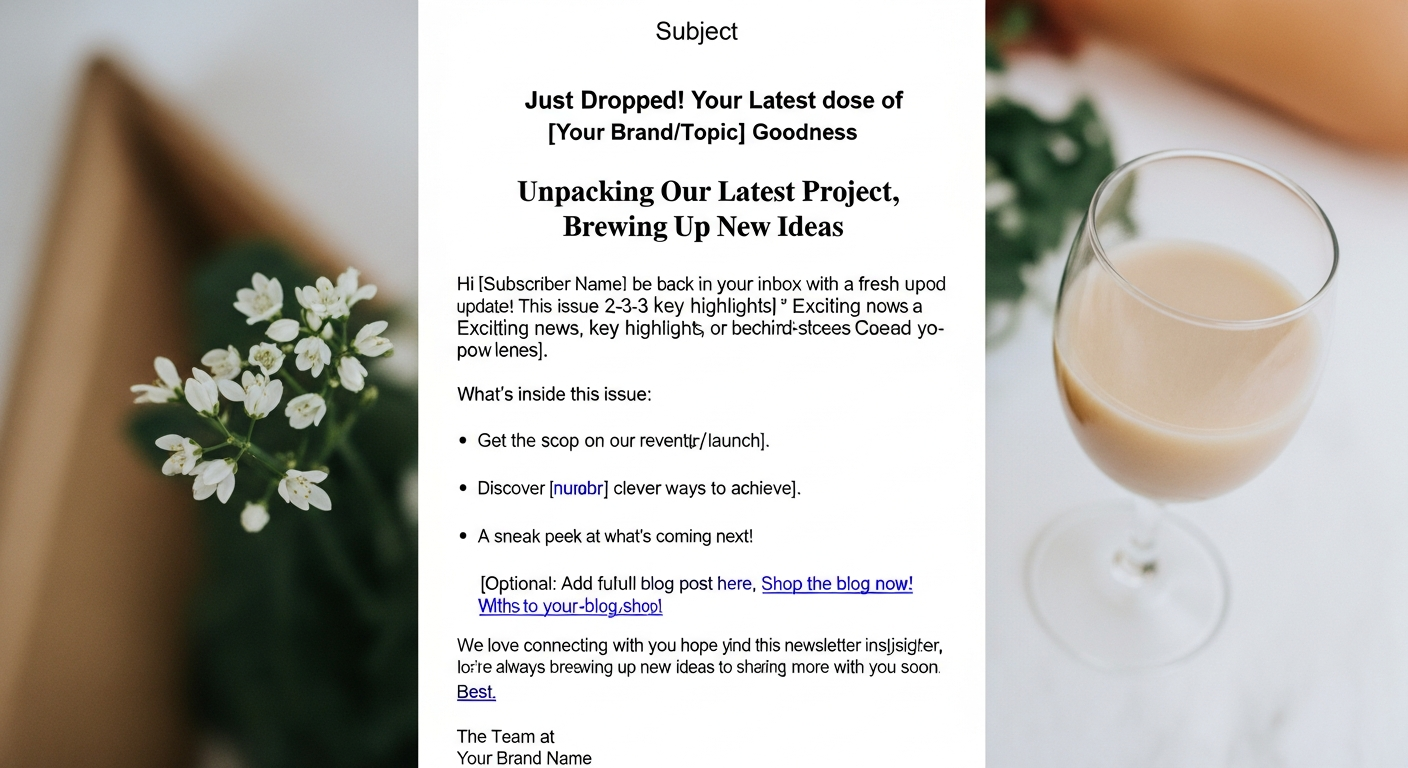
Once you have a segmented audience, the next critical step is to deliver content that consistently captivates and converts. Your newsletter isn’t just a bulletin board; it’s a curated experience designed to build trust, provide solutions, and establish your authority. The core principle for 2026? Value over velocity, relevance over randomness.
Beyond the Pitch: Delivering Genuine Value
Every email should offer something tangible. This could be:
- Thought Leadership & Industry Insights: Share your unique perspective on market trends, future predictions, or challenges relevant to your audience. Position yourself as a go-to expert.
- Actionable How-To Guides: Break down complex topics into simple, digestible steps. Provide templates, checklists, or frameworks that subscribers can immediately apply.
- Case Studies & Success Stories: Illustrate how your solutions have helped others. For B2B, focus on quantifiable results and relatable challenges.
- Exclusive Content & Offers: Give your subscribers a reason to stay subscribed by offering early access to new products, special discounts, or subscriber-only content.
- Curated News & Resources: Become a trusted filter for your audience, highlighting the most important industry news, tools, or articles they might have missed.
Framework: The 80/20 Rule for Content Mix
Dedicate approximately 80% of your newsletter content to providing pure value, education, or entertainment. The remaining 20% can be used for promotional messages, product announcements, or calls to action. This balance ensures your audience perceives your newsletter as a resource, not just a sales channel.
Establishing Your Unique Voice
Your newsletter should sound like you (or your brand). For Kacerr, this means authoritative, data-backed, professional yet approachable, and always practical. Consistency in tone builds familiarity and trust. Are you witty and informal, or serious and analytical? Let your personality shine through, but ensure it aligns with your brand identity and resonates with your target audience.
Actionable Tip: Create a brand style guide for your email copy. Include guidelines for tone, specific terminology to use/avoid, and formatting preferences. This ensures consistency across all contributors.
Formatting for Readability & Engagement
Even the most brilliant content will fail if it’s unreadable. Optimize for the modern inbox:
- Short Paragraphs & White Space: Break up text into easily digestible chunks. Use ample white space to prevent visual fatigue.
- Bullet Points & Numbered Lists: Ideal for conveying information quickly and making key takeaways stand out.
- Compelling Visuals: Incorporate high-quality images, infographics, or GIFs that support your content and break up text. Ensure they are optimized for quick loading.
- Clear Calls-to-Action (CTAs): Make your CTAs prominent, specific, and action-oriented. Use buttons rather than plain text links for better visibility and clickability.
- Mobile Responsiveness: A non-negotiable. The majority of emails are opened on mobile devices. Ensure your design adapts seamlessly to all screen sizes.
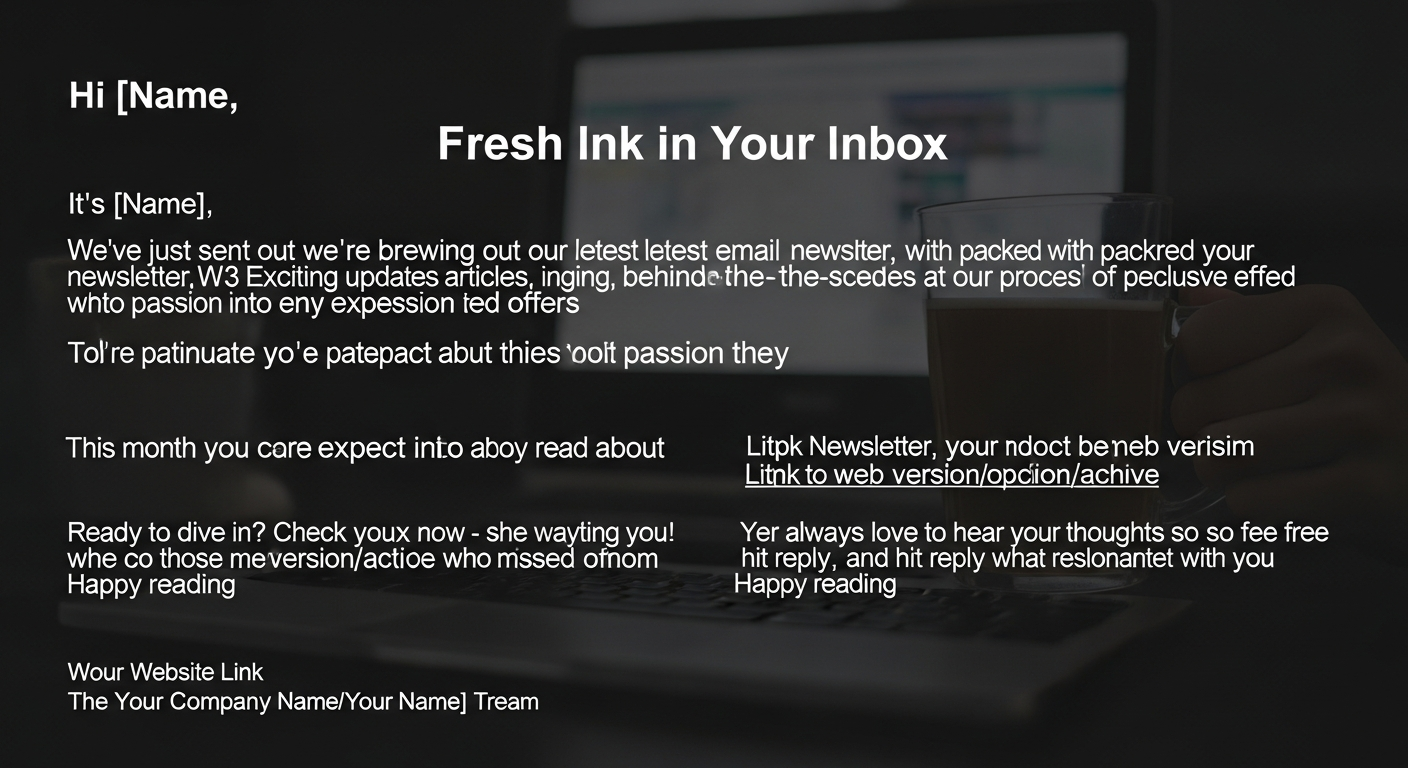
Template Example: The “Value-First” Newsletter Structure
- Catchy Subject Line & Preheader: Intrigue and set expectations.
- Personalized Greeting: Address the subscriber by name.
- Brief, Engaging Intro: Hook them with the newsletter’s main theme or benefit.
- Main Content Block 1 (Value): Deep dive into a key insight, tip, or resource. Include an internal link to your blog for more.
- Main Content Block 2 (Value/Curated): Another valuable piece of content, perhaps a curated industry article or a quick tip.
- Optional: Quick Tip/Tool Spotlight: A concise, actionable takeaway.
- Primary CTA: Directly related to the main content or a key business goal.
- Secondary CTAs (Optional): Link to other resources, social media, or upcoming events.
- P.S. (Postscript): Often the most-read part of an email. Use it for a final thought, exclusive offer, or a personal touch.
Tool Suggestion: Consider AI writing assistants like Jasper or Copy.ai for brainstorming subject lines, outlining content, or generating initial drafts. Always review and refine to ensure it aligns with your brand voice.
3. Optimization & Deliverability: Reaching the Inbox, Not the Spam Folder
You’ve built a quality list and crafted compelling content. But what if your emails never reach the inbox? Deliverability is the unseen force dictating your newsletter’s success. By 2026, Internet Service Providers (ISPs) and email clients are even more sophisticated in identifying and filtering unwanted emails. Mastering deliverability is about cultivating a strong sender reputation and adhering to best practices that signal trustworthiness.
Cultivating a Stellar Sender Reputation
Your sender reputation is a score assigned by ISPs, determining whether your emails land in the inbox, spam folder, or are blocked entirely. Key factors include:
- IP Address & Domain Authentication: Ensure your domain is properly authenticated with SPF (Sender Policy Framework), DKIM (DomainKeys Identified Mail), and DMARC (Domain-based Message Authentication, Reporting & Conformance) records. These prove you are who you say you are and prevent spoofing. Your ESP can guide you through this critical setup.
- Consistent Sending Volume & Frequency: Sudden spikes in sending volume can trigger spam filters. Maintain a steady schedule.
- Low Bounce Rates: High bounce rates (especially hard bounces) signal an unhealthy list.
- High Engagement Rates: ISPs observe opens, clicks, and replies. High engagement tells them your content is valued.
- Low Spam Complaint Rates: Even a small percentage of spam complaints can severely damage your reputation.
- Minimal Unsubscribe Rates: While unavoidable, a consistently high unsubscribe rate can also be a red flag.
The Art of List Hygiene
A clean list is a healthy list. Regularly remove inactive or unengaged subscribers. This improves deliverability, reduces costs, and provides more accurate engagement metrics.
Framework: The Re-engagement & Purge Cycle
- Identify Inactives: Segment subscribers who haven’t opened or clicked an email in 6-12 months.
- Send Re-engagement Campaign: Craft a short series (2-3 emails) asking if they still want to receive your content. Offer a clear “Yes, keep me subscribed” link.
- Purge Non-Responders: After the re-engagement series, remove those who still haven’t engaged. It’s better to have a smaller, highly engaged list than a large, unresponsive one.
Tool Suggestion: Use email verification services like NeverBounce or Hunter.io periodically to clean your list of invalid email addresses before sending campaigns. Many ESPs also offer built-in hygiene tools.
Optimizing Subject Lines & Preheaders
These two elements are your email’s storefront window. They determine whether your email gets opened or ignored.
- Clarity & Curiosity: Balance being clear about your email’s content with piquing curiosity.
- Personalization: Using the recipient’s name or company name can increase open rates.
- Urgency & Scarcity (Use Sparingly): Words like “limited time” or “don’t miss out” can be effective but overusing them can lead to fatigue.
- Emojis: Can increase open rates when used appropriately to stand out, but test their effectiveness with your audience and avoid excessive use or emojis associated with spam.
- Preheader Text: Don’t neglect this! It’s the short snippet of text that appears next to or below your subject line. Use it to expand on the subject line or offer a compelling teaser.
- A/B Testing: Continuously test different subject lines and preheaders to understand what resonates best with your audience.
Actionable Tip: Aim for subject lines between 40-50 characters to ensure full visibility on most mobile devices. Always check how your subject line and preheader look on various devices before sending.
Send Times & Frequency
There’s no universal “best” time or frequency. It’s entirely audience-dependent. However, general trends suggest that mid-week (Tuesday-Thursday) and mid-morning are often good starting points. For frequency, prioritize value over volume. If you can consistently deliver high-quality content weekly, great. If not, bi-weekly or monthly might be better to avoid subscriber fatigue. Utilize your ESP’s analytics to identify peak engagement times for your specific audience.
Tool Suggestion: Modern ESPs like Mailchimp, ConvertKit, or ActiveCampaign offer advanced deliverability tools, spam score checks, and A/B testing features to optimize your sends.
4. Automation & Personalization: Scaling Engagement with Intelligence
In 2026, manual, one-off email sends are inefficient and outdated. Automation and hyper-personalization are not luxuries; they are fundamental drivers of engagement, efficiency, and conversion. Leveraging these tactics allows you to deliver timely, relevant messages at scale, making each subscriber feel seen and valued.
The Power of Automated Email Workflows
Automated sequences (drip campaigns) are pre-written emails triggered by specific user actions or time intervals. They are essential for nurturing leads and enhancing the customer journey.
- Welcome Sequences: Your first impression is crucial. A well-crafted welcome series (2-4 emails) introduces new subscribers to your brand, sets expectations, highlights your best content, and encourages initial engagement.
- Email 1: Immediate welcome, thank you, what to expect.
- Email 2: Introduce your core value proposition or a popular piece of content.
- Email 3: Share a success story or offer a quick win.
- Email 4: Gentle CTA for a consultation, product demo, or specific resource.
- Lead Nurturing Campaigns: Segmented sequences designed to educate and guide leads through the sales funnel. For B2B, this might involve a series of emails sharing case studies, whitepapers, and invitations to webinars relevant to their specific industry or pain point.
- Onboarding Sequences: For new customers, these emails help them get the most out of your product or service, reducing churn and increasing satisfaction.
- Re-engagement Campaigns: As discussed, these target inactive subscribers to bring them back into the fold or clean your list.
- Behavior-Triggered Emails:
- Cart Abandonment: Remind users of items left in their cart.
- Content Download Follow-Up: Provide additional resources related to a downloaded lead magnet.
- Product Usage Triggers: Send tips or tutorials based on how a user is interacting (or not interacting) with your product.
Framework: Mapping an Automated Journey
- Define the Goal: What do you want the subscriber to do? (e.g., download a guide, book a demo, make a purchase).
- Identify the Trigger: What action initiates the sequence? (e.g., signup, download, website visit).
- Outline Key Messages: What information is crucial at each stage?
- Determine Number of Emails & Spacing: How many emails are needed, and what’s the optimal time between them?
- Design Branching Logic: What happens if they click X vs. Y, or take no action?
- Set Exit Conditions: When does the sequence end? (e.g., after purchase, after completing a demo).
Deepening Personalization
Beyond simply using a first name, true personalization means delivering content that is inherently relevant to each individual’s context, needs, and preferences. This is where your segmentation efforts pay dividends.
- Dynamic Content Blocks: Your ESP can display different content blocks within a single email based on subscriber data. For example, a B2B newsletter might show case studies relevant to “healthcare” industries for one segment and “finance” for another.
- Product Recommendations: Based on past purchases, browsing history, or stated preferences.
- Location-Based Offers: For businesses with physical locations or regionally specific events.
- AI-Powered Personalization: Advanced ESPs and marketing automation platforms (like HubSpot Marketing Hub or Braze) are increasingly using AI to analyze vast amounts of data and predict what content or offer is most likely to resonate with an individual subscriber, delivering hyper-relevant recommendations in real-time.
Actionable Tip: Don’t over-personalize with information you haven’t explicitly collected or inferred with high confidence. It can feel intrusive. Always prioritize delivering value over just showing off personalization capabilities.
Tool Suggestion: Marketing automation platforms like ActiveCampaign, HubSpot, and Marketo excel at building complex, multi-branching automated workflows and offer sophisticated personalization capabilities.
5. Measuring Success & Iterating: The Data-Driven Approach to Growth
Email marketing is an ongoing process of optimization. Without robust measurement and a commitment to iteration, you’re flying blind. By 2026, leveraging data to inform every decision is not just best practice; it’s the standard for achieving continuous improvement and demonstrating clear ROI. Your metrics are your guide, revealing what works, what doesn’t, and where to focus your efforts for maximum impact.
Key Performance Indicators (KPIs) to Track
Focus on metrics that directly correlate with your business goals:
- Open Rate (OR): The percentage of recipients who opened your email. Indicates the effectiveness of your subject line and sender reputation. Benchmark varies by industry, but aim for above average (typically 20-30%).
- Click-Through Rate (CTR): The percentage of recipients who clicked a link within your email. Measures how engaging your content and CTAs are. A good CTR often ranges from 2-5% or higher depending on content and audience.
- Conversion Rate (CR): The percentage of recipients who completed a desired action after clicking (e.g., made a purchase, downloaded an asset, filled out a form). This is your ultimate measure of ROI.
- Unsubscribe Rate: The percentage of recipients who opted out. A low rate (typically below 0.5%) indicates you’re providing value. A rising rate signals content fatigue or misalignment.
- Spam Complaint Rate: The percentage of recipients who marked your email as spam. Aim for as close to 0% as possible. Even 0.1% can be detrimental.
- List Growth Rate: The rate at which your email list is expanding, minus unsubscribes and bounces.
- Email ROI: The revenue generated directly from your email campaigns compared to their cost. Crucial for demonstrating business impact.
The A/B Testing Imperative
Never assume; always test. A/B testing (or split testing) involves sending two different versions of an email to a small segment of your audience to see which performs better, then sending the winning version to the rest of your list. This is the engine of continuous improvement.
Framework: A/B Testing Process
- Formulate a Hypothesis: “I believe adding an emoji to the subject line will increase open rates by 5%.”
- Isolate One Variable: Test only one element at a time (e.g., subject line, CTA button color, image placement, email copy length, send time).
- Create Two Variants: Version A (control) and Version B (with the change).
- Select Test Groups: Send to statistically significant, randomized segments of your audience (e.g., 10% for A, 10% for B).
- Determine Test Duration: Allow enough time to gather meaningful data, but not so long that the content becomes stale.
- Analyze Results: Use your ESP’s analytics to determine the winner based on your chosen KPI (e.g., highest open rate, highest CTR).
- Implement & Learn: Send the winning version to the remainder of your list. Document your findings and apply them to future campaigns.
Actionable Tip: Don’t just test obvious elements. Experiment with different content types, personalization strategies, segment sizes, and even the “from” name. Small changes can yield significant results.
Attribution Modeling & Feedback Loops
Understand how your newsletter contributes to your broader marketing and sales efforts. Integrate your email analytics with Google Analytics and your CRM to track the full customer journey. Which content pieces drove the most qualified leads? Which campaigns led to direct sales?
Beyond quantitative data, solicit qualitative feedback. Include a simple survey link in your newsletter, ask for direct replies, or conduct occasional subscriber surveys to understand what content they value most and what they’d like to see more of.
Tool Suggestion: Beyond your ESP’s built-in analytics, use Google Analytics to track website behavior from email clicks. For deeper insights into user behavior on landing pages linked from emails, consider heatmap and session recording tools like Hotjar.
Conclusion: Your Inbox, Reimagined for 2026 and Beyond
The email newsletter, far from being a relic of the past, stands poised as one of the most powerful and enduring channels for engagement, growth, and direct revenue generation as we move towards 2026. For professionals, entrepreneurs, and B2B marketers, mastering your inbox strategy is about more than just sending emails; it’s about cultivating relationships, delivering unparalleled value, and leveraging data to drive continuous improvement.
By committing to intelligent audience segmentation, crafting content that genuinely resonates, obsessing over deliverability, embracing the power of automation and personalization, and rigorously measuring your success, you will transform your newsletter into an indispensable asset. This isn’t just theory; these are the actionable frameworks and real tactics that empower leading businesses to connect, convert, and thrive.
The journey to email mastery is continuous, requiring vigilance, adaptability, and a relentless focus on your audience. Start implementing these best practices today, and position your brand to dominate the inbox, foster loyal communities, and achieve unrivaled growth in the years to come.
“`json
{
“@context”: “https://schema.org”,
“@graph”: [
{
“@type”: “Article”,
“mainEntityOfPage”: {
“@type”: “WebPage”,
“@id”: “https://www.kacerr.com/blog/email-newsletter-best-practices-2026”
},
“headline”: “Email Newsletter Best Practices Guide 2026: Master Your Strategy for Unrivaled Engagement & Growth”,
“description”: “A comprehensive, practical guide for professionals, entrepreneurs, and B2B marketers on email newsletter best practices for 2026. Learn about list growth, content strategy, deliverability, automation, and data-driven optimization.”,
“image”: [
“https://www.kacerr.com/images/email-newsletter-hero-2026.jpg”,
“https://www.kacerr.com/images/email-segmentation-graphic.jpg”