Crafting High-Converting Lead Magnets: A Strategic Guide for Professionals & B2B Marketers
1. Understanding Your Audience: The Foundation of Conversion
Before you write a single word or design a single graphic, your primary mission is to deeply understand the individuals you aim to attract. Attempting to create a lead magnet without this foundational knowledge is like trying to hit a moving target blindfolded – you’ll likely miss, wasting valuable resources and time. Your audience isn’t a monolithic entity; they are diverse professionals, entrepreneurs, and B2B decision-makers with distinct pain points, aspirations, and information consumption habits.
The Power of Buyer Personas
Developing detailed buyer personas is non-negotiable. These semi-fictional representations of your ideal customers go beyond basic demographics. They encapsulate:
* Demographics: Job title, industry, company size, location, age range.
* Psychographics: Goals, motivations, values, fears, frustrations, and professional aspirations.
* Pain Points: What specific challenges do they face in their role or business that your product/service can solve?
* Information Sources: Where do they go for solutions? (e.g., industry blogs, LinkedIn groups, conferences, specific publications).
* Objections: What hesitations might they have about solutions like yours?
How to Gather This Data:
* Interviews: Talk to your current customers, lost prospects, and sales team. They are a goldmine of direct insights.
* Surveys: Use tools like Typeform or SurveyMonkey to poll your existing audience or website visitors.
* CRM Data: Analyze historical sales data to identify common characteristics of your most successful clients.
* Social Listening: Monitor industry discussions on LinkedIn, Reddit, and forums to uncover prevalent questions and complaints.
* Competitor Analysis: What lead magnets are your competitors offering? What gaps can you fill?
2. Ideation & Choosing the Right Lead Magnet Format

Once you have a crystal-clear understanding of your audience’s needs, the next step is to brainstorm lead magnet ideas that deliver immediate, tangible value. The format you choose is critical; it must align with the perceived value, the complexity of the problem it solves, and how your audience prefers to consume information.
Brainstorming Value-Driven Ideas
Start by listing your audience’s top 3-5 pain points. For each pain point, brainstorm solutions you could offer in a digestible format.
* Pain Point Example (B2B Marketer): “Struggling to prove ROI for content marketing.”
* Potential Solution: A template for tracking content performance, a guide on attributing sales to content, an ROI calculator.
High-Converting Lead Magnet Formats for B2B & Professionals:
1. Checklists/Templates: These are incredibly popular because they offer immediate utility. They simplify complex processes and save time.
Examples:* “SaaS Onboarding Flow Checklist,” “B2B Email Marketing Sequence Template,” “SEO Audit Checklist for 2026.”
Tools:* Google Docs, Canva, Microsoft Word.
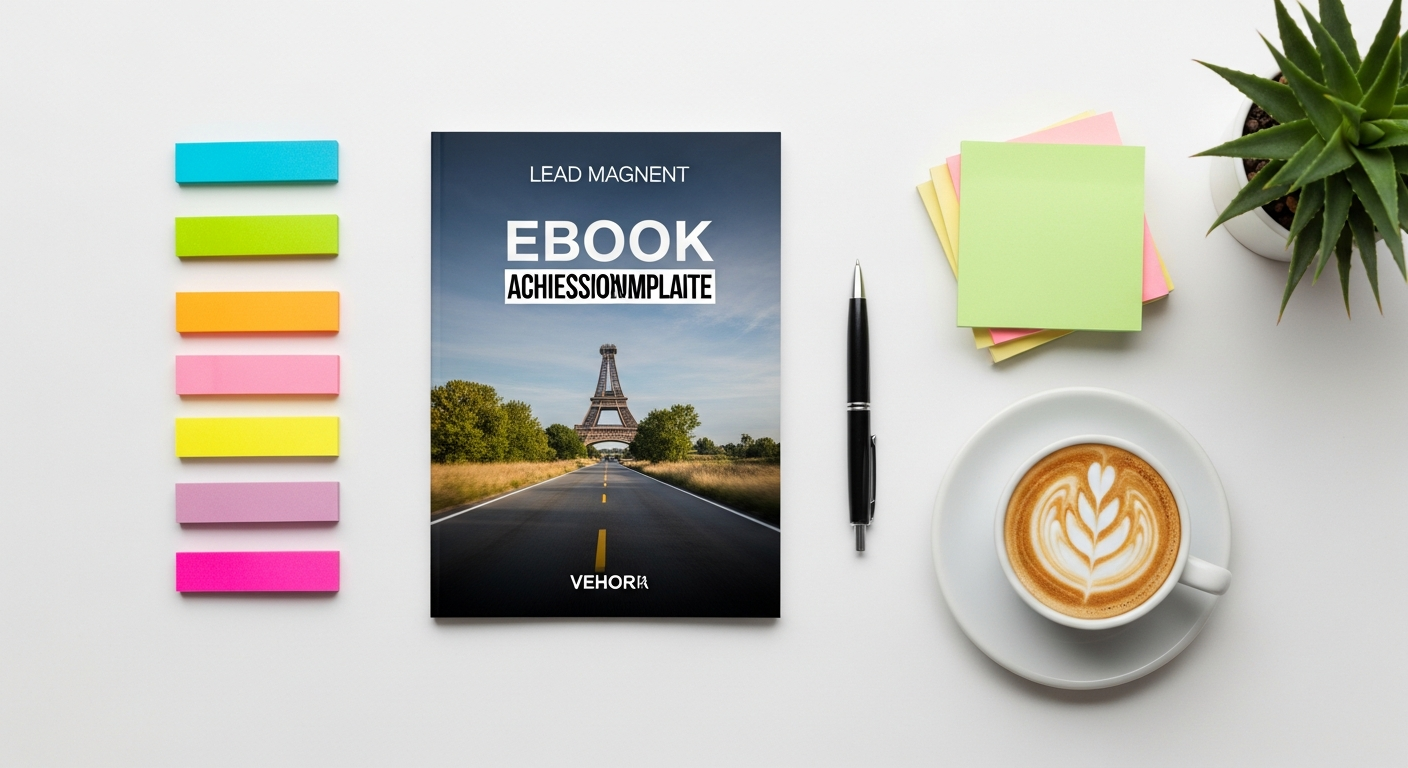
2. Guides/Ebooks: Offer in-depth knowledge on a specific topic. They establish authority and educate your audience.
Examples:* “The Definitive Guide to Account-Based Marketing (ABM) in 2026,” “Mastering LinkedIn for B2B Lead Generation.”
Tools:* Adobe InDesign, Canva, Google Docs, professional designers.
3. Worksheets/Workbooks: Encourage active engagement and help users apply concepts directly to their own business.
Examples:* “Ideal Customer Profile Worksheet,” “Content Strategy Planning Workbook,” “Sales Pipeline Optimization Worksheet.”
Tools:* Google Sheets, Canva, Microsoft Excel.
4. Case Studies/Success Stories: For B2B, demonstrating how you’ve solved similar problems for others is incredibly powerful.
Examples:* “How [Client Name] Increased Lead Quality by 40% with Our [Service],” “Case Study: Scaling B2B SaaS Sales with AI-Powered Outreach.”
Tools:* Word processors, design software for professional layout.
5. Calculators/Assessments: Offer personalized insights or quantify potential ROI. These are highly engaging and provide immediate, relevant data.
Examples:* “Marketing ROI Calculator,” “Website Performance Grader,” “B2B Sales Readiness Assessment.”
Tools:* Excel, Google Sheets, specialized online calculator builders (e.g., Outgrow, ConvertCalculator).
6. Webinars/Workshops: Live or pre-recorded sessions that offer deep dives or practical training. They build trust and allow for direct interaction.
Examples:* “Live Workshop: Building a Profitable B2B Content Calendar,” “On-Demand Webinar: Navigating the Latest SEO Updates for 2026.”
Tools:* Zoom, GoToWebinar, Loom (for pre-recorded).
7. Resource Libraries/Toolkits: Curated collections of useful links, tools, or assets.
Examples:* “The Essential Toolkit for Remote B2B Sales Teams,” “Top 10 AI Tools for Marketing Automation.”
Tools:* Notion, Google Docs, simple landing page.
Criteria for Selection:
* Perceived Value: Does it look like something your audience would willingly pay for?
* Ease of Consumption: Can they get value quickly, or does it require significant effort?
* Relevance: Does it directly relate to your core offering and position you as a solution provider?
* Production Difficulty: Can you create it efficiently without sacrificing quality?
3. Crafting Irresistible Content: Quality & Value Delivery
A compelling idea is only half the battle; the execution of your lead magnet’s content and design is paramount. This is where you demonstrate your expertise and build trust, transforming a casual download into the first step of a lasting relationship.
The “Wow” Factor: Delivering Exceptional Value
Your lead magnet must be genuinely valuable. It should solve a real problem, offer a novel perspective, or provide information that is difficult to find elsewhere.
Actionability: Provide specific steps, frameworks, or insights that your audience can implement immediately. Avoid theoretical fluff. A checklist isn’t just a list of items; it’s a guide to how* to check them off effectively.
* Specificity: General advice is forgettable. Target a niche problem with a niche solution. Instead of “Improve Your Marketing,” offer “5 Proven Tactics to Increase B2B Lead Quality by 20% in 90 Days.”
* Completeness (within its scope): While it shouldn’t be your entire product, it should fully deliver on its promise. If it’s a guide to “LinkedIn Profile Optimization,” it should cover all critical aspects comprehensively.
Professional Design & User Experience
First impressions matter. A poorly designed lead magnet, even with great content, can undermine your authority and reduce its perceived value.
* Branding: Ensure your lead magnet aligns with your company’s brand guidelines (colors, fonts, logo). Consistency builds recognition and trust.
* Readability: Use clear headings (H1, H2, H3), bullet points, numbered lists, and short paragraphs. Break up text with relevant images, charts, or infographics.
* Visual Appeal: Invest in professional design. Tools like Canva offer excellent templates for non-designers, but for high-stakes lead magnets, consider a graphic designer using Adobe InDesign or Illustrator.
* User-Friendly Format: PDFs are standard, but consider interactive elements for calculators or assessments. Ensure mobile responsiveness.
Internal Call to Action (CTA)
Your lead magnet isn’t just a gift; it’s a bridge to your core offering. Strategically place subtle, non-salesy calls to action within the lead magnet itself.
* Contextual Links: If your lead magnet discusses a specific strategy, link to a relevant service page or case study on your website.
* “Learn More” Sections: At the end, include a brief section about how your company helps clients implement the strategies discussed.
* Next Steps: Suggest a free consultation, a demo, or invite them to another valuable resource (e.g., a webinar). The goal is to guide them naturally further down your sales funnel without being overtly pushy.
4. The Conversion Mechanism: Landing Pages & Opt-in Forms
Once your lead magnet is perfected, you need a robust system to deliver it and capture leads efficiently. This involves optimizing your landing page, streamlining your opt-in form, and setting up automated delivery.
High-Converting Landing Page Best Practices
Your landing page is the digital storefront for your lead magnet. Its sole purpose is to convert visitors into leads.
* Clear, Benefit-Driven Headline: Immediately tell visitors what they will gain. Focus on the transformation, not just the features.
Example:* Instead of “Download Our Ebook,” try “Unlock 5 Strategies to Double Your B2B Lead Quality.”
* Compelling Sub-Headline & Body Copy: Elaborate on the benefits. Use bullet points to highlight key takeaways and solve specific pain points. Keep it concise.
* Hero Shot/Mockup: Visually represent your lead magnet (e.g., a 3D cover image of an ebook, a screenshot of a template). This increases perceived value.
* Social Proof: Include testimonials, trust badges, or logos of recognized clients/partners. This builds credibility and reduces perceived risk.
* Minimalist Design: Remove navigation menus and extraneous links. Keep the focus entirely on the lead magnet and the opt-in form.
* Fast Loading Speed: Optimize images and code to ensure your page loads quickly. Every second counts for conversion rates.
* Mobile Responsiveness: A significant portion of your audience will access your site via mobile devices. Ensure a seamless experience.
Tools for Landing Page Creation:
* Dedicated Landing Page Builders: Leadpages, Unbounce, Instapage offer drag-and-drop interfaces with built-in A/B testing.
* Marketing Automation Platforms: HubSpot, ActiveCampaign, Mailchimp often include landing page functionalities integrated with their CRM and email tools.
Optimizing Your Opt-in Form
The form is the gateway to your lead magnet. Its design directly impacts conversion rates.
* Minimize Fields: For top-of-funnel lead magnets, request only essential information (typically Name and Email Address). Each additional field can decrease conversion rates by up20-30%. For B2B, you might add “Company Name” or “Job Title” if lead qualification is a high priority.
* Clear Call-to-Action (CTA) Button: Use action-oriented language like “Get Your Free Guide,” “Download Now,” or “Access the Toolkit.” Make the button visually prominent.
* Privacy Policy Link: Assure users their data is safe and won’t be spammed. This builds trust.
* Pre-fill Options: If possible (e.g., for returning visitors), pre-fill fields to reduce friction.
The Thank You Page & Automated Delivery
* Immediate Delivery: After form submission, redirect users to a thank you page where they can immediately download the lead magnet. Also, send an automated email with the download link.
* Set Expectations: On the thank you page, briefly tell them what to expect next (e.g., “Check your inbox for a welcome email”).
* Suggest Next Steps: This is another opportunity to nurture.
* “Follow us on LinkedIn for more insights.”
* “Read our latest blog post on [related topic].”
* “Book a free 15-minute consultation.”
Email Automation:
Your email marketing platform (e.g., Mailchimp, ActiveCampaign, HubSpot, ConvertKit) should immediately trigger:
1. A welcome email delivering the lead magnet.
2. A short, automated nurture sequence (2-3 emails) that provides additional value, introduces your brand, and subtly guides them toward your core offering.
5. Promotion Strategies: Getting Your Lead Magnet Seen
A brilliant lead magnet is useless if no one knows it exists. Strategic promotion across multiple channels is essential to drive traffic to your landing page and maximize lead generation.
Multi-Channel Promotion Approach:
1. Your Website:
* Homepage Hero Section: A prime spot for your most valuable lead magnet.
* Sidebar Widgets: Evergreen placement on blog posts and other relevant pages.
Content Upgrades: Offer a highly relevant lead magnet within* a blog post that expands on the topic. This converts exceptionally well.
* Exit-Intent Pop-ups: Capture visitors about to leave your site.
* Hello Bar/Top Banner: A non-intrusive banner across the top of your site.
2. Blog Content:
* Integrate contextual CTAs within relevant blog posts. If you have an article on “B2B SEO Trends,” link to your “SEO Audit Checklist.”
3. Social Media Marketing:
* Organic Posts: Share compelling visuals and benefit-driven copy on LinkedIn (critical for B2B), X (Twitter), Facebook, and Instagram. Use relevant hashtags.
* Paid Social Ads: Leverage LinkedIn Ads for precise B2B targeting (job title, industry, company size). Facebook/Instagram Ads can also be effective for broader professional audiences. A/B test ad creatives, headlines, and CTAs.
4. Email Marketing:
* Email Signature: A subtle but effective way to promote your lead magnet in every email you send.
* Newsletter Promotion: Announce new lead magnets to your existing subscribers (even if they’re already leads, they might share it or find new value).
5. Guest Posting & Collaborations:
* When guest posting on other industry blogs, offer your lead magnet as a valuable resource in your author bio or within the content itself (if permitted).
* Collaborate with complementary businesses to cross-promote each other’s lead magnets.
6. Paid Search Advertising (Google Ads):
* Target keywords related to the problem your lead magnet solves. For example, if your lead magnet is an “ABM Strategy Template,” bid on terms like “account-based marketing strategy” or “ABM planning.”
Key Takeaway: Don’t just promote it once. Create an ongoing promotion schedule. Refresh your ad copy, update social posts, and find new contextual opportunities to share your valuable resource.
6. Analyze, Optimize, and Iterate: Driving Continuous Conversion
Creating and promoting a lead magnet is only half the journey. The true magic happens in the continuous cycle of analysis, optimization, and iteration. Data is your compass, guiding you to higher conversion rates and better lead quality.
Key Metrics to Track:
1. Conversion Rate: (Number of Leads / Number of Landing Page Visitors) * 100. This is your primary indicator of effectiveness. A good conversion rate varies by industry and offer, but 10-20% is a reasonable target for lead magnet landing pages.
2. Lead Quality: Not all leads are created equal. Work with your sales team (for B2B) or track downstream metrics (e.g., email engagement, product demo sign-ups) to assess how well your lead magnet attracts qualified prospects.
3. Lead Magnet Download Rate: How many people who start the download process (e.g., click the initial CTA) actually complete the form and receive the magnet?
4. Email Open & Click Rates: For your immediate delivery and nurture emails. Are people opening your emails? Are they clicking on links to further content or your website?
5. Cost Per Lead (CPL): If using paid promotion, track how much you’re spending to acquire each lead. (Total Ad Spend / Number of Leads from Ad).
6. Time to Conversion: How long does it take for a lead generated by this magnet to become a customer?
Tools for Tracking:
* Google Analytics: Track landing page traffic, bounce rates, and conversion goals.
* CRM Systems (e.g., Salesforce, HubSpot): Track lead status, sales pipeline progression, and lead source.
* Email Marketing Platforms (e.g., ActiveCampaign, Mailchimp): Monitor email engagement metrics.
* Landing Page Builders (e.g., Unbounce, Leadpages): Often have built-in analytics and A/B testing features.
A/B Testing Elements for Optimization:
Never assume your first version is the best. Continuously test different elements to find what resonates most with your audience.
* Landing Page:
* Headlines and sub-headlines.
* Body copy and bullet points.
* Hero images/mockups of the lead magnet.
* Placement and type of social proof.
* Page layout and color schemes.
* Opt-in Form:
* Number of fields requested.
* Call-to-action button text, color, and size.
* Lead Magnet Itself:
* Its title and description (how it’s promoted).
* The internal CTAs within the magnet.
* Promotion Channels:
* Ad copy and visuals for paid campaigns.
* Email subject lines for nurture sequences.
* Placement of CTAs on your website.
Iterative Improvement:
The process of creating high-converting lead magnets is not a one-and-done task. It’s an ongoing cycle.
1. Launch: Get your lead magnet out there.
2. Measure: Collect data on all key metrics.
3. Analyze: Identify bottlenecks or underperforming elements.
4. Hypothesize: Formulate ideas for improvement (e.g., “If we shorten the form, conversion rates will increase”).
5. Test: Implement changes and run A/B tests.
6. Refine: Implement the winning variations and repeat the cycle.
Regularly review the performance of your lead magnets. What resonated a year ago might not be as effective today. Stay attuned to industry trends and your audience’s evolving needs to keep your lead generation engine robust and efficient.
Conclusion
Creating high-converting lead magnets isn’t a mystical art; it’s a strategic discipline rooted in understanding your audience, delivering exceptional value, optimizing your delivery mechanisms, and relentlessly analyzing performance. As a professional, entrepreneur, or B2B marketer, your ability to consistently attract and nurture quality leads will directly correlate with your business’s long-term success. By following this comprehensive framework—from deep audience insight and strategic ideation to meticulous execution and continuous optimization—you’ll transform your lead generation efforts from a hopeful endeavor into a predictable, powerful engine for growth. Don’t just offer a freebie; offer a solution that truly resonates, and watch your prospect list, and ultimately your business, flourish.