
The Foundation of Success: Understanding Business Goals and KPIs
At the heart of every successful enterprise lies a clear understanding of where it’s headed and how it will measure its journey. Business goals and Key Performance Indicators (KPIs) are the dual pillars supporting this understanding, providing both direction and a metric for progress. While often used interchangeably, it’s crucial to distinguish between the two for effective strategic planning.
A business goal is a desired outcome or objective that an organization aims to achieve within a specific timeframe. These are the aspirational targets that define what success looks like for your company. They can range from broad, strategic aims like “Become the market leader in enterprise SaaS solutions” to more operational objectives such as “Increase customer retention by 15%.” Goals provide the ‘what’ and the ‘why’ behind your efforts, acting as the ultimate destinations on your business map. They should inspire, unify teams, and drive the overall strategic direction of the company.
Key Performance Indicators (KPIs), on the other hand, are measurable values that demonstrate how effectively a company is achieving its key business objectives. If goals are the destinations, KPIs are the speedometer, fuel gauge, and mileage counter, telling you if you’re on track, how fast you’re going, and how much progress you’ve made. KPIs are quantifiable, providing concrete data points that allow businesses to assess performance, identify areas for improvement, and make informed decisions. For instance, if your goal is to “Increase customer retention by 15%,” relevant KPIs might include “Customer Churn Rate,” “Customer Lifetime Value (CLTV),” or “Net Promoter Score (NPS).”
The synergy between goals and KPIs is profound. Goals provide the strategic direction, while KPIs offer the tactical insights needed to navigate towards those goals. Without clear goals, KPIs become mere data points lacking context or actionable meaning. Conversely, without robust KPIs, goals remain abstract aspirations, impossible to measure or manage effectively. In the B2B sphere, where sales cycles can be lengthy, client relationships are paramount, and market shifts are constant, this synergy is particularly vital. It enables businesses to:
- Ensure Strategic Alignment: Every department and individual understands how their daily tasks contribute to the overarching company objectives.
- Facilitate Informed Decision-Making: Data-driven insights from KPIs allow leaders to pivot strategies, reallocate resources, and address challenges proactively.
- Foster Accountability: With clear metrics tied to specific goals, teams and individuals can take ownership of their performance.
- Drive Continuous Improvement: Regular monitoring of KPIs highlights successes to replicate and weaknesses to address, creating a cycle of optimization.
In essence, setting robust business goals and diligently tracking the right KPIs transforms abstract ambition into measurable progress, empowering B2B companies to achieve their strategic imperatives and secure a competitive edge in 2026.
Crafting Your Vision: The SMART Framework for Goal Setting
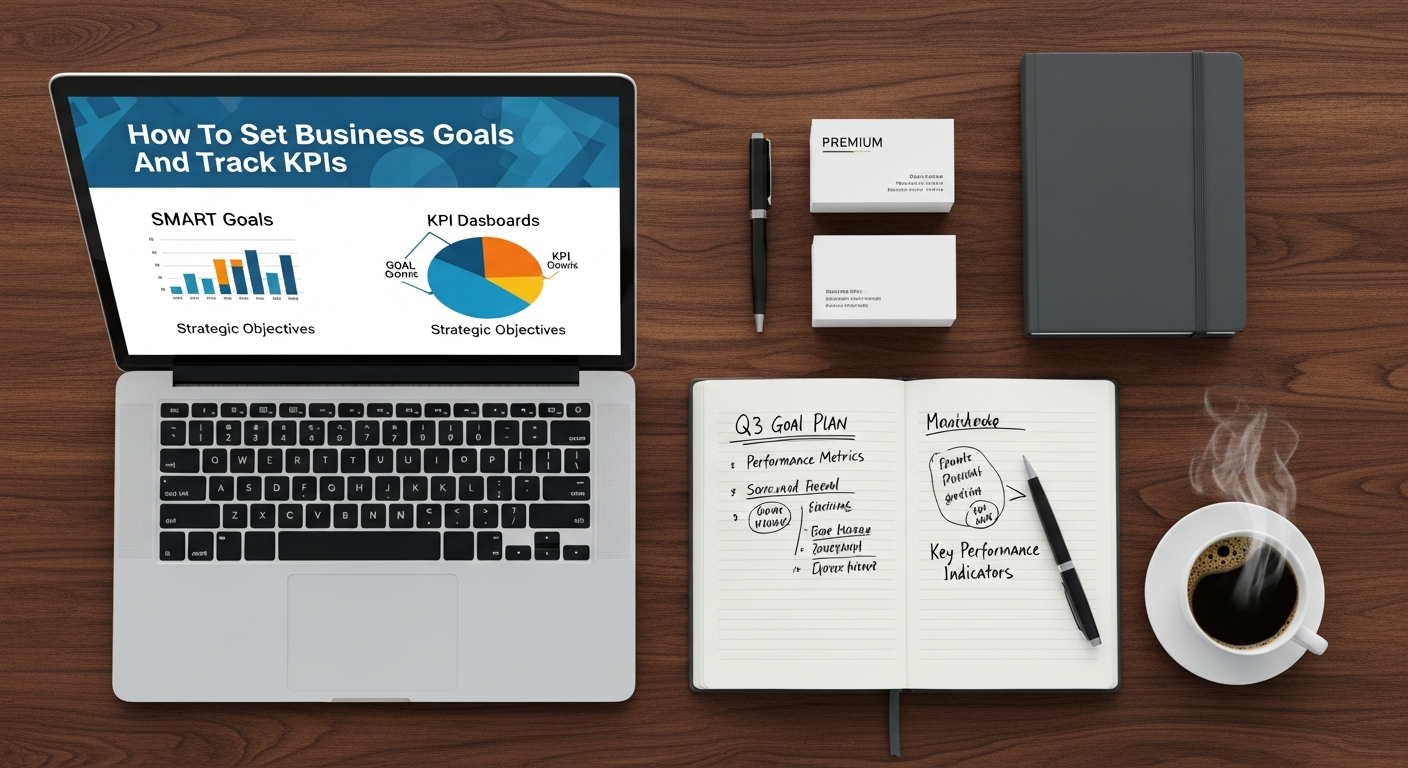
Once the importance of business goals is established, the next critical step is to formulate them effectively. Vague or overly ambitious goals can be demoralizing and lead to wasted resources. This is where the SMART framework proves invaluable, offering a structured approach to creating objectives that are clear, actionable, and attainable. SMART is an acronym that stands for Specific, Measurable, Achievable, Relevant, and Time-bound.
Specific
A specific goal clearly defines what needs to be accomplished. It answers the “who, what, where, when, which, and why” questions. Instead of saying, “We want to improve our marketing,” a specific goal would be, “Increase qualified lead generation for our enterprise SaaS product in the North American market by Q4 2026.” This level of detail eliminates ambiguity and provides a clear focus for all efforts.
Measurable
For a goal to be truly effective, it must be measurable. This means you need concrete criteria for tracking progress and determining when the goal has been met. How will you know if you’ve succeeded? The “Increase qualified lead generation by 20%” part of the example provides this measurable component. Without measurable elements, goals remain subjective and impossible to evaluate, making it difficult to assess ROI or justify future investments.
Achievable
An achievable goal is realistic and attainable given your company’s resources, time, and current market conditions. While it should be challenging enough to inspire effort, it shouldn’t be so out of reach that it becomes demotivating. Setting an achievable goal requires an honest assessment of your capabilities and market realities. For example, aiming for a 20% increase in qualified leads might be achievable with a focused marketing effort, whereas a 200% increase might be unrealistic without a significant shift in strategy or investment. It’s about finding the sweet spot between challenge and possibility.
Relevant
A relevant goal aligns with your overall business objectives and strategic vision. It should contribute directly to the larger success of the organization and be meaningful to the team working towards it. If your company’s overarching strategy is to penetrate new markets, then a goal focused on optimizing existing market share might not be as relevant as one targeting market entry or brand awareness in those new territories. Every goal should answer the question: “Is this the right goal for our business at this time?” For B2B companies, relevance often means goals that directly impact client acquisition, retention, and revenue growth.
Time-bound
Every SMART goal must have a deadline. A time limit creates a sense of urgency and prevents the goal from being perpetually postponed. It provides a target date for completion and helps in planning the necessary steps. In our example, “by Q4 2026” provides this critical time constraint. Without a deadline, there’s no impetus to act, and goals can easily lose momentum or be forgotten.
Applying the SMART framework transforms vague intentions into clear, actionable objectives. For a B2B business, this might mean setting goals like:
- Specific: Launch a new CRM module for mid-market clients.
- Measurable: Achieve 50 new subscriptions for the CRM module.
- Achievable: Based on historical market data and current sales team capacity.
- Relevant: Aligns with the company’s strategy to expand into the mid-market segment.
- Time-bound: By the end of Q3 2026.
By meticulously applying the SMART criteria, businesses can create a robust foundation for their strategic plans, ensuring that every effort is directed towards a well-defined and attainable outcome.
Pinpointing Progress: Selecting the Right Key Performance Indicators
The process begins by directly linking KPIs to each SMART goal. For every goal, ask: “What are the most critical metrics that will tell me if we are on track to achieve this goal?” It’s important to differentiate between mere metrics and true KPIs. A metric is any data point you can track, but a KPI is a metric that is key to understanding and improving performance relative to a specific strategic objective.
KPIs can broadly be categorized across different facets of your business:
- Financial KPIs: These measure the financial health and performance of your company. Examples include Net Profit Margin, Revenue Growth Rate, Customer Lifetime Value (CLTV), and Return on Investment (ROI).
- Customer KPIs: These focus on customer satisfaction, retention, and acquisition. Examples include Customer Churn Rate, Net Promoter Score (NPS), Customer Acquisition Cost (CAC), and Customer Satisfaction (CSAT) Score.
- Operational KPIs: These measure the efficiency and effectiveness of your internal processes. Examples might include Order Fulfillment Rate, Production Cycle Time, or Employee Productivity. For businesses engaged in What Is Business Process Outsourcing, specific operational KPIs for the outsourced functions (e.g., invoice processing time, call resolution rate for a BPO contact center) are crucial to monitor the vendor’s performance and ensure alignment with internal efficiency goals.
- Employee/Learning & Growth KPIs: These focus on internal capabilities, talent development, and employee engagement. Examples include Employee Turnover Rate, Training Completion Rate, or Employee Engagement Score.
When selecting KPIs, consider these guiding principles:
- Actionable: A good KPI provides data that you can act upon. If a KPI consistently shows a decline, it should prompt an investigation and a strategic response. Avoid “vanity metrics” – numbers that look good but don’t offer real insight or actionable opportunities for improvement (e.g., raw website traffic without conversion context).
- Relevant: Each KPI must directly relate to a specific business goal. If your goal is to increase market share, then a KPI like “Social Media Likes” might be less relevant than “Market Share Percentage” or “Number of Qualified Leads from New Markets.”
- Timely: The data for your KPIs should be available within a reasonable timeframe, allowing for timely adjustments to strategy. Real-time or near real-time data is often ideal for critical operational KPIs.
- Aligned with Strategy: KPIs should reflect the strategic priorities of the business. If your strategy is cost leadership, then cost-related KPIs will be paramount. If it’s product innovation, then KPIs related to new product adoption or R&D efficiency will be key.
Let’s consider an example of linking goals to KPIs, particularly integrating topics like What Is Supply Chain Management Small Business and BPO:
- Goal: “Reduce operational costs by 10% by Q4 2026.”
- KPI 1 (Operational/Financial): Cost per Unit Produced/Service Delivered – This directly measures efficiency.
- KPI 2 (Operational): Supplier Defect Rate – Lower defects reduce rework and waste, impacting costs, especially crucial for a small business focused on What Is Supply Chain Management Small Business.
- KPI 3 (Operational): Invoice Processing Time & Cost – If finance operations are a significant cost center, tracking these can indicate the efficiency of internal processes or the effectiveness of a BPO partner handling accounts payable.
- Goal: “Improve customer satisfaction and retention for our B2B clients by 15% by mid-2026.”
- KPI 1 (Customer): Customer Churn Rate – Direct measure of retention.
- KPI 2 (Customer): Net Promoter Score (NPS) – Indicates customer loyalty and willingness to recommend.
- KPI 3 (Operational/Customer): Average Customer Support Resolution Time – Faster issue resolution often leads to higher satisfaction. If customer support is outsourced, this is a key KPI to track with your BPO provider to ensure service quality aligns with your goal, reinforcing the importance of monitoring performance when considering What Is Business Process Outsourcing for customer-facing functions.
By carefully selecting and defining KPIs that are directly tied to your SMART goals, you create a robust measurement system that provides a clear, data-driven picture of your business’s performance, enabling proactive management and continuous improvement.
Strategic Alignment: Weaving Goals and KPIs Across Your Organization
Setting top-level business goals and identifying key KPIs is only the first step. For these to truly drive organizational performance, they must be cascaded and aligned throughout every layer of the company – from the executive suite down to individual departments and teams. This strategic alignment ensures that every employee understands how their daily efforts contribute to the overarching vision, fostering a cohesive and purpose-driven environment.
The process of alignment involves breaking down high-level strategic goals into more granular, departmental, and individual objectives, each with its own set of relevant KPIs. This creates a clear lineage from the smallest task to the largest corporate ambition. For instance, if a company’s strategic goal is “Increase annual recurring revenue (ARR) by 25% by the end of 2026,” this goal needs to be translated into actionable objectives for different departments:
- Sales Department Goal: “Increase new client acquisition by 30% by Q4 2026.”
- KPIs: Number of Qualified Leads, Sales Conversion Rate, Average Deal Size, Sales Cycle Length.
- Marketing Department Goal: “Generate 40% more Marketing Qualified Leads (MQLs) for the sales team by mid-2026.”
- KPIs: Website Traffic, Lead-to-MQL Conversion Rate, Cost Per Lead, MQL Volume.
- Product Development Goal: “Launch two new revenue-generating features for existing clients by Q3 2026.”
- KPIs: Feature Adoption Rate, Revenue Per Feature, Client Feedback Scores.
- Customer Success Department Goal: “Reduce customer churn by 10% by year-end 2026.”
- KPIs: Customer Churn Rate, Net Promoter Score (NPS), Customer Satisfaction (CSAT) Score.
This cascading approach ensures that departmental goals are not siloed but are interconnected, each supporting the larger strategic imperative. It also highlights areas where cross-functional collaboration is essential. For example, the marketing team’s MQL goal directly impacts the sales team’s acquisition goal, necessitating close cooperation between the two departments.
Integrating Business Process Outsourcing (BPO) and Supply Chain Management (SCM)
Strategic alignment is particularly critical when considering external partners or specialized functions like Business Process Outsourcing (BPO) and Supply Chain Management (SCM), especially for small and growing businesses. These areas often have distinct operational goals that must seamlessly integrate with the company’s overall objectives.
When a business decides to leverage What Is Business Process Outsourcing, it’s typically to gain efficiencies, reduce costs, or access specialized expertise in non-core functions such as HR, finance, or customer service. The goals set for these outsourced processes must align with the company’s strategic objectives. For example, if a company’s overall goal is to “Enhance customer experience and reduce support costs,” then the BPO provider managing customer service should have specific, aligned goals like “Improve first-call resolution rate by 15%” and “Reduce average handle time by 10%.” The KPIs tracked for the BPO partner (e.g., customer satisfaction scores, adherence to service level agreements, cost per interaction) directly feed into the company’s broader customer experience and cost reduction goals. Without this alignment, the outsourcing initiative might fail to deliver the intended strategic benefits.
Similarly, for small businesses, effective What Is Supply Chain Management Small Business is often a direct determinant of profitability and customer satisfaction. If a company’s strategic goal is to “Increase gross profit margin by 5% through optimized operations,” then the SCM function needs to set aligned goals. These might include “Reduce inventory holding costs by 10%,” “Improve on-time delivery rate to 98%,” or “Negotiate 5% better terms with key suppliers.” The KPIs for SCM (e.g., inventory turnover rate, perfect order rate, lead time, supplier performance scores) become vital in measuring progress towards the financial and operational goals. A small business, often with limited resources, must ensure its supply chain strategy is not just efficient but also directly supports its growth and profitability objectives, making careful KPI tracking in SCM indispensable.
Effective communication is the cornerstone of successful alignment. Goals and KPIs should be clearly communicated across all levels of the organization, ensuring transparency and fostering a shared sense of purpose. Regular reviews and feedback loops are also essential to ensure that individual and departmental efforts remain synchronized with the evolving strategic direction of the company. By meticulously weaving goals and KPIs throughout the organizational fabric, businesses can create a powerful engine for collective achievement.
The Feedback Loop: Tracking, Analyzing, and Reporting Your Performance
Setting ambitious goals and identifying relevant KPIs are foundational, but their true value lies in the consistent process of tracking, analyzing, and reporting performance. This feedback loop is essential for understanding what’s working, what isn’t, and making timely adjustments to strategy. Without it, even the most perfectly crafted goals and KPIs become static documents rather than dynamic tools for growth.
Consistent Tracking
The first step is establishing a reliable system for data collection. This often involves leveraging various technologies that are integral to modern B2B operations:
- CRM Systems: Customer Relationship Management (CRM) platforms are vital for tracking sales pipelines, lead progression, customer interactions, and retention metrics. KPIs like sales conversion rates, customer acquisition cost (CAC), and customer lifetime value (CLTV) are often derived from CRM data.
- ERP Systems: Enterprise Resource Planning (ERP) systems integrate various business processes, providing data for financial, operational, and supply chain KPIs. Metrics such as inventory turnover, production costs, and on-time delivery rates are often managed here.
- Marketing Automation Platforms: These tools track website traffic, lead generation, email campaign performance, and content engagement, providing data for marketing KPIs like MQLs, cost per lead, and channel effectiveness.
- Dedicated KPI Dashboards & Business Intelligence (BI) Tools: Platforms like Tableau, Power BI, or even customized internal dashboards aggregate data from disparate sources, providing a centralized, visual representation of key performance metrics. These dashboards should be designed to be intuitive, real-time (or near real-time), and accessible to relevant stakeholders.
The frequency of tracking depends on the nature of the KPI and the speed at which decisions need to be made. Some operational KPIs might be monitored daily, while strategic, high-level KPIs might be reviewed weekly, monthly, or quarterly.
Analyzing Data for Insights
Collecting data is only half the battle; the real value comes from analyzing it to extract actionable insights. This involves more than just looking at numbers; it requires critical thinking to understand the story the data is telling:
- Identifying Trends: Are KPIs consistently improving, declining, or fluctuating? Understanding trends helps in forecasting and proactive planning.
- Spotting Anomalies: Sudden spikes or drops in KPIs warrant investigation. What external factors or internal changes might have caused this deviation?
- Root Cause Analysis: When a KPI is underperforming, delve deeper to understand the underlying reasons. For example, if “customer churn rate” is increasing, is it due to product issues, poor customer service, or competitive pressures?
- Benchmarking: Compare your KPIs against industry benchmarks or your own historical performance to gauge relative success. This helps in setting realistic targets and identifying areas where you might be lagging or excelling.
- Correlation vs. Causation: Be careful not to confuse correlation with causation. Two KPIs might move in tandem, but one might not directly cause the other. Rigorous analysis is needed to establish true causal links.
Reporting Your Progress
Effective reporting ensures that insights reach the right people in a timely and understandable manner. Reports should be:
- Clear and Concise: Avoid jargon and present information visually through charts, graphs, and dashboards.
- Actionable: Reports should highlight key findings, implications, and recommended next steps. Don’t just present data; interpret it.
- Tailored to the Audience: Executive summaries for leadership, detailed operational reports for team managers, and individual performance dashboards for employees. Each audience requires different levels of detail and focus.
- Regular: Establish a consistent reporting cadence (e.g., weekly team meetings, monthly departmental reviews, quarterly board presentations).
For a B2B sales team, a weekly report might highlight lead conversion rates and pipeline velocity, allowing sales managers to adjust coaching or resource allocation. For a marketing team, a monthly report on MQL generation and campaign ROI might inform budget adjustments. The goal is to create a dynamic feedback loop where data collection leads to analysis, which then informs reporting, ultimately driving strategic adjustments and continuous improvement towards your 2026 goals.
Iteration and Evolution: Adapting Your Strategy for Continuous Growth
In today’s fast-paced business environment, setting goals and tracking KPIs cannot be a static, one-time exercise. It must be an iterative and evolutionary process. Market conditions shift, competitor strategies evolve, technological advancements emerge, and internal capabilities change. Therefore, successful B2B organizations continuously review, adapt, and optimize their goals and KPI strategies to ensure sustained growth and relevance.
Regular Review and Assessment
Periodically, it’s crucial to step back and assess your entire goal-setting and KPI framework. This isn’t just about looking at whether you hit your numbers, but critically evaluating the goals themselves:
- Are the goals still relevant? What seemed like a critical goal at the beginning of 2026 might be less so by Q3 if market dynamics have drastically changed.
- Are the KPIs still the right indicators? As your business evolves, new metrics might become more pertinent, or some existing KPIs might lose their significance.
- Are the targets realistic? Perhaps initial targets were too aggressive or too conservative. Learning from past performance allows for more accurate forecasting.
- What external factors have changed? Economic shifts, new regulations, or disruptive technologies can all necessitate a re-evaluation of your strategic direction.
This assessment should lead to actionable insights – not just what to do differently, but why. It’s about understanding the “why” behind performance fluctuations and using that knowledge to refine future strategies.
Optimizing Strategies Based on Performance
The insights gained from tracking and analysis must translate into strategic adjustments. This is where the true power of the feedback loop comes into play. For example:
- If a marketing KPI like “qualified lead volume” is consistently falling short, it might indicate a need to overhaul your marketing tactics or reallocate budget.
- If “customer churn rate” is higher than expected, it could prompt a review of your customer success processes, product features, or pricing structure.
- If operational efficiency KPIs (e.g., “cost per transaction”) are not improving despite efforts, it might be time to reassess the effectiveness of existing processes or explore new technologies, or even re-evaluate your What Is Business Process Outsourcing strategy to find a more efficient partner or model.
The Role of Marketing Strategy: Inbound Marketing vs. Outbound Marketing
A prime example of strategic adaptation based on KPI performance can be seen in marketing. If a B2B company’s overarching goal is “Achieve a 15% increase in market share by 2026,” marketing efforts are critical. The choice between Inbound Marketing Vs Outbound Marketing, and the blend of both, will heavily influence which KPIs are tracked and how strategies are adapted.
- Inbound Marketing: This strategy focuses on attracting customers by creating valuable content and experiences tailored to them. KPIs typically include website traffic (organic, referral), search engine rankings, lead magnet conversion rates, blog post engagement, and marketing-qualified lead (MQL) generation through content. If inbound marketing KPIs show high engagement but low conversion to MQLs, the strategy might need to focus on optimizing calls-to-action or improving lead nurturing flows. If organic traffic is stagnant, investment in SEO or new content formats might be necessary.
- Outbound Marketing: This traditional approach involves proactively reaching out to prospects through channels like cold calling, email blasts, direct mail, and trade shows. KPIs include open rates, click-through rates, response rates to cold outreach, cost per lead from paid campaigns, and appointment setting rates. If outbound marketing KPIs reveal diminishing returns on cold outreach, the company might pivot to more targeted account-based marketing (ABM) or re-evaluate the messaging and channels used. Conversely, if a specific outbound channel (e.g., industry event participation) yields high-quality leads, increasing investment there might be warranted.
The ongoing analysis of these distinct sets of KPIs allows businesses to continuously refine their marketing mix. If inbound channels are proving to be more cost-effective for generating high-quality leads, resources might be shifted away from less productive outbound efforts, or vice-versa. This iterative process, driven by KPI data, ensures that marketing strategies remain agile, efficient, and maximally contributory to the overarching business goals. The ability to pivot from an underperforming strategy and double down on a successful one, all guided by data, is a hallmark of a continuously growing organization.
Avoiding Common Pitfalls in Goal Setting and KPI Tracking
While the benefits of effective goal setting and KPI tracking are undeniable, many businesses stumble by falling into common traps. Recognizing and actively avoiding these pitfalls is just as crucial as understanding the best practices, ensuring your efforts lead to genuine progress rather than frustration or stagnation.
1. Setting Too Many Goals or KPIs
The Pitfall: Overloading your organization with an excessive number of goals or KPIs can lead to a lack of focus, diluted effort, and analysis paralysis. When everything is a priority, nothing truly is. Teams become overwhelmed trying to track too many metrics, and the most critical objectives get lost in the noise.
How to Avoid: Embrace simplicity and focus. For strategic goals, aim for 3-5 core objectives at the highest level. For KPIs, select only the key indicators that truly reflect progress towards your goals. Prioritize quality over quantity. If a KPI doesn’t directly inform a critical decision or measure a strategic objective, it might be better relegated to a secondary metric or eliminated.
2. Lack of Alignment and Communication
The Pitfall: Goals and KPIs are often set at the top, but fail to cascade effectively down to departmental and individual levels. If employees don’t understand how their work contributes to the larger picture, or if departmental goals conflict, efforts become fragmented and inefficient.
How to Avoid: Foster a culture of transparency and communication. Clearly articulate the company’s strategic goals and explain how departmental and individual KPIs contribute to them. Involve teams
Recommended Resources
For more on how to set, see Peer To Peer Lending Guide 2026 on Trading Costs.
Explore Digital Marketing Strategy For Small Business 2026 for additional insights.