The Definitive Product Launch Marketing Checklist 2026: Master Your Market Entry
In the high-stakes arena of business, a product launch isn’t merely an announcement; it’s a strategic declaration of intent, a carefully orchestrated symphony designed to capture attention, drive adoption, and secure market share. For professionals, entrepreneurs, and B2B marketers, the landscape of 2026 presents both unprecedented opportunities and intensified challenges. The digital noise is louder, customer expectations are higher, and the pace of innovation demands a level of precision and adaptability that was unimaginable just a few years ago. Relying on outdated playbooks is a direct path to obscurity.
This article isn’t about theory; it’s a comprehensive, actionable blueprint – a definitive product launch marketing checklist for 2026 – designed to equip you with the frameworks, tools, and insights needed to navigate this complex environment successfully. We’ll delve into the critical phases of a launch, from the foundational pre-launch intelligence to the post-launch optimization, ensuring your market entry isn’t just impactful, but sustainable. We’ll also highlight the emerging trends and technologies, particularly AI, that will define success in the coming years. Consider this your senior advisor’s guide to not just launching a product, but dominating your market from day one.
Phase 1: Pre-Launch – Laying the Unshakeable Foundation
The success of your product launch in 2026 hinges on the meticulous groundwork laid long before any marketing collateral sees the light of day. This phase is about deep understanding, strategic alignment, and robust planning. Neglect it at your peril; it’s where 70% of product launch failures can often be traced back to, according to various industry analyses on new product introductions.
Market & Customer Intelligence: Beyond Basic Research
Before you even think about messaging, you must possess an intimate understanding of your market and, more importantly, your customer. This goes far beyond demographics; it’s about psychographics, pain points, aspirations, and purchase triggers.
- Define Your Ideal Customer Profile (ICP) & Buyer Personas: This isn’t a one-time exercise. In 2026, your ICP must reflect emerging market shifts. Who are you truly trying to reach? What are their daily challenges? What solutions are they currently using (or struggling without)? Create detailed personas, including their goals, frustrations, preferred communication channels, and decision-making processes.
- Comprehensive Competitive Analysis: Don’t just identify competitors; dissect their go-to-market strategies, pricing models, messaging, and customer reviews. What are their strengths? More critically, what are their weaknesses, and where are the gaps you can exploit? Tools like SEMrush or Ahrefs can reveal their organic and paid search strategies, while social listening tools like Brandwatch or Sprout Social can uncover public sentiment.
- Market Sizing & Trend Spotting: Quantify your potential market. Are there macro trends (e.g., AI adoption, remote work, sustainability) that your product aligns with or can leverage? Utilize industry reports (Gartner, Forrester) and economic data to validate your assumptions.
- Feedback Loops & Validation: Engage potential customers early. Conduct surveys (Qualtrics, SurveyMonkey), focus groups, and one-on-one interviews. Use early beta programs to gather direct, unfiltered feedback. This isn’t just about product improvement; it’s about validating market need and refining your value proposition.
Product-Market Fit & Value Proposition Refinement
A brilliant product without a clear problem it solves is a hobby, not a business. Your product must resonate deeply with market needs.
- Confirm Product-Market Fit (PMF): Before a full launch, ensure your product genuinely solves a significant problem for a specific market segment. This is often an iterative process. Metrics like high retention rates, strong Net Promoter Scores (NPS) from early users, and unsolicited positive feedback are strong indicators.
- Craft an Irresistible Value Proposition: This is the core message that explains why your product is superior and necessary. It must be clear, concise, and compelling. Use frameworks like the “Value Proposition Canvas” or “Jobs-to-be-Done” to articulate precisely what unique value you deliver, for whom, and how it differs from alternatives.
- Template Tip: Value Proposition Statement: “For [Target Customer] who [Customer Pain Point], our [Product Name] is a [Product Category] that [Key Benefit/Solution] unlike [Competitor], because [Unique Differentiator].”
- Internal Alignment: Ensure every department – product, sales, marketing, support – understands and can articulate the core value proposition. This internal consistency is crucial for a unified market message.
Strategic Goal Setting & KPI Definition
Without clear objectives and measurable key performance indicators (KPIs), your launch is flying blind. Define what success looks like.
- SMART Goals: Your launch goals must be Specific, Measurable, Achievable, Relevant, and Time-bound. Examples:
- “Generate 500 Marketing Qualified Leads (MQLs) within the first 30 days post-launch.”
- “Achieve a 15% trial-to-paid conversion rate from launch month sign-ups.”
- “Secure 10 positive media mentions in top-tier industry publications within 60 days.”
- Key Metrics to Track:
- Awareness: Website traffic, social media reach/engagement, press mentions, brand sentiment.
- Acquisition: MQLs, SQLs, new sign-ups/trials, demo requests, Cost Per Acquisition (CPA).
- Activation: Onboarding completion rates, initial feature usage.
- Revenue: New customer revenue, Average Contract Value (ACV).
- Establish Baselines: If applicable, understand your current performance metrics before the launch to accurately gauge its impact.
Phase 2: Launch Preparation – Assembling Your Arsenal
With a solid foundation in place, this phase is about building out the specific assets, strategies, and enablement resources that will power your launch. This is where your intelligence transforms into tangible marketing efforts.
Content Strategy & Asset Creation
Content is the fuel for your launch engine. It educates, persuades, and converts. Your content strategy must be holistic and aligned with your buyer’s journey.
- Buyer Journey Mapping: Identify the key stages your target audience goes through (Awareness, Consideration, Decision) and map specific content types to each stage.
- Awareness: Blog posts, infographics, short videos, social media snippets, press releases.
- Consideration: Whitepapers, case studies, webinars, detailed product demos, comparison guides, expert interviews.
- Decision: Free trials, consultations, pricing pages, testimonials, sales enablement collateral (battlecards, objection handling guides).
- SEO Optimization: Integrate relevant keywords identified in your market research into all content. Ensure your website and landing pages are technically optimized for search engines. Use tools like Moz or Ahrefs for keyword research and content gap analysis.
- Visuals & Multimedia: Invest in high-quality visuals, explainer videos, and interactive elements. A compelling product video can increase conversions by 80% on landing pages.
- Call to Actions (CTAs): Every piece of content should have a clear, compelling CTA guiding the user to the next step.
- Content Calendar: Plan your content rollout meticulously. A template for this might include: Content Type, Topic, Target Persona, Keywords, Channel, Publish Date, CTA, and Status.
Channel Strategy & Activation
Your product needs to be seen and heard in the right places. A multi-channel, integrated approach is non-negotiable for 2026.
- Owned Channels:
- Website & Landing Pages: Fully optimized, mobile-responsive, clear messaging, strong CTAs. Create dedicated launch pages.
- Blog: Publish a series of articles leading up to and following the launch, addressing pain points your product solves.
- Email Marketing: Segment your existing audience and craft a drip campaign: announcement, feature deep-dive, use cases, testimonials, special offers. Tools like Mailchimp or HubSpot are essential.
- Social Media: Develop a comprehensive social media plan across relevant platforms (LinkedIn for B2B, Twitter for announcements, YouTube for demos). Utilize native video, polls, and live Q&A sessions.
- Community Platforms: If you have an existing user community, leverage it for early access, feedback, and advocacy.
- Earned Channels:
- Public Relations (PR): Craft a compelling press release. Target industry publications, tech journalists, and relevant analysts. Develop a media kit (press release, high-res images, product fact sheet, executive bios).
- Influencer Marketing: Identify key industry influencers, thought leaders, or micro-influencers whose audience aligns with your ICP. Collaborate on reviews, sponsored content, or joint webinars.
- Review Sites: Proactively engage with platforms like G2, Capterra, Trustpilot. Encourage early users to leave honest reviews.
- Paid Channels:
- Paid Search (PPC): Google Ads, Bing Ads targeting specific keywords related to your product and problem space.
- Social Media Ads: LinkedIn Ads (for B2B targeting by job title, industry), Meta Ads (Facebook/Instagram for broader reach or niche B2B groups), X (Twitter) Ads. Leverage advanced targeting options.
- Display & Retargeting: Build brand awareness and nurture leads with visual ads across the web, retargeting website visitors.
- Sponsored Content & Native Advertising: Partner with industry publications for sponsored articles or placements that blend seamlessly with their content.
- Affiliate/Partner Programs: Recruit partners who can promote your product to their audience for a commission.
- Personalization at Scale: Utilize AI-powered tools to personalize content delivery, ad creatives, and email sequences based on user behavior and preferences.
Sales Enablement & Partner Readiness
Your sales team and partners are on the front lines. They need to be armed with every tool imaginable to convert interest into revenue.
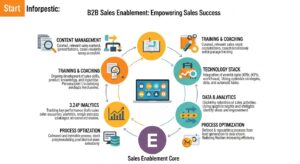
- Comprehensive Sales Training: Conduct intensive training sessions covering product features, benefits, use cases, competitive differentiators, and common objections.
- Sales Enablement Materials:
- Sales Playbooks: Step-by-step guides for different sales scenarios.
- Battlecards: Quick reference guides for competitive advantages and objection handling.
- Demo Scripts: Standardized yet flexible scripts for product demonstrations.
- Case Studies & Testimonials: Real-world examples of success.
- Pricing Guides & ROI Calculators: Tools to help prospects understand the financial benefits.
- CRM Integration: Ensure your Salesforce or HubSpot CRM is updated with new product information, lead scoring rules, and sales workflows.
- Partner Programs: If leveraging channel partners, ensure they receive the same level of training and access to marketing materials. Establish co-marketing agreements.
Phase 3: Launch Execution – The Moment of Truth
This is the culmination of all your planning. Flawless execution and real-time responsiveness are paramount.
The Big Day & Beyond
The launch isn’t a single event; it’s a coordinated rollout that extends over several weeks.
- Orchestrated Rollout:
- Launch Day: Simultaneously release your press release, update your website/landing pages, send out email announcements, launch ad campaigns, and blast social media channels.
- Webinar/Virtual Event: Host a live product launch event, demo, or Q&A session to generate excitement and answer immediate questions.
- Internal Celebration: Don’t forget to celebrate with your team! Acknowledging their hard work builds morale.
- Real-time Monitoring:
- Website Traffic: Monitor spikes, bounce rates, and conversion paths using Google Analytics 4.
- Social Listening: Track mentions, sentiment, and engagement across all social platforms.
- Ad Performance: Continuously optimize your paid campaigns based on real-time data (CTR, CPC, conversions).
- Server Performance: Ensure your infrastructure can handle the increased traffic.
- Rapid Response Plan: Have a crisis communication plan ready. Who handles negative press? Who responds to customer support inquiries? How do you address technical glitches? Speed and transparency are critical.
Community Engagement & Social Proof Generation
Early adopters are your most powerful advocates. Nurture them.
- Active Engagement: Respond promptly to comments, questions, and feedback across all channels. Show genuine appreciation for early interest.
- Encourage User-Generated Content (UGC): Run contests, create hashtags, and invite users to share their experiences with your product. UGC builds authentic social proof.
- Solicit Reviews & Testimonials: Strategically ask satisfied early customers for reviews on relevant platforms and for testimonials you can use in future marketing. Offer incentives where appropriate.
- Leverage Advocates: Identify your most enthusiastic users and empower them to become brand advocates. Provide them with resources and exclusive access.
Phase 4: Post-Launch – Optimize, Iterate, Dominate
The launch is over, but the work has just begun. This phase is about learning, adapting, and ensuring long-term success.
Performance Analysis & Reporting
Data is your compass. Rigorously analyze your launch performance against your initial KPIs.
- Comprehensive Reporting: Compile detailed reports on all key metrics (traffic, leads, conversions, revenue, media mentions, social engagement, sales pipeline velocity).
- Attribution Modeling: Understand which channels and touchpoints contributed most to your conversions. This informs future budget allocation.
- Qualitative Feedback: Supplement quantitative data with qualitative insights from sales calls, customer support interactions, and direct customer interviews. What are the common questions? What objections frequently arise?
- Competitor Monitoring: Keep a close eye on your competitors’ responses to your launch. Did they adjust their pricing? Launch new features?
Iteration & Optimization
A successful launch is a continuous cycle of improvement.
- A/B Testing: Continuously test different landing page variations, ad creatives, email subject lines, and CTAs to optimize conversion rates.
- Messaging Refinement: Based on market response and feedback, refine your value proposition and messaging. What resonated most? What caused confusion?
- Product Roadmap Adjustments: Feed customer feedback and market data directly into your product development roadmap. Prioritize features that address common pain points or provide significant value.
- Ongoing SEO & Content Updates: Keep your content fresh and relevant. Update blog posts, create new case studies, and ensure your website remains a valuable resource.
Sustained Growth & Market Leadership
A launch is a sprint, but market leadership is a marathon.
- Long-Term Content Strategy: Develop an evergreen content strategy that continually attracts, engages, and converts your target audience.
- Customer Loyalty Programs: Implement strategies to foster customer loyalty, reduce churn, and encourage repeat business (e.g., loyalty points, exclusive access, referral programs).
- Explore New Segments & Extensions: Based on your initial market success, identify opportunities to expand into new customer segments or develop complementary product extensions.
- Continuous Market Intelligence: The market is dynamic. Keep monitoring trends, competitor activities, and customer needs to stay ahead.
Future-Proofing Your Launch: Key 2026 Trends to Embrace
The marketing landscape is evolving at an exhilarating pace. To truly master your market entry in 2026, you must integrate forward-looking strategies.
AI-Powered Personalization & Automation
Artificial intelligence is no longer a futuristic concept; it’s an indispensable marketing partner. By 2026, leveraging AI will be a baseline expectation, not a differentiator.
- Hyper-Personalization: Use AI to analyze vast datasets and deliver highly personalized content, product recommendations, and ad experiences in real-time. Think dynamic landing pages that adapt to visitor segments, or email sequences triggered by specific in-app behaviors.
- Content Creation & Optimization: AI tools can assist with generating initial content drafts, optimizing headlines, and identifying high-performing keywords. This frees up human marketers for strategic thinking.
- Predictive Analytics: AI can forecast customer churn, identify high-value leads, and predict future market trends, allowing for proactive marketing adjustments.
- Automated Customer Service: AI-powered chatbots can handle routine inquiries, freeing up support teams to focus on complex issues and providing instant gratification to customers.
Experiential Marketing & Immersive Technologies
Traditional marketing is giving way to engaging, memorable experiences.
- Virtual Events & Demos: Beyond standard webinars, consider fully immersive virtual launch events using platforms that offer interactive booths, networking lounges, and 3D product showcases.
- Augmented Reality (AR) & Virtual Reality (VR): Explore AR filters for social media or VR experiences that allow prospects to virtually “try out” your product or see it in their environment. This is particularly powerful for B2B products that might be complex or physical.
- Interactive Content: Quizzes, calculators, interactive infographics, and personalized assessment tools drive deeper engagement and provide valuable data.
Ethical Data Use & Privacy Compliance
As data privacy regulations tighten globally (e.g., GDPR, CCPA, and emerging frameworks), trust becomes a paramount currency.
- Transparency & Consent: Be explicit about what data you collect, why, and how it’s used. Make consent mechanisms clear and easy to manage.
- Data Security: Prioritize the security of customer data. Breaches erode trust instantly.
- Privacy-Enhancing Technologies: Explore privacy-preserving analytics and advertising solutions that reduce reliance on third-party cookies.
The Rise of Community-Led Growth
Beyond traditional social media, dedicated product communities are becoming powerful engines for growth, feedback, and advocacy.
- Build & Nurture a Community: Create a space (e.g., on Circle.so, Discord, or a dedicated forum) where users can connect, share tips, ask questions, and provide direct feedback to your product team.
- Leverage Superfans: Identify and empower your most engaged community members. They can become invaluable beta testers, content creators, and brand evangelists.
- Direct Feedback Loop: Communities provide an unparalleled channel for continuous product feedback and validation, helping you iterate and improve rapidly.
Frequently Asked Questions (FAQ)
Q1: How early should I start planning my product launch marketing?
A: You should begin planning your product launch marketing strategy a minimum of 6-9 months before your target launch date, especially for complex B2B products. The pre-launch phase (market research, value proposition refinement, content strategy) is critical and requires significant time to execute thoroughly and effectively. For simpler products, 3-4 months might suffice, but more time always allows for deeper insights and better preparation.
Q2: What’s the biggest mistake businesses make in product launches?
A: The single biggest mistake is failing to conduct thorough market and customer intelligence, leading to a product-market mismatch or a poorly articulated value proposition. This often manifests as launching a product nobody truly needs or one whose benefits aren’t clearly communicated. Another common error is treating the launch as a one-time event rather than a continuous process of engagement, optimization, and iteration.
Q3: How do I measure the ROI of my product launch marketing efforts?
A: Measuring ROI involves tracking your initial investment in launch activities against the revenue generated or strategic goals achieved. Key metrics include Cost Per Acquisition (CPA), Customer Lifetime Value (CLTV), conversion rates from launch campaigns, and the revenue directly attributable to launch-specific leads. Utilize attribution modeling (first-touch, last-touch, multi-touch) in your CRM and marketing automation platforms to understand the contribution of different channels. Consistent tracking of your predefined KPIs against your SMART goals is essential.
Q4: Should I focus more on B2B or B2C tactics for a B2B product launch?
A: While your product is B2B, remember that you’re still selling to individuals within businesses. Therefore, a hybrid approach is often most effective. B2B tactics (e.g., LinkedIn Ads, whitepapers, direct sales enablement, industry events) are crucial for reaching decision-makers and building credibility. However, incorporating B2C-like empathy, compelling storytelling, and a focus on the individual user’s experience (e.g., intuitive UI/UX, strong community engagement) can significantly enhance adoption and advocacy within the target organization.
Q5: What role does AI play in a 2026 product launch?
A: In 2026, AI is transformative across every launch phase. In pre-launch, it powers advanced market research and predictive analytics. During preparation, AI assists with content generation (first drafts), hyper-personalization of messaging, and optimizing ad targeting for maximum efficiency. During execution, AI-driven chatbots enhance customer support, and real-time analytics provide insights for immediate campaign optimization. Post-launch, AI helps with predictive churn analysis and identifying opportunities for sustained growth. Essentially, AI enhances precision, personalization, and efficiency, allowing marketers to make data-backed decisions faster and at scale.
Conclusion
Launching a product in 2026 is an intricate dance of strategy, creativity, and data-driven execution. It’s no longer enough to simply build a great product; you must master the art and science of bringing it to market with precision and impact. By meticulously navigating the pre-launch, preparation, execution, and post-launch phases outlined in this checklist, you position your offering not just to survive, but to thrive amidst the competitive din.
Embrace the power of deep customer intelligence, craft an undeniable value proposition, arm your sales force, and leverage the transformative potential of AI and immersive technologies. Remember, a successful launch isn’t the finish line; it’s the beginning of a continuous journey of optimization, iteration, and sustained growth. Your market entry in 2026 can be your defining moment – but only if you approach it with the strategic rigor and forward-thinking adaptability it demands. Start building your definitive launch plan today, and prepare to dominate your market.
“`json
{
“@context”: “https://schema.org”,
“@graph”: [
{
“@type”: “