The Definitive Word of Mouth Marketing Strategy Guide for 2026: Unleashing Your Brand’s Most Powerful Advocate
Understanding the Modern Word of Mouth Landscape
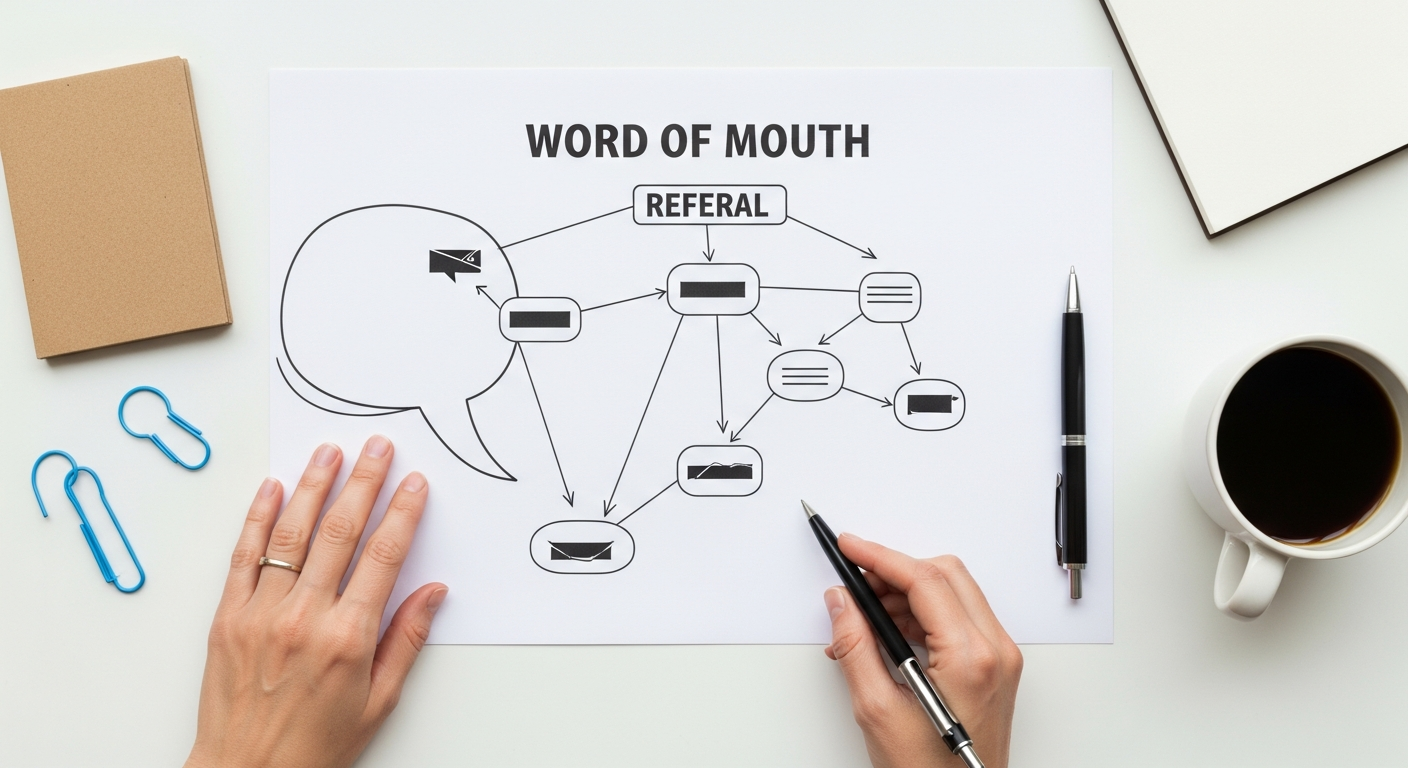
The concept of “word of mouth” has evolved dramatically. While the core principle – one person telling another about a positive experience – remains timeless, the channels and velocity of these conversations have exploded. Today’s WOMM isn’t just a casual chat over coffee; it’s a multi-faceted ecosystem encompassing online reviews, social media mentions, influencer recommendations, community forums, and sophisticated referral programs.
Consumers are savvier and more skeptical than ever. They actively seek out authentic experiences and opinions before making buying decisions. A recent study by Nielsen revealed that 88% of consumers trust recommendations from people they know, while 72% trust online reviews as much as personal recommendations. This seismic shift underscores a critical reality: your brand narrative is no longer solely dictated by your marketing department. It’s shaped, amplified, and validated (or invalidated) by your customers.
For B2B marketers, this is equally true. Business decision-makers are increasingly turning to peer reviews on platforms like G2, Capterra, and TrustRadius, as well as recommendations from their professional networks, before engaging with sales teams. The modern WOMM landscape demands a proactive, integrated strategy that moves beyond simply hoping for referrals to actively facilitating, amplifying, and rewarding customer advocacy. It’s about designing an experience so compelling that people want to talk about it, and then giving them the tools and incentives to do so effectively.
Building the Foundation: An Exceptional Product/Service & Customer Experience
Before you even think about referral programs or review solicitation, you must acknowledge an undeniable truth: you cannot engineer authentic word of mouth for a mediocre product or service. WOMM is a direct reflection of customer satisfaction and delight. If your core offering doesn’t consistently exceed expectations, any attempt to generate advocacy will fall flat, or worse, backfire.
The “WOW!” Factor Checklist: Core Pillars of WOMM-Ready Excellence
- Uncompromising Product/Service Quality: Is your offering truly best-in-class? Does it solve a significant problem, deliver tangible value, and perform reliably? Continuously iterate based on feedback.
- Exceptional Customer Service: This isn’t just about problem-solving; it’s about proactive support, personalized interactions, and going the extra mile. Empower your support teams to delight customers.
- Seamless User Experience (UX/UI): Whether it’s a software interface, a website, or an in-person service flow, simplicity, intuition, and efficiency are paramount. Reduce friction at every touchpoint.
- Compelling Brand Values & Story: People connect with brands that stand for something. What’s your mission? How do you make an impact? A strong, authentic brand narrative provides advocates with something meaningful to share.
- Reliable Post-Purchase Support & Value: Advocacy doesn’t end at the sale. Ongoing support, valuable content, community access, and continuous product improvements keep customers engaged and loyal.
Actionable Tactics for Building Excellence:
- Conduct Regular CX Audits: Map the entire customer journey and identify pain points and opportunities for delight.
- Implement Robust Feedback Loops: Use surveys (NPS, CSAT), interviews, and user testing to constantly gather insights. Tools like Qualtrics, SurveyMonkey, or Typeform are invaluable here.
- Empower Front-Line Teams: Provide training and autonomy for customer-facing staff to resolve issues and create positive experiences.
- Personalize Interactions: Utilize CRM systems (Salesforce, HubSpot, Zoho CRM) to track customer history and tailor communications.
- Focus on Onboarding: For B2B especially, a smooth and effective onboarding process sets the stage for long-term success and advocacy.
By obsessively focusing on delivering outstanding value and an unparalleled customer experience, you lay the indispensable groundwork for genuine, powerful word of mouth.
Activating Your Advocates: Structured Referral Programs
While organic word of mouth is powerful, a structured referral program allows you to actively harness and amplify it. This moves WOMM from a passive hope to a predictable, measurable growth channel. A well-designed referral program incentivizes existing customers to spread the word, offering rewards for both the referrer and the referred, creating a win-win scenario.
The 5-Step Referral Program Launch Framework:
- Define Clear Goals & KPIs: What do you want to achieve?
- Goals: Reduce Customer Acquisition Cost (CAC), increase Customer Lifetime Value (CLTV), expand market reach, boost customer loyalty.
- KPIs: Number of referrals, conversion rate of referred leads, average order value of referred customers, ROI of the referral program.
- Identify Your Ideal Advocates: Not all customers are equal advocates.
- Target: Your most satisfied customers (e.g., those who give high NPS scores), long-term clients, power users, or customers who have already referred others organically.
- How: Segment your customer base using CRM data, survey results, or product usage analytics.
- Craft Compelling Incentives: The right incentives motivate action.
- Two-Sided Incentives: Offer a reward to both the referrer and the new customer. This significantly boosts participation.
- Tiered Rewards: Implement escalating rewards for multiple successful referrals.
- Types of Rewards:
- Monetary (discounts, gift cards, cash)
- Non-Monetary (exclusive access, upgrades, premium features, store credit, charitable donations in their name)
- For B2B: extended service, premium support, co-marketing opportunities, thought leadership exposure.
- Considerations: Keep incentives relevant to your brand and valuable to your audience.
- Choose the Right Platform & Tools: Automate and streamline the process.
- Dedicated Referral Platforms: ReferralCandy, FriendBuy, SaaSquatch, GrowSurf. These tools handle tracking, payouts, and program management.
- CRM Integrations: Ensure your chosen platform integrates seamlessly with your existing CRM (e.g., Salesforce, HubSpot) for lead tracking and customer segmentation.
- Landing Pages: Create dedicated, easy-to-understand landing pages for your referral program.
- Promote & Optimize: Make your program visible and continuously improve it.
- Promotion Channels: Email campaigns, social media posts, in-app notifications, website banners, checkout pages, customer service interactions, email signatures.
- A/B Testing: Experiment with different incentives, messaging, and call-to-actions to find what resonates best with your audience.
- Monitor & Report: Regularly review your KPIs and adjust your strategy based on performance.
Referral Email Template (Structure Idea):
Subject: [Your Company Name] Loves You! Share the Love & Get Rewarded!
Body:
Hi [Customer Name],
We truly appreciate your business and are thrilled to have you as part of the [Your Company Name] family. We’re often told by customers like you how much they value [mention specific benefit/feature].
We believe great things are meant to be shared, so we’re inviting you to become an official advocate!
Introduce a friend or colleague to [Your Company Name], and when they sign up/make a purchase, you’ll both receive [Your Incentive]!
It’s simple:
1. Share your unique referral link: [Your Unique Referral Link]
2. Your friend gets [Friend’s Incentive] on their first [purchase/subscription/service].
3. You get [Your Incentive] once they complete their action.
Thank you for helping us grow!
Best,
The Team at [Your Company Name]
By implementing a structured referral program, you transform casual recommendations into a powerful, measurable engine for growth. Statistics show that referred customers often have a higher lifetime value and lower churn rate, making these programs a significant ROI driver.
Amplifying Online Mentions: Reviews, Social Proof, and User-Generated Content (UGC)
In the digital age, word of mouth extends far beyond direct referrals. Online reviews, social media mentions, and user-generated content (UGC) act as public endorsements, influencing countless potential customers. For businesses, mastering this aspect of WOMM is crucial, as 93% of consumers say online reviews influence their purchasing decisions.
The “Amplify & Engage” Strategy:
- Proactively Solicit Reviews: Don’t wait for reviews to happen; ask for them strategically.
- Timing: Ask after a positive interaction, successful onboarding, or after a customer has experienced the value of your product/service.
- Channels: Email campaigns, in-app prompts, post-purchase follow-ups, QR codes on physical products.
- Platforms:
- B2C: Google My Business, Yelp, Trustpilot, industry-specific review sites.
- B2B: G2, Capterra, TrustRadius, Google Workspace Marketplace, Salesforce AppExchange.
- Tools: Review management platforms like Birdeye, Podium, or Reputation.com can automate requests and consolidate reviews.
- Monitor & Respond to All Reviews (Positive & Negative): Engagement builds trust and shows you care.
- Positive Reviews: Thank the customer, acknowledge their specific feedback, and reiterate your commitment to excellence. This encourages more reviews.
- Negative Reviews: Respond promptly, professionally, and empathetically. Acknowledge the issue, apologize, and offer a path to resolution (e.g., “Please contact us directly at…”). A well-handled negative review can turn a detractor into an advocate.
- Tools: Social listening tools (Sprout Social, Brandwatch, Hootsuite) help track mentions across platforms.
- Showcase Social Proof Prominently: Make it easy for prospects to see what others are saying.
- Website: Dedicate sections for testimonials, case studies, customer logos, and star ratings. Use tools like Trustpilot or G2 widgets.
- Marketing Materials: Integrate quotes and success stories into sales decks, landing pages, and email campaigns.
- Awards & Badges: Display any industry recognition or “best of” awards prominently.
- Encourage User-Generated Content (UGC): Leverage your customers’ creativity.
- Contests: Run photo or video contests using branded hashtags.
- Challenges: Encourage customers to share how they use your product/service in creative ways.
- Features: Regularly feature customer posts, stories, and videos on your official social channels (with permission).
- Tools: UGC platforms like Yotpo or TINT help collect, curate, and display content.
- Leverage Influencers & Micro-Influencers Authentically: Partner with voices your audience trusts.
- Focus on Authenticity: Seek out individuals whose values align with your brand and who genuinely appreciate your product/service.
- Micro-Influencers: Often have higher engagement rates and more niche, dedicated audiences than mega-influencers.
- Disclosure: Always ensure full transparency regarding sponsored content.
By actively managing and amplifying online mentions, you build a powerful reservoir of social proof that serves as a constant, credible source of word of mouth, driving trust and conversions.
Building Community & Fostering Belonging
Word of mouth thrives in environments where people feel connected, valued, and part of something larger than themselves. Building a strong community around your brand transforms individual customers into a collective of loyal advocates. This strategy moves beyond transactional relationships to emotional connections, fostering deeper loyalty and more consistent advocacy.
Tactics for Cultivating Brand Community:
- Create Dedicated Online Spaces:
- Forums/Groups: Host private Facebook Groups, LinkedIn Groups, Slack channels, or Discord servers where customers can connect, share tips, and ask questions. For B2B, these can be invaluable for peer-to-peer learning and networking.
- Benefits: Provides a platform for organic discussion, peer support, and direct feedback to your team.
- Host Exclusive Events & Content:
- Webinars/Workshops: Offer advanced training or behind-the-scenes insights exclusively for loyal customers.
- Meetups/Conferences: Organize virtual or in-person gatherings that foster networking and celebrate your community.
- Early Access: Provide loyal customers with early access to new features, products, or beta programs.
- Implement a Brand Ambassador Program:
- Identify Super-Advocates: Recruit your most enthusiastic and engaged customers to officially represent your brand.
- Provide Tools & Training: Equip ambassadors with marketing materials, product knowledge, and exclusive perks.
- Benefits: Ambassadors act as trusted voices, extending your reach and credibility in authentic ways.
- Facilitate Co-Creation Opportunities:
- Beta Testing: Involve customers in the development process of new products or features.
- Feedback Panels: Regularly consult with a select group of customers for in-depth insights and validation.
- User-Generated Content Campaigns: Actively solicit and feature content created by your community.
- Recognize and Reward Engagement:
- Spotlight Customers: Feature customer success stories, testimonials, or profiles on your blog, social media, or in newsletters.
- Gamification: Implement leaderboards, badges, or points for active participation in your community.
- Personalized Thank Yous: Send handwritten notes, small gifts, or personalized video messages to highly engaged community members.
By investing in community building, you transform customers into active participants in your brand’s journey. This fosters a sense of ownership and belonging, making them far more likely to advocate for you organically and enthusiastically.
Measuring & Optimizing Your WOMM Strategy
A strategic approach to Word of Mouth Marketing requires robust measurement and continuous optimization. Without tracking key metrics, your efforts remain unquantified and your potential for improvement untapped. Remember, what gets measured gets managed.
Key Metrics for WOMM Success:
- Net Promoter Score (NPS): Your primary indicator of customer loyalty and willingness to recommend.
- How to Measure: “On a scale of 0-10, how likely are you to recommend [Company/Product/Service] to a friend or colleague?”
- Action: Track trends, identify detractors and promoters, and follow up to gather qualitative feedback.
- Customer Lifetime Value (CLTV): Referred customers often have a higher CLTV.
- How to Measure: Compare CLTV of referred customers versus non-referred customers.
- Action: If referred CLTV is higher, it validates your WOMM investment.
- Customer Acquisition Cost (CAC) for Referred Customers: WOMM typically lowers CAC.
- How to Measure: Calculate the cost of your referral program (incentives, platform fees) divided by the number of referred customers. Compare this to your overall CAC.
- Action: Aim to keep referral CAC significantly lower than other channels.
- Referral Conversion Rate: How effectively do referred leads turn into customers?
- How to Measure: (Number of referred customers / Number of referred leads) * 100.
- Action: Optimize landing pages, follow-up processes, and incentives to improve this rate.
- Social Mentions & Engagement: Track brand visibility and interaction.
- How to Measure: Number of mentions, shares, likes, comments, and sentiment analysis across social media platforms.
- Tools: Sprout Social, Brandwatch, Mention, Awario.
- Action: Identify trending topics, engaging content, and advocate hotspots.
- Review Volume & Sentiment: Quantity and quality of online reviews.
- How to Measure: Total number of reviews, average star rating, and sentiment analysis of review content.
- Tools: Birdeye, Podium, Reputation.com, Google My Business insights.
- Action: Prioritize increasing positive reviews and addressing negative ones.
- Website Traffic from Referral Sources: Direct impact of referral links.
- How to Measure: Use UTM parameters on referral links and track in Google Analytics (or equivalent).
- Action: Analyze which referral channels are most effective.
Continuous Optimization:
- A/B Test Incentives: Experiment with different reward structures (e.g., monetary vs. non-monetary, tiered vs. flat).
- Refine Messaging: Test different calls to action and value propositions in your referral program communications and review requests.
- Segment Your Advocates: Offer tailored referral programs or advocacy opportunities to different customer segments based on their loyalty or product usage.
- Gather Qualitative Feedback: Conduct interviews or focus groups with advocates to understand their motivations and identify areas for improvement.
- Stay Agile: The digital landscape is always changing. Be prepared to adapt your WOMM strategy to new platforms, trends, and consumer behaviors.
By meticulously tracking these metrics and committing to continuous optimization, you can transform your WOMM strategy into a highly efficient, data-driven growth engine for your business.
Conclusion
In a future where digital noise only intensifies, the human element of trust and genuine recommendation will become the ultimate differentiator. Word of Mouth Marketing is not a fleeting trend; it is the most enduring, authentic, and cost-effective growth strategy available to businesses. It moves beyond fleeting campaigns, building a sustainable engine fueled by the passion and loyalty of your own customers.
By committing to an exceptional product and customer experience, strategically activating your advocates through referral programs, amplifying their voices through online reviews and UGC, and fostering a vibrant brand community, you unlock unparalleled growth. This isn’t just about getting more customers; it’s about acquiring the right customers – those who arrive pre-sold, stay longer, and spend more, all while becoming your most powerful marketing asset.
The time to build your strategic Word of Mouth Marketing program is now. Start small, focus on delighting your existing customers, measure your efforts, and iterate. Embrace the power of your advocates, and watch as they transform your brand’s trajectory in 2026 and for years to come.