
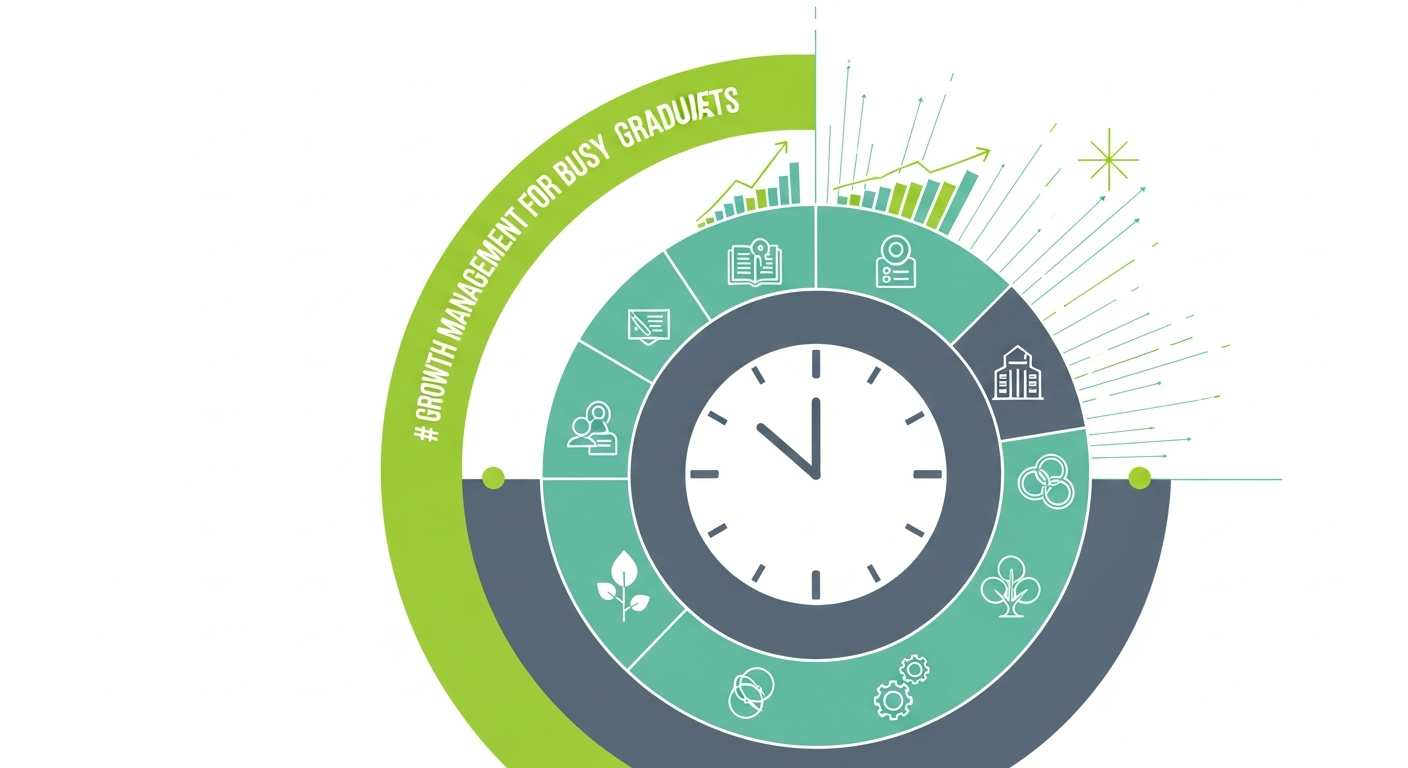
Master Your Minutes: The Ultimate Guide to Time Management for Busy Graduates
The transition from the structured environment of a university campus to the unpredictable landscape of the professional world is often a jarring experience. As a recent graduate, you are likely juggling entry-level career demands, the complexities of financial independence, and the pursuit of a meaningful social life. By 2026, the pace of the global economy has only accelerated, demanding that young professionals become masters of their most finite resource: time. Managing your schedule isn’t just about ticking off a to-do list; it is a fundamental life skill that dictates your mental health, your net worth, and your long-term career trajectory. Many graduates find themselves “busy” without being “productive,” a trap that leads to burnout and stagnation. This guide explores the sophisticated time management strategies necessary for the modern graduate, offering a roadmap to reclaiming your hours and building a foundation for a prosperous, balanced life.
1. The Philosophy of Essentialism: Focus on What Moves the Needle
In your first few years post-graduation, the temptation to say “yes” to everything is overwhelming. You want to impress your boss, attend every networking event, and maintain your college friendships. However, the most successful graduates in 2026 are those who embrace Essentialism—the disciplined pursuit of less but better.
To master your time, you must apply the Pareto Principle, or the 80/20 rule. This concept suggests that 80% of your results come from 20% of your activities. For a busy graduate, this means identifying which tasks at work actually contribute to your performance reviews and which social engagements actually bring you joy and professional growth.
Start by auditing your week. Are you spending hours on “shallow work”—answering non-urgent emails, scrolling through LinkedIn, or attending optional meetings—while neglecting the “deep work” that requires intense concentration? By shifting your focus to high-impact tasks, you create a compounding effect on your career. This isn’t just about professional output; it’s about financial wisdom. Time spent mastering a high-value skill or side hustle is an investment that yields much higher returns than time spent on low-level administrative chores. In 2026, the market rewards specialists and those who can solve complex problems, not just those who look busy.
2. Strategic Financial Time Management: Automating the Admin
One of the biggest “time-sinks” for young adults is the management of personal finances. Between student loan repayments, budgeting for rising rent, and navigating investment options, the cognitive load can be exhausting. Effective time management for graduates must include a strategy for “Financial Time Management.”
The key is automation. In 2026, the integration of AI-driven financial tools has made it easier than ever to remove the manual labor from your money management. Set up automatic transfers for your savings, investments, and bill payments the day after your paycheck arrives. This “set it and forget it” mentality saves you hours every month that would otherwise be spent agonizing over spreadsheets or worrying about late fees.
Furthermore, view your time through a monetary lens. If you are spending four hours a week searching for coupons to save $10, but your hourly value (or potential side-hustle rate) is $30, you are effectively losing money. Busy graduates must learn when to outsource or use technology to handle repetitive tasks. This mindset shift—treating your time as your primary capital—is what separates those who struggle paycheck-to-paycheck from those who build wealth early in their careers.
3. Leveraging the 2026 Tech Stack for Peak Productivity
As we navigate 2026, the tools available for time management have evolved far beyond simple paper planners. For the busy graduate, your digital environment is either an asset or a liability. To stay ahead, you must curate a tech stack that minimizes friction and maximizes output.
* **AI Integration:** Use AI assistants to draft initial emails, summarize long industry reports, or organize your meeting notes. This isn’t “cheating”; it is efficiency. By delegating the first draft of your work to technology, you can spend your time on the high-level editing and strategic thinking that humans do best.
* **Time Blocking and Digital Calendars:** Move away from the traditional to-do list, which often grows indefinitely. Instead, use “time blocking.” Assign every task a specific slot in your digital calendar. If a task doesn’t have a time slot, it doesn’t exist. This forces you to be realistic about how much you can actually achieve in 24 hours.
* **Batching and Context Switching:** One of the greatest productivity killers is context switching—the act of jumping from an email to a project to a phone call. Use your tools to “batch” similar tasks. Check emails only twice a day, and use “Focus Mode” on your devices to silence notifications during your deep-work blocks. By 2026, the “always-on” culture has proven to be a myth; the most productive professionals are those who know how to disconnect and focus.
4. Setting Boundaries: The Art of Protecting Your Energy
Time management is often discussed as a logistical challenge, but for the modern graduate, it is a psychological one. You cannot manage your time if you cannot manage your boundaries. In a hybrid or remote work world, the lines between “home” and “office” are increasingly blurred.
Learning to say “no” is perhaps the most difficult yet essential life skill for a young adult. This applies to the workplace—where you must learn to push back on unrealistic deadlines or low-priority projects—and to your personal life. Social burnout is a real threat to your productivity. If you are spending your weekends at events you don’t enjoy, you aren’t resting. Without rest, your Monday-through-Friday performance will suffer, leading to longer work hours and a vicious cycle of exhaustion.
Establish “hard stops” for your workday. By 2026, many forward-thinking companies have realized that well-rested employees are more efficient. If you are a freelancer or a side-hustler, this is even more critical. Designate a “shutdown ritual” where you close your laptop and physically move away from your workspace. Protecting your energy ensures that the hours you *do* work are high-intensity and high-quality, rather than a long, sluggish slog.
5. Habit Stacking and the Power of Routine
For a busy graduate, the sheer number of daily decisions can lead to decision fatigue. What should I eat? When should I gym? When do I work on my budget? Each of these questions eats away at your mental energy. The solution is the implementation of “Habit Stacking,” a concept popularized by James Clear but highly relevant for the 2026 professional.
Habit stacking involves taking a habit you already have (like drinking coffee in the morning) and “stacking” a new, productive habit on top of it (like reviewing your top three priorities for the day). By creating these routines, you move your most important tasks into the realm of the automatic.
Consider a morning routine that incorporates both personal growth and financial health. While you eat breakfast, you could listen to a 10-minute financial news podcast. While you commute, you could use voice-to-text to brainstorm ideas for a work project. These “micro-habits” don’t feel like a burden because they are integrated into your existing life. Over a year, the graduate who spends 15 minutes a day on professional development will be lightyears ahead of the one who relies on occasional bursts of motivation. Consistency, fueled by a well-managed routine, is the “secret sauce” of long-term success.
6. Long-Term Visioning: The “Quarterly Review” for Life
Finally, time management for graduates must extend beyond the daily and weekly scope. It is easy to get so caught up in the “busy-ness” of your 20s that you look up in five years and realize you haven’t moved toward your actual goals. In 2026, the most successful young adults treat their lives like a startup, conducting “Quarterly Reviews.”
Every three months, take a half-day to step back from the grind. Look at your finances, your career progression, and your personal health. Ask yourself: “Is the way I am spending my time today leading me to where I want to be in 2030?”
This high-level perspective allows you to course-correct. Maybe you realize you’ve been spending too much time on a dead-end project at work, or perhaps your social life has completely eclipsed your fitness goals. Adjusting your “time budget” quarterly ensures that your daily actions are aligned with your long-term values. Graduates who practice this level of intentionality are far more likely to achieve financial independence and career satisfaction early in life. They don’t just “find” time; they *create* it for the things that matter most.
***
#
FAQ: Time Management for Busy Graduates
**Q1: How do I manage my time if my entry-level job requires long, unpredictable hours?**
Focus on “controlled inputs.” While you may not control your work hours, you can control your morning routine or how you spend your lunch break. Use “micro-productivity”—breaking tasks into 10-minute segments—so you can make progress even during small windows of downtime.
**Q2: I feel guilty when I’m not being productive. How do I stop “toxic productivity”?**
Understand that rest is a prerequisite for productivity, not a reward for it. In the 2026 professional landscape, burnout is a major career setback. Schedule your “do-nothing” time into your calendar just like a meeting. If it’s scheduled, it’s a commitment to your long-term health, not “laziness.”
**Q3: What are the best apps for time management in 2026?**
Look for tools that offer cross-platform integration and AI assistance. Notion remains excellent for project management, while apps like Sunsama or Akiflow are great for merging your calendar with your to-do lists. For financial time management, AI-driven tools like Copilot or YNAB (You Need A Budget) are essential.
**Q4: How can I balance a side hustle with a full-time career without losing my mind?**
The key is “strict partitioning.” Dedicate specific days or hours solely to the side hustle (e.g., Tuesday nights and Saturday mornings). Avoid letting side-hustle tasks bleed into your 9-to-5, as this causes cognitive drag and reduces your efficiency in both roles.
**Q5: Is it possible to have a social life and still be highly productive?**
Yes, but it requires “social batching.” Instead of several small mid-week hangouts that disrupt your sleep and routine, aim for one or two high-quality social events on the weekend. Quality over quantity ensures you stay connected without compromising your career or financial goals.
***
#
Conclusion: Your Time is Your Legacy
Mastering time management as a busy graduate is not about becoming a robot; it is about gaining the freedom to live the life you envisioned when you walked across the graduation stage. By 2026, the world has become a place of infinite distractions and high demands, but for the graduate who applies Essentialism, leverages modern technology, and sets firm boundaries, the opportunities are boundless.
Remember that time is the only asset you cannot earn back. While you can always make more money or find a new job, the way you spend your 20s sets the trajectory for the rest of your life. By treating your time with the same respect you treat your finances, you are investing in a future of autonomy, wealth, and fulfillment. Start small, build your routines, and never forget that you are the architect of your own schedule. The transition from a “busy graduate” to a “productive professional” begins with the very next hour. Use it wisely.