
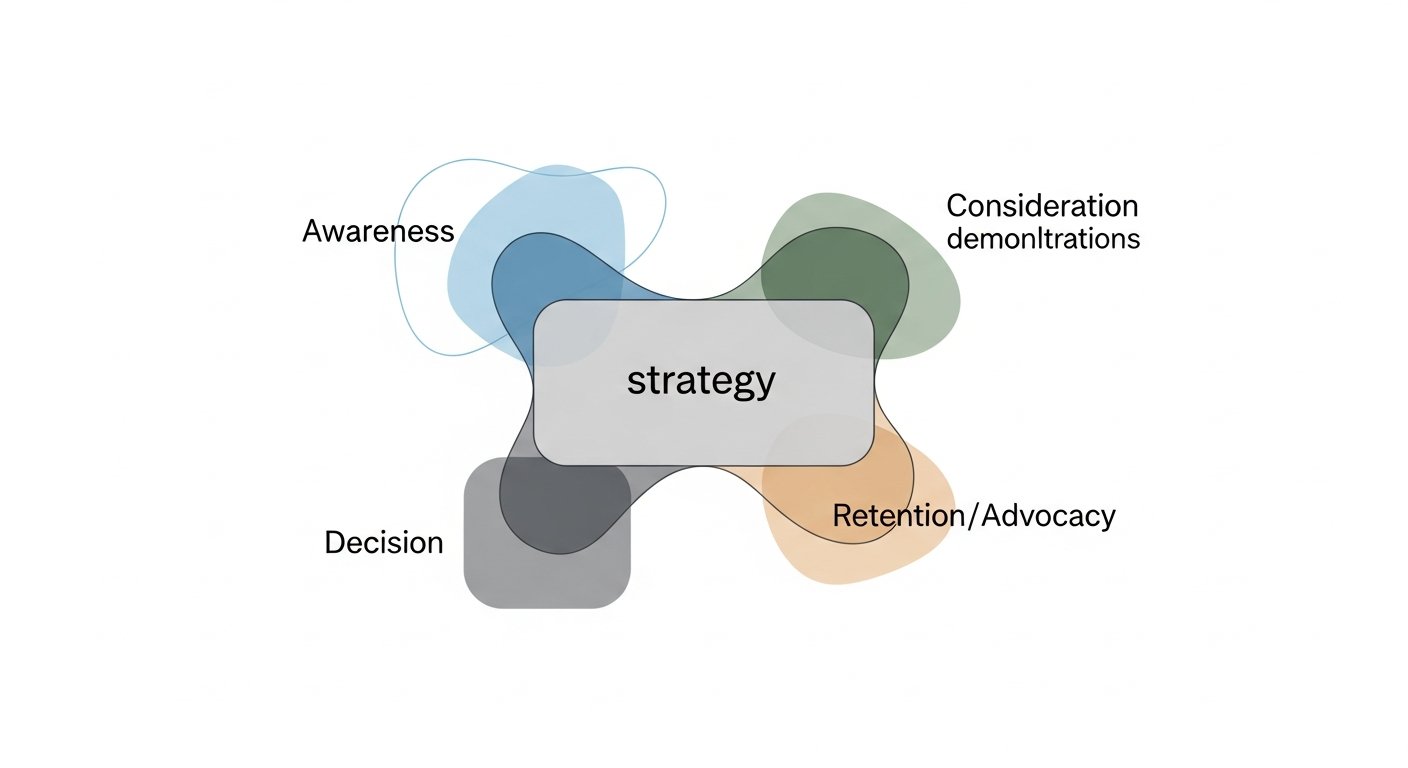
Updated April 2026. Developing a high-impact B2B video marketing strategy requires more than just decent camera equipment and an active corporate social presence. It involves a systematic approach to leveraging visual narratives to capture executive attention, drive lead generation, and ultimately fuel professional and business growth.
For modern enterprises, the traditional playbook of text-heavy whitepapers and endless PDF reports is increasingly yielding diminishing returns. Decision-makers are overwhelmed with data but starved for clarity. Visual content acts as a powerful bridge, translating complex industrial solutions or multi-tiered SaaS architectures into digestible, compelling formats. When executed effectively, business-to-business visual campaigns align perfectly with the modern buyer’s journey, accelerating trust and shrinking lengthy sales cycles. This comprehensive pillar page will break down the essential components of building a corporate media blueprint, moving from high-level planning and creative asset development through to precise distribution and rigorous return-on-investment measurement.
What Defines a Successful Corporate Video Approach?
Defining a corporate video approach requires looking beyond individual asset creation. At its foundation, it is the deliberate alignment of visual storytelling with specific enterprise growth objectives. By establishing a clear visual framework, organizations can ensure every piece of media serves a distinct commercial purpose.
Accelerating the Modern Buyer Journey
According to a 2024 industry report by Wyzowl, 87% of business-to-business marketers report that moving images give them a positive return on investment. Consider a scenario where an enterprise software company replaces its dense 5,000-word implementation guide with a fast-paced, 2-minute executive summary video. Because visual processing circumvents the heavy executive cognitive load associated with reading technical documents, C-suite prospects are able to absorb the core value proposition during a brief commute. Visual mediums bypass the friction of text, establishing immediate context.
This shift from text to motion directly supports professional and business growth by rapidly expanding the top of the funnel. When a corporate media content approach is firmly rooted in foundational B2B marketing frameworks, it ensures that every frame recorded serves a deliberate commercial purpose, whether that is capturing a new market segment or nurturing highly qualified leads.
The Role of Strategic Planning in Visual Success

A meticulously crafted blueprint separates high-performing enterprise media content tactics from expensive, disjointed media projects. Rigorous pre-production planning is the anchor for sustained professional and business growth, ensuring that creative execution aligns perfectly with overarching commercial goals.
Mapping Content to Buyer Nuance
Mapping specific visual topics to precise stages of the sales funnel works effectively because a buyer in the initial awareness phase needs urgent problem-identification validation, whereas a procurement officer in the decision phase requires rigid technical proof. If an industrial manufacturing firm creates highly targeted 15-second pre-roll ads addressing localized supply chain bottlenecks and shows them exclusively to logistics managers on LinkedIn, the relevance is immediate. Unsurprisingly, organizations that actively align their visual assets with established buyer journey stages close enterprise deals 24% faster (Forrester, 2026).
Allocating resources for content production requires understanding these nuances to ensure maximum capital efficiency.
[INLINE IMAGE 2: A flowchart detailing the enterprise video planning cycle from audience segmentation and funnel mapping to budget allocation.]
Types of Enterprise Video Assets and When to Apply Them
The execution phase of business-to-business visual campaigns involves selecting the right formats to address specific audience pain points. Different stages of the buyer’s journey require distinct narrative structures to effectively move prospects down the funnel.
Choosing the Right Format for Growth
Imagine a cybersecurity vendor producing a client testimonial where a real CTO walks through the exact dashboard interface they used to thwart a live ransomware attack. By seeing the software in action during a high-stakes scenario, the prospective buyer mentally test-drives the platform, completely removing the abstract friction typically associated with enterprise software purchases. This visceral connection explains why product demonstration recordings boost landing page conversion rates by up to 86% (Unbounce, 2026).
| Video Type | Primary Purpose | Target Funnel Stage | Impact on Professional and Business Growth |
|---|---|---|---|
| Explainer Animations | Simplify complex concepts rapidly | Top of Funnel (Awareness) | Drives broader brand awareness and initial lead capture |
| Client Testimonials | Build peer-to-peer trust | Middle of Funnel (Consideration) | Increases win rates by leveraging social proof |
| Product Walkthroughs | Demonstrate specific functionality | Bottom of Funnel (Decision) | Reduces sales cycle length and buyer hesitation |
| Thought Leadership | Establish industry authority | Post-Sale (Retention/Upsell) | Fosters long-term loyalty and expands account value |
Deploying these distinct formats purposefully ensures that every stage of the prospect’s journey is supported by relevant, high-quality visual reinforcement.
The Mechanics of Distributing Corporate Media Assets

Producing exceptional visual content is irrelevant if it remains unseen. Utilizing strategic distribution channels is the engine that connects creative efforts to tangible business growth, ensuring your media reaches the right decision-makers at the right time.
Maximizing Organic and Paid Reach
Emails containing a clear media thumbnail experience a massive 300% increase in click-through rates (Campaign Monitor, 2022). A static thumbnail overlay featuring a prominent play button serves as a powerful psychological trigger; it promises the recipient a high-information, low-effort experience compared to digesting a traditional wall of text. Consider a scenario where an enterprise account executive uses a specialized webcam tool to record a personalized 30-second greeting, dropping the dynamic thumbnail directly into a cold outreach message. This approach instantly humanizes the interaction and frequently establishes rapport with previously unresponsive enterprise buyers.
Integrating visual media into corporate email cadences is just one facet. Amplifying assets across LinkedIn natively, utilizing targeted YouTube pre-roll, and embedding players strategically on high-converting website landing pages ensures that the visual content works tirelessly across multiple touchpoints.
[INLINE IMAGE 4: A comparison diagram showing organic versus paid video distribution channels and their respective reach potential in the corporate sector.]
How Do You Measure ROI on Visual Campaigns?
To sustain professional and business growth, subjective opinions on visual content must be replaced by hard, quantifiable data. Leveraging advanced visual campaign analytics allows organizations to tie creative output directly to pipeline generation and revenue.
Moving Beyond Vanity Metrics
Tracking simple view counts only provides surface-level validation. Measuring precise engagement drop-off reveals exactly where the messaging loses resonance with the audience, allowing the marketing team to make precise editorial adjustments. For example, if an analytics dashboard shows that 70% of viewers stop watching a software platform overview precisely at the 45-second mark, the strategic move is to reposition the critical pricing and integration discussion to the very beginning of the timeline before attention wanes. According to a 2026 Gartner report, B2B organizations that actively track lower-funnel visual metrics, such as pipeline generated and direct lead capture from in-player forms, report a 40% higher marketing budget approval rate from their executive boards.
By evaluating the true return of your content investments through CRM integrations and advanced player analytics, marketing departments transform their visual assets from an unquantifiable art form into a predictable revenue generation engine.
Categories of Common Pitfalls in Corporate Media Production
Even well-funded enterprise media campaigns can falter if structural execution flaws are present. Recognizing and overcoming enterprise media challenges is essential for protecting marketing investments and ensuring a high return on creative spend.
Avoiding Strategic Disconnects
When a technology firm spends $15,000 on a sweeping, cinematic brand anthem but subsequently buries it on a secondary ‘About Us’ page without any accompanying lead capture form, the campaign will inevitably generate zero measurable pipeline. Without a clear directive telling the viewer what to do next, the emotional momentum generated by the visual narrative dissipates entirely. HubSpot (2026) data reveals that 62% of business-to-business media campaigns fail to meet initial lead goals strictly due to a lack of defined post-viewing action steps.
- What failure looks like: Uploading a 45-minute unedited webinar recording directly to YouTube with a generic title and no timestamps, resulting in single-digit retention rates.
- What success looks like: Breaking that same webinar into ten distinct 2-minute micro-clips, each optimized with native captions and distributed across LinkedIn over a three-week period.
- Relying on outdated tools: Failing to use automated software platforms to trigger specific follow-up sequences based on how much of a prospect watched.
Mitigating these pitfalls requires prioritizing buyer utility and seamless user experience over pure cinematic aesthetic.
What Future Trends Will Drive Business Growth?

The landscape of corporate visual media is rapidly evolving, driven by technological advancements that favor hyper-personalization and immersive experiences. Staying ahead of future trends in corporate media is critical for maintaining a competitive edge.
The Rise of Interactive Experiences
Interactive visual elements are projected to increase user engagement metrics by up to 45% over the next two years (Demand Gen Report, 2026). Interactive hotspots transform traditionally passive viewing into active participation because they allow prospects to self-qualify by navigating directly to the features most relevant to their unique operational use cases. Imagine a user watching a cloud infrastructure overview who clicks an on-screen branching path labeled ‘I am a backend developer’; the player seamlessly transitions into deep API documentation and technical specifications, completely bypassing the high-level marketing fluff intended for executives.
Future iterations of enterprise content tactics will heavily leverage AI-driven personalization, generating custom visual greetings and dynamic product walkthroughs at scale. Staying ahead of these technological shifts ensures that your visual communication remains a potent catalyst for long-term professional and business growth.
Sources & References
- Wyzowl. (2024). The State of Video Marketing.
- Forrester Research. (2026). B2B Buyer Journey Mapping and Content Alignment.
- Unbounce. (2026). The Conversion Benchmark Report.
- Campaign Monitor. (2022). Ultimate Email Marketing Benchmarks.
- Gartner. (2026). CMO Spend Survey: Content Marketing Metrics.
- HubSpot. (2026). State of Inbound Marketing Trends.
- Demand Gen Report. (2026). B2B Content Preferences Survey.
Reviewed by Julian Vance, Senior Content Strategist — Last reviewed: April 15, 2026
For more on social bookmarking strategies that help B2B teams curate and share high-value industry content, see bookmarksharer.com.