
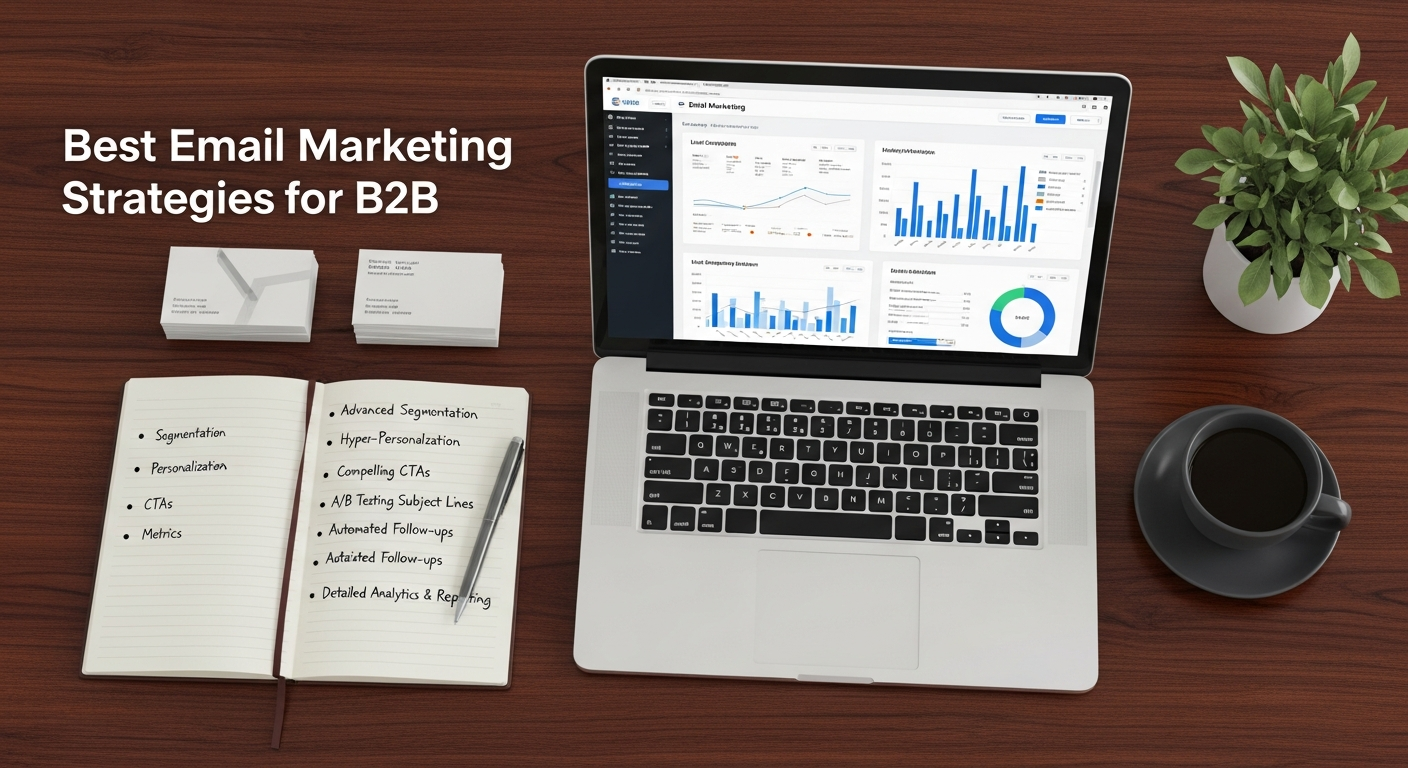
The Enduring Power of B2B Email Marketing in 2026
Despite the proliferation of new digital channels, email marketing continues to reign supreme for B2B companies. Its direct, personal, and measurable nature makes it an indispensable tool for engaging with decision-makers and influencing the complex B2B buying cycle. Unlike the fleeting nature of social media posts or the interruption of outbound calls, email allows for a sustained conversation, delivering targeted value directly to an interested prospect’s inbox.
- Exceptional ROI: Email marketing consistently delivers one of the highest returns on investment among all marketing channels. For B2B, where deal sizes are larger and customer lifetime value is higher, even marginal improvements in engagement can translate into substantial revenue gains.
- Direct Communication Channel: Email provides a direct line to your audience, bypassing algorithmic gatekeepers and ensuring your message has a chance to be seen. In a B2B context, this directness is crucial for building trust and establishing authority with professionals who value clear, concise communication.
- Personalization at Scale: Modern email marketing platforms allow for sophisticated segmentation and personalization, enabling businesses to tailor messages to specific industries, roles, pain points, or stages in the buyer journey. This level of customization resonates deeply with B2B audiences, who are looking for solutions relevant to their unique challenges.
- Data-Driven Optimization: Every email campaign generates a wealth of data – open rates, click-through rates, conversion rates, unsubscribe rates. This data provides invaluable insights into what resonates with your audience, allowing for continuous refinement and optimization of your strategies for 2026 and beyond.
- Foundation for Nurturing: B2B sales cycles are often long and involve multiple stakeholders. Email marketing is perfectly suited for nurturing leads over extended periods, providing valuable content, answering potential questions, and gently guiding prospects towards a purchasing decision without being overly pushy.
The key to harnessing this power lies not just in sending emails, but in developing strategic, data-informed campaigns that genuinely serve the needs of your B2B audience.
Building a Robust B2B Email List: Quality Over Quantity
The foundation of any successful email marketing strategy is a high-quality, engaged email list. For B2B, this means focusing intently on building a list composed of legitimate prospects who have expressed genuine interest in your offerings. Simply acquiring a large number of email addresses is futile if those addresses belong to individuals who are not decision-makers, are outside your target industry, or have no need for your services.
Ethical and Effective List Building Strategies:
-
Lead Magnets Tailored for B2B: Offer valuable resources that solve specific pain points for your target audience.
- Whitepapers and E-books: In-depth guides on industry challenges, emerging trends, or best practices.
- Webinars and Online Workshops: Live or on-demand sessions providing expert insights and practical skills.
- Case Studies: Demonstrations of how your solution has helped other businesses achieve tangible results.
- Templates and Toolkits: Practical resources that save prospects time and effort.
- Industry Reports & Data: Proprietary research that offers unique insights.
These should be gated content, requiring an email address (and perhaps other qualifying information like company name, role, industry) for access.
- Website Opt-in Forms: Strategically place clear, compelling opt-in forms on your website, blog posts, and landing pages. Use clear calls-to-action (CTAs) that explain the value subscribers will receive.
- Content Syndication: Partner with reputable industry publications or platforms to share your gated content, expanding your reach to their established B2B audience.
- Event & Conference Sign-ups: Collect email addresses from attendees at industry events, webinars, or virtual summits, always ensuring explicit consent.
- CRM Integration: Seamlessly integrate your email marketing platform with your Customer Relationship Management (CRM) system. This ensures that new leads from sales inquiries, demo requests, or other interactions are automatically added to relevant email lists, maintaining a unified view of your customer journey.
Crucially, always prioritize compliance with data privacy regulations like GDPR, CCPA, and CAN-SPAM. Obtain explicit consent for email communication, provide clear unsubscribe options, and protect subscriber data. A clean, consented list not only ensures compliance but also significantly improves deliverability and engagement rates.
Crafting Compelling Content for B2B Audiences
Understanding the B2B Buyer Journey:
B2B purchasing decisions are often complex, involving multiple stakeholders and extended evaluation periods. Your email content must align with the different stages of this journey:
- Awareness Stage: Focus on educational content that addresses general industry challenges or pain points without explicitly promoting your product. Think blog summaries, industry trends, expert interviews.
- Consideration Stage: Provide content that introduces your solutions as viable options. This could include whitepapers comparing solutions, detailed guides on specific methodologies, or invitations to webinars demonstrating capabilities.
- Decision Stage: Offer content that helps prospects make a final choice. Case studies, testimonials, demo offers, pricing guides, and direct consultations are highly effective here.
Types of High-Impact B2B Email Content:
- Educational Nurture Sequences: A series of emails that deliver valuable, problem-solving content over time, guiding prospects through the buyer journey. These should be automated and triggered by specific actions or lead scores.
- Thought Leadership & Industry Insights: Share your company’s unique perspective on industry challenges, future trends (e.g., looking ahead to 2026), and innovative solutions. This builds credibility and positions you as an expert.
- Product Updates & Feature Announcements: Keep existing customers and engaged prospects informed about new features, enhancements, or how they can leverage your product more effectively.
- Event Invitations & Follow-ups: Promote webinars, virtual conferences, or in-person events, and then follow up with attendees and registrants with relevant resources.
- Customer Success Stories & Testimonials: Show, don’t just tell. Real-world examples of how your solution has delivered value are incredibly persuasive.
- Personalized Recommendations: Based on past interactions or known interests, recommend specific content, features, or services.
When crafting content, consider how it contributes to the overall efficiency and How To Improve Employee Productivity within your client’s organization. For instance, an email series demonstrating how your software streamlines a particular workflow directly addresses productivity concerns. Similarly, providing quick tips or resources that help their teams work smarter can be highly valued. Your email content should consistently deliver value, making the recipient feel that opening your emails is a productive use of their time, directly contributing to their professional growth or business success.
Remember to keep your emails concise, scannable, and actionable. Use clear subject lines, compelling body copy, and a single, strong Call-to-Action (CTA) per email to guide the reader to the next step.
Advanced Segmentation and Personalization Strategies
Generic, one-size-fits-all emails are ineffective in the B2B world. Advanced segmentation and hyper-personalization are not just nice-to-haves; they are essential for achieving high engagement and conversion rates. By delivering the right message to the right person at the right time, you significantly increase the relevance and impact of your email campaigns.
Sophisticated Segmentation Approaches for B2B:
- Firmographics: Segment by company size, industry, revenue, location, and number of employees. This allows you to tailor your value proposition to the specific context of different business types.
- Technographics: Understand the technology stack your prospects are currently using. This is crucial for selling complementary products or identifying opportunities for integration.
-
Behavioral Data: Segment based on how prospects interact with your website and previous emails.
- Website Activity: Pages visited, content downloaded, forms submitted, time spent on site.
- Email Engagement: Open rates, click-through rates on specific links, emails replied to.
- Product Usage (for existing customers): Features used, frequency of use, last login.
- Job Role/Persona: Tailor content to the specific responsibilities and pain points of different roles within an organization (e.g., CFO vs. IT Manager vs. Marketing Director).
- Lead Source: Segment based on where the lead originated (e.g., webinar attendee, content download, referral) to maintain context and relevance.
Implementing Hyper-Personalization:
- Dynamic Content: Use email marketing platforms that allow you to dynamically insert different blocks of content, images, or CTAs based on subscriber data. For example, a different case study could appear for a prospect in healthcare versus finance.
- Personalized Subject Lines & Preheaders: Go beyond just using a first name. Reference their company, industry, or a specific pain point they’ve expressed.
-
Automated Workflows & Nurture Sequences: Set up sophisticated automation that triggers specific email series based on user actions.
- Welcome Series: For new subscribers.
- Lead Nurturing: Based on downloaded content or website visits.
- Abandoned Cart (for B2B e-commerce): Reminders for incomplete purchases.
- Re-engagement Campaigns: For inactive subscribers to try and win them back.
- Onboarding & Training: For new customers to ensure successful adoption.
- Account-Based Marketing (ABM) via Email: For high-value accounts, create highly customized email campaigns that speak directly to the specific challenges and goals of individual stakeholders within that target company. This often involves manual personalization and coordination with sales teams.
The strategic deployment of automation in email marketing is akin to understanding What Is Business Process Outsourcing (BPO). Just as BPO aims to streamline and externalize non-core business functions, email marketing automation streamlines repetitive communication tasks, freeing up your internal teams to focus on higher-value activities like strategic planning and direct sales interactions. By outsourcing the ‘process’ of consistent communication to an automated system, you can ensure timely, relevant outreach without consuming excessive internal resources, thereby improving overall operational efficiency.
Regularly clean your email lists to remove inactive subscribers and invalid addresses. This improves deliverability and ensures your segmentation efforts are based on accurate data, leading to more impactful campaigns in 2026.
Optimizing for Deliverability, Engagement, and Conversion
Even the most perfectly crafted email with the best content is useless if it doesn’t reach the inbox or fails to engage the recipient. Optimizing for deliverability, engagement, and conversion is a continuous process that requires attention to technical details, creative messaging, and data analysis.
Ensuring Deliverability: Getting to the Inbox
- Sender Reputation: Maintain a good sender reputation by consistently sending valuable content, avoiding spam triggers, and minimizing bounce rates.
- Authentication Protocols: Implement SPF (Sender Policy Framework), DKIM (DomainKeys Identified Mail), and DMARC (Domain-based Message Authentication, Reporting & Conformance). These protocols verify that your emails are legitimate and prevent spoofing, significantly improving deliverability.
- List Hygiene: Regularly clean your list by removing inactive subscribers, hard bounces, and unsubscribes. Sending to an unengaged list signals to ISPs that your emails are not valuable.
- Avoid Spam Triggers: Steer clear of all-caps subject lines, excessive exclamation points, spammy keywords (e.g., “free,” “guarantee,” “win”), and image-only emails.
Maximizing Engagement: Getting Clicks and Interactions
- Compelling Subject Lines & Preheaders: These are your first impression. Make them concise, intriguing, and relevant to the email’s content. Use personalization where appropriate. A/B test different subject lines to see what performs best.
- Clear & Concise Body Copy: B2B professionals are busy. Get straight to the point, use bullet points, short paragraphs, and clear headings to make content scannable.
- Strong Call-to-Action (CTA): Every email should have a clear, single purpose and a prominent CTA that guides the reader to the next step (e.g., “Download Whitepaper,” “Request a Demo,” “Register for Webinar”).
- Mobile Optimization: A significant portion of B2B professionals check emails on mobile devices. Ensure your emails are responsive, load quickly, and are easy to read and interact with on smaller screens.
- Visual Appeal: Use professional branding, appropriate imagery, and a clean layout. However, avoid overly heavy images that might slow loading times or trigger spam filters.
- Personalization: As discussed, tailoring content based on data significantly boosts engagement.
Driving Conversions: Turning Engagement into Action
- A/B Testing: Continuously test different elements of your emails – subject lines, CTAs, content formats, send times, and even sender names – to identify what resonates best with your audience and drives conversions.
- Landing Page Optimization: Ensure that the landing page linked in your email is highly relevant to the email’s content, provides a seamless user experience, and has a clear conversion goal.
- Analytics & Reporting: Regularly monitor key metrics such as open rates, click-through rates (CTR), conversion rates, bounce rates, and unsubscribe rates. Use this data to identify trends, pinpoint areas for improvement, and justify your email marketing efforts.
- Feedback Loops: Encourage replies, surveys, or feedback forms within your emails to gather qualitative insights into what your audience wants and needs.
By focusing on these three pillars – deliverability, engagement, and conversion – B2B companies can ensure their email marketing efforts are not just sending messages, but actively generating valuable business outcomes as we move into 2026.
Integrating Email with Your Broader B2B Marketing Ecosystem
Email marketing, while powerful on its own, achieves its true potential when seamlessly integrated into your overall B2B marketing ecosystem. It acts as a central nervous system, connecting various channels and ensuring a cohesive, consistent brand experience across all touchpoints. This integrated approach amplifies the impact of each individual channel and provides a holistic view of the customer journey.
Synergistic Integration Points:
-
CRM (Customer Relationship Management) System: This is arguably the most critical integration.
- Unified Customer View: All email interactions (opens, clicks, unsubscribes) should be logged in your CRM, providing sales and marketing teams with a complete history of each prospect or customer.
- Automated Lead Nurturing: Trigger email sequences based on CRM data, such as a lead’s stage in the sales funnel or specific actions taken.
- Sales & Marketing Alignment: Ensure sales teams know what marketing emails a prospect has received, preventing redundant communication and enabling more informed conversations.
-
Content Marketing: Email is the primary distribution channel for your valuable B2B content.
- Content Promotion: Use emails to announce new blog posts, whitepapers, case studies, or videos.
- Content Gating: Use email sign-ups to access premium content, building your list while delivering value.
- Repurposing Content: Break down lengthy content pieces into email series or newsletters.
-
Social Media:
- Promote Email Sign-ups: Use social media to drive traffic to landing pages where prospects can subscribe to your email list.
- Share Email Content: Highlight snippets or key takeaways from your emails on social platforms to pique interest.
- Retargeting: Use email engagement data to inform social media retargeting campaigns, showing ads to those who opened certain emails but didn’t convert.
-
Website & Landing Pages:
- Consistent Branding: Ensure your email templates align with your website’s branding for a seamless experience.
- Clear CTAs: Emails should drive traffic to optimized landing pages with clear calls to action, completing the conversion funnel.
- Personalized Experiences: Use data from email interactions to personalize website content for returning visitors.
-
Paid Advertising:
- Audience Creation: Upload your email lists to platforms like LinkedIn or Google to create custom audiences for targeted advertising campaigns.
- Exclusion Lists: Exclude existing email subscribers or customers from certain ad campaigns to avoid ad fatigue and wasted spend.
Understanding the distinction between Inbound Marketing Vs Outbound Marketing is crucial here. Email marketing is a quintessential inbound tool when used to nurture leads who have explicitly opted in or engaged with your content. It allows you to build relationships by providing value, drawing prospects towards your solution on their terms. However, email can also be an outbound tool if used for cold outreach, which often has lower engagement rates and higher risk of being marked as spam. For B2B, focusing on inbound email strategies – where email nurtures leads generated through content, SEO, and social media – yields significantly better results, as it aligns with the buyer’s journey and respects their preferences. Integrating email effectively means ensuring it functions as a strong inbound channel, pulling prospects further into your ecosystem rather than pushing unsolicited messages.
By strategically integrating email marketing with these other channels, you create a powerful, unified marketing engine that drives efficiency, enhances customer experience, and ultimately accelerates your business growth towards 2026 and beyond.
Future Trends and Staying Ahead in 2026
While the core principles of effective B2B email marketing remain consistent, the landscape is continuously evolving. Staying ahead means anticipating and embracing emerging trends, ensuring your strategies remain cutting-edge and impactful in 2026.
Key Trends to Watch:
- AI-Powered Personalization & Automation: Artificial intelligence will continue to revolutionize email marketing by enabling even deeper personalization, dynamic content generation, and smart automation. AI can analyze vast amounts of data to predict what content a prospect is most likely to engage with, optimize send times, and even assist in writing compelling subject lines and body copy.
- Interactive Emails (AMP for Email): Interactive elements directly within the email (e.g., forms, quizzes, carousels, bookings, surveys) will become more commonplace. This reduces friction by allowing users to complete actions without leaving their inbox, leading to higher engagement and conversion rates.
- Hyper-Personalization at Scale: Beyond basic name personalization, expect to see emails dynamically generated based on a comprehensive profile of the recipient, including their specific company challenges, recent website activity, industry news, and even their current project status.
- Focus on Data Privacy & Trust: With increasing regulations and heightened consumer awareness, transparency around data usage and privacy will be paramount. B2B companies must prioritize explicit consent, robust data security, and clear communication about how subscriber data is used. Building trust through ethical data practices will be a competitive differentiator.
- Predictive Analytics for Lead Scoring: Leveraging predictive analytics will allow B2B marketers to more accurately score leads based on their email engagement and other behavioral data, ensuring sales teams focus their efforts on the most promising prospects.
- Omnichannel Orchestration: Email will become an even more integrated component of comprehensive omnichannel strategies, where the customer experience is seamless across email, social, web, chat, and offline interactions. The goal is a unified conversation, regardless of the channel.
- Emphasis on Value Exchange: As inboxes become more crowded, the bar for providing value will rise. Every email must justify its presence in the recipient’s inbox by offering actionable insights, solving a problem, or genuinely assisting their business.
To stay competitive in 2026, B2B companies must invest in advanced email marketing platforms, prioritize continuous learning, and foster a culture of experimentation and data-driven decision-making. The future of B2B email marketing is not just about sending messages; it’s about initiating and sustaining intelligent, valuable conversations that drive long-term business relationships.
Frequently Asked Questions
Recommended Resources
For more on best email marketing, see On Page Seo Checklist 2026 on Page Release.
Check out How To Create Passive Income With Ecommerce on E-ComProfits for a deeper dive.