
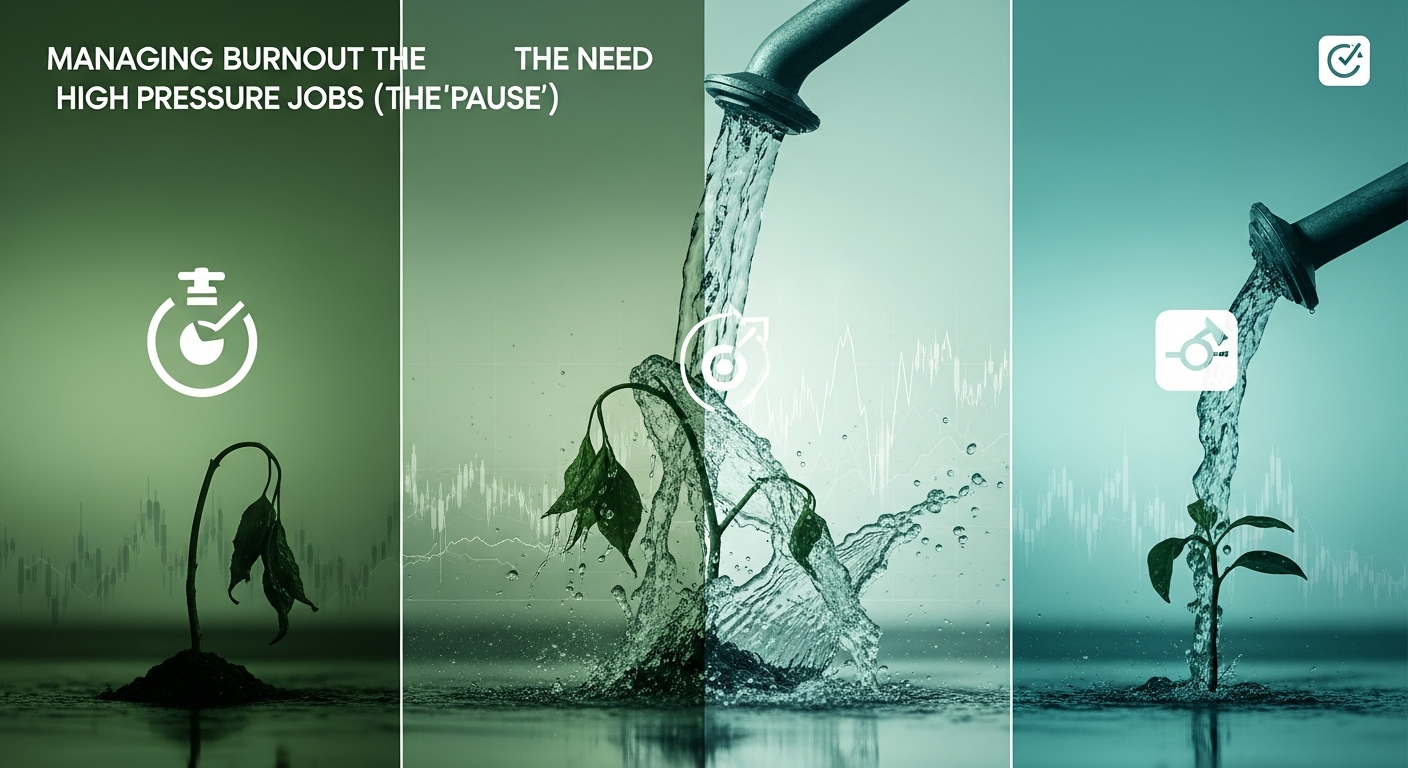
How to Manage Burnout in High-Pressure Jobs: A 2026 Strategy for Young Professionals
The transition from the academic world to the high-stakes environment of corporate ladder-climbing is often described as “trial by fire.” For young adults today, the pressure is multifaceted: you are expected to master complex life skills, navigate a volatile global economy, and build a solid financial foundation—all while performing at peak capacity in roles that demand 24/7 connectivity. By 2026, the boundary between professional excellence and personal depletion has become thinner than ever. Burnout is no longer just a “buzzword”; it is a systemic risk to your earning potential and your long-term health.
Managing burnout in high-pressure jobs isn’t just about taking a weekend off or lighting a scented candle. It is a strategic necessity. If your mental health collapses, your ability to build wealth and enjoy your life collapses with it. This guide explores how to identify the early warning signs of exhaustion, implement systems to protect your energy, and navigate the high-pressure landscape of the modern workforce without sacrificing your soul or your bank account.
1. Recognizing the Anatomy of Burnout in the Modern Workplace
Before you can manage burnout, you must understand that it is a physiological and psychological state, not a character flaw. The World Health Organization defines burnout as a syndrome resulting from chronic workplace stress that has not been successfully managed. For young professionals in high-pressure sectors like finance, tech, law, or healthcare, burnout often manifests in three distinct stages.
First is **exhaustion**. This isn’t the “good tired” you feel after a productive day; it is a deep, cellular fatigue that sleep doesn’t fix. You wake up on Monday morning feeling as though you’ve already finished a forty-hour week. Second is **cynicism or depersonalization**. You might find yourself feeling detached from your work, resentful of your colleagues, or increasingly “numb” to your achievements. The third stage is a **sense of reduced professional efficacy**. You start to doubt your skills, take longer to complete simple tasks, and feel like your contribution doesn’t matter.
In 2026, the “always-on” culture facilitated by AI-integrated communication tools has made it harder to spot these signs early. You might mistake burnout for a lack of ambition or a need for more caffeine. However, recognizing these red flags is the first step in protecting your most valuable asset: your mind.
2. The Financial Cost of Burnout: Why Your Wallet Cares
Young adults focused on improving their finances often view “hustling” as the only path to wealth. However, burnout is incredibly expensive. When you are operating in a state of chronic stress, your decision-making capabilities are compromised. This leads to several financial pitfalls that can set your goals back by years.
One major cost is **”revenge spending.”** When work is miserable, you are more likely to justify impulsive, high-ticket purchases—vacations you can’t afford, luxury goods, or expensive daily conveniences—as a “reward” for your suffering. This creates a vicious cycle: you work a high-pressure job to afford a lifestyle that numbs the pain of the job.
Furthermore, burnout often leads to **forced career breaks**. Quitting a job abruptly because of a mental breakdown usually means leaving without a backup plan, losing out on bonuses, and potentially damaging professional references. There is also the literal cost of healthcare; chronic stress is linked to heart disease, weakened immune systems, and digestive issues. By managing burnout proactively, you are practicing a form of long-term financial risk management. True wealth is the ability to sustain your income over decades, not just a few high-intensity months.
3. Setting “Digital Fences” in a 24/7 Economy
The greatest challenge for young professionals in 2026 is the erosion of the “home” space. With remote and hybrid work being the standard, work now lives in your pocket. To manage burnout in a high-pressure job, you must establish “digital fences.”
This goes beyond just turning off notifications. It requires a fundamental shift in how you communicate your availability. Start by setting clear expectations with your manager and team. If you are in a role that requires on-call availability, rotate those responsibilities so you aren’t “on” every night. Use the “Do Not Disturb” features on your devices to ensure that from 8:00 PM to 7:00 AM, you are unreachable for non-emergencies.
Another effective strategy is **contextualizing your devices**. If possible, have a dedicated work laptop and a personal tablet or phone. When the work laptop is closed, the “office” is closed. If you live in a small apartment, even the act of putting your work equipment inside a drawer or covering it with a cloth at the end of the day can provide the psychological signal your brain needs to switch from “produce” mode to “recovery” mode.
4. The Power of “Micro-Rest” and Physiological Regulation
In high-pressure environments, the idea of taking a two-week vacation often feels impossible or creates more stress due to the inevitable backlog. While long breaks are important, the most sustainable way to manage burnout is through **micro-rest**.
The human brain is not designed to focus for eight hours straight. The “Ultradian Rhythm” suggests that our brains can focus intensely for about 90 to 120 minutes before needing a break. Instead of powering through with a third espresso, implement 10-minute “physiological resets.” This could involve a short walk without your phone, a quick breathing exercise (like box breathing), or simply staring out a window to reset your visual focus.
Additionally, pay attention to your nervous system. High-pressure jobs keep you in a state of “fight or night” (sympathetic nervous system activation). To counter this, you must actively engage your parasympathetic nervous system—the “rest and digest” mode. Activities like weightlifting, yoga, or even a cold shower can help “flush” the cortisol out of your system, preventing the biological buildup that leads to burnout.
5. Navigating the “Quiet Promotion” and Saying No
A common trap for high-achieving young adults is the “quiet promotion”—being given the responsibilities of a higher-level role without the corresponding title or pay increase. While you want to show you’re a team player, taking on an unsustainable workload is the fastest route to burnout.
Learning to say “no” or “not now” is a vital life skill. This doesn’t mean being uncooperative; it means being protective of your capacity to deliver quality work. When a new task is pushed your way, use the **”Priority Pivot”** technique. Ask your manager: *”I’m currently focused on Project A and Project B. If Project C is the priority, which of the first two should I move to the back burner to ensure Project C gets the attention it needs?”*
This forces a conversation about resources and priorities rather than just adding more weight to your shoulders. It also demonstrates that you are thinking strategically about the company’s goals. Remember, if you say “yes” to everything, your “yes” eventually loses its value because your output will inevitably suffer.
6. Building a “Resilience Toolkit” Outside of Work
Your identity should never be 100% tied to your job. When your work is high-pressure and things go wrong—as they inevitably will—having a multi-dimensional life provides a buffer. This is the “Resilience Toolkit.”
This toolkit includes:
* **A Non-Professional Community:** Have friends who don’t work in your industry. If you are a lawyer, hang out with artists or engineers. This prevents your social life from becoming a second “networking” session.
* **Active Hobbies:** Engage in activities where you are a “beginner.” This removes the pressure to be perfect and reminds you that growth is a process.
* **Financial Runway:** Knowing you have 6–12 months of living expenses saved (an emergency fund) significantly reduces the “trapped” feeling that exacerbates burnout. The less you *need* that specific high-pressure paycheck to survive the next month, the more power you have to set boundaries.
* **Professional Mentorship:** Connect with people who are 10–15 years ahead of you. They can provide perspective on which “emergencies” are actually important and which are just corporate theater.
FAQ: Managing Burnout in the Modern Age
#
1. Is burnout considered a medical condition I can take leave for?
While burnout is not always classified as a standalone medical diagnosis in every country, it is recognized by the WHO as an occupational phenomenon. In many jurisdictions, the symptoms of burnout (such as clinical anxiety or depression resulting from work) are valid reasons for medical leave under the Family and Medical Leave Act (FMLA) or similar local labor laws. Consult with a healthcare professional to document your symptoms.
#
2. How do I tell my boss I’m burnt out without looking “weak”?
Avoid using the word “weak.” Frame the conversation around **sustainability and performance**. You might say: *”I’ve noticed that the current workload is impacting my ability to deliver work at the high standard I usually maintain. I’d like to discuss how we can optimize my tasks to ensure long-term productivity.”* This positions you as a professional looking out for the company’s interests.
#
3. Will a “mental health day” actually help?
A single day off is a “band-aid” for a systemic issue. While it can provide immediate relief from a panic attack or extreme fatigue, it won’t fix a toxic work culture or an unsustainable schedule. Use mental health days to rest, but also use that time to reflect on what systemic changes (boundaries, delegation, or a new job search) need to happen.
#
4. Can I recover from burnout while staying in the same job?
Yes, but it requires a “re-set” of your role. You cannot return to the same habits that caused the burnout. This may involve a formal conversation with HR, changing your working hours, or moving to a different team within the same company. If the company culture is the primary driver of the stress and they refuse to change, you may ultimately need to move on.
#
5. How do I differentiate between “normal stress” and “burnout”?
Stress is generally characterized by “over-engagement”—you feel like if you could just get everything under control, you’d be fine. Burnout is characterized by “disengagement.” Stress feels like drowning in tasks; burnout feels like being dried up and hollowed out. If you no longer care about things you used to love, it’s likely burnout.
Conclusion: Investing in Your Future Self
As we look toward the remainder of 2026 and beyond, the most successful young professionals won’t be those who worked the most hours, but those who managed their energy most effectively. High-pressure jobs can offer incredible financial rewards and skill-building opportunities, but they are only “worth it” if you emerge on the other side with your health and happiness intact.
Managing burnout is a proactive discipline. It requires you to be your own advocate, your own HR department, and your own life coach. By recognizing the signs early, setting firm digital boundaries, and viewing your mental health as a financial asset, you can navigate the pressures of a high-octane career while building a life that is both prosperous and peaceful. Don’t wait for a crisis to change your habits; start building your resilience today. Your future self—and your bank account—will thank you.