
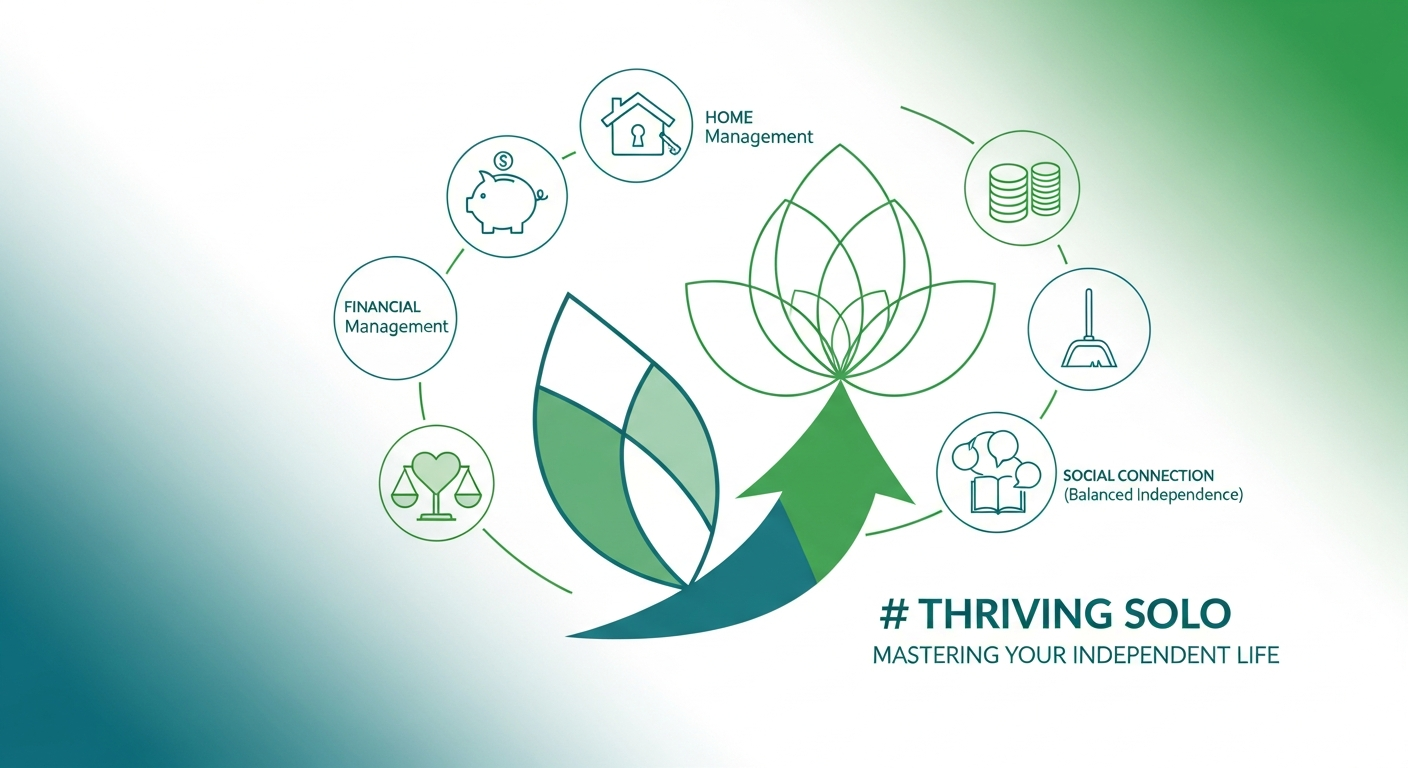
The Ultimate Guide: How to Live Alone Successfully in 2026
There is a unique, quiet thrill that comes with turning the key in your own lock for the first time. For many young adults, living alone is a major milestone—a rite of passage that signals true independence. However, the transition from a roommate-filled dorm or a family home to a solo apartment involves more than just picking out a rug. It requires a strategic approach to financial management, a new set of domestic “adulting” skills, and a proactive plan for mental well-being.
In 2026, the landscape of solo living is defined by smart technology, the “solo tax” of an inflationary economy, and the need for intentional community. Whether you are moving into a studio in the city or a quiet suburban flat, success isn’t just about surviving the silence; it’s about thriving in it. This guide will walk you through the essential pillars of living alone successfully, ensuring your bank account grows as much as your personal confidence.
1. Mastering the Solo Budget: Navigating the “Solo Tax”
The most significant hurdle to living alone is the financial one. Without a roommate to split the rent, utilities, and grocery bills, you are responsible for 100% of the overhead. To live alone successfully, you must master the art of the solo budget.
Start by implementing the **50/30/20 rule**, but adjust it for the reality of 2026 prices. 50% of your income goes to needs (rent, utilities, insurance), 30% to wants, and 20% to savings or debt repayment. Because you lack a “financial safety net” in the form of a roommate, your emergency fund is your most important asset. Aim to save three to six months of expenses in a high-yield savings account.
To mitigate the “solo tax,” get granular with your recurring costs. Audit your subscription services—do you really need three different streaming platforms? Negotiate your internet rates annually and invest in smart home technology, like programmable thermostats, to shave 10-15% off your utility bills. Remember, every dollar you save on fixed costs is a dollar that can be redirected toward your long-term wealth.
2. Developing High-Level Domestic Life Skills
When you live alone, you are the CEO, the janitor, and the head chef. If a lightbulb burns out or the sink clogs, there is no one else to fix it. Developing a “maintenance mindset” is crucial for preserving your security deposit and your sanity.
First, embrace **culinary independence**. Eating out or ordering delivery is the fastest way to drain a solo budget. Learn to cook “modular meals”—dishes where components can be reused in different ways throughout the week (e.g., roasted chicken that becomes tacos, then soup). This reduces food waste, which is a common problem for solo dwellers.
Second, establish a **cleaning cadence**. Without the social pressure of a roommate, it is easy to let chores slide. However, a cluttered environment often leads to a cluttered mind. Use the “one-touch rule”: if you pick something up, put it away in its permanent home rather than setting it down. Dedicate 15 minutes every evening to a “closing shift” for your home—dishes done, surfaces wiped, and pillows fluffed—so you wake up to a fresh start every morning.
3. Prioritizing Safety and Security
Safety is often the primary concern for those moving into their own space for the first time. Feeling secure is the foundation of enjoying your independence. In 2026, modern safety is a blend of physical hardware and digital awareness.
Invest in a few non-invasive security upgrades. If your lease allows, a video doorbell or a smart lock can provide immense peace of mind. For those in apartments, simple door reinforcement rungs or window alarms are cost-effective and easy to install.
Beyond hardware, build a **digital safety net**. Share your location with a trusted friend or family member. Set up an “emergency contact” shortcut on your smartphone. Most importantly, get to know your neighbors. You don’t need to be best friends, but having a rapport with the person across the hall means you have someone to call if you see something suspicious or if you accidentally lock yourself out. A “hello” in the hallway is your first line of defense.
4. Curating Your Social Ecosystem and Combatting Loneliness
Living alone does not have to mean being lonely, but it does require you to be more intentional about your social life. In a roommate situation, social interaction is passive; when you live alone, it must be active.
To prevent the “solitude slump,” schedule your social interactions like they are business meetings. Join a local “third place”—a coffee shop, a gym, or a hobbyist club—where you can interact with others without the pressure of a formal hangout.
At home, use your space to host. One of the greatest joys of living alone is the ability to invite people into a space that is entirely yours. Whether it’s a book club, a game night, or a Sunday brunch, hosting allows you to strengthen your community on your own terms. On the flip side, learn to appreciate the silence. Use your solo time for high-value activities like reading, journaling, or learning a new skill, rather than mindless scrolling. Successful solo living is about finding the balance between “me time” and “we time.”
5. Designing an Environment for Productivity and Wellness
Your home should be more than just a place to sleep; it should be an engine for your personal growth. Since you have total control over the decor, use it to support your goals.
If you work from home, **demarcate your zones**. Avoid working from your bed or your sofa. Even in a small studio, a dedicated desk area signals to your brain that it is time to be productive. Conversely, ensure your sleeping area is a sanctuary for rest. Use blackout curtains and maintain a cool temperature to optimize your sleep hygiene.
Incorporate elements of “biophilic design”—the practice of bringing the outdoors in. Plants not only improve air quality but have been shown to reduce stress levels. In 2026, many solo dwellers are also turning to “sensory layering,” using specific scents (candles or diffusers) and lighting (smart bulbs that change color temperature based on the time of day) to regulate their moods. When your environment is tailored to your psychological needs, your home becomes a powerful tool for wellness.
6. Future-Proofing Your Independence
Living alone is a golden opportunity to focus on your career and long-term trajectory. Without the distractions of a roommate’s schedule, you can dive deep into professional development or side hustles that will solidify your financial future.
Use this period of your life to **invest in yourself**. This might mean taking an online certification course, attending networking events, or simply spending time researching investment strategies. The discipline you learn by managing a household solo—balancing the books, maintaining a schedule, and solving problems—is directly transferable to leadership roles in the workplace.
Furthermore, view your solo living arrangement as a “litmus test” for your future. It teaches you exactly what you need to be happy, how much space you actually use, and what your non-negotiables are. Whether you eventually move in with a partner or choose to remain a “solo-preneur” of your own life, the skills you cultivate now will serve as a foundation for decades to come.
FAQ: Frequently Asked Questions About Living Alone
#
Q1: Is living alone significantly more expensive than having roommates?
Yes, generally. You are responsible for the full cost of rent and utilities, and you lose the “economies of scale” for things like groceries and household supplies. However, many find the “peace of mind premium” worth the extra cost. You can offset these expenses by being more disciplined with energy usage and meal prepping.
#
Q2: How do I handle the fear of something going wrong when I’m alone?
Preparation is the cure for anxiety. Keep a well-stocked first-aid kit, a basic toolkit, and a portable power bank for emergencies. Knowing exactly what to do if the power goes out or if you trip and scrape your knee reduces the “what-if” fear.
#
Q3: What is the biggest mistake first-time solo dwellers make?
Over-furnishing too quickly. People often feel the need to fill every corner of their new home immediately, leading to high credit card debt. Buy the essentials (bed, one chair, kitchen basics) and live in the space for a month before purchasing more.
#
Q4: How do I deal with the silence if I’m used to a busy house?
Background noise is your friend. Podcasts, audiobooks, or a “lo-fi” music stream can make a quiet apartment feel inhabited. Additionally, adopting a pet (if your lease and budget allow) can provide companionship and a sense of routine.
#
Q5: Can I really save money while living alone in 2026?
Absolutely. While your fixed costs are higher, you have total control over your variable costs. You don’t have to worry about a roommate leaving the lights on or cranked-up AC. By being hyper-aware of your consumption habits, you can often find surprising areas to cut back.
Conclusion: The Solo Journey is a Power Move
Successfully living alone in 2026 is about more than just paying your bills on time; it is about the radical act of becoming your own best friend. It is a period of life where you can discover who you are when no one is watching. By mastering your finances, honing your life skills, and intentionally building your community, you turn your apartment into a launchpad for your greatest ambitions.
Independence is a muscle. It might feel a bit weak the first time you have to kill a spider or fix a leaky faucet by yourself, but with every challenge you meet, that muscle grows stronger. Embrace the autonomy, relish the quiet, and take pride in the fact that you are building a life—and a home—entirely on your own terms. Your future self will thank you for the resilience and competence you are building today.