
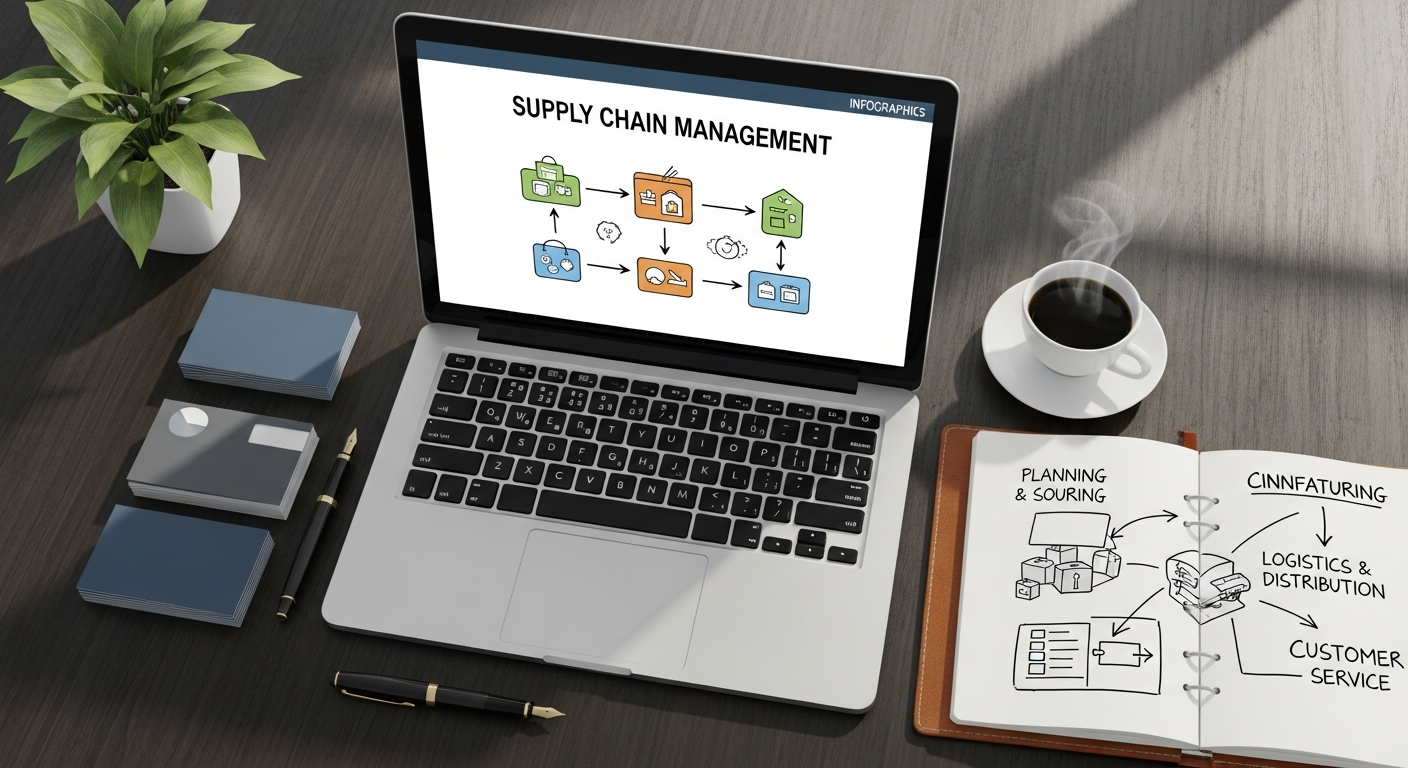
Understanding Supply Chain Management: Beyond the Basics for Small Businesses
At its core, supply chain management is the active management of supply chain activities to maximize customer value and achieve a sustainable competitive advantage. For a small business, this translates to overseeing the entire journey of a product or service, from the initial raw materials or concept all the way to the final delivery into the customer’s hands, and even beyond to returns and recycling. It’s a holistic approach that integrates all processes involved in converting raw materials into final products and services, coordinating the flow of goods, data, and finances.
Many small business owners might not explicitly label their daily tasks as “supply chain management,” yet they are inherently engaged in it. Whether you’re a local bakery sourcing flour and ingredients, a boutique clothing store managing inventory from various designers, or a service provider coordinating software licenses and support staff, you are navigating a supply chain. The difference for small businesses often lies in the scale and the direct involvement of the owner or a small team in every facet. This direct involvement can be both a challenge and a unique strength, fostering agility and deep customer understanding.
Thinking of your business as part of a larger interconnected system, rather than an isolated entity, is the first step towards effective SCM. It encompasses not just your direct suppliers and customers, but also the logistics providers, technology platforms, financial institutions, and even regulatory bodies that influence your operations. By understanding these connections, small businesses can identify bottlenecks, anticipate disruptions, and proactively seek efficiencies that larger, more bureaucratic organizations might struggle to implement quickly. The goal is to create a seamless, efficient, and responsive flow that minimizes costs, maximizes quality, and delivers exceptional value to your end customer.
The Core Components of SCM for Small Businesses

While the scale may differ, the fundamental elements of supply chain management remain consistent across businesses of all sizes. For small businesses, understanding these components is crucial for identifying areas for improvement and strategic focus.
Planning and Strategy
This is the foundational stage where a small business defines its operational goals and devises a strategy to achieve them. It involves forecasting demand, which for an SMB might mean analyzing past sales data, monitoring market trends, and even leveraging customer feedback from social media or direct interactions. Strategic planning also includes determining production levels, inventory policies, and sourcing strategies. For instance, a small e-commerce business planning for the holiday season needs to forecast how many units of each product it expects to sell, when to order them, and how much buffer stock to keep. Without proper planning, a business risks stockouts, lost sales, or conversely, excess inventory that ties up capital and incurs storage costs. Effective planning can significantly improve cash flow and reduce operational uncertainties.
Sourcing and Procurement
Sourcing is about identifying and evaluating suppliers, while procurement involves the actual purchasing of goods and services. For a small business, this means finding reliable suppliers for raw materials, components, finished goods, or even specialized services like web development or accounting. Key considerations include cost, quality, reliability, lead times, and ethical practices. Building strong relationships with a select group of trusted suppliers can lead to better pricing, more flexible terms, and improved responsiveness during unforeseen circumstances. Diversifying suppliers can also mitigate risks associated with relying too heavily on a single source. A small custom furniture maker, for example, needs to source high-quality timber, fabrics, and hardware. Their ability to do so efficiently and cost-effectively directly impacts their product quality and profitability.
Production and Operations
This component covers all activities involved in transforming raw materials or inputs into finished products or services ready for customers. For a manufacturing small business, this involves the actual production process, quality control, and assembly. For a service-based business, it might entail the development and delivery of a service, ensuring service standards are met. Efficiency in this stage is paramount. Streamlining workflows, minimizing waste, and optimizing resource utilization directly impact profitability. This is where topics like How To Improve Employee Productivity become highly relevant. An SMB looking to optimize its production might invest in training employees on lean manufacturing principles, cross-train staff to increase flexibility, or adopt technology to automate repetitive tasks. By focusing on productivity, small businesses can achieve higher output with fewer resources, leading to quicker turnaround times and a more competitive offering.
Logistics and Distribution
Once products are made or services are ready, they need to reach the customer. Logistics and distribution encompass inventory management, warehousing, transportation, and order fulfillment. For a small business, this could mean managing stock in a garage, renting a small warehouse space, or relying on third-party logistics (3PL) providers. Deciding how to store, move, and deliver products efficiently is critical. Considerations include shipping costs, delivery speed, and reliability. An artisanal food business, for instance, must manage its perishable inventory carefully, choosing appropriate storage and shipping methods to ensure products arrive fresh to customers. Effective logistics can enhance customer satisfaction through timely and accurate deliveries, while poor logistics can lead to delays, damaged goods, and frustrated customers.
Returns Management (Reverse Logistics)
Often overlooked, returns management deals with the process of products moving from the customer back to the business. This includes returns for refunds, exchanges, repairs, or recycling. While it might seem like a cost center, an efficient returns process can significantly enhance customer loyalty and brand reputation. For a small online retailer, clear return policies and a streamlined process for accepting and processing returns can turn a potentially negative customer experience into an opportunity to reinforce trust. This component also includes managing defective products, excess inventory, or even packaging materials for reuse or proper disposal, contributing to both financial and environmental sustainability.
The Unique Challenges and Opportunities for Small Business SCM
Challenges
- Limited Resources: Unlike large corporations with dedicated SCM departments and substantial budgets, small businesses often operate with lean teams and tighter financial constraints. This limits investment in advanced SCM software, automation, or hiring specialized personnel.
- Lack of Negotiating Power: Small order volumes often mean less leverage with suppliers and logistics providers, potentially leading to higher per-unit costs and less favorable terms compared to larger buyers.
- Scalability Issues: Rapid growth can quickly overwhelm an unoptimized small business supply chain. What works for 50 orders a month might collapse under the weight of 500, leading to delays and customer dissatisfaction.
- Visibility and Data Management: Small businesses may lack integrated systems, leading to fragmented data across spreadsheets, emails, and manual records. This makes it difficult to gain real-time visibility into inventory levels, order status, or supplier performance.
- Risk Mitigation: With fewer alternative suppliers and smaller inventory buffers, small businesses can be more vulnerable to disruptions like natural disasters, supplier failures, or sudden demand spikes.
Opportunities
- Agility and Adaptability: Small businesses can pivot much faster than large enterprises. They can quickly change suppliers, adjust product lines, or adopt new technologies without navigating layers of bureaucracy. This agility is a significant competitive advantage in rapidly changing markets.
- Direct Customer Relationships: SMBs often have closer ties to their customers, providing invaluable direct feedback that can be used to refine products, services, and supply chain processes. This intimate understanding can lead to highly personalized offerings and superior customer service.
- Niche Focus: Many small businesses thrive by serving specific niches. This allows them to tailor their supply chain to specialized needs, building deep expertise and strong relationships within a particular market segment.
- Leveraging Business Process Outsourcing (BPO): Small businesses can strategically outsource certain SCM functions that are not core competencies or are too resource-intensive to manage internally. This is where understanding What Is Business Process Outsourcing becomes a game-changer. For example, a small e-commerce business might outsource its warehousing and fulfillment to a 3PL, leveraging their infrastructure and expertise without the capital expenditure. Similarly, IT support for SCM software or even aspects of procurement can be outsourced, allowing the small business to focus its internal resources on core value-generating activities. BPO can provide access to specialized skills and economies of scale that would otherwise be out of reach.
- Technology Adoption: While budgets may be smaller, accessible cloud-based SCM tools, inventory management software, and e-commerce platforms offer sophisticated capabilities at a fraction of the cost of traditional enterprise systems. These tools can level the playing field, providing small businesses with data insights and automation previously reserved for large corporations.
Implementing Effective SCM Strategies for Your Small Business
Building a robust supply chain doesn’t require a massive budget or an army of consultants. It starts with strategic thinking and incremental improvements.
Start with a Clear Vision and Process Mapping
Before making any changes, understand your current supply chain. Document every step from sourcing to delivery. Identify all stakeholders, processes, and technologies involved. Ask questions like: Where do delays occur? Which steps are most costly? Where is quality compromised? What are the key performance indicators (KPIs) you should be tracking? This mapping exercise often reveals hidden inefficiencies and bottlenecks, providing a clear roadmap for improvement. For a small bakery, this might involve mapping out when ingredients are ordered, when they arrive, the baking schedule, and how products are packaged and delivered to customers or retail partners.
Build Strong, Collaborative Supplier Relationships
Your suppliers are extensions of your business. Foster open communication, transparency, and trust. While price is important, prioritize reliability, quality, and responsiveness. Consider working with local suppliers where possible to reduce lead times and shipping costs. Explore long-term contracts for stability and potential discounts. Engage in mutual problem-solving rather than adversarial negotiations. For instance, if a supplier faces an issue, collaborate on solutions that minimize impact on your business, rather than simply penalizing them. A strong relationship can mean the difference between a minor hiccup and a major disruption during challenging times.
Optimize Inventory Management
Inventory is often a small business’s largest asset and its biggest liability. The goal is to strike a balance between having enough stock to meet demand and avoiding excess inventory that ties up capital and incurs storage costs.
- Accurate Forecasting: Use historical data, market trends, and even current events to predict future demand as accurately as possible.
- Just-In-Time (JIT) Principles: Where feasible, adopt JIT strategies to minimize inventory by receiving goods only as they are needed. This reduces carrying costs but requires highly reliable suppliers and efficient logistics.
- Safety Stock: Maintain a small buffer of critical items to guard against unexpected demand spikes or supply disruptions.
- Inventory Tracking Software: Even simple spreadsheet-based systems can be a vast improvement over manual methods. Cloud-based inventory management tools offer real-time tracking, automated reordering, and integration with e-commerce platforms, making them invaluable for growing SMBs.
Embrace Technology (Smartly)
You don’t need a multi-million dollar ERP system. Start with affordable, scalable solutions:
- Inventory Management Software: As mentioned, these can automate tracking, reduce manual errors, and provide crucial insights.
- Order Management Systems (OMS): Integrate with your e-commerce platform to streamline order processing, fulfillment, and shipping.
- CRM (Customer Relationship Management) Tools: While primarily for sales and marketing, CRM systems can provide valuable customer data that informs demand forecasting and service delivery, influencing your SCM decisions.
- Cloud-Based Logistics Platforms: These can help compare shipping rates, print labels, and track shipments across multiple carriers, simplifying outbound logistics.
The key is to choose technology that solves a specific pain point and offers a clear return on investment, rather than adopting tools for technology’s sake.
Focus on Customer Satisfaction as the Ultimate Goal
Every SCM decision should ultimately lead to a better customer experience. Timely delivery, consistent quality, accurate orders, and efficient returns all contribute to customer loyalty. Use customer feedback to continually refine your supply chain processes. A small business with a highly responsive and reliable supply chain can differentiate itself from larger competitors who may struggle with personalized service or flexibility. The promise of consistent delivery and quality, backed by a strong supply chain, can be a powerful Inbound Marketing Vs Outbound Marketing advantage. If your inbound marketing efforts promise a smooth experience, your supply chain must deliver on that promise. Conversely, poor SCM can necessitate more outbound marketing to manage customer complaints or win back lost trust.
The ROI of Robust SCM for Small Businesses
Investing time and resources into supply chain management is not just about avoiding problems; it’s about unlocking tangible business benefits and driving growth. The return on investment (ROI) for effective SCM for small businesses is multifaceted and significant.
Cost Reduction and Operational Efficiency
One of the most immediate and impactful benefits is cost savings. By optimizing sourcing, reducing inventory holding costs, streamlining production, and negotiating better logistics rates, small businesses can significantly lower their operational expenses. Eliminating waste, reducing errors, and improving workflow efficiency directly translate to a healthier bottom line. For example, by identifying a more cost-effective shipping partner or optimizing warehouse layout to speed up picking times, a small business can see direct savings that accumulate over time. This efficiency also frees up valuable resources – both capital and human – that can be reinvested into growth initiatives or product development.
Improved Customer Satisfaction and Loyalty
A well-managed supply chain ensures that products are available when customers want them, delivered accurately and on time, and meet quality expectations. This reliability builds trust and enhances the overall customer experience. Satisfied customers are more likely to become repeat buyers and brand advocates, leading to increased lifetime value and organic referrals. For a small business, where personal reputation often plays a larger role, consistent delivery on promises made by your supply chain is paramount. When customers consistently receive their orders as expected, it reinforces positive perceptions of your brand, making your Inbound Marketing Vs Outbound Marketing efforts more effective. Happy customers from a smooth supply chain become your best advocates, generating organic inbound leads, rather than requiring costly outbound marketing to resolve issues.
Enhanced Competitiveness
In a crowded marketplace, efficient SCM can be a key differentiator. A small business that can deliver faster, offer more consistent quality, or respond more quickly to market changes than its competitors gains a distinct advantage. This allows them to compete not just on price, but on service and reliability, attracting and retaining a loyal customer base. Being able to quickly introduce new products or services to the market because your supply chain is agile also provides a competitive edge, allowing you to capture emerging trends ahead of slower-moving rivals.
Risk Mitigation and Resilience
A diversified and well-managed supply chain is inherently more resilient to disruptions. By having backup suppliers, clear contingency plans, and real-time visibility, small businesses can better weather unforeseen events – from raw material shortages to logistics delays. This proactive approach minimizes the impact of disruptions on operations and customer commitments, safeguarding revenue and reputation. In today’s volatile global environment, building resilience is not just an advantage; it’s a necessity for survival.
Scalability for Growth
As a small business grows, its supply chain must be able to scale alongside it. A thoughtfully designed SCM strategy anticipates future growth, building in the flexibility and capacity to handle increased demand without breaking down. This means establishing processes and relationships that can expand, whether through adding new suppliers, outsourcing fulfillment, or upgrading technology. Without a scalable supply chain, rapid growth can quickly turn into chaos, leading to operational failures and lost opportunities. Planning for scalability from the outset ensures that your supply chain can support your business ambitions for 2026 and beyond.
Future-Proofing Your Small Business Supply Chain in 2026 and Beyond
The landscape of supply chain management is constantly evolving, driven by technological advancements, shifting consumer expectations, and global events. For small businesses, staying ahead means embracing a forward-thinking approach.
Embrace Digital Transformation and Data Analytics
The future of SCM is digital. For small businesses, this doesn’t mean investing in enterprise-level AI from day one, but rather leveraging accessible digital tools to gain insights. Cloud-based platforms for inventory, order management, and even CRM offer powerful analytics capabilities. By collecting and analyzing data on sales trends, supplier performance, shipping times, and customer feedback, small businesses can make data-driven decisions. Predictive analytics, even in its simpler forms, can help forecast demand more accurately, optimize inventory levels, and identify potential issues before they escalate. Automated reporting can free up valuable time, allowing business owners to focus on strategic initiatives rather than manual data compilation.
Prioritize Resilience and Agility
The disruptions of recent years have underscored the critical importance of supply chain resilience. For 2026 and beyond, small businesses must actively build agility into their supply chains. This includes:
- Supplier Diversification: Don’t put all your eggs in one basket. Having multiple qualified suppliers for critical components or services reduces reliance on a single source.
- Geographic Diversification: Explore sourcing from different regions to mitigate risks associated with localized disruptions (e.g., political instability, natural disasters).
- Flexible Operations: Be prepared to pivot. This might mean having manufacturing partners who can handle smaller runs or being able to quickly switch logistics providers.
- Contingency Planning: Develop clear plans for what to do if a key supplier fails, a shipment is delayed, or demand suddenly spikes.
Focus on Sustainability and Ethical Sourcing
Consumers, especially younger demographics, are increasingly conscious of a brand’s environmental and social impact. For small businesses, integrating sustainability into SCM can be a powerful brand differentiator. This includes:
- Eco-Friendly Sourcing: Choosing suppliers who use sustainable materials, minimize waste, and have ethical labor practices.
- Reduced Carbon Footprint: Optimizing logistics routes, using local suppliers, and exploring greener packaging options.
- Waste Reduction: Implementing lean principles to minimize waste throughout the production and delivery process.
Communicating your commitment to sustainability can enhance your brand image and appeal to a growing segment of environmentally conscious consumers.
Explore Collaborative Networks and Partnerships
Small businesses don’t have to go it alone. Collaborative networks, such as industry associations, co-ops, or even shared logistics hubs, can provide small businesses with collective bargaining power, shared resources, and access to expertise they might not otherwise afford. Partnering with other small businesses to consolidate shipments or share warehousing space can lead to significant cost savings and improved efficiency. The rise of platform economies also offers new opportunities for small businesses to connect with a wider network of suppliers, logistics providers, and even customers, enabling them to expand their reach and optimize their supply chains more effectively.
In conclusion, supply chain management is not just a buzzword for large enterprises; it is an indispensable strategic imperative for small businesses aiming for resilience, profitability, and sustainable growth in 2026 and beyond. By understanding its core components, addressing unique challenges, and leveraging available opportunities and technologies, small business owners can transform their operational backbone into a powerful competitive advantage.
Frequently Asked Questions
Recommended Resources
You might also enjoy Best Travel Rewards Credit Cards 2026 from Gold Points.
Related reading: How To Create An Online Course For Income (Trading Costs).