

The Imperative of Marketing Automation in B2B for 2026
The B2B marketing world is characterized by longer sales cycles, multiple decision-makers, and a greater emphasis on relationship building and value proposition. In 2026, these characteristics are more pronounced than ever. Buyers are more informed, conducting extensive research before engaging with sales, and they expect personalized, relevant communication at every touchpoint. This shift mandates a move away from generic, mass outreach towards highly targeted and automated campaigns that can adapt to individual buyer behaviors.
Marketing automation for B2B is fundamentally about streamlining and automating repetitive marketing tasks, workflows, and processes. This includes everything from email marketing and social media posting to lead nurturing, lead scoring, and customer segmentation. The goal is not just to save time, but to create a more consistent, effective, and measurable marketing strategy. Without automation, B2B companies face significant hurdles: leads fall through the cracks, follow-up is inconsistent, and marketing teams spend an inordinate amount of time on administrative duties rather than strategic planning or creative execution.
Consider the stark contrast between Inbound Marketing Vs Outbound Marketing in the B2B context. While outbound methods like cold calling and direct mail still have their place, inbound strategies – content marketing, SEO, social media, and email marketing – are increasingly dominant due to their ability to attract qualified leads naturally. Marketing automation tools are the engine behind successful inbound campaigns, allowing businesses to nurture leads with relevant content based on their engagement, guiding them through the sales funnel without constant manual intervention. This not only enhances the customer experience but also significantly improves the efficiency of your marketing operations, directly contributing to How To Improve Employee Productivity by empowering your team to focus on high-value activities that require human creativity and strategic thinking.
Furthermore, as global markets become more interconnected, many B2B companies are exploring or already engaging in What Is Business Process Outsourcing for various functions, including aspects of marketing. A robust marketing automation platform becomes even more critical in such scenarios, providing a centralized system for managing campaigns, tracking performance, and ensuring seamless collaboration, whether teams are in-house or distributed across external partners. It provides the necessary infrastructure for consistency and control, regardless of where the work is being performed.
Key Features to Look for in B2B Marketing Automation Tools
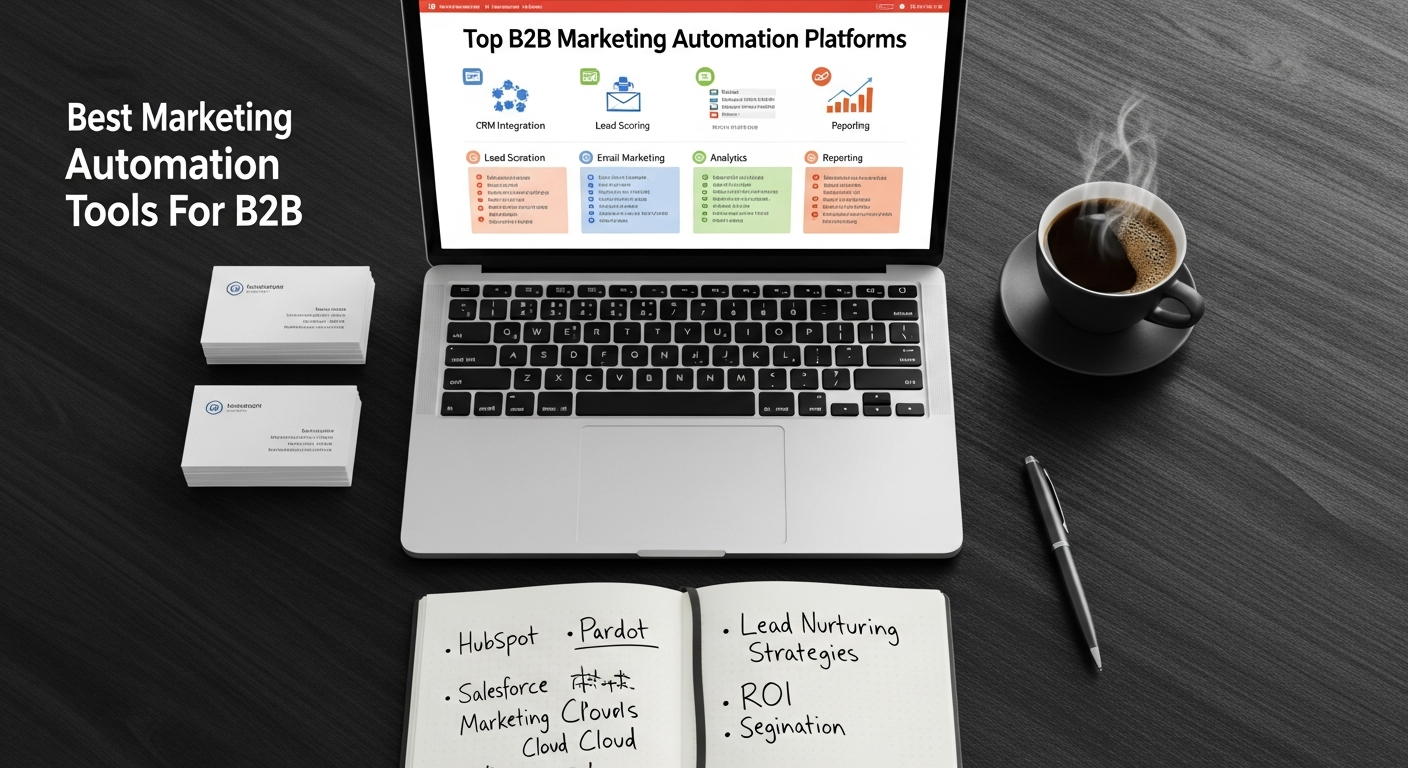
Choosing the best marketing automation tool for your B2B business requires a clear understanding of the features that deliver the most value. It’s not just about automating tasks; it’s about enabling strategic growth and operational excellence. Here are the essential capabilities to prioritize in 2026:
- Advanced Lead Nurturing & Scoring: This is arguably the cornerstone of B2B marketing automation. The ability to create sophisticated, multi-channel nurturing sequences based on prospect behavior (website visits, content downloads, email opens) is crucial. Coupled with robust lead scoring, which assigns points based on demographic data and engagement levels, your sales team receives warm, qualified leads ready for conversion. This directly impacts How To Improve Employee Productivity within the sales team, as they spend less time prospecting and more time closing.
- Comprehensive Email Marketing Capabilities: Beyond basic bulk emails, B2B tools should offer advanced segmentation, A/B testing, dynamic content personalization, and detailed analytics for email performance. Drag-and-drop editors, templating, and automation triggers for specific actions are also vital.
- Seamless CRM Integration: A tight integration with your Customer Relationship Management (CRM) system (e.g., Salesforce, Dynamics 365, HubSpot CRM) is non-negotiable. This ensures a unified view of the customer journey, from initial interaction to closed deal, preventing data silos and facilitating smooth handoffs between marketing and sales.
- Robust Analytics and Reporting: You can’t optimize what you can’t measure. The best tools provide customizable dashboards, detailed reports on campaign performance, lead funnel analysis, ROI tracking, and attribution modeling. This data is essential for iterative improvement and demonstrating marketing’s impact on revenue.
- Website Personalization & Tracking: Tools that can track website visitor behavior, identify returning visitors, and even dynamically personalize website content based on their profile or past interactions can significantly enhance engagement and conversion rates. Landing page builders and A/B testing for web pages are also key.
- Social Media Management: Integrated social media publishing, listening, and analytics allow B2B marketers to manage their social presence, engage with prospects, and track brand mentions from a single platform, enhancing multi-channel strategy and consistency.
- Campaign Management & Workflow Automation: The ability to design complex automated workflows for various scenarios – welcome series, re-engagement campaigns, event promotions, etc. – is fundamental. Visual workflow builders make this process intuitive and efficient.
- Content Management Integration: For B2B, content is king. Tools that integrate with or provide content management features (blogging platforms, resource libraries) help streamline content distribution and tracking.
- Scalability and Customization: As your business grows, your marketing automation needs will evolve. Look for platforms that can scale with you and offer sufficient customization options to adapt to your unique B2B processes and industry nuances.
- Compliance Features: With increasing data privacy regulations (e.g., GDPR, CCPA), features for consent management, data security, and compliance reporting are critical for mitigating risk.
By focusing on these features, B2B companies can ensure they select a tool that not only automates tasks but also empowers strategic growth, improves team efficiency, and delivers measurable results.
Top Marketing Automation Platforms for B2B in 2026 (Part 1 – Comprehensive Suites)
1. HubSpot Marketing Hub
HubSpot remains a dominant force in the B2B marketing automation space, particularly for its user-friendly interface and its pioneering work in inbound marketing methodologies. The Marketing Hub is part of a broader suite of hubs (Sales, Service, CMS, Operations), making it a truly integrated solution for businesses aiming for a complete customer platform.
- Strengths: HubSpot excels in its ease of use, making it accessible even for marketers new to automation. Its robust content management system (CMS), SEO tools, blogging platform, and social media management capabilities make it an inbound marketer’s dream. The platform offers powerful lead nurturing workflows, comprehensive email marketing, landing page builders, and excellent analytics. Its integration with HubSpot CRM (which is free to start) is seamless, providing a 360-degree view of every prospect and customer. For businesses looking to optimize How To Improve Employee Productivity across marketing and sales, HubSpot’s unified platform reduces friction and streamlines handoffs.
- Target Audience: Ideal for small to large B2B businesses that prioritize inbound marketing, user-friendliness, and a tightly integrated sales and marketing experience. It offers scalable plans that can grow with your company.
- Key Features for 2026: Advanced AI-powered content creation assistance, deeper personalization capabilities driven by behavioral data, enhanced conversational marketing tools (live chat, chatbots), and more sophisticated attribution reporting.
2. Salesforce Marketing Cloud Account Engagement (Pardot)
Salesforce Marketing Cloud Account Engagement, formerly known as Pardot, is purpose-built for B2B marketers who are already deeply invested in the Salesforce ecosystem. It’s a powerful, enterprise-grade solution renowned for its deep analytics, advanced lead management, and tight integration with Salesforce Sales Cloud.
- Strengths: Pardot offers unparalleled lead scoring and grading, allowing for highly precise qualification of leads. Its automation rules and engagement studio provide sophisticated tools for creating complex, dynamic lead nurturing paths. B2B marketers benefit from advanced email marketing, landing page builders, robust reporting, and seamless integration with Salesforce CRM, ensuring sales has immediate access to rich prospect data. This deep integration is crucial for B2B companies that want a single source of truth for all customer interactions, especially when considering What Is Business Process Outsourcing for sales or marketing support, as it ensures all external teams work from the same comprehensive data set.
- Target Audience: Best suited for mid-market to enterprise B2B companies that are existing Salesforce users or are planning to adopt Salesforce as their primary CRM. It caters to organizations with complex sales processes and a need for highly sophisticated lead management.
- Key Features for 2026: Continued enhancements in AI-driven insights for campaign optimization, deeper integration with Einstein Analytics for predictive lead scoring, and more advanced multi-touch attribution models to accurately measure ROI across complex B2B funnels.
3. Adobe Marketo Engage
Marketo Engage, part of the Adobe Experience Cloud, is another industry giant specifically designed for large, complex B2B marketing organizations. It’s known for its powerful automation capabilities, extensive integrations, and ability to handle highly customized and intricate customer journeys.
- Strengths: Marketo offers an incredibly flexible and powerful platform for building intricate lead nurturing programs, advanced segmentation, and personalized campaigns across multiple channels. Its strength lies in its ability to automate almost any marketing process, from email and landing pages to event management and account-based marketing (ABM). Marketo’s open architecture allows for extensive integrations with various third-party tools, making it adaptable to diverse tech stacks. It provides robust analytics and reporting, allowing marketers to drill down into campaign performance and optimize their strategies effectively.
- Target Audience: Ideal for large B2B enterprises with sophisticated marketing requirements, complex customer journeys, and the resources to leverage its full potential. It’s particularly strong for companies with a dedicated marketing operations team.
- Key Features for 2026: Further integration with Adobe’s broader creative and data platforms, enhanced AI for predictive content recommendations and audience segmentation, and more robust capabilities for personalizing experiences at scale across all touchpoints, solidifying its position for managing both Inbound Marketing Vs Outbound Marketing within a unified framework.
These comprehensive suites represent the pinnacle of B2B marketing automation, offering the depth and breadth of features required by demanding organizations. Their strength lies in their ability to unify various marketing functions and provide a holistic view of the customer, directly impacting How To Improve Employee Productivity by eliminating redundant tasks and providing actionable insights.
Top Marketing Automation Platforms for B2B in 2026 (Part 2 – Specialized or Emerging Solutions)
While the comprehensive suites offer an all-in-one experience, many B2B businesses, particularly SMBs or those with specific needs, might find more agility and value in specialized or emerging marketing automation tools. These platforms often excel in particular areas or offer a more streamlined, cost-effective approach without sacrificing core automation capabilities. They can be particularly appealing for companies exploring What Is Business Process Outsourcing for specific marketing functions, as their focused feature sets might align better with outsourced tasks.
1. ActiveCampaign
ActiveCampaign has gained significant traction for its powerful email marketing automation combined with a built-in CRM, making it a strong contender for B2B companies seeking robust automation without the complexity or price tag of enterprise solutions.
- Strengths: ActiveCampaign offers incredibly sophisticated marketing automation workflows that are easy to build with a visual editor. It excels in email marketing, offering advanced segmentation, personalization, and deliverability. The platform includes a sales CRM, allowing for integrated marketing and sales processes, and offers robust site tracking and lead scoring. Its affordability and powerful feature set make it a compelling choice for businesses that need to nurture leads effectively across email and their website. It directly contributes to How To Improve Employee Productivity by consolidating email, CRM, and automation into a single, intuitive platform.
- Target Audience: Small to mid-sized B2B businesses, e-commerce companies, and solopreneurs looking for powerful, flexible email and marketing automation with an integrated CRM at a competitive price point.
- Key Features for 2026: Continued expansion of machine learning for predictive sending and content recommendations, enhanced SMS marketing capabilities, and deeper integration with third-party apps through its extensive marketplace.
2. Zoho Marketing Automation
As part of the larger Zoho ecosystem, Zoho Marketing Automation offers a comprehensive suite of marketing tools designed to integrate seamlessly with other Zoho products (CRM, SalesIQ, Campaigns, etc.). It’s a compelling option for businesses already using or considering the Zoho stack.
- Strengths: Zoho Marketing Automation provides a complete set of features including email marketing, lead nurturing, lead scoring, website tracking, social media management, and event management. Its strength lies in its deep integration with Zoho CRM and other Zoho applications, offering a cohesive platform for managing customer relationships across the entire lifecycle. It’s often praised for its value for money, providing a rich feature set at a more accessible price point than some enterprise competitors. This integrated approach can significantly streamline operations for companies that utilize Zoho for various business functions, including those engaged in What Is Business Process Outsourcing for specific tasks, ensuring data consistency across different teams.
- Target Audience: Small to large B2B businesses that are already invested in the Zoho ecosystem or are looking for an affordable, comprehensive, and integrated suite of business applications.
- Key Features for 2026: Further AI-driven insights for campaign optimization, enhanced predictive analytics, and expanded capabilities for managing complex B2B customer journeys within the unified Zoho platform.
3. Braze
While often associated with B2C, Braze is increasingly being adopted by B2B companies, especially those with a strong focus on product-led growth (PLG) or intricate customer engagement across mobile, web, and in-app experiences. It’s a customer engagement platform built for real-time personalization.
- Strengths: Braze excels in real-time data ingestion and cross-channel message orchestration. It allows B2B businesses to create highly personalized, context-aware campaigns across email, SMS, push notifications, and in-app messages based on real-time user behavior. Its robust segmentation capabilities and A/B testing frameworks are powerful for optimizing engagement. For B2B companies with sophisticated digital products or services, Braze offers unparalleled precision in guiding users through onboarding, feature adoption, and retention. It’s an excellent tool for enhancing the post-conversion experience and ensuring continued customer loyalty.
- Target Audience: B2B companies with digital products (SaaS, apps), those focused on product-led growth, or businesses that require highly personalized, real-time engagement across multiple digital channels.
- Key Features for 2026: Deeper machine learning for predictive user paths and automated message optimization, enhanced capabilities for orchestrating complex multi-step customer journeys, and more robust analytics for measuring the impact of real-time engagement on B2B metrics.
These specialized platforms demonstrate that the “best” tool isn’t always the largest or most expensive. It’s the one that best fits your specific B2B needs, budget, and existing tech stack, while still delivering powerful automation and contributing significantly to How To Improve Employee Productivity.
Implementing Marketing Automation: Best Practices for B2B Success
Adopting a marketing automation tool is a significant investment, and its success hinges not just on the software itself, but on a strategic approach to implementation and ongoing management. For B2B companies in 2026, simply purchasing a platform isn’t enough; it requires a well-thought-out strategy to maximize ROI and truly transform your marketing efforts.
- 1. Define Clear Goals and KPIs First: Before even selecting a tool, identify what you want to achieve. Are you looking to increase lead volume, improve lead quality, shorten the sales cycle, boost customer retention, or enhance personalization? Clear, measurable goals (Key Performance Indicators or KPIs) will guide your tool selection, campaign design, and success measurement. This initial step is crucial for ensuring that the automation directly supports business objectives and contributes to How To Improve Employee Productivity by focusing efforts on what truly matters.
- 2. Start Small, Think Big: Don’t try to automate everything at once. Begin with a single, high-impact campaign or workflow, such as a welcome series for new leads or a re-engagement campaign for inactive prospects. This allows your team to learn the platform, refine processes, and demonstrate early wins before scaling up. Iterative implementation reduces overwhelm and builds confidence.
- 3. Data Quality is Paramount: Your marketing automation platform is only as good as the data you feed it. Invest time in cleaning and segmenting your existing customer and prospect data. Implement processes for ongoing data hygiene to ensure accuracy and relevance. Poor data leads to ineffective campaigns and wasted resources, undermining the very purpose of automation. This is especially true if you leverage What Is Business Process Outsourcing for data entry or list management; strict data quality protocols must be in place.
- 4. Align Marketing and Sales Teams: Successful B2B marketing automation requires seamless collaboration between marketing and sales. Define clear service-level agreements (SLAs) for lead qualification and handoff processes. Ensure both teams understand how the automation tool supports their respective goals and provides a unified view of the customer journey. This alignment is critical for optimizing the entire funnel and maximizing efficiency.
- 5. Develop a Comprehensive Content Strategy: Marketing automation relies heavily on compelling content to nurture leads. Map out your content assets to different stages of the buyer journey. Ensure you have a consistent supply of valuable content – blog posts, whitepapers, case studies, webinars, videos – that can be leveraged in your automated workflows. This integrated approach supports both Inbound Marketing Vs Outbound Marketing strategies.
- 6. Invest in Training and Adoption: Even the most intuitive tool requires proper training. Ensure your marketing team, and relevant sales personnel, are fully proficient in using the platform’s features. Ongoing education and sharing of best practices will ensure continuous improvement and full utilization of the tool’s capabilities. A well-trained team is a productive team.
- 7. Test, Analyze, and Optimize Continuously: Marketing automation is not a set-it-and-forget-it endeavor. Continuously monitor campaign performance, conduct A/B tests on emails, landing pages, and workflows, and analyze results. Use the insights gained to refine your strategies and optimize for better outcomes. This iterative process is key to achieving long-term success and maximizing your investment.
- 8. Prioritize Personalization: In 2026, generic messages simply won’t cut it. Leverage the automation tool’s segmentation and dynamic content capabilities to deliver highly personalized experiences. Address prospects by name, recommend relevant content based on their past behavior, and tailor messaging to their specific industry or pain points.
By adhering to these best practices, B2B companies can move beyond simply automating tasks to truly transforming their marketing operations, driving significant business growth, and making a measurable impact on their bottom line.
Measuring ROI and Proving Value
Justifying the investment in B2B marketing automation requires a clear demonstration of its return on investment (ROI). In 2026, marketing leaders are under increasing pressure to prove how their efforts contribute directly to revenue. A robust marketing automation platform provides the data necessary to connect marketing activities to business outcomes, making it easier to show value and secure future budgets.
The first step in measuring ROI is to establish baseline metrics before implementation. What are your current lead conversion rates, average sales cycle length, customer acquisition cost (CAC), and customer lifetime value (CLTV)? These benchmarks will allow you to quantify the improvements brought about by automation.
Key metrics to track and analyze include:
- Lead-to-Customer Conversion Rate: This is a fundamental metric. How many of the leads generated and nurtured by your automation platform ultimately become paying customers? Track this percentage over time and compare it to pre-automation rates.
- Sales Cycle Length: Automation, particularly through effective lead nurturing and scoring, should help qualify leads more efficiently, leading to shorter sales cycles. Measure the average time it takes for a lead to move from initial contact to a closed deal.
- Customer Acquisition Cost (CAC): By streamlining processes and improving lead quality, marketing automation can reduce the cost of acquiring a new customer. Calculate the total marketing and sales expenses (including the cost of the automation platform) divided by the number of new customers acquired.
- Customer Lifetime Value (CLTV): Automated customer retention campaigns, cross-sell, and upsell efforts can significantly increase CLTV. Track the revenue generated from existing customers over their relationship with your company.
- Campaign Performance: Dive into the specifics of individual campaigns. Track email open rates, click-through rates, conversion rates for landing pages, and engagement rates for content assets. This granular data helps optimize individual elements and understand what resonates with your audience, providing direct feedback on How To Improve Employee Productivity by guiding effective content creation.
- Marketing-Generated Revenue: The ultimate measure. How much revenue can be directly attributed to marketing automation efforts? This requires strong CRM integration and clear attribution models.
- Cost Savings: Quantify the time saved by automating repetitive tasks. If your team spent X hours on manual email sends, and now those are automated, calculate the monetary value of that saved time. This represents a direct cost saving and a boost to overall efficiency.
- Lead Quality Improvement: While harder to quantify purely financially, a significant increase in the quality of leads passed to sales can dramatically improve sales team productivity and morale. Track the sales team’s feedback on lead quality.
Attribution models are crucial here. Whether you use first-touch, last-touch, linear, or a custom multi-touch model, consistently apply it to understand which marketing touchpoints contribute most to conversions. This insight is invaluable for optimizing your budget and efforts, especially when balancing Inbound Marketing Vs Outbound Marketing strategies, allowing you to see which automation-driven channels deliver the best results. Moreover, if your company leverages What Is Business Process Outsourcing for certain marketing tasks, robust reporting ensures you can evaluate the effectiveness of those outsourced efforts and the value they bring to your automated campaigns.
By meticulously tracking these metrics and presenting them in clear, concise reports, B2B marketers can effectively demonstrate the profound impact marketing automation has on business growth, operational efficiency, and ultimately, the bottom line. This data-driven approach not only proves value but also guides strategic decisions for future investments and optimizations in 2026 and beyond.
Frequently Asked Questions
Recommended Resources
Related reading: Influencer Marketing For Small Brands (E-ComProfits).
For more on best marketing automation, see How To Run Google Ads For Beginners on Page Release.