
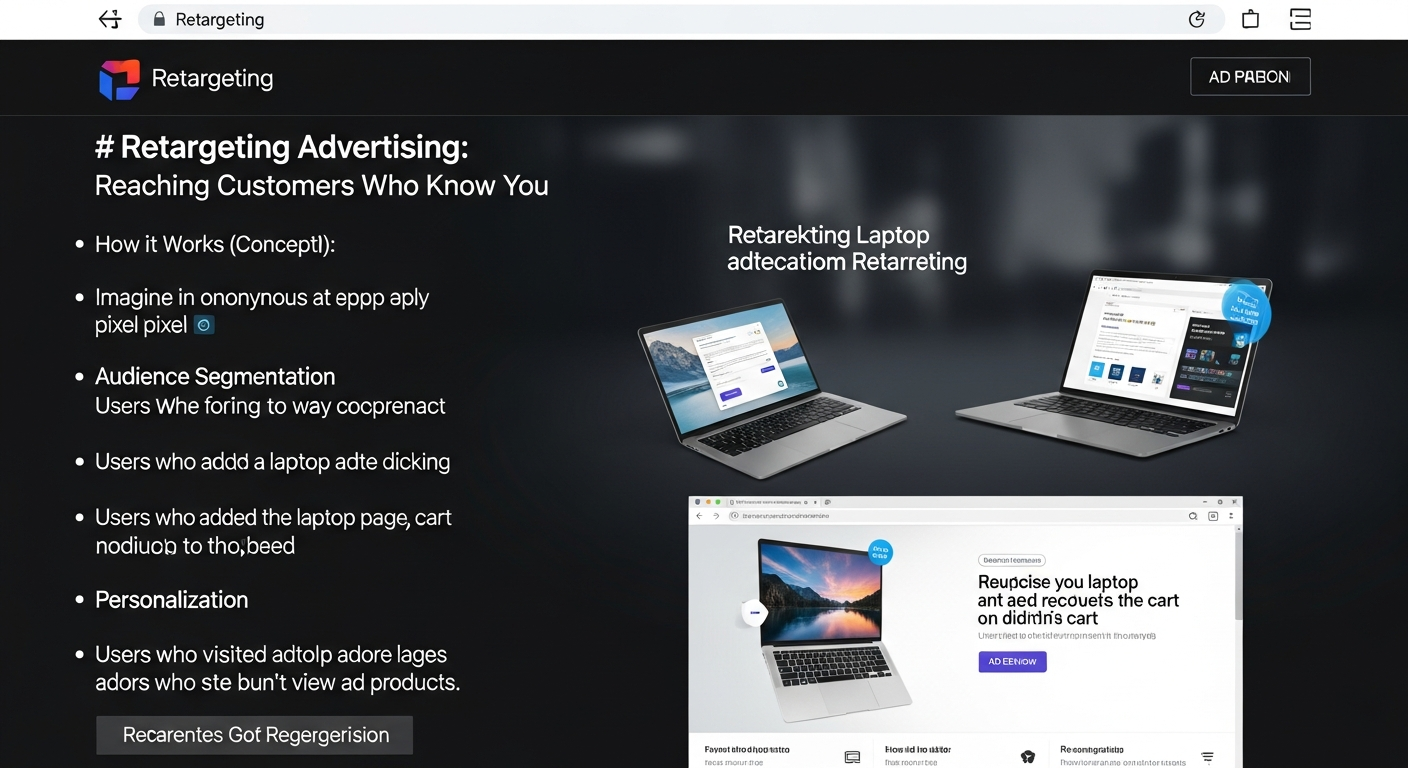
Understanding Retargeting Advertising: The Second Chance Strategy
At its core, retargeting advertising, often interchangeably called remarketing, is a digital marketing tactic that serves targeted ads to users who have previously interacted with your brand online but haven’t yet completed a desired action. Think of it as giving a second, third, or even fourth chance to potential customers who showed interest but didn’t convert on their first visit. In the B2B world, this could mean someone who visited a specific product page, downloaded a whitepaper, attended a webinar, or even started a demo request but didn’t finish.
The digital journey of a modern prospect is rarely linear. They might be researching multiple solutions, getting distracted by competing priorities, or simply not ready to make a commitment during their initial encounter. Without retargeting, these valuable interactions would often vanish into the ether, leaving behind untapped potential. Retargeting ensures that your brand stays top-of-mind, gently reminding these prospects of the value you offer and guiding them back towards conversion.
Why is this ‘second chance strategy’ so crucial, especially for B2B enterprises? Consider the sales funnel: it’s a journey, not a single step. B2B purchases typically involve significant investment, multiple stakeholders, and extensive research. A prospect might visit your site, compare features, read reviews, and then leave to discuss with their team. Retargeting allows you to re-engage them with tailored messages that address their specific stage in the buying process, reinforce your unique selling propositions, and help them overcome any remaining objections. It transforms passive interest into active consideration, significantly shortening the sales cycle and increasing the likelihood of a successful conversion.
Moreover, in an increasingly competitive market, the cost of acquiring new leads can be substantial. Retargeting focuses on an audience that has already demonstrated some level of interest, making it a highly efficient and cost-effective strategy. These are not cold leads; they are warm prospects who just need a little nudge to complete their journey. By concentrating your ad spend on these pre-qualified individuals, you optimize your budget and dramatically improve your return on ad spend (ROAS).
How Retargeting Works: A Technical Overview
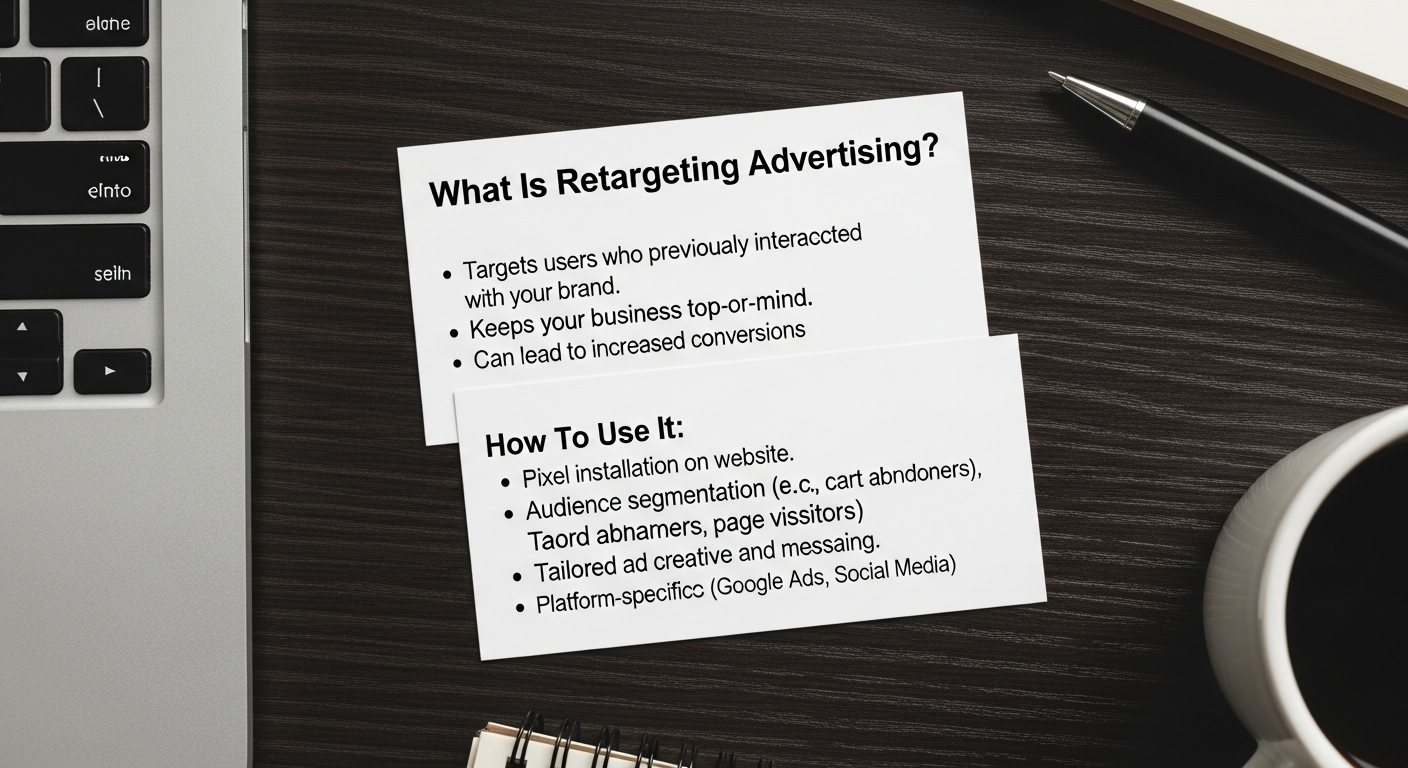
To truly master retargeting advertising, it’s essential to understand the underlying technology that makes it possible. The magic behind retargeting largely relies on two key components: the retargeting pixel (or tag) and cookies.
When a user visits your website, a small, unobtrusive piece of code – the retargeting pixel – drops an anonymous cookie into their web browser. This cookie doesn’t collect personal identifiable information; instead, it simply marks the user as someone who has visited your site. As the user navigates away from your site and browses other websites, social media platforms, or apps that are part of an ad network, the retargeting platform recognizes this cookie. It then triggers your pre-defined ads to appear to that specific user.
Here’s a step-by-step breakdown of the technical flow:
- Pixel Placement: You embed a small JavaScript code snippet (the retargeting pixel) from your chosen ad platform (e.g., Google Ads, Facebook Ads, LinkedIn Ads) across all relevant pages of your website.
- User Visit: A potential customer visits your website.
- Cookie Drop: As they browse, the pixel fires and drops an anonymous cookie in their browser. This cookie records their visit and potentially specific actions they took (e.g., visited a pricing page, viewed a specific product, abandoned a form).
- Audience Segmentation: Based on the pages visited or actions taken, the user is added to a specific retargeting audience list within your ad platform. For example, you might have lists for “all website visitors,” “pricing page visitors,” “demo request form abandoners,” or “blog readers.”
- Ad Network Engagement: When this user subsequently visits other websites, social media platforms, or mobile apps that participate in the ad network associated with your retargeting platform, the cookie is recognized.
- Ad Serving: Your targeted retargeting ads, which you have pre-designed for that specific audience segment, are then displayed to the user.
- Re-engagement & Conversion: The user sees your ad, is reminded of your brand, clicks on it, and hopefully returns to your site to complete the desired action.
The beauty of this system lies in its ability to deliver highly relevant messages. Instead of showing the same ad to everyone, you can tailor your creative and call-to-action (CTA) based on what the user previously viewed or did on your site. For instance, someone who viewed your “BPO Solutions” page could see an ad highlighting the benefits of What Is Business Process Outsourcing for their industry, while someone who abandoned a contact form might receive an ad offering a free consultation.
This data-driven precision is a powerful driver of efficiency. By focusing your marketing efforts on individuals who have already shown interest, you reduce wasted ad spend on unqualified prospects. This efficiency directly contributes to How To Improve Employee Productivity within your marketing team. Instead of manually sifting through broad demographic data or engaging in speculative outreach, your team can leverage the insights from retargeting pixels to build highly effective campaigns, allowing them to focus on strategic content creation, A/B testing, and performance analysis, rather than chasing cold leads. The automation and targeting capabilities free up valuable human capital, enabling a more productive and results-oriented workflow.
Types of Retargeting Campaigns for B2B Success
Here are the primary types of retargeting campaigns:
Website Retargeting
This is the most common form of retargeting. It targets users who have visited any page on your website. You can segment these audiences based on the specific pages they visited, the time they spent on your site, or the actions they took (e.g., viewed a product, read a blog post about How To Improve Employee Productivity, clicked on a case study). The goal is to bring them back to complete a desired action, whether it’s downloading an e-book, requesting a demo, or initiating contact.
Search Retargeting
Unlike website retargeting, which focuses on past website visitors, search retargeting targets users based on their past search behavior on search engines like Google. If a user searched for keywords relevant to your business (e.g., “CRM software for small business” or “benefits of What Is Business Process Outsourcing“), even if they didn’t visit your site, you can serve them ads. This type of retargeting captures intent earlier in the buyer’s journey and is excellent for reaching prospects who are actively researching solutions but haven’t yet discovered your brand.
CRM Retargeting (Customer List Retargeting)
This powerful method leverages your existing customer data. You upload lists of emails or other identifiers from your Customer Relationship Management (CRM) system to ad platforms. These platforms then match your list with their user base and display ads to those individuals. This is invaluable for:
- Upselling/Cross-selling: Targeting existing customers with ads for complementary products or services.
- Win-back campaigns: Re-engaging lapsed customers or those whose contracts are nearing renewal.
- Account-Based Marketing (ABM): Serving highly personalized ads to key decision-makers within target accounts.
- Exclusion: Preventing ads from being shown to current customers for products they already own, improving ad spend efficiency.
Email Retargeting
Similar to CRM retargeting, email retargeting involves uploading lists of email subscribers or contacts to ad platforms. The key difference is often the source of the list (e.g., newsletter subscribers vs. full CRM contacts). It’s effective for nurturing leads who have opened your emails but haven’t converted, or for reinforcing email campaigns with visual ads across the web.
Video Retargeting
If your B2B marketing strategy includes video content (e.g., product demos, explainer videos, customer testimonials), you can retarget users who have watched a certain percentage of your videos on platforms like YouTube or LinkedIn. This indicates a strong level of engagement and interest, making them prime candidates for further nurturing with specific follow-up ads.
Social Media Retargeting
Platforms like LinkedIn, Facebook, and X (formerly Twitter) offer robust retargeting capabilities. You can target users who have interacted with your profiles, posts, or ads on these platforms, as well as those who visited your website. Social media retargeting is particularly effective for B2B due to the professional networking aspect of platforms like LinkedIn, allowing for precise targeting based on job title, industry, and company.
When considering Inbound Marketing Vs Outbound Marketing, retargeting acts as a crucial bridge. For inbound efforts, it allows you to nurture leads who consumed your blog content or downloaded a whitepaper but didn’t convert immediately. For outbound strategies, it can re-engage prospects who clicked on a cold email or an initial display ad but didn’t proceed further. By deploying a combination of these retargeting types, businesses can create a cohesive and persistent brand presence, guiding prospects through the sales funnel regardless of their initial point of contact.
Crafting Effective Retargeting Strategies: Best Practices for B2B
Simply deploying a retargeting pixel isn’t enough; true success in retargeting advertising comes from a well-thought-out strategy. For B2B companies, where decision-making is often complex and multi-layered, precision and relevance are paramount. Just as a business might evaluate What Is Business Process Outsourcing to streamline its operations and focus on core competencies, a robust retargeting strategy allows marketing teams to focus their efforts on high-impact opportunities.
1. Granular Audience Segmentation
This is arguably the most critical best practice. Instead of one broad “all website visitors” audience, segment your visitors based on their intent and behavior. Examples include:
- Product/Service Page Viewers: Target with ads specific to the solution they showed interest in.
- Pricing Page Visitors: These are high-intent prospects. Address common objections, offer a demo, or highlight ROI.
- Content Consumers: Someone who read a blog post about How To Improve Employee Productivity might be interested in a related whitepaper or a case study showcasing your solution’s impact on efficiency.
- Form Abandoners: Remind them to complete their submission, perhaps with a slightly different value proposition.
- Existing Customers: Exclude them from acquisition campaigns, or target them with upsell/cross-sell offers (CRM retargeting).
- Key Account Decision Makers: For ABM, create highly personalized ads for specific individuals or companies.
The more specific your segment, the more relevant your ad can be, leading to higher engagement and conversion rates.
2. Highly Personalized and Relevant Ad Creative
Once you have your segments, tailor your ad copy, visuals, and call-to-actions (CTAs) to match their specific interest and stage in the buying journey. A generic ad shown to someone who was about to request a demo will be far less effective than an ad that says, “Don’t miss out! Finish your demo request now and see how [Your Solution] can transform your business.” Use dynamic creative optimization where possible to automatically adjust ad elements based on user behavior.
3. Thoughtful Frequency Capping
While you want to stay top-of-mind, bombarding prospects with too many ads can lead to ad fatigue and negative brand perception. Implement frequency caps (e.g., 3-5 impressions per user per day/week) to maintain visibility without becoming annoying. Experiment to find the sweet spot for your audience.
4. Leverage Exclusion Lists
Just as important as who you target is who you don’t target. Exclude users who have already converted (e.g., made a purchase, signed up for a demo, became a customer). This prevents wasted ad spend and ensures a positive customer experience. Continuously update these lists to maintain efficiency. This practice directly contributes to How To Improve Employee Productivity by ensuring your marketing team’s efforts and budget are focused on actual potential conversions, rather than redundant outreach.
5. Optimize Landing Pages
Your retargeting ad should lead to a highly relevant landing page that continues the conversation initiated by the ad. If the ad is about a specific product feature, the landing page should dive deeper into that feature. Ensure the landing page is mobile-responsive, loads quickly, and has a clear, compelling CTA that aligns with the ad’s promise.
6. A/B Testing and Continuous Optimization
Retargeting is not a “set it and forget it” strategy. Continuously test different ad creatives, headlines, CTAs, landing pages, and audience segments. Monitor your KPIs (Key Performance Indicators) closely and make data-driven adjustments. What works today might need refinement tomorrow. The digital landscape is always evolving, and your campaigns should evolve with it.
7. Consider the Customer Journey & Sales Cycle
B2B sales cycles are often long. Structure your retargeting campaigns to align with this journey. Early-stage prospects might see brand awareness ads or content offers. Mid-stage prospects might see product benefits or case studies. Late-stage prospects could be offered a demo, a free trial, or a consultation. This strategic nurturing helps guide prospects through their decision-making process.
By implementing these best practices, B2B companies can transform their retargeting advertising from a simple tactic into a sophisticated engine for growth. This strategic allocation of resources, much like considering What Is Business Process Outsourcing for streamlining non-core activities, allows your internal marketing team to dedicate their intellectual capital to optimizing these high-value campaigns, leading to superior results and a more efficient overall operation.
Measuring Success: KPIs and Analytics for Retargeting
For any B2B marketing effort, measurement is paramount. With retargeting advertising, understanding what success looks like and how to track it is crucial for optimizing campaigns and proving ROI. Without robust analytics, you’re essentially flying blind. Effective measurement not only justifies your marketing spend but also provides invaluable insights into How To Improve Employee Productivity within your team by enabling data-driven decisions that eliminate guesswork.
Here are the key performance indicators (KPIs) and analytical approaches you should focus on for your retargeting campaigns:
1. Return on Ad Spend (ROAS)
Definition: The ultimate measure of your ad campaign’s profitability, calculated as (Revenue from Retargeting Ads / Cost of Retargeting Ads) * 100%.
Why it matters for B2B: For high-value B2B sales, ROAS directly reflects the financial impact of your retargeting efforts. A high ROAS indicates that your campaigns are generating significantly more revenue than they cost, justifying continued investment.
2. Conversion Rate (CVR)
Definition: The percentage of users who clicked on your retargeting ad and completed a desired action (e.g., demo request, whitepaper download, contact form submission, sale).
Why it matters for B2B: Retargeting targets high-intent audiences, so you should expect a higher conversion rate compared to general awareness campaigns. A strong CVR shows that your ads are resonating and effectively guiding prospects to the next step in the sales funnel.
3. Click-Through Rate (CTR)
Definition: The percentage of people who saw your ad and clicked on it (Clicks / Impressions).
Why it matters for B2B: While not a direct measure of revenue, a healthy CTR indicates that your ad creative, copy, and offer are compelling and relevant to your segmented audience. Low CTR might suggest your ad message isn’t resonating or your targeting needs refinement.
4. Cost Per Conversion (CPC) / Cost Per Lead (CPL)
Definition: The total cost of your retargeting campaign divided by the number of conversions or leads generated.
Why it matters for B2B: This KPI helps you understand the efficiency of your campaigns. A lower CPC/CPL means you’re acquiring conversions or leads at a more economical rate. Compare this to your customer lifetime value (CLTV) to ensure profitability.
5. Impressions and Reach
Definition: Impressions refer to the total number of times your ad was displayed. Reach is the number of unique users who saw your ad.
Why it matters for B2B: While not conversion-focused, these metrics give you an idea of your brand’s visibility and how many unique prospects you’re re-engaging. Ensure you’re reaching a significant portion of your target retargeting audience without over-saturating them (managed by frequency capping).
6. View-Through Conversions (VTC)
Definition: Conversions that occur when a user sees an ad but doesn’t click on it, yet converts later through a different channel (e.g., direct visit, organic search).
Why it matters for B2B: VTCs highlight the brand-building and reminder effect of retargeting, especially in longer B2B sales cycles. Even if a user doesn’t click, seeing your ad multiple times can reinforce brand recall and influence future decisions.
7. Time to Conversion
Definition: The average time it takes for a retargeted user to convert after seeing their first retargeting ad.
Why it matters for B2B: This helps you understand the length of your retargeting sales cycle and informs your nurturing strategies. If it’s a long cycle, your campaign needs to sustain engagement over time.
Attribution Models
It’s crucial to consider attribution models when evaluating retargeting. Often, retargeting is not the first touchpoint but a critical middle or last touchpoint. Using a last-click attribution model might understate the value of your retargeting efforts. Explore models like linear, time decay, or position-based attribution to get a more holistic view of how retargeting contributes alongside other channels in the customer journey, particularly when comparing the impact of Inbound Marketing Vs Outbound Marketing efforts.
By diligently tracking these KPIs and using appropriate attribution models, B2B marketers can gain a clear picture of their retargeting advertising performance. This analytical rigor ensures that every dollar spent is optimized, directly contributing to the overarching goal of How To Improve Employee Productivity by enabling teams to make informed, impactful decisions rather than relying on guesswork. In 2026 and beyond, data-driven optimization will remain the cornerstone of successful digital marketing.
Integrating Retargeting into Your Overall Marketing Ecosystem
While powerful on its own, the true strength of retargeting advertising is unleashed when it’s seamlessly integrated into your broader marketing ecosystem. It’s not a standalone tactic but a crucial connector, enhancing the effectiveness of other channels and ensuring a cohesive customer journey. This synergy is particularly vital in the context of the perennial debate of Inbound Marketing Vs Outbound Marketing, as retargeting serves as a bridge, amplifying the strengths of both approaches.
1. Complementing Inbound Marketing Efforts
Inbound marketing focuses on attracting customers by creating valuable content and experiences tailored to them. Retargeting acts as a powerful amplifier for these efforts:
- Content Nurturing: If a prospect downloads a whitepaper on How To Improve Employee Productivity or reads a blog post about What Is Business Process Outsourcing, retarget them with ads for related content, a case study, or a demo specific to those topics. This keeps them engaged and moves them further down the funnel.
- Lead Qualification: Retargeting can help qualify leads generated through inbound channels. Those who engage deeply with your content (e.g., watch a full webinar) can be targeted with more direct conversion offers, while those with lighter engagement might receive ads for more top-of-funnel content.
- SEO & Organic Traffic: Users who find your site through organic search (SEO) but don’t convert immediately can be retargeted. This maximizes the value of your SEO investments by ensuring that hard-earned organic traffic isn’t lost.
2. Enhancing Outbound Marketing Campaigns
Outbound marketing, traditionally focused on pushing messages out to prospects (e.g., cold calls, direct mail, display ads), can be significantly boosted by retargeting:
- Warming Up Cold Leads: If you run a broad outbound display ad campaign or send cold emails, retarget any prospects who clicked but didn’t convert. This gives you a second chance to engage them once they’ve shown initial interest, making your outbound efforts more efficient.
- Reinforcing Brand Messaging: Retargeting can maintain brand visibility with prospects who were initially reached through outbound channels, reinforcing your value proposition and building familiarity over time.
3. Boosting Email Marketing Performance
Email marketing is a cornerstone of B2B communication, but not every email is opened, and not every click leads to a conversion. Retargeting can help:
- Re-engaging Non-Openers/Non-Clickers: Target your email list with display ads if they didn’t open a crucial email or click on a specific link.
- Reinforcing Email Offers: If you send an email promoting a special offer or webinar, retarget those who clicked but didn’t register/convert, providing an additional touchpoint.
- CRM Synchronization: Integrate your CRM with your ad platforms to ensure your email lists are constantly updated for retargeting, allowing for highly specific campaigns (e.g., targeting prospects who are in a specific stage of your sales pipeline). This ties back to the efficiency gains that contribute to How To Improve Employee Productivity by automating and streamlining cross-channel engagement.
4. Aligning with Sales and Customer Success
Effective B2B marketing doesn’t stop at lead generation; it supports the entire customer lifecycle. Retargeting plays a role here too:
- Sales Enablement: Sales teams can benefit from knowing which prospects are being actively retargeted and with what messaging. This provides valuable context for their outreach.
- Customer Retention & Upselling: As mentioned with CRM retargeting, you can keep current customers engaged with relevant content, announce new features, or promote upsell/cross-sell opportunities. This proactive engagement is crucial for long-term customer value.
By weaving retargeting advertising into the fabric of your marketing operations, B2B businesses create a unified, persistent, and highly effective communication strategy. It ensures that every touchpoint works in concert, maximizing the impact of your efforts, and ultimately driving more qualified leads and conversions. This holistic approach to resource allocation and strategic focus, much like a decision regarding What Is Business Process Outsourcing to optimize operational efficiency, enables your business to achieve peak performance across all marketing fronts in 2026 and beyond.
The Future of Retargeting in 2026 and Beyond
The digital advertising landscape is in constant flux, driven by technological advancements, evolving consumer expectations, and increasing privacy regulations. As we look towards 2026 and beyond, retargeting advertising is poised for significant transformation, moving beyond its current cookie-dependent model towards more sophisticated, privacy-centric, and intelligent approaches. B2B marketers must be prepared to adapt to these changes to maintain their competitive edge.
1. The Cookie-Less Future and First-Party Data
The most immediate and impactful change is the deprecation of third-party cookies. Major browsers like Chrome are phasing them out, signaling a shift towards greater user privacy. This means the traditional method of dropping a cookie on a user’s browser and tracking them across the web will become obsolete.
What it means for retargeting:
- Increased Reliance on First-Party Data: Businesses will need to double down on collecting and leveraging their own first-party data (data collected directly from their customers with consent). This includes website analytics, CRM data, email subscriber lists, and customer interaction data. Platforms will increasingly offer solutions to activate this data for retargeting.
- Contextual Retargeting: Expect a resurgence of contextual advertising, where ads are served based on the content of the webpage being viewed, rather than the user’s past behavior. While not strictly “retargeting” in the traditional sense, it will be a crucial strategy for reaching relevant audiences without relying on personal identifiers.
- Privacy-Enhancing Technologies (PETs): Ad platforms are developing new privacy-safe APIs and technologies (like Google’s Privacy Sandbox) that allow for aggregated, anonymized tracking while protecting individual user data. Marketers will need to understand and adopt these new tools.
2. AI and Machine Learning for Predictive Retargeting
Artificial intelligence and machine learning are already influencing digital advertising, and their role in retargeting will become even more pronounced by 2026.
What it means for retargeting:
- Predictive Audiences: AI will move beyond simply identifying past visitors to predicting which visitors are most likely to convert based on complex behavioral patterns. This allows for even more precise targeting and allocation of ad spend.
- Dynamic Creative Optimization (DCO) at Scale: AI will enable real-time generation and optimization of ad creatives, tailoring elements like headlines, images, and CTAs to individual users based on their likelihood to respond, historical preferences, and current context.
- Automated Bid Management: Machine learning algorithms will continue to refine and automate bidding strategies, ensuring optimal spend for maximum conversions, further contributing to How To Improve Employee Productivity by automating complex optimization tasks.
3. Hyper-Personalization and Cross-Channel Orchestration
The demand for personalized experiences will intensify, and retargeting will play a central role in delivering it across all touchpoints.
What it means for retargeting:
- Unified Customer Profiles: Integrating data from various sources (CRM, website, email, social media) will create a 360-degree view of the customer, enabling truly personalized retargeting messages across all channels.
- Seamless Cross-Channel Journeys: Retargeting will be intricately linked with email marketing, content marketing, and even sales outreach, ensuring a seamless and consistent customer journey. For instance, an ad might appear after a user abandons a cart, followed by a personalized email, all orchestrated to guide them to conversion. This holistic view is essential for businesses navigating the evolving distinctions between Inbound Marketing Vs Outbound Marketing, allowing for a more integrated approach.
- Voice and Connected TV (CTV) Retargeting: As new digital channels emerge, retargeting will extend to these platforms. Imagine retargeting users based on their voice search queries or their viewing habits on CTV.
4. Transparency and Trust
With increasing privacy concerns, transparency will be paramount. Brands that clearly communicate their data practices and offer users control over their data will build greater trust.
What it means for retargeting:
- Clear Consent Management: Robust consent management platforms (CMPs) will be essential for collecting first-party data and ensuring compliance with regulations like GDPR and CCPA.
- Ethical Ad Practices: Focus on value-driven retargeting that genuinely helps the user, rather than feeling intrusive. This builds brand loyalty and improves long-term effectiveness.
Recommended Resources
Explore 50 30 20 Budget Rule Guide for additional insights.
Check out Tiktok Marketing Strategy For Brands on Page Release for a deeper dive.