
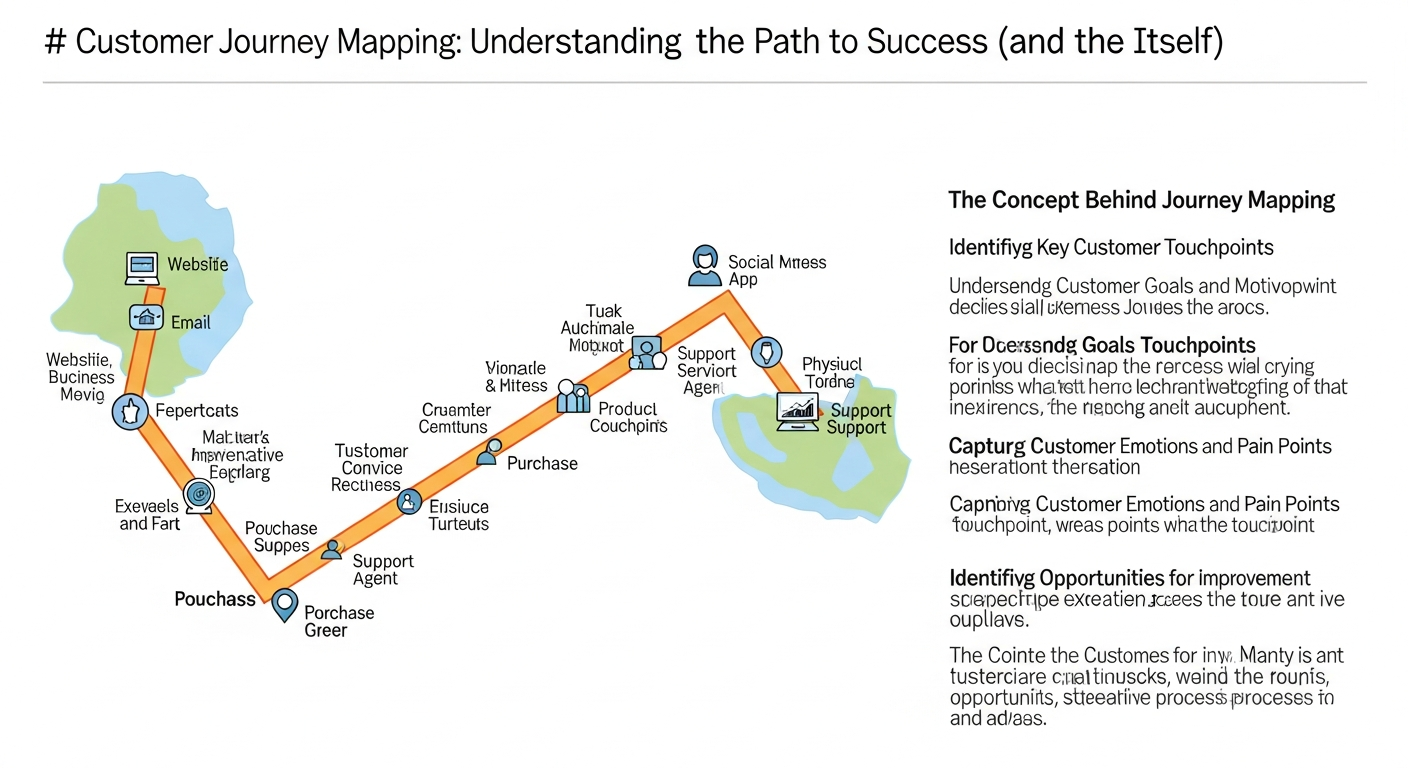
What is Customer Journey Mapping? A Definitive Overview
Customer journey mapping is the process of creating a visual representation of the entire customer experience. It meticulously charts every interaction a customer has with a company, product, or service, from the moment they first become aware of a need or solution to their post-purchase engagement and potential advocacy. This comprehensive visual narrative is crafted from the customer’s perspective, not an internal operational view, which is a crucial distinction. It aims to uncover the customer’s motivations, actions, thoughts, and emotions at each stage of their interaction.
At its core, a customer journey map typically consists of several key elements:
- Customer Persona(s): A detailed, semi-fictional representation of your ideal customer, based on market research and real data about your existing customers. This persona outlines their demographics, behaviors, motivations, and pain points.
- Stages of the Journey: These represent the distinct phases a customer goes through, such as Awareness, Consideration, Decision, Onboarding, Retention, and Advocacy. These stages are often aligned with a typical B2B sales funnel, providing a holistic view beyond just the initial conversion.
- Touchpoints: Every point of contact between the customer and the business. This can include digital touchpoints (website, email, social media, ads) and physical touchpoints (sales calls, events, product usage, customer service interactions).
- Customer Actions: What the customer does at each touchpoint or stage (e.g., searches online, downloads a whitepaper, requests a demo, makes a purchase, contacts support).
- Customer Thoughts and Emotions: What the customer is thinking and feeling at each stage. This is perhaps the most critical element, as it uncovers frustrations, delights, uncertainties, and motivations. Understanding these emotional states allows businesses to build empathy and design more impactful experiences.
- Pain Points: Specific obstacles, frustrations, or areas of dissatisfaction experienced by the customer. These are critical opportunities for improvement.
- Opportunities: Points where the business can improve the customer experience, introduce new features, or provide additional value.
- Internal Ownership: Identifying which internal teams or departments are responsible for each touchpoint or stage, helping to break down silos and assign accountability.
Unlike an internal process flow, which focuses on how a company operates, a customer journey map is designed to reveal the customer’s subjective experience. It’s a powerful tool for identifying gaps between what a company thinks it delivers and what the customer actually perceives. By bringing these discrepancies to light, organizations can make data-driven decisions to optimize their processes, products, and services, ultimately leading to higher customer satisfaction and loyalty.
The Anatomy of a Comprehensive Customer Journey Map
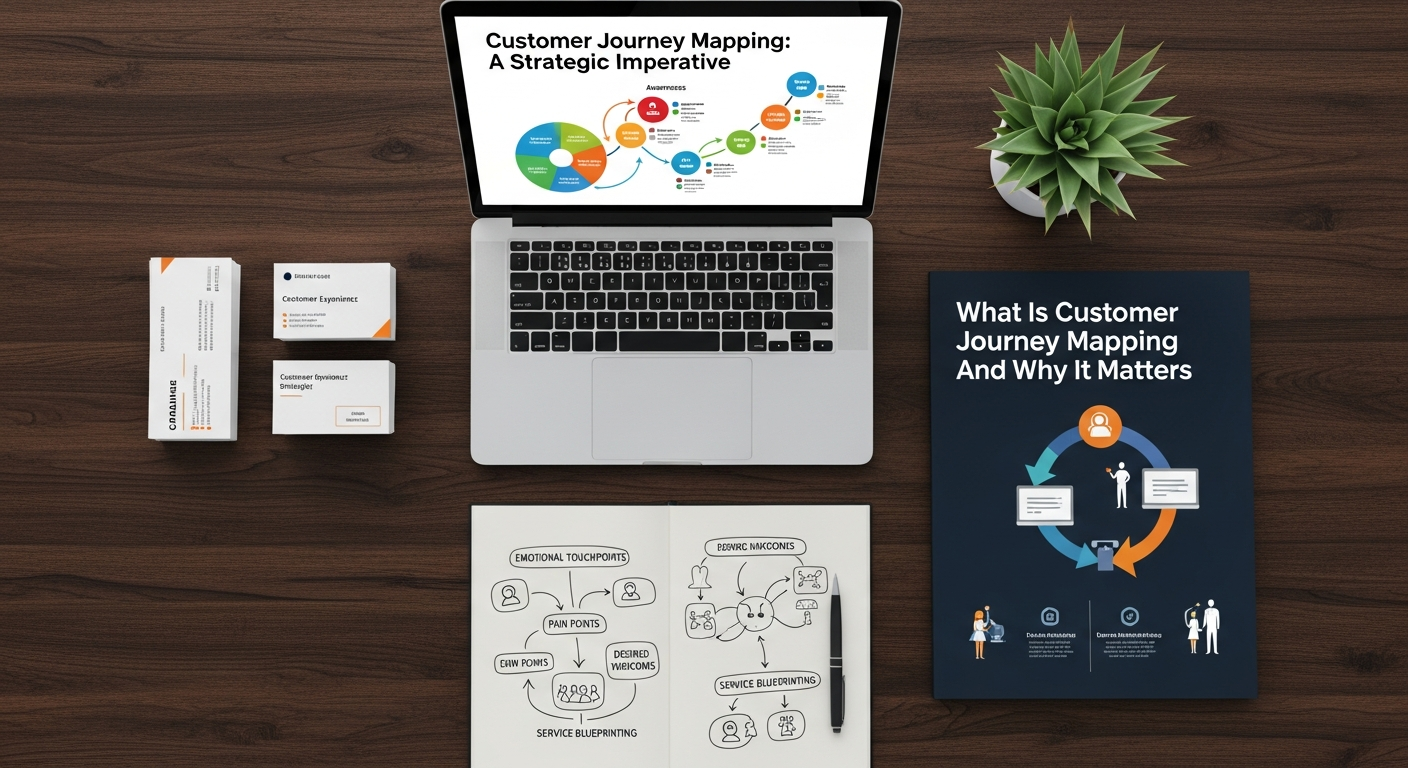
A truly effective customer journey map goes beyond a simple linear flow. It’s a rich, multi-layered document that encapsulates the complete emotional and practical journey of a customer. Let’s delve deeper into the essential components that construct a robust and actionable map:
- The Persona at the Helm: Every journey map begins with a detailed customer persona. For B2B, this might be “Decision-Maker David,” “IT Manager Ingrid,” or “Procurement Paul.” These aren’t just names; they are profiles built on extensive research, including job roles, industry, company size, goals, challenges, preferred communication channels, and even personal aspirations. Without a well-defined persona, the map lacks focus and empathy, risking generalized insights that don’t address specific customer needs. The journey is always from their perspective.
-
Discrete Journey Stages: The customer journey is not monolithic. It unfolds in distinct phases. While the exact stages can vary by industry and business model, common B2B stages include:
- Awareness: The customer realizes they have a problem or a need. They are passively seeking information.
- Consideration: The customer actively researches potential solutions, comparing vendors, features, and benefits. This stage is crucial in the initial phases of a `How To Build B2b Sales Funnel`.
- Decision: The customer evaluates options, engages with sales teams, and makes a purchasing choice.
- Onboarding/Implementation: The customer integrates the new product or service into their operations. This phase is critical for demonstrating immediate value.
- Retention/Usage: The customer actively uses the product/service, seeking ongoing value and support.
- Advocacy: The customer becomes a loyal promoter, recommending the solution to others.
Each stage marks a significant shift in the customer’s mindset and actions.
- Identifying All Touchpoints: A touchpoint is any point of interaction between the customer and your brand. These can be digital (website, blog, email, social media, online ads, webinars, software interface, support chat) or offline (sales calls, conferences, workshops, physical product interaction, invoicing). It’s vital to list every single touchpoint, even those seemingly minor, as each contributes to the overall experience.
- Customer Actions and Behaviors: At each touchpoint and stage, what does the customer do? Do they click a link, fill out a form, read a case study, attend a demo, open a support ticket, renew a subscription? Documenting these actions provides tangible data points for analysis.
- Capturing Thoughts and Emotions: This is where empathy truly comes into play. What is the customer thinking? What are their concerns, questions, or hopes? How are they feeling—frustrated, confused, excited, relieved, skeptical? Using direct quotes from customer interviews or feedback can powerfully illustrate these internal states. This layer helps transform abstract data into relatable human experiences.
- Pinpointing Pain Points and Obstacles: Where does the customer experience friction, disappointment, or difficulty? These pain points are golden opportunities for improvement. They could be slow website loading times, confusing pricing structures, unresponsive customer service, complex onboarding processes, or a lack of specific features. Identifying these enables targeted interventions.
- Uncovering Opportunities for Improvement and Delight: Conversely, where can you exceed expectations? Opportunities might include simplifying a process, offering proactive support, providing personalized content, or adding a new feature that addresses a common customer challenge. These insights can lead to innovative solutions and competitive differentiation.
- Metrics and KPIs: While not always visually present on the map itself, linking each stage or touchpoint to relevant metrics (e.g., website bounce rate, conversion rates, NPS scores, customer effort score, churn rate) allows for quantitative validation of qualitative insights. This helps measure the impact of changes.
- Internal Ownership and Responsibility: To ensure actionability, it’s crucial to assign internal stakeholders to each stage or touchpoint. Which department is responsible for the website content? Who owns the sales process? Who manages customer support? This promotes cross-functional collaboration and accountability, preventing insights from simply gathering dust.
By meticulously detailing these elements, a comprehensive customer journey map transforms abstract customer data into a powerful, actionable narrative. It highlights where your business is succeeding, where it’s failing, and most importantly, where it needs to focus its efforts to create a truly exceptional customer experience that drives growth and loyalty.
Why Customer Journey Mapping Matters for B2B Success
- Enhanced Customer Experience (CX): This is arguably the most direct and significant benefit. By gaining a deep, empathetic understanding of customer needs, frustrations, and desires at every touchpoint, businesses can proactively design experiences that are smoother, more intuitive, and ultimately more satisfying. A superior CX leads to higher satisfaction, reduced churn, and increased customer lifetime value (CLV).
- Identification of Critical Pain Points and Gaps: Journey maps illuminate the “moments of truth” where customers might feel confused, frustrated, or abandoned. These pain points often represent systemic issues within an organization’s processes or service delivery. By identifying these critical gaps, B2B companies can prioritize improvements, whether it’s simplifying complex onboarding procedures, streamlining communication, or enhancing product features.
- Breaks Down Internal Silos: B2B organizations often operate in departmental silos – sales, marketing, product, support, finance – each with its own goals and metrics. A customer journey map provides a unified, customer-centric view that transcends these internal boundaries. It forces departments to collaborate, understand each other’s roles in the broader customer experience, and work together towards common CX goals. This cross-functional alignment fosters a more cohesive and efficient organization.
- Informs Product and Service Development: By highlighting what customers truly need, what problems they face, and what features they value (or lack), journey mapping provides invaluable insights for product development teams. It ensures that new features, services, or product iterations are built based on real customer demand and pain points, rather than internal assumptions, leading to more market-aligned and successful offerings.
- Optimizes Resource Allocation: When you understand which touchpoints and stages are most critical to customer satisfaction and retention, you can allocate resources more effectively. Instead of guessing where to invest, businesses can focus their efforts and budget on areas that will have the greatest positive impact on the customer journey, leading to better ROI on marketing, sales, and service initiatives.
- Achieves Competitive Advantage: In a crowded B2B marketplace, simply having a good product is often not enough. Companies that consistently deliver a superior customer experience stand out. Journey mapping enables businesses to differentiate themselves by anticipating customer needs, providing proactive support, and creating memorable interactions that competitors may overlook.
- Drives Sales Funnel Optimization: A detailed understanding of the customer’s journey through the `How To Build B2b Sales Funnel` allows businesses to identify where prospects drop off, what information they need at each stage, and what objections they might have. This insight enables the optimization of marketing campaigns, sales scripts, and content strategies to move prospects more efficiently from awareness to decision.
- Increases Customer Lifetime Value (CLV) and Retention: A smooth, positive customer journey from start to finish naturally leads to higher customer satisfaction. Satisfied B2B customers are more likely to renew contracts, expand their usage of your services, and become advocates for your brand, significantly increasing their CLV and reducing costly churn.
- Boosts Employee Engagement and Productivity: When employees understand how their work contributes to the overall customer journey, they feel a greater sense of purpose and impact. Providing employees with a clear understanding of customer pain points and how their efforts alleviate them can `How To Improve Employee Productivity` and morale, fostering a more customer-centric culture.
In essence, customer journey mapping provides the roadmap for creating intentional, impactful, and profitable customer experiences. It moves businesses beyond reactive problem-solving to proactive experience design, setting the stage for sustained growth and market leadership in 2026 and beyond.
Customer Journey Mapping as a Catalyst for Business Growth
Beyond simply improving customer satisfaction, customer journey mapping acts as a powerful catalyst for tangible business growth. By providing deep insights into customer behavior and sentiment, it empowers organizations to make strategic decisions that directly impact revenue, operational efficiency, and market position.
-
Optimizing the B2B Sales Funnel for Higher Conversions:
A well-mapped customer journey provides an unparalleled view of the `How To Build B2b Sales Funnel` from the customer’s perspective. It reveals precisely where prospects engage, where they hesitate, and where they drop off. For instance, a journey map might highlight that potential clients get stuck during the “consideration” phase due to a lack of clear comparison data or during the “decision” phase due to complex pricing. Armed with this knowledge, sales and marketing teams can:
- Develop targeted content to address specific questions at each stage.
- Refine sales scripts to proactively address common objections.
- Simplify pricing structures or contract terms based on identified friction points.
- Optimize lead nurturing campaigns for better engagement.
By smoothing out the path to purchase, businesses can significantly improve conversion rates and shorten sales cycles, directly impacting revenue growth.
-
Driving Operational Efficiency and Cost Reduction:
Customer journey mapping often exposes inefficiencies in internal processes that negatively impact the customer experience. For example, a map might reveal that customers repeatedly contact different departments for the same issue, indicating a lack of internal communication or a fragmented support system. Identifying such bottlenecks allows businesses to streamline operations, reduce redundant efforts, and improve service delivery.
This is where considering solutions like `What Is Business Process Outsourcing` can come into play. If the map uncovers that internal teams are spending an inordinate amount of time on non-core, repetitive tasks that cause customer delays (e.g., complex data entry for onboarding, manual invoice processing), outsourcing these processes to a specialized provider could not only free up internal resources but also improve accuracy and speed, enhancing the customer experience. Similarly, by reducing friction points and making customer interactions smoother, employees spend less time troubleshooting preventable issues, which directly contributes to `How To Improve Employee Productivity` across the organization.
-
Fueling Innovation and Market Differentiation:
By understanding unmet needs and “wish list” items from the customer’s perspective, journey mapping becomes a powerful engine for innovation. It helps businesses identify opportunities to develop new features, services, or even entirely new product lines that directly address customer pain points or create moments of delight. This foresight allows companies to stay ahead of the curve, differentiate themselves from competitors, and carve out new market segments.
-
Improving Customer Retention and Lifetime Value:
A seamless post-purchase journey, from onboarding to ongoing support and renewal, is crucial for B2B retention. Journey maps help pinpoint areas where customers might feel neglected or confused after the initial sale. By proactively addressing these, such as by improving proactive support, personalized follow-ups, or easier access to training, businesses can significantly increase customer loyalty, reduce churn, and maximize the long-term value of each client relationship.
-
Empowering Employees and Building a Customer-Centric Culture:
When employees across all departments understand the full customer journey, they gain context for their roles and appreciate how their individual efforts contribute to the overall customer experience. This shared understanding fosters a customer-centric culture, where every team member is aligned around the goal of delivering value. Empowered with this knowledge, employees are more engaged, make better decisions, and are more proactive in solving customer problems, leading to a direct positive impact on `How To Improve Employee Productivity` and overall business performance.
In conclusion, customer journey mapping is far more than a diagnostic tool; it’s a strategic framework that guides B2B organizations toward sustainable growth by optimizing every aspect of their customer interactions, from the initial sales touchpoint to long-term advocacy.
Implementing Customer Journey Mapping: A Strategic Approach
Embarking on a customer journey mapping initiative requires a structured and strategic approach to ensure the output is actionable and yields tangible results. It’s not a one-time project but an ongoing commitment to understanding and improving the customer experience.
-
Define Scope and Goals:
Before diving in, clearly articulate why you’re mapping and what you hope to achieve. Are you looking to reduce churn for a specific product, optimize a particular stage of the `How To Build B2b Sales Funnel`, or improve the onboarding process? Defining specific, measurable goals will guide your research and focus your efforts. Decide which customer persona(s) you will focus on and which part of their journey (e.g., pre-sales, post-sales, specific product usage) you will map.
-
Conduct Thorough Research and Gather Data:
The foundation of any effective journey map is robust data. This involves both quantitative and qualitative research:
- Quantitative Data: Leverage analytics from your website, CRM, marketing automation platforms, support tickets, and sales data. Look for trends, drop-off points, conversion rates, and common issues.
- Qualitative Data: This is where you gain deep empathy. Conduct interviews with existing customers, lost prospects, and even internal stakeholders who interact with customers daily (sales, support, account management). Use surveys, focus groups, and usability testing to understand motivations, thoughts, and emotions. Ask open-ended questions about their experiences, frustrations, and delights.
Remember, the goal is to capture the customer’s actual experience, not just what you perceive it to be.
-
Create Detailed Customer Persona(s):
Based on your research, develop realistic and detailed customer personas. Give them names, job titles, backgrounds, goals, challenges, and even personal characteristics. These personas will serve as the “protagonists” of your journey map, ensuring that the map remains customer-centric.
-
Map the Current State Journey:
Convene a cross-functional workshop involving representatives from sales, marketing, product, customer service, and management. Using a whiteboard, digital tool, or large paper, begin to chart the journey for your chosen persona:
- List out the discrete stages of the journey.
- For each stage, identify all customer touchpoints.
- Document the customer’s actions, thoughts, and emotions at each touchpoint.
- Crucially, identify pain points and moments of delight.
- Note down the internal teams responsible for each touchpoint.
This “as-is” map reflects the current reality, warts and all.
-
Analyze and Identify Opportunities:
Once the current state map is complete, step back and analyze it. Where are the biggest pain points? Where are there significant emotional dips? Where do customers abandon the journey? These are your opportunities for improvement. Brainstorm potential solutions, new features, or process changes that could alleviate frustrations and enhance satisfaction. Consider how improving internal processes, potentially through `What Is Business Process Outsourcing` for non-core functions, could free up resources to focus on these identified opportunities.
-
Design the Future State Journey:
Based on your identified opportunities, create an “ideal” or “to-be” journey map. This map visualizes how the customer experience should look after implementing your proposed changes. This future state map serves as a blueprint for your improvement initiatives.
-
Prioritize, Implement, and Measure Changes:
You can’t fix everything at once. Prioritize the opportunities that will have the biggest impact with the most feasible effort. Develop an action plan, assign responsibilities (linking to the internal ownership identified earlier), and set deadlines. Implement the changes and, critically, measure their impact using relevant KPIs (e.g., NPS, CSAT, retention rates, conversion rates). This iterative process helps quantify the success of your mapping efforts and demonstrates ROI.
-
Monitor and Iterate:
The customer journey is not static. Market conditions, customer expectations, and your offerings evolve. Therefore, customer journey maps should be living documents. Regularly review and update your maps, ideally annually or whenever significant changes occur. Continuously gather feedback and data to ensure your maps remain relevant and accurate for 2026 and beyond.
By following these steps, B2B organizations can transform abstract customer data into concrete strategies that drive operational improvements, foster innovation, and ultimately, accelerate business growth.
Overcoming Common Challenges in Customer Journey Mapping
While the benefits of customer journey mapping are clear, the process itself isn’t without its hurdles. B2B organizations often encounter several common challenges that can impede success. Recognizing and proactively addressing these can ensure a smoother and more effective mapping initiative.
-
Lack of Comprehensive Data and Research:
Challenge: Many organizations rely on assumptions or anecdotal evidence rather than robust data to build their maps. This leads to inaccurate or incomplete representations of the customer journey, making the map less actionable.
Solution: Prioritize thorough research. Combine quantitative data (web analytics, CRM data, support tickets, sales figures) with qualitative insights (customer interviews, surveys, focus groups, direct feedback from sales and support teams). Don’t just talk to happy customers; engage with detractors and lost prospects to understand pain points fully. Invest time in crafting detailed personas based on real data.
-
Internal Silos and Lack of Cross-Functional Buy-in:
Challenge: Different departments often have fragmented views of the customer and may resist sharing data or collaborating. Without buy-in from all key stakeholders (sales, marketing, product, service, IT), the map won’t reflect the full journey, and implementation efforts will falter.
Solution: Emphasize the shared goal: improving customer experience and business outcomes. Frame the initiative as a way to improve `How To Improve Employee Productivity` by reducing customer friction. Involve key representatives from all relevant departments from the very beginning. Facilitate cross-functional workshops to build the map collaboratively, fostering a sense of shared ownership and breaking down barriers. Executive sponsorship is crucial to enforce collaboration.
-
Scope Creep and Overwhelm:
Challenge: Attempting to map every single customer journey for every single persona across all products can quickly become overwhelming, leading to analysis paralysis and project abandonment.
Solution: Start small and focused. Select one critical persona and one specific journey (e.g., the onboarding journey for new enterprise clients, or the journey through a particular segment of your `How To Build B2b Sales Funnel`). Define clear objectives and boundaries for your initial mapping effort. Once successful, you can iterate and expand to other journeys or personas.
-
Focusing on “What” Instead of “Why” and “How”:
Challenge: Some maps simply list touchpoints and actions without delving into the customer’s thoughts, emotions, and motivations. This misses the crucial empathetic layer that makes journey maps powerful.
Solution: Actively probe for the “why” behind customer actions and feelings. Use techniques like “5 Whys” in interviews to uncover root causes of frustration. Dedicate specific sections on your map to capturing emotional highs and lows, pain points, and opportunities for delight. These insights are what truly drive meaningful change.
-
Turning Insights into Action (The “So What?” Problem):
Challenge: A beautifully crafted journey map is useless if its insights aren’t translated into concrete actions and implemented changes. Many initiatives fail at this stage, with maps gathering dust.
Solution: Integrate action planning directly into the mapping process. For every identified pain point and opportunity, brainstorm specific, actionable solutions. Assign clear owners and deadlines for each action. Prioritize initiatives based on impact and feasibility. Establish a feedback loop to measure the impact of implemented changes and continuously iterate. This might involve looking at areas where `What Is Business Process Outsourcing` could offload non-core, friction-causing tasks, freeing up internal teams to focus on core improvements identified in the map.
-
Maintaining Relevance and Keeping Maps Updated:
Challenge: Customer behaviors, market conditions, and your own product/service offerings evolve. A map created today might be outdated in six months, especially in the fast-paced B2B environment of 2026.
Solution: Treat journey maps as living documents. Schedule regular review and update sessions (e.g., quarterly or annually). Continuously collect new customer feedback and data. Make sure to incorporate insights from product updates, new marketing campaigns, or shifts in customer support trends to keep your maps accurate and relevant.
By proactively addressing these common challenges, B2B organizations can maximize the value of their customer journey mapping efforts, ensuring they lead to tangible improvements in customer experience and sustainable business growth.
The Future of Customer Journey Mapping in 2026
As we look towards 2026, customer journey mapping is poised to evolve significantly, moving beyond static diagrams to become a more dynamic, intelligent, and deeply integrated component of B2B strategy. The rapid advancements in technology, coupled with ever-increasing customer expectations, will redefine how organizations understand and interact with their clientele.
-
AI and Machine Learning for Predictive and Prescriptive Insights:
The biggest leap will come from the intelligent application of AI and machine learning. In 2026, AI will not only analyze vast quantities of customer data to identify patterns and predict future behaviors but also prescribe optimal next steps. Instead of merely mapping past journeys, AI-powered tools will offer real-time insights into customer sentiment, identify potential pain points before they escalate, and suggest personalized interventions. This will enable B2B companies to proactively address issues and guide customers more effectively through their journey, significantly impacting the efficiency of the `How To Build B2b Sales Funnel` by predicting where prospects might drop off and suggesting targeted engagements.
-
Real-time, Dynamic Journey Mapping:
Static journey maps, while foundational, will be augmented by dynamic, real-time representations. Integrated CX platforms will pull data from every touchpoint—CRM, marketing automation, support, product usage analytics, social media listening—to create a continuously updated view of individual customer journeys. This means businesses can react instantly to shifts in customer behavior or sentiment, offering hyper-personalized experiences and support exactly when and where it’s needed.
-
Hyper-Personalization at Scale:
Leveraging AI and real-time data, personalization will reach new heights. B2B communications, content, product recommendations, and even support interactions will be tailored to the individual customer’s unique journey stage, industry, role, and historical interactions. This will move beyond segment-based personalization to true one-to-one experiences, making customers feel deeply understood and valued.
-
Emphasis on Emotional Intelligence and Sentiment Analysis:
While current mapping identifies emotions, 2026 will see advanced natural language processing (NLP) and sentiment analysis tools providing deeper, more nuanced insights into customer feelings expressed across all textual and even voice interactions. This will allow businesses to detect subtle shifts in customer mood, identify emerging frustrations, and respond with greater empathy and precision, enhancing customer satisfaction and loyalty.
-
Seamless Omnichannel Experiences:
The expectation for seamless transitions between channels will be paramount. Customer journey mapping in 2026 will focus heavily on ensuring a consistent and uninterrupted experience whether a customer moves from an email to a website, a sales call, a support chat, or product usage. The map will highlight where these transitions break down and where integration needs to be strengthened, potentially even identifying areas where `What Is Business Process Outsourcing` can streamline cross-channel data flow and improve response times for non-core communications.
-
Integration with Employee Experience (EX):
The understanding that customer experience is inextricably linked to employee experience will deepen. Future journey mapping will increasingly integrate insights from employee journey maps. Identifying internal pain points that hinder employees from delivering excellent CX will become standard. For example
Recommended Resources
Learn more about this topic in How To Set Financial Goals And Stick To Them at AssetBar.
Explore E E A T Seo Guide 2026 for additional insights.