
Invoice Management Best Practices Guide 2026: Optimize Cash Flow & Boost Profitability
We’ll delve into establishing robust policies, leveraging advanced automation, optimizing both accounts receivable (AR) and accounts payable (AP) cycles, and harnessing data for continuous improvement. The goal is clear: to help you streamline operations, minimize errors, accelerate payments, and unlock significant value, positioning your business for unparalleled financial resilience in the years ahead.
The Strategic Imperative of Modern Invoice Management
Invoice management, at its core, is the process of handling incoming and outgoing invoices efficiently and accurately. However, its implications stretch far beyond basic accounting. In today’s fast-paced B2B environment, inefficient invoice management can lead to a cascade of negative consequences: delayed payments, strained vendor relationships, compliance risks, and a significant drain on valuable resources. Conversely, a well-oiled invoicing system acts as a financial command center, providing real-time visibility into cash flow, optimizing working capital, and fortifying your balance sheet.
Consider the stark realities: Industry reports consistently show that a significant percentage of invoices are paid late. For instance, data indicates that businesses often wait 30, 60, or even 90+ days for payments, severely impacting liquidity. The cost of manual invoice processing is staggering, with estimates ranging from $15 to $40 per invoice when factoring in labor, errors, and reconciliation time. Multiply that across hundreds or thousands of invoices monthly, and the financial burden becomes immense. Moreover, manual processes are breeding grounds for errors and fraud, posing substantial risks to your bottom line and reputation.
By 2026, businesses that fail to adopt modern invoice management practices will find themselves at a severe disadvantage. The competitive landscape demands agility, accuracy, and strategic financial control. Embracing best practices in this domain isn’t just about saving money; it’s about building a resilient, data-driven organization capable of informed decision-making and sustainable growth.
Laying the Foundation: Robust Policies & Standardized Processes
Develop Clear Invoicing Policies
Every business needs a written, accessible policy that outlines the rules for invoicing. This isn’t just for external communication; it ensures internal consistency and clarity. Key elements to define include:
- Payment Terms: Clearly state net 30, net 60, etc., and specify the calculation start date (e.g., from invoice date, from delivery date).
- Due Dates: Explicitly mention the payment due date on every invoice.
- Late Payment Fees/Interest: Detail any penalties for overdue invoices, ensuring compliance with local regulations.
- Dispute Resolution Process: Outline the steps for customers or vendors to dispute an invoice, including contact points and timelines.
- Accepted Payment Methods: List all payment channels available (bank transfer, credit card, digital wallets).
Standardize Invoice Creation
Consistency in invoice creation reduces errors, speeds up processing, and reinforces your brand professionalism. Utilize templates that include:
- Company Branding: Logo, contact information.
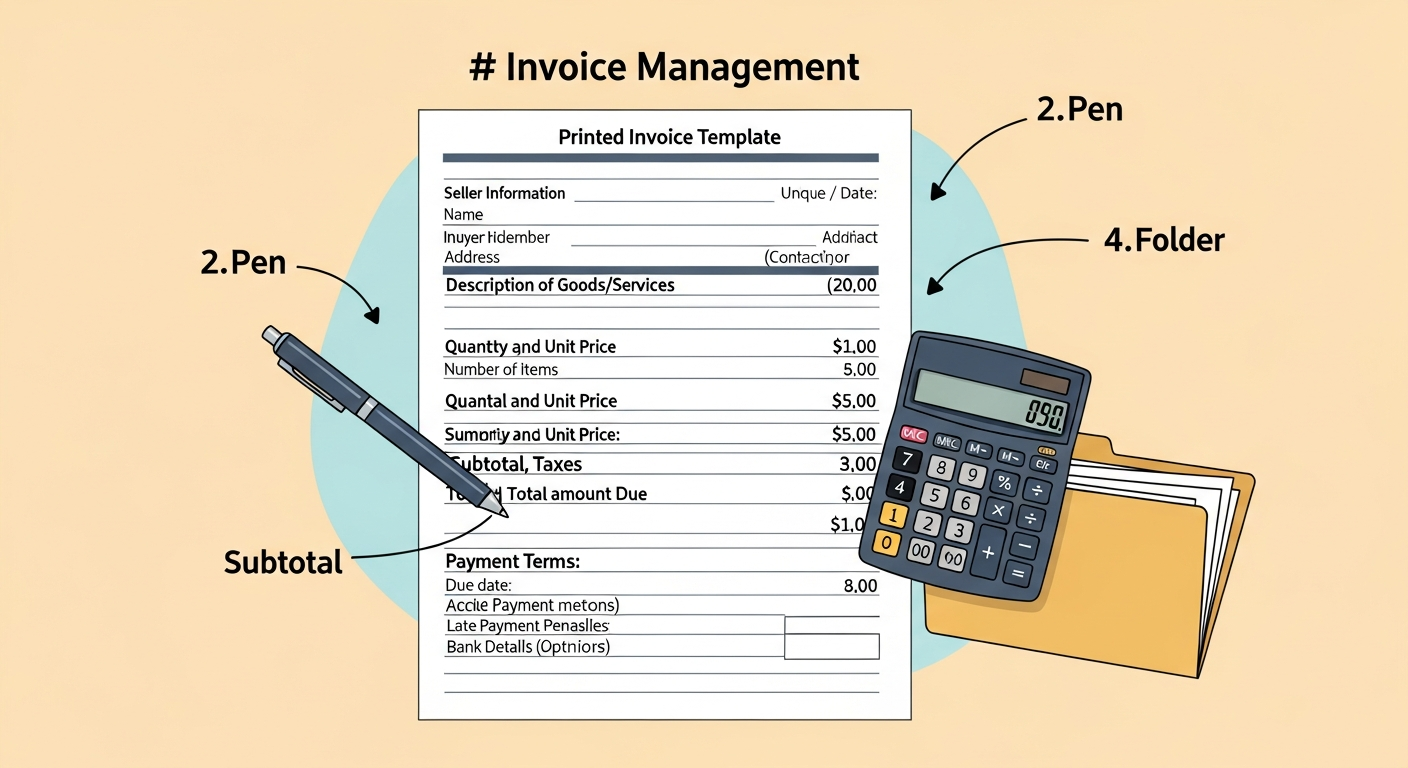
- Required Fields: Unique invoice number, date, customer/vendor details, itemized list of goods/services, quantities, unit prices, total amount, taxes, payment terms, and banking details.
- Document Types: Ensure clear linkage to purchase orders (POs), contracts, or service agreements where applicable.
Establish a Consistent Approval Workflow
Whether for incoming (AP) or outgoing (AR) adjustments, a defined approval workflow prevents unauthorized transactions and ensures accountability. This involves:
- Role-Based Approvals: Who approves invoices based on value, department, or project.
- Approval Limits: Set monetary thresholds for different levels of approval.
- Documentation: All approvals should be recorded and auditable.
Framework: Invoice Policy & Process Blueprint
- Audit Current State: Document existing invoicing practices, identifying bottlenecks and inconsistencies.
- Draft Core Policies: Define payment terms, late fees, dispute resolution, and accepted payment methods.
- Design Standardized Templates: Create professional, comprehensive invoice templates for all service/product types.
- Map Approval Workflows: Diagram the step-by-step process for invoice creation, sending, receipt, and approval, including roles and responsibilities.
- Communicate & Train: Disseminate policies internally and externally, ensuring all stakeholders understand the new standards.
- Implement & Review: Put policies into practice and schedule regular reviews (e.g., quarterly) to refine as needed.
Leveraging Technology: Automation & Digital Transformation
In 2026, manual invoice processing is a liability. Technology offers unparalleled opportunities to automate repetitive tasks, reduce errors, and provide real-time insights. Embracing digital transformation is not optional; it’s essential for efficiency and strategic advantage.
Embrace Automated Invoice Processing
Automated solutions leverage technologies like Optical Character Recognition (OCR) and Artificial Intelligence (AI) to extract data from invoices, regardless of their format (PDF, email, scanned image). This data is then automatically matched against purchase orders, goods receipts, and vendor contracts. Benefits include:
- Speed: Invoices are processed in minutes, not days.
- Accuracy: Significantly reduces human error in data entry.
- Reduced Costs: Eliminates manual labor and associated overhead.
- Enhanced Visibility: Real-time status updates for every invoice.
Implement Integrated Accounting & ERP Systems
Disconnected systems create data silos and inefficiencies. Integrated platforms provide a unified view of your financial operations. Look for solutions that:
- Sync with CRM: Connects sales data to billing.
- Integrate with Inventory/Project Management: Ensures accurate billing for goods shipped or services rendered.
- Automate Reconciliation: Matches payments to invoices automatically.
Popular choices include cloud-based ERPs like NetSuite or SAP for larger enterprises, and robust accounting software like QuickBooks Online, Xero, or Zoho Books for SMBs. These platforms often include built-in invoicing and payment tracking capabilities.
Utilize Dedicated AP/AR Automation Platforms
For businesses with high invoice volumes or complex approval workflows, specialized automation platforms can be game-changers. These solutions go beyond basic accounting software to offer advanced features:
- AP Automation: Platforms like Bill.com, AvidXchange, Stampli, and Tipalti streamline vendor invoice capture, approval routing, and payments, often offering early payment discount opportunities.
- AR Automation: Tools like HighRadius, BlackLine, or even advanced features within ERPs automate credit management, collections, and cash application, significantly reducing Days Sales Outstanding (DSO).
Step-by-Step: Tech Adoption Roadmap for Invoice Management
- Assess Needs: Identify current pain points, volume of invoices, and budget constraints.
- Research Solutions: Explore various accounting software, ERPs, and dedicated AP/AR automation platforms.
- Pilot Program: Implement a chosen solution in a limited capacity (e.g., one department) to test functionality and gather feedback.
- Phased Rollout: Gradually expand the system across the organization, providing comprehensive training.
- Integrate Systems: Connect your new invoice management solution with existing CRM, inventory, or project management tools for a holistic view.
- Monitor & Optimize: Continuously track performance metrics and fine-tune settings for maximum efficiency.
Optimizing the Accounts Receivable (AR) Cycle
A healthy AR cycle is the lifeblood of your business. It ensures consistent cash flow, reduces the need for external financing, and strengthens customer relationships. Optimizing this cycle means getting paid faster and with less effort.
Proactive Billing & Timely Issuance
The moment a service is rendered or a product is shipped, the invoice should be generated and sent. Delays in invoicing directly translate to delays in payment. Use your integrated system to automatically generate invoices upon completion of a project phase or delivery confirmation.
Clear Payment Terms & Multiple Payment Options
Clearly reiterate payment terms on every invoice. Make it as easy as possible for customers to pay you. Offer a variety of modern payment methods:
- Online Payment Portals: Secure links for credit/debit card payments (Stripe, PayPal, Square).
- ACH/Direct Debit: For recurring payments or larger B2B transactions.
- Bank Transfers: Ensure clear banking details are provided.
Automated Reminders & Follow-Ups
Manual chasing of overdue invoices is time-consuming and often ineffective. Implement an automated dunning process:
- Pre-Due Date Reminders: A polite reminder 7-10 days before the due date.
- On-Due Date Reminder: A notification on the day payment is due.
- Post-Due Date Sequence: A series of escalating reminders (e.g., 3, 7, 14, 30 days overdue), transitioning from friendly nudges to more formal collection notices.
These can be customized based on customer segments or invoice value.
Dispute Resolution Protocol
Unresolved disputes are a major cause of payment delays. Establish a clear, efficient process for handling customer queries and disputes:
- Dedicated Contact Point: A specific person or department for invoice-related questions.
- Timely Response: Acknowledge disputes promptly (e.g., within 24-48 hours).
- Investigation & Resolution: Swiftly investigate the issue, communicate findings, and work towards a mutually agreeable solution.
- Documentation: Record all communications and resolutions for audit trails.
Template Idea: Automated AR Reminder Sequence
Email 1 (7 Days Before Due Date): Friendly reminder of upcoming payment.
Email 2 (On Due Date): Gentle notification that payment is due today.
Email 3 (3 Days Overdue): Polite follow-up, offering assistance.
Email 4 (7 Days Overdue): More direct reminder, re-stating terms.
Email 5 (14 Days Overdue): Formal notice of overdue payment, mentioning late fees (if applicable).
Email 6 (30 Days Overdue): Final notice before collections actions, detailing next steps.
Strengthening Accounts Payable (AP) Efficiency & Control
Efficient AP management isn’t just about paying bills; it’s about controlling costs, optimizing working capital, and fostering strong supplier relationships. By 2026, best-in-class AP departments are strategic assets, not cost centers.
Centralized Invoice Capture & Digitization
Eliminate paper invoices entirely. Implement a system where all vendor invoices, regardless of their original format (email attachment, portal upload, scan), are funneled into a single digital repository. Automated OCR technology then extracts relevant data, minimizing manual data entry.
Three-Way Matching (PO, Invoice, Receipt)
This is a critical control for preventing fraud and ensuring payment accuracy. Automated systems can instantly compare:
- Purchase Order (PO): What was ordered and at what price.
- Invoice: What the vendor billed.
- Goods Receipt Note (GRN) or Service Confirmation: What was actually received or delivered.
Discrepancies are automatically flagged for review, preventing overpayments or payments for unreceived goods/services.
Streamlined Approval Workflows
Automate the routing of invoices for approval based on predefined rules (e.g., department, value, project code). Modern solutions offer mobile approval capabilities, allowing managers to review and approve invoices on the go, accelerating the process significantly. This reduces approval bottlenecks and ensures compliance with internal policies.
Early Payment Discounts & Supplier Relationship Management
Strategic AP can turn expenses into opportunities. Many suppliers offer discounts (e.g., 2% Net 10) for early payment. Automated systems can identify these opportunities and facilitate timely payments to capture savings. Furthermore, prompt and accurate payments build trust and strengthen supplier relationships, potentially leading to better terms, priority service, or more favorable pricing in the future.
Framework: AP Optimization Checklist
- Digitize All Incoming Invoices: Implement a “no paper invoice” policy and use OCR for data extraction.
- Automate Three-Way Matching: Configure your system to automatically match POs, invoices, and receipts.
- Map & Automate Approval Paths: Define clear approval hierarchies and use software to route invoices.
- Enable Mobile Approvals: Empower approvers to act quickly from any device.
- Track Early Payment Discount Opportunities: Set up alerts for invoices eligible for discounts and prioritize their processing.
- Integrate with ERP/Accounting: Ensure seamless data flow between AP automation and your core financial system.
- Regularly Review & Update Vendor Master Data: Maintain accurate and current supplier information to prevent payment errors and fraud.
Data-Driven Insights & Continuous Improvement
The ultimate goal of modern invoice management is not just efficiency but also intelligence. By leveraging the data generated through your processes, you can gain deep insights, identify areas for improvement, and make strategic decisions that drive profitability and mitigate risk.
Key Performance Indicators (KPIs) for Invoice Management
Measure what matters to track performance and identify trends:
- Days Sales Outstanding (DSO): Average number of days it takes to collect payments after a sale. Lower is better.
- Days Payable Outstanding (DPO): Average number of days it takes to pay your suppliers. Optimize for cash flow (not too high, not too low to miss discounts).
- Invoice Processing Cost: Total cost to process a single invoice (manual vs. automated).
- Invoice Processing Time: Time from invoice receipt to approval/payment.
- Error Rate: Percentage of invoices requiring manual correction or rework.
- On-Time Payment Rate (AR): Percentage of customer invoices paid by the due date.
- Early Payment Discount Capture Rate (AP): Percentage of available early payment discounts that are successfully taken.
Regular Reporting & Analytics
Utilize dashboards and reporting tools within your invoice management or ERP system to visualize KPIs. Look for trends, identify bottlenecks, and pinpoint specific customers or vendors that require attention. Regular analysis (e.g., monthly or quarterly) allows you to proactively address issues before they escalate.
Fraud Detection & Security Measures
Automated systems, especially those leveraging AI and machine learning, can detect anomalies that might indicate fraudulent invoices or suspicious payment requests. Implement robust security measures:
- Access Controls: Limit access to sensitive invoice data and payment functionalities based on roles.
- Segregation of Duties: Ensure no single person can create, approve, and pay an invoice.
- Vendor Master Data Verification: Implement strict protocols for creating and modifying vendor details, especially banking information, with multi-level approvals.
- Audit Trails: Maintain a complete, immutable record of all invoice activities, approvals, and changes.
Compliance & Audit Readiness
Modern invoice management systems automatically log every step of the process, creating a comprehensive audit trail. This is invaluable for:
- Regulatory Compliance: Adhering to local tax laws (e.g., e-invoicing mandates), data privacy regulations (GDPR), and financial reporting standards (SOX).
- Internal & External Audits: Providing auditors with instant access to verifiable data, reducing audit time and costs.
Actionable Advice: Quarterly Invoice Management Review Agenda
- Review Key Performance Indicators: Analyze DSO, DPO, processing times, and error rates.
- Identify Bottlenecks: Pinpoint specific stages in AR or AP where delays or issues are recurring.
- Analyze Customer/Vendor Performance: Identify frequent late payers or vendors with invoicing discrepancies.
- Assess Technology Utilization: Are all features being used effectively? Are there new updates or integrations to consider?
- Update Policies & Procedures: Revise policies based on new regulations, business changes, or identified pain points.
- Fraud & Security Check: Review access logs, recent audit findings, and update security protocols as needed.
- Team Feedback: Gather input from the AR and AP teams on challenges and suggestions for improvement.
Conclusion
In the competitive business landscape of 2026, robust invoice management is not a luxury but a necessity. By embracing the best practices outlined in this guide – from establishing clear policies and leveraging cutting-edge automation to optimizing both your accounts receivable and accounts payable cycles – you position your organization for unparalleled financial agility and control. The journey involves strategic planning, technology adoption, and a commitment to continuous improvement, all underpinned by a data-driven approach.
The dividend of this investment is clear: accelerated cash flow, reduced operational costs, minimized financial risk, and enhanced profitability. You’ll gain clearer insights into your financial health, build stronger relationships with partners, and free up valuable resources to focus on core business growth. Don’t let outdated invoicing practices hold your business back. Start implementing these best practices today and transform your invoice management into a powerful strategic asset that drives your success well into the future.