Understanding the B2B Sales Funnel: A Foundation for Predictable Growth
Before diving into the mechanics of building one, it’s crucial to grasp what a B2B sales funnel truly represents. At its core, a B2B sales funnel is a visual and strategic representation of the journey a potential client takes, from their very first interaction with your company to the point where they become a paying customer. It’s often depicted as an inverted pyramid, wide at the top where many prospects enter, and narrow at the bottom where only qualified customers emerge.
The B2B sales funnel differs significantly from its B2C counterpart. B2B sales cycles are typically much longer, often spanning weeks, months, or even years. They involve multiple decision-makers within an organization, each with distinct needs, concerns, and approval levels. The stakes are often higher, involving larger contract values and more complex solutions, demanding a consultative approach rather than a transactional one. Therefore, a B2B sales funnel must be designed to accommodate these complexities, focusing on building relationships, demonstrating value, and navigating intricate organizational structures.
Why is having a clearly defined B2B sales funnel so critical for your business? Firstly, it provides predictability. By tracking conversion rates at each stage, you can forecast future revenue with greater accuracy, aiding in resource allocation and strategic planning. Secondly, it allows for optimization. Identifying bottlenecks or underperforming stages within the funnel enables targeted improvements, whether it’s enhancing lead generation efforts, refining your nurturing content, or bolstering your sales team’s closing techniques. Thirdly, it ensures a consistent customer experience. A well-mapped funnel ensures that every prospect receives relevant information and support at the right time, fostering trust and increasing the likelihood of conversion. Finally, it aligns your sales and marketing teams, providing a shared understanding of the customer journey and a common set of goals. This synergy is invaluable for maximizing efficiency and driving collective success.
By establishing a robust B2B sales funnel, businesses lay the groundwork for scalable growth, enabling them to systematically attract, engage, and convert ideal clients. This foundational understanding is the first step towards building a sales engine that consistently fuels your company’s expansion.
Step 1: Awareness & Lead Generation – Filling the Top of Your Funnel
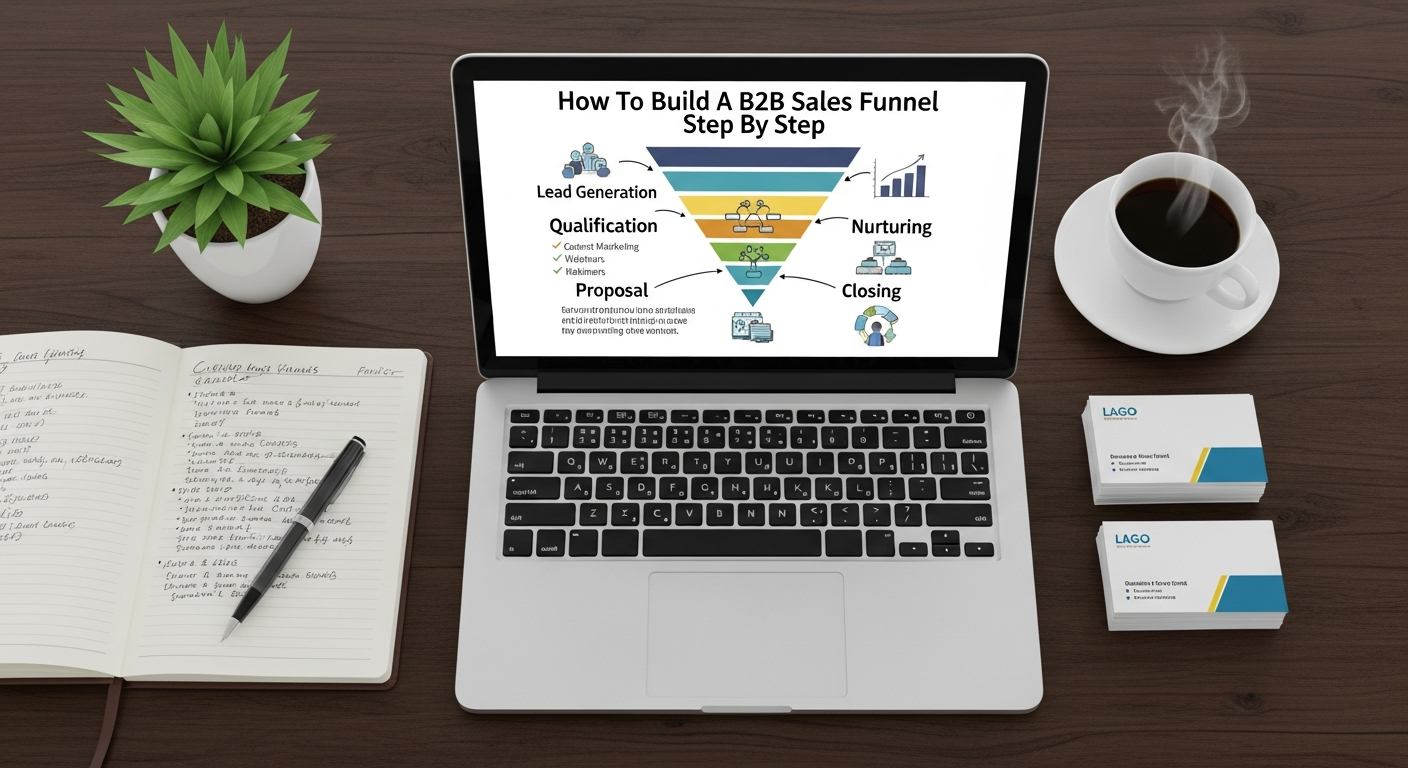
The initial stage of any B2B sales funnel is all about creating awareness and generating leads. This is the widest part of the funnel, where your primary goal is to attract as many potential prospects as possible who might be interested in your solutions. It’s about casting a wide, yet targeted, net to identify organizations that fit your Ideal Customer Profile (ICP) and individuals who align with your buyer personas.
A crucial strategic decision at this stage involves understanding the difference between Inbound Marketing Vs Outbound Marketing. Both have their merits and, when used in conjunction, can create a powerful lead generation engine.
- Inbound Marketing: This approach focuses on attracting prospects by creating valuable content and experiences tailored to them. Instead of pushing your message out, inbound marketing draws customers in. Key tactics include:
- Content Marketing: Blogs, whitepapers, eBooks, case studies, infographics, and videos that address your target audience’s pain points and provide solutions.
- Search Engine Optimization (SEO): Optimizing your website and content to rank higher in search engine results for relevant keywords, ensuring prospects find you when they’re actively searching for solutions.
- Social Media Marketing: Engaging with your audience on platforms like LinkedIn, Twitter, and industry-specific forums to build brand authority and drive traffic to your content.
- Webinars and Online Events: Hosting educational sessions that showcase your expertise and offer direct value to potential leads.
The beauty of inbound marketing is its ability to generate high-quality, self-qualified leads who are already demonstrating interest in what you offer.
- Outbound Marketing: This traditional approach involves actively reaching out to prospects. While sometimes perceived as less subtle, it remains highly effective for targeted outreach and breaking into new markets. Key tactics include:
- Cold Email Outreach: Sending personalized emails to prospects who fit your ICP, introducing your company and offering value.
- Cold Calling: Directly contacting potential clients via phone to introduce your services and gauge interest.
- Paid Advertising (PPC): Running targeted ads on search engines (Google Ads) and social media platforms (LinkedIn Ads) to reach specific demographics and job titles.
- Trade Shows and Industry Events: Attending or exhibiting to network directly with potential clients and generate leads face-to-face.
Outbound marketing allows for more direct control over who you target and can yield quicker results, especially for niche markets.
To maximize efficiency in lead generation, many businesses are exploring What Is Business Process Outsourcing (BPO). Outsourcing tasks like initial lead research, data entry for prospect lists, or even cold calling can significantly reduce the internal workload, allowing your core sales team to focus on higher-value activities. BPO providers specialize in these tasks, often bringing economies of scale and expertise that can boost the volume and quality of leads entering your funnel. For example, a BPO firm could manage your LinkedIn outreach campaigns or qualify initial inbound inquiries, ensuring your sales development representatives (SDRs) only engage with truly promising prospects.
Regardless of the tactics employed, the key to success in this stage is a deep understanding of your ICP and buyer personas. Knowing who you’re trying to reach, what their challenges are, and where they consume information allows you to tailor your awareness and lead generation efforts for maximum impact. By effectively filling the top of your funnel with relevant prospects, you lay a strong foundation for the subsequent stages of the sales process.
Step 2: Interest & Lead Nurturing – Building Engagement and Trust
The goal here is to educate leads about your solutions, demonstrate how you can solve their specific pain points, and keep your brand top-of-mind without being overly salesy. B2B buying decisions are often complex and involve significant research, so your nurturing efforts must be patient, persistent, and highly personalized. This is where the strategic use of content and communication channels truly shines.
Key tactics for effective lead nurturing include:
- Personalized Email Marketing Campaigns: Moving beyond generic newsletters, implement drip campaigns that deliver tailored content based on a lead’s interests, behavior, and position in the buying cycle. If a prospect downloaded a whitepaper on cybersecurity, follow up with case studies demonstrating your cybersecurity solutions, not an email about cloud storage.
- Targeted Content Offers: Provide prospects with increasingly in-depth and valuable content as they show more interest. This could include eBooks, detailed guides, interactive tools, industry reports, or invitations to exclusive webinars. Each piece of content should move them closer to understanding the full scope of your solution.
- Retargeting Campaigns: For prospects who have visited your website but haven’t converted, use retargeting ads to display relevant messages and offers on other websites or social media platforms, gently reminding them of your value proposition.
- Webinars and Workshops: Offer live or on-demand sessions that delve deeper into specific topics, allowing prospects to learn directly from your experts and ask questions in a low-pressure environment.
- Personalized Demonstrations or Consultations: For more engaged leads, offer one-on-one sessions where you can address their unique challenges and showcase how your solution directly meets their needs.
Central to managing this stage effectively is a robust Customer Relationship Management (CRM) system. A CRM allows your sales and marketing teams to track every interaction a lead has with your company – from website visits and email opens to content downloads and webinar attendance. This rich data enables precise segmentation of leads, ensuring that each prospect receives the most relevant and timely communications. Without a well-maintained CRM, nurturing efforts can become haphazard and ineffective.
Furthermore, this stage significantly impacts How To Improve Employee Productivity within your sales and marketing teams. By automating nurturing sequences through marketing automation platforms integrated with your CRM, employees can focus on creating high-value content and engaging with highly qualified leads, rather than manually sending repetitive emails. This frees up time for strategic planning, personalized outreach, and deeper customer engagement. Training sales representatives on how to effectively use CRM data to tailor their conversations and identify opportune moments for follow-up is also crucial. When reps have a complete picture of a lead’s history and interests, their interactions become more impactful and efficient, directly boosting productivity.
The goal of lead nurturing is to build a relationship based on trust and value, gradually guiding prospects from casual interest to a clear understanding of how your solution can solve their problems. By consistently delivering relevant content and engaging meaningfully, you prepare them for the next crucial stage: qualification and decision.
Step 3: Decision & Qualification – Identifying Sales-Ready Leads
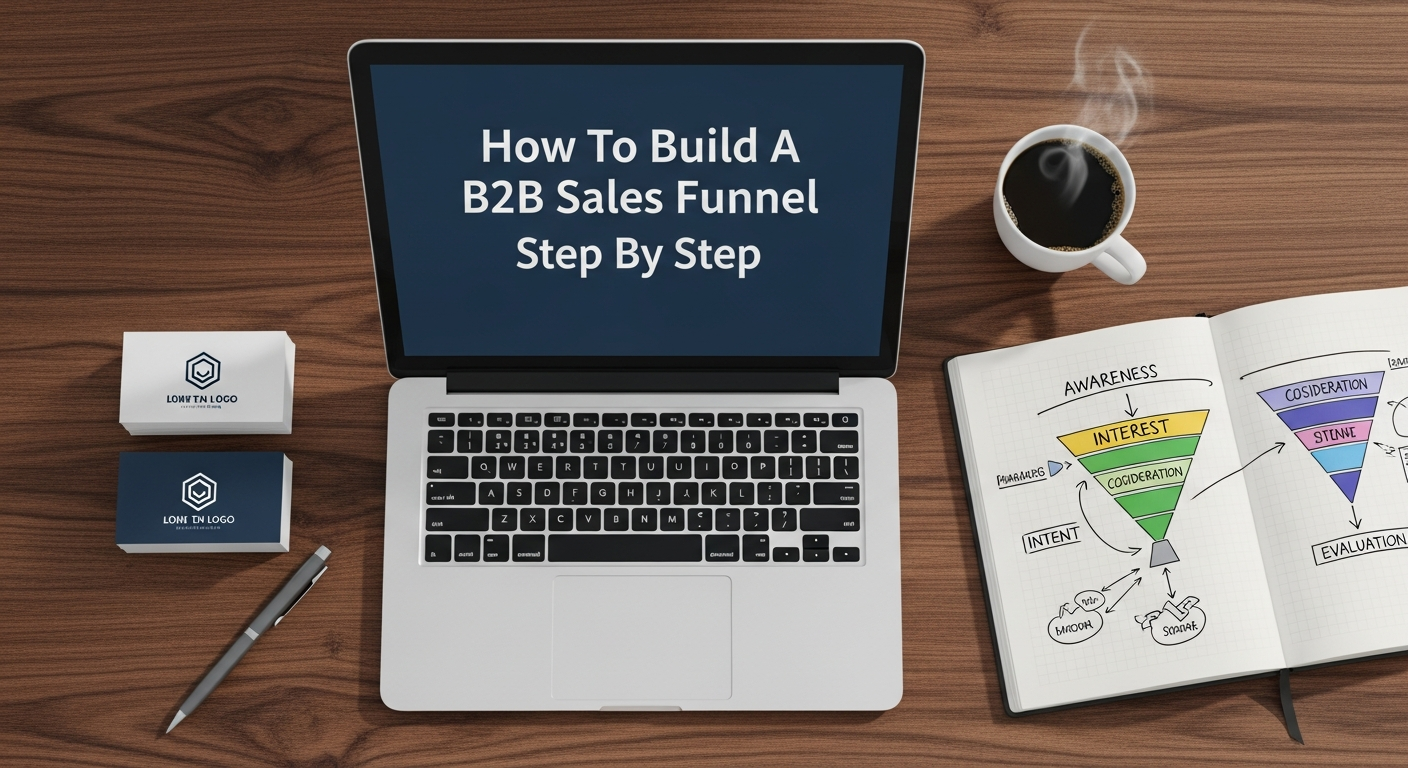
After successfully nurturing leads and building initial interest, the next critical phase in your B2B sales funnel is to qualify them. This stage is about discerning which prospects are genuinely sales-ready and a good fit for your offerings, separating those who are merely curious from those with a real need, budget, and authority to make a purchase. Mismanaging this stage can lead to sales teams wasting valuable time on unqualified leads, impacting efficiency and morale.
The primary objective here is to determine if a prospect has a genuine pain point your solution can address, if they have the budget allocated, if they possess the authority to make a purchasing decision (or influence it heavily), and if they have a realistic timeline for implementation. This is often where the baton is formally passed from marketing to sales, requiring seamless communication and alignment between the two departments.
Several qualification frameworks can guide this process:
- BANT (Budget, Authority, Need, Timeline): A classic framework where sales representatives ask questions to uncover if the prospect has the financial resources, the power to make the decision, a clear problem your solution can solve, and a specific timeframe for implementation. While foundational, BANT is sometimes criticized for being too focused on the vendor’s needs rather than the customer’s.
- MEDDIC (Metrics, Economic Buyer, Decision Criteria, Decision Process, Identify Pain, Champion): A more comprehensive and customer-centric framework, particularly useful for complex enterprise sales.
- Metrics: What measurable impact does the prospect seek?
- Economic Buyer: Who has the ultimate financial approval?
- Decision Criteria: What are the specific criteria the prospect uses to evaluate solutions?
- Decision Process: What steps will the prospect take to make a purchase, and who is involved?
- Identify Pain: What are the prospect’s critical business challenges?
- Champion: Who within the prospect’s organization is advocating for your solution?
MEDDIC helps sales teams understand the prospect’s internal dynamics and build a more robust case.
Tactics for the qualification stage often include:
- Discovery Calls: Structured conversations designed to uncover a prospect’s needs, challenges, current solutions, and desired outcomes. These calls are crucial for determining fit and building rapport.
- Personalized Presentations and Demos: Once a need is identified, provide tailored demonstrations that directly address the prospect’s specific pain points and showcase how your solution provides a unique advantage.
- Addressing Objections: Prospects will inevitably have concerns about price, implementation, features, or competitor offerings. Sales professionals must be adept at listening to, understanding, and effectively addressing these objections with empathy and clear solutions.
- Proof of Concept (POC) or Pilot Programs: For complex solutions, offering a limited-scope POC or pilot can be an excellent way for prospects to experience the value firsthand, solidifying their decision.
This stage also benefits significantly from the insights gathered during the lead nurturing phase. A well-integrated CRM system will provide sales representatives with a detailed history of a prospect’s interactions, content consumption, and expressed interests. This information empowers reps to have more informed and personalized qualification conversations, drastically reducing the time spent on unqualified leads and thus directly contributing to How To Improve Employee Productivity. When sales teams are equipped with relevant data, they can ask smarter questions, anticipate objections, and tailor their approach more effectively, leading to higher qualification rates and faster movement through the funnel.
By rigorously qualifying leads, businesses ensure that their sales resources are focused on the most promising opportunities, leading to higher conversion rates, shorter sales cycles, and a more efficient overall sales process. This strategic filter is vital for maintaining a healthy and productive B2B sales funnel.
Step 4: Purchase & Closing – Sealing the Deal
The purchase and closing stage is the culmination of all the efforts expended in the preceding phases of the B2B sales funnel. This is where qualified leads are converted into paying customers. While it might seem like the final hurdle, it often involves intricate negotiations, meticulous proposal development, and expert objection handling to ensure a smooth transition from prospect to client.
At this stage, your sales team is working with prospects who have a clear understanding of their needs, believe your solution can address them, and have largely been qualified in terms of budget and authority. The focus shifts from education and qualification to solidifying the value proposition, overcoming any remaining hesitations, and facilitating the contractual process.
Key tactics for successful closing include:
- Customized Proposal Generation: Develop a detailed, professional proposal that clearly outlines the scope of work, features, benefits, pricing, and terms. This proposal should directly reflect the specific needs and challenges discussed during the qualification stage, reiterating the value your solution brings.
- Contract Negotiation and Management: Be prepared to negotiate terms, pricing, and service level agreements (SLAs). This requires a deep understanding of your company’s flexibility and boundaries. Streamlining the contract generation and e-signature process can significantly accelerate this phase.
- Handling Final Objections: Even at this late stage, prospects may raise new objections or revisit old ones. Sales professionals must be skilled at active listening, empathy, and providing clear, concise, and compelling answers that reinforce the value and mitigate risks.
- Building Urgency (Ethically): While not always necessary, creating a legitimate sense of urgency can sometimes encourage prospects to make a decision. This could involve limited-time offers, upcoming price changes, or highlighting the immediate benefits of starting sooner rather than later.
- Leveraging Social Proof: Provide relevant case studies, testimonials, or references from existing clients who have achieved similar success with your solution. This external validation can be a powerful final push.
- Clear Call-to-Action: Ensure that the next steps are always clear. Whether it’s signing a contract, scheduling an onboarding call, or making an initial payment, guide the prospect explicitly.
How To Improve Employee Productivity during the closing stage is paramount. Equipping your sales team with sales enablement tools can drastically streamline the process. For instance, proposal generation software can automate the creation of professional documents, reducing manual effort and errors. CRM integration ensures that all communication and negotiation details are logged, providing a single source of truth and preventing duplication of effort. Training sales professionals in advanced negotiation techniques and objection handling further empowers them to close deals more efficiently and effectively. By focusing on process optimization and providing the right tools, businesses can significantly shorten the sales cycle and increase their win rates.
It’s also important to remember that the closing stage is not just about getting a signature; it’s about setting the foundation for a successful long-term relationship. A positive closing experience, marked by transparency and efficiency, contributes to customer satisfaction and loyalty from day one. This smooth transition into becoming a customer paves the way for the final, often overlooked, stage of the B2B sales funnel: post-sale engagement and advocacy.
Step 5: Post-Sale & Advocacy – Nurturing Long-Term Relationships
Many businesses mistakenly view the sales funnel as ending once a contract is signed. However, in the B2B world, the purchase is often just the beginning of a potentially long and highly valuable relationship. The post-sale and advocacy stage is crucial for customer retention, increasing Customer Lifetime Value (CLTV), and turning satisfied clients into powerful brand advocates. Neglecting this stage means leaving significant revenue and growth opportunities on the table.
The goals of this final stage are multifaceted: ensuring customer satisfaction, facilitating successful onboarding and adoption of your solution, identifying opportunities for upsells and cross-sells, and ultimately encouraging referrals and positive testimonials. This is where your customer success and account management teams play a pivotal role, working in close collaboration with sales and product development.
Key strategies for post-sale engagement and advocacy include:
- Robust Onboarding Process: A well-structured onboarding program is critical for initial success. This includes training, implementation support, and dedicated resources to ensure the client quickly realizes value from your solution. Poor onboarding is a leading cause of churn in B2B.
- Proactive Customer Success Management: Don’t wait for problems to arise. Regularly check in with clients, monitor their usage, and proactively offer support, tips, and best practices. Customer Success Managers (CSMs) act as trusted advisors, ensuring clients achieve their desired outcomes.
- Continuous Value Delivery: Demonstrate ongoing value through new features, updates, educational content, and strategic reviews. Show clients that your partnership continues to evolve and benefit their business.
- Feedback Loops: Establish clear channels for client feedback, whether through surveys, regular meetings, or user forums. Actively listen to their input and use it to improve your product or service, showing clients that their voice matters.
- Upsell and Cross-sell Opportunities: As you build a deeper understanding of your clients’ evolving needs, identify opportunities to offer additional products, services, or higher-tier solutions that can further enhance their success. This requires a consultative approach, focusing on client benefit rather than just pushing more sales.
- Encouraging Advocacy: Happy customers are your best marketers. Actively solicit testimonials, case studies, and online reviews. Encourage them to participate in referral programs or speak at industry events. A strong network of advocates can significantly reduce your customer acquisition costs and build immense brand credibility.
This stage also has a direct impact on How To Improve Employee Productivity across the organization. By automating routine customer communication, survey distribution, and basic support queries, customer success teams can focus their efforts on high-touch engagement with strategic accounts or clients who require more complex assistance. Furthermore, empowering customer-facing teams with comprehensive knowledge bases and efficient communication tools ensures they can resolve issues quickly and effectively, enhancing client satisfaction and their own efficiency.
Investing in post-sale relationships pays dividends. Retaining an existing customer is significantly cheaper than acquiring a new one, and loyal customers are more likely to spend more over time and refer new business. By extending your B2B sales funnel beyond the initial purchase, you transform it into a powerful engine for sustainable growth and long-term profitability, creating a virtuous cycle of customer satisfaction and advocacy.
Optimizing Your B2B Sales Funnel for 2026 and Beyond
Building a B2B sales funnel is not a one-time project; it’s an ongoing process of refinement and adaptation. To ensure your funnel remains effective, competitive, and scalable well into 2026 and beyond, continuous optimization is absolutely essential. The market is constantly evolving, new technologies emerge, and customer expectations shift. Staying ahead requires a proactive approach to analysis, experimentation, and strategic adjustment.
Here’s how to continually optimize your B2B sales funnel:
- Data-Driven Analysis and Metrics:
- Track Key Performance Indicators (KPIs): Regularly monitor metrics at every stage of the funnel. This includes website traffic, lead conversion rates, MQL-to-SQL conversion rates, sales cycle length, average deal size, win rates, and customer churn.
- Identify Bottlenecks: Pinpoint where leads are dropping off or where the process slows down. Is it during initial qualification? Are proposals taking too long to close? Data will reveal these weak points.
- Utilize CRM and Analytics Tools: Leverage your CRM’s reporting capabilities and integrate with analytics platforms (like Google Analytics) to gain deeper insights into user behavior and funnel performance.
- A/B Testing and Experimentation:
- Test Messaging: Experiment with different headlines, call-to-actions, and value propositions in your marketing collateral and sales outreach.
- Optimize Content: A/B test different content formats, topics, and placement to see what resonates best with your audience at various funnel stages.
- Refine Processes: Experiment with different sales scripts, qualification questions, or proposal formats to see what yields better results.
- Embrace Technology and Automation:
- AI and Machine Learning: Explore AI-powered tools for lead scoring, predictive analytics, sales forecasting, and even automating personalized email responses. These can significantly enhance efficiency and accuracy.
- Advanced CRM and Marketing Automation: Ensure your platforms are fully integrated and utilized to their maximum potential. Automate repetitive tasks like lead assignment, follow-up sequences, and data entry.
- Sales Enablement Platforms: Provide your sales team with dynamic content libraries, presentation tools, and coaching modules to ensure they have the right resources at their fingertips.
- Personalization at Scale:
- Go beyond basic personalization. Use advanced segmentation and behavioral data to deliver highly relevant content, offers, and communication that feels genuinely tailored to each prospect’s unique needs and journey.
- AI can help identify micro-segments and suggest personalized content paths, further enhancing engagement.
- Agile Adaptation:
- The B2B landscape is always changing. Be prepared to adapt your funnel strategies based on market shifts, competitor actions, and evolving customer expectations. Regular reviews (quarterly or bi-annually) of your entire funnel are crucial.
- Foster a culture of continuous learning and improvement within your sales and marketing teams.
- Strategic Use of Business Process Outsourcing (BPO):
- Consider BPO for specialized tasks like data analytics, market research, or even managing certain aspects of customer support to free up internal resources. This allows your core team to focus on strategic optimization efforts.
- Outsourcing can provide access to specialized skills and technologies that might be cost-prohibitive to develop in-house, ensuring your funnel benefits from cutting-edge capabilities.
Continual optimization is key to How To Improve Employee Productivity within your sales and marketing teams. By automating low-value tasks, providing better tools, and focusing on data-driven decision-making, employees can dedicate more time to strategic thinking, relationship building, and high-impact activities. An optimized funnel not only drives better results but also creates a more efficient and satisfying work environment for your team.
By committing to these optimization strategies, your B2B sales funnel will not only withstand the challenges of the future but will evolve into a powerful, agile engine driving sustainable growth and competitive advantage for your business well beyond 2026.
Frequently Asked Questions About Building a B2B Sales Funnel
What is the primary difference between a B2B and B2C sales funnel?
The primary difference lies in complexity, sales cycle length, and decision-making. B2B sales funnels typically involve longer sales cycles, multiple stakeholders and decision-makers within an organization, higher contract values, and a more consultative, relationship-driven approach. B2C funnels are often shorter, more transactional, and target individual consumers with simpler decision processes.
How long does it typically take to build an effective B2B sales funnel?
Building the foundational structure of a B2B sales funnel can take anywhere from a few weeks to a few months, depending on the complexity of your business and existing resources. However, optimizing and refining it into a truly effective, high-performing funnel is an ongoing process that can take 6-12 months or even longer, requiring continuous data analysis, testing, and adaptation to market changes and customer feedback.
What are the most critical metrics to track in a B2B sales funnel?
Critical metrics include lead conversion rates at each stage (e.g., website visitor to lead, MQL to SQL, SQL to won deal), sales cycle length, average deal size, win rate (percentage of qualified opportunities closed), customer acquisition cost (CAC), and customer lifetime value (CLTV). Monitoring these KPIs helps identify bottlenecks and areas for improvement.
Can small businesses effectively use a B2B sales funnel?
Absolutely. While resources may be limited, a B2B sales funnel is even more crucial for small businesses to ensure efficient allocation of time and money. The principles remain the same: attracting, engaging, qualifying, and converting prospects. Small businesses can start with simpler tools and processes, leveraging free or affordable marketing automation and CRM solutions, and focusing on inbound strategies to build momentum.
What role does technology play in optimizing a B2B sales funnel for 2026?
Technology is central to optimizing B2B sales funnels for 2026. Advanced CRM systems, marketing automation platforms, AI-powered lead scoring and forecasting tools, and sales enablement software are crucial. These technologies enable greater personalization at scale, automate repetitive tasks (improving employee productivity), provide deeper data insights, and streamline the entire sales process, making funnels more efficient, predictive, and adaptable.
When should a business consider Business Process Outsourcing (BPO) for their sales funnel?
A business should consider BPO when they need to scale quickly, reduce operational costs, access specialized expertise (e.g., in lead research, data entry, initial qualification, or even customer support), or free up internal teams to focus on core strategic activities. BPO can be particularly effective for tasks at the top of the funnel (lead generation) or for post-sale support, ensuring consistency and efficiency without overburdening internal staff.
Building a robust B2B sales funnel is not merely a tactical exercise; it’s a strategic imperative for any business aiming for sustainable growth and long-term success. By meticulously constructing each stage – from initial awareness and lead generation to diligent nurturing, rigorous qualification, effective closing, and dedicated post-sale advocacy – you create a predictable, scalable engine for revenue. The journey requires a deep understanding of your ideal customer, a blend of inbound and outbound marketing strategies, continuous technological adoption, and an unwavering commitment to optimization through data-driven insights. As we look towards 2026, the businesses that master the art of building and refining their B2B sales funnel will be those best
Recommended Resources
Check out How To Start Investing With Little Money 2026 on Trading Costs for a deeper dive.
Learn more about this topic in How To Increase Website Traffic 2026 at Page Release.