How to Build a Sales Funnel from Scratch in 2026: A Definitive Guide for Sustainable Growth
In the competitive landscape of 2026, relying on sporadic leads and unpredictable revenue is a recipe for stagnation. For professionals, entrepreneurs, and B2B marketers striving for scalable growth, a well-structured sales funnel isn’t just an advantage—it’s a fundamental necessity. It transforms chaotic lead generation into a predictable, measurable process, guiding potential customers from initial awareness to a committed purchase and beyond. But where do you begin when you’re starting from zero? This comprehensive guide cuts through the complexity, offering a data-backed, actionable framework to build a robust sales funnel from scratch, designed for the modern business environment. We’ll equip you with the strategies, tools, and insights to create a revenue engine that drives sustainable success.
Understanding the Modern Sales Funnel: Beyond the Traditional AIDA
Forget the simplistic, linear models of yesteryear. The modern sales funnel in 2026 is a dynamic, multi-stage journey that reflects today’s informed and digitally-savvy buyer. It’s less a funnel and more a self-optimizing system, designed to attract, engage, convert, and ultimately delight customers. While the foundational concept of moving prospects through stages remains, the emphasis has shifted dramatically towards personalization, value delivery, and a seamless customer experience at every touchpoint.
At its core, a sales funnel provides a visual and strategic representation of the path a potential customer takes with your business. It allows you to segment your audience, tailor your messaging, and measure performance with precision. Businesses with a clearly defined sales process report an average of 18% higher revenue growth compared to those without. This isn’t just about closing a sale; it’s about building relationships and fostering loyalty that drives repeat business and advocacy.
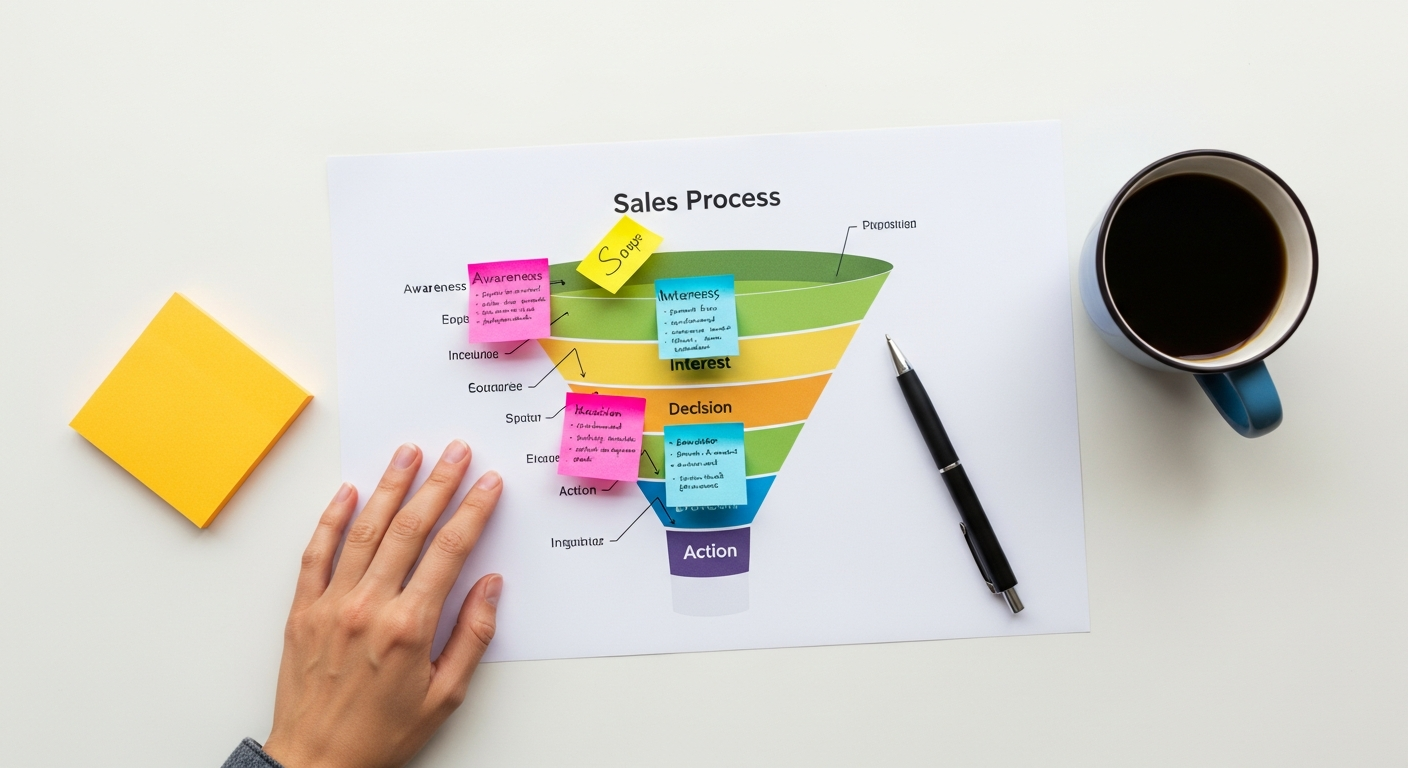
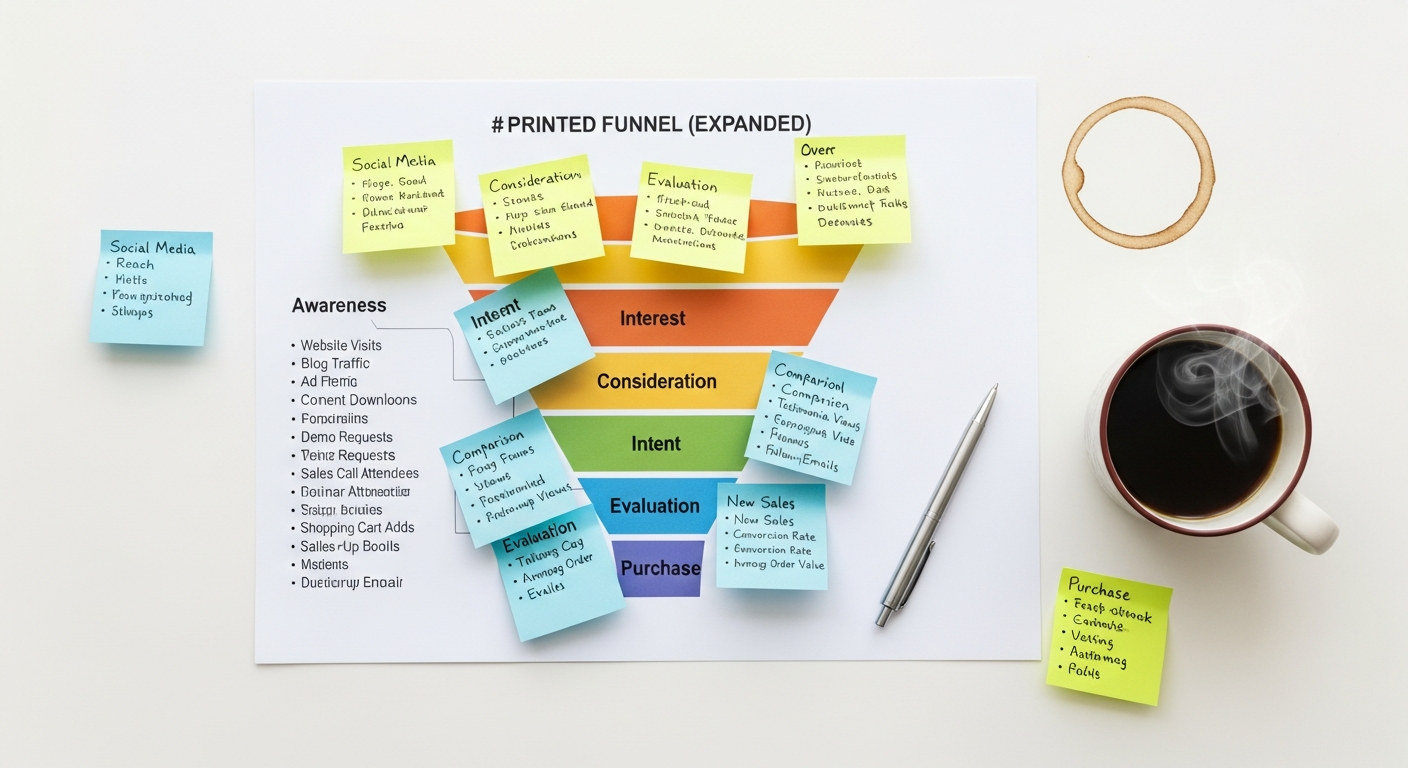
The typical modern sales funnel encompasses several key stages, each with distinct goals and strategies:
* Awareness (Top of Funnel – TOFU): Prospects become aware of a problem they have and that your brand exists as a potential solution.
* Interest/Engagement: Prospects show curiosity, seeking more information about their problem and your offerings.
* Consideration: Prospects actively evaluate various solutions, including yours, comparing features, benefits, and value.
* Intent/Evaluation: Prospects demonstrate a clear intent to purchase, often requesting demos, trials, or consultations.
* Purchase/Conversion (Bottom of Funnel – BOFU): Prospects become paying customers.
* Post-Purchase/Retention: Focusing on customer onboarding, satisfaction, and preventing churn.
* Advocacy: Delighted customers become promoters, referring new business and providing testimonials.
Recognizing these stages is the first step. The next is understanding that prospects might enter or exit at different points, and even loop back. Your funnel must be flexible enough to accommodate these non-linear paths, providing consistent value throughout.
Phase 1: Foundation & Strategy – Laying the Groundwork
Before you build, you must plan. This foundational phase is critical for ensuring your sales funnel is not just functional, but highly effective and aligned with your business objectives.
Define Your Ideal Customer Profile (ICP) and Buyer Personas
The biggest mistake businesses make when starting from scratch is trying to sell to everyone. This dilutes your efforts and wastes resources. Instead, pinpoint exactly who you serve best.
* Ideal Customer Profile (ICP): This defines the type of company that would gain the most value from your product or service and, in turn, provide the most value to your business. For B2B, consider attributes like:
* Industry: (e.g., SaaS, Manufacturing, Healthcare)
* Company Size: (e.g., revenue range, employee count)
* Geographic Location:
* Pain Points/Challenges: What specific problems do they face that you solve?
* Technographic: What technologies do they currently use?
* Budget: What’s their typical budget for solutions like yours?
* Buyer Personas: Within your ICP, identify the specific individuals (roles) involved in the purchasing decision. A buyer persona is a semi-fictional representation of your ideal customer, based on market research and real data about your existing customers. For each persona, outline:
* Demographics: Job title, age range, education level.
* Goals & Motivations: What are they trying to achieve?
* Challenges & Pain Points: What obstacles do they face daily?
* Information Sources: Where do they get their information (blogs, forums, conferences)?
* Objections: What are their likely concerns about your solution?
* Decision Criteria: What factors influence their purchase decisions?
How to Research: Conduct interviews with current customers, analyze CRM data, survey your target audience, and research competitors. Tools like LinkedIn Sales Navigator can help you identify and profile target companies and individuals. This deep understanding will inform every piece of content and every interaction within your funnel.
Map the Customer Journey & Identify Touchpoints
With your ICP and personas defined, visualize their journey from initial problem awareness to becoming a loyal customer. This involves mapping out the steps they take and identifying every potential interaction point with your brand.
* Step-by-Step Mapping: For each stage of the funnel (Awareness, Interest, Consideration, etc.), ask:
* What questions does my persona have at this stage?
* What information do they need to progress?
* What actions are they likely to take?
* What challenges or objections might arise?
* Identify Touchpoints: List all the places where a prospect might interact with your brand. These could be:
* Digital: Your website, blog, social media channels, email, online ads, review sites, webinars, online events.
* Offline: Industry conferences, networking events, direct mail, phone calls.
A customer journey map template often includes columns for “Stage,” “Customer Goal,” “Customer Emotion,” “Actions Taken,” “Your Business’s Role,” and “Touchpoints.” This exercise reveals gaps in your current strategy and highlights opportunities for delivering value.
Set Clear, Measurable Goals (SMART Goals)
Without clear objectives, you can’t measure success or identify areas for improvement. Your sales funnel goals should be SMART: Specific, Measurable, Achievable, Relevant, and Time-bound.
* Examples of Funnel Goals:
* Lead Volume: “Generate 500 qualified leads per month by Q3 2026.”
* Conversion Rates: “Improve TOFU to MOFU conversion rate by 15% within the next six months.”
* Sales Cycle Length: “Reduce average sales cycle from 90 days to 60 days by year-end.”
* Average Deal Size: “Increase average deal size by 10% in the next fiscal year.”
* Customer Acquisition Cost (CAC): “Reduce CAC by 5% over the next 12 months.”
These goals provide benchmarks for tracking performance and optimizing your funnel over time. Ensure you have the necessary tracking mechanisms in place from day one.
Phase 2: Building the Funnel Stages – Tactics & Tools
This is where you translate your strategy into actionable components, crafting the content and experiences that guide prospects through each stage.
Top of Funnel (TOFU): Awareness & Interest Generation
The goal here is to attract a broad audience of potential ICPs and pique their initial interest without being overly promotional. You’re solving a problem they might not even fully recognize yet.
* Content Strategy: Focus on educational, high-value content that addresses common pain points and questions your ICP has.
* Blog Posts: SEO-optimized articles answering “how-to” questions, industry trends, foundational guides.
* Social Media: Engaging posts, short-form videos, infographics that provide quick value.
* Webinars/Podcasts: Educational sessions on relevant topics, interviews with industry experts.
* Whitepapers/Ebooks: Comprehensive guides offering solutions to broad problems (gated content for lead capture).
* Infographics: Visually appealing data or process explanations.
* SEO: Optimize your website and content for relevant keywords to attract organic traffic.
* Key Tactics:
* Content Marketing: Consistently publish valuable content across relevant channels.
* Social Media Marketing: Active engagement, paid social campaigns targeting ICP demographics.
* Search Engine Optimization (SEO): Ensure your content ranks high for relevant search queries.
* Paid Advertising: Google Ads, LinkedIn Ads, Facebook/Instagram Ads targeting specific audiences.
* Call to Action (CTA): Soft CTAs like “Learn More,” “Download Guide,” “Subscribe to our Newsletter,” “Follow Us.”
* Essential Tools:
* Website/CMS: WordPress, Webflow, HubSpot CMS.
* SEO & Content Research: SEMrush, Ahrefs, Google Keyword Planner.
* Social Media Management: Hootsuite, Buffer, Sprout Social.
* Analytics: Google Analytics 4 (GA4).
* Lead Capture: Forms on your website, landing pages (Unbounce, Leadpages), integrated forms within your CRM.
Middle of Funnel (MOFU): Consideration & Intent Nurturing
Once you’ve captured a lead (e.g., via an ebook download), the MOFU stage is about building trust, educating them further, and positioning your solution as the best fit. This is where you qualify leads and move them towards intent.
* Content Strategy: Dive deeper into how your solution addresses their specific challenges.
* Case Studies: Real-world examples of how your product/service helped similar companies achieve results.
* Testimonials/Reviews: Social proof from satisfied customers.
* Detailed Guides/Workbooks: More in-depth content requiring a higher level of commitment.
* Product Demos/Webinars (Advanced): Showcasing specific features and benefits.
* Comparison Sheets: How your solution stacks up against competitors.
* Email Nurturing Sequences: Automated email series providing targeted information based on their initial interaction.
* Key Tactics:
* Lead Nurturing: Automated email campaigns, personalized content delivery.
* Retargeting Ads: Show ads to people who have interacted with your TOFU content.
* CRM Segmentation: Categorize leads based on their interests and engagement levels.
* Lead Scoring: Assign points to leads based on their actions (e.g., website visits, email opens, content downloads) to prioritize sales efforts.
* Call to Action (CTA): “Request a Demo,” “Start a Free Trial,” “Schedule a Consultation,” “Download Our Pricing Guide,” “Attend a Live Q&A.”
* Essential Tools:
* CRM (Customer Relationship Management): HubSpot, Salesforce, Zoho CRM – essential for managing leads, tracking interactions, and automating tasks.
* Email Marketing/Marketing Automation: ActiveCampaign, Mailchimp, ConvertKit, Pardot (Salesforce).
* Landing Page Builders: Unbounce, Leadpages, Instapage.
* Webinar Platforms: Zoom, GoToWebinar.
Bottom of Funnel (BOFU): Evaluation & Purchase Conversion
At this stage, prospects are highly qualified and ready to make a decision. Your role is to remove any remaining doubts, address specific objections, and facilitate a smooth conversion. This is typically where your sales team takes over for direct engagement.
* Content Strategy: Highly personalized and focused on closing the deal.
* Personalized Proposals/Quotes: Tailored to their specific needs and budget.
* One-on-One Demos: Customized demonstrations addressing their unique use cases.
* Free Trials/Pilots: Allowing them to experience your product firsthand.
* Consultations/Assessments: Direct interaction with sales to solve specific problems.
* Detailed FAQs: Addressing common pre-purchase questions and concerns.
* Customer Success Stories (Specific): Showcasing results for clients similar to them.
* Key Tactics:
* Sales Team Engagement: Direct calls, meetings, personalized emails.
* Objection Handling: Proactively addressing concerns about pricing, features, implementation, etc.
* Urgency/Scarcity: Strategic use of limited-time offers (use sparingly and genuinely).
* Seamless Onboarding Preview: Demonstrating ease of transition.
* Call to Action (CTA): “Buy Now,” “Sign Up,” “Request a Proposal,” “Contact Sales,” “Let’s Get Started.”
* Essential Tools:
* CRM: Salesforce Sales Cloud, HubSpot Sales Hub – for managing deals, tracking sales activities, forecasting.
* E-signature Software: DocuSign, Adobe Sign, PandaDoc.
* Scheduling Tools: Calendly, Acuity Scheduling.
* Live Chat/Chatbots: Intercom, Drift (for real-time support and lead qualification).
* Video Conferencing: Zoom, Google Meet.
Phase 3: Post-Purchase & Optimization – The Engine of Growth
The sale isn’t the end of the funnel; it’s the beginning of a long-term customer relationship. This phase is crucial for retention, increasing customer lifetime value (CLV), and turning customers into advocates.
Onboarding & Customer Success
A smooth onboarding process is vital for customer satisfaction and retention. If customers don’t quickly see value, churn becomes a significant risk.
* Onboarding:
* Welcome Emails: Guide new customers through initial setup and key features.
* Tutorials/Knowledge Base: Provide self-service resources.
* Dedicated Onboarding Specialists: For complex products or high-value clients.
* Check-ins: Proactive communication to ensure they’re leveraging the solution effectively.
* Customer Success:
* Proactive Support: Anticipate needs and offer solutions before problems arise.
* Regular Value Demonstrations: Show customers new features or how to get more from your product.
* Feedback Loops: Collect feedback regularly to improve the product and service.
* Tools:
* Customer Success Platforms: Gainsight, ChurnZero.
* Help Desk Software: Zendesk, Freshdesk.
* Email Automation: For onboarding sequences.
Loyalty & Advocacy
Delighted customers are your best marketing asset. Encourage them to become promoters of your brand.
* Loyalty Programs: Offer exclusive content, discounts, or early access to new features.
* Referral Programs: Incentivize existing customers to refer new business. A well-structured referral program can significantly lower your Customer Acquisition Cost (CAC) and bring in highly qualified leads.
* Review Requests: Encourage satisfied customers to leave reviews on relevant platforms (G2, Capterra, Google).
* Community Building: Create forums, groups, or events where customers can connect and share insights.
* Testimonial Requests: Proactively ask for testimonials and case study participation from your happiest clients.
* Tools:
* Referral Marketing Software: ReferralCandy, Ambassador.
* Survey Tools: Typeform, SurveyMonkey, NPS (Net Promoter Score) tools.
* Community Platforms: Circle, Mighty Networks.
Continuous Analysis & Optimization
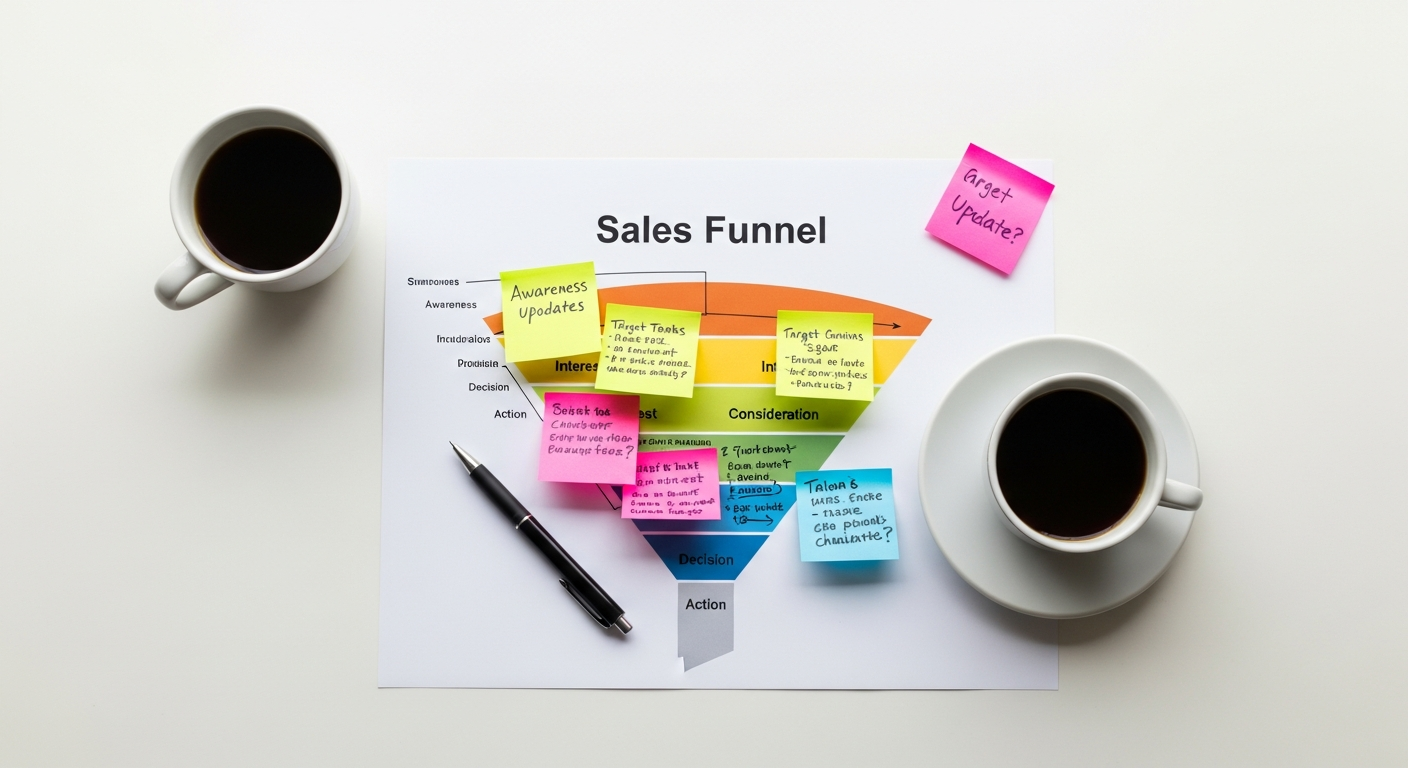
A sales funnel is never “finished.” It’s a living system that requires constant monitoring, analysis, and refinement.
* Key Metrics to Track:
* Conversion Rate at Each Stage: The percentage of prospects moving from one stage to the next. Identify bottlenecks.
* Traffic Sources: Where are your best leads coming from?
* Lead Quality: Are the leads you’re generating actually converting into customers?
* Sales Cycle Length: How long does it take for a lead to become a customer?
* Customer Lifetime Value (CLV): The total revenue a customer is expected to generate over their relationship with your company.
* Customer Acquisition Cost (CAC): The cost associated with acquiring a new customer.
* ROI of Marketing Channels: Which channels are providing the best return?
* Optimization Tactics:
* A/B Testing: Experiment with different headlines, CTAs, landing page layouts, email subject lines, and ad creatives.
* Feedback Integration: Use customer and sales team feedback to refine content and processes.
* Content Audits: Regularly review and update your content to ensure it remains relevant and effective.
* CRM Data Analysis: Leverage your CRM’s reporting features to uncover trends and insights.
* Funnel Mapping Review: Periodically revisit your customer journey map to ensure it still aligns with buyer behavior.
Businesses that consistently optimize their sales funnel can see conversion rates improve by 30% or more. This iterative process, driven by data, is the engine of sustainable growth.
Essential Tools for Your 2026 Sales Funnel Stack
Building a powerful sales funnel from scratch requires the right technological backbone. Here’s a curated list of essential categories and specific tools to consider for your 2026 stack:
* CRM (Customer Relationship Management): The central nervous system of your funnel, managing all customer interactions and data.
* HubSpot: An all-in-one platform offering CRM, marketing, sales, and service hubs, ideal for integrated funnel management.
* Salesforce: A robust, highly customizable CRM suitable for businesses of all sizes, with extensive integration capabilities.
* Zoho CRM: A cost-effective solution offering a comprehensive suite of tools for sales, marketing, and customer support, great for startups and SMBs.
* Marketing Automation & Email Marketing: For nurturing leads and automating communications.
* ActiveCampaign: Powerful automation features, email marketing, and CRM functionalities, highly flexible.
* Mailchimp: Excellent for email marketing, especially for smaller businesses, with growing automation capabilities.
* Pardot (Salesforce): A robust B2B marketing automation platform for larger enterprises, deeply integrated with Salesforce CRM.
* Content Creation & SEO: For attracting and engaging your audience.
* SEMrush / Ahrefs: Indispensable tools for keyword research, competitor analysis, backlink tracking, and content optimization.
* Canva: User-friendly graphic design tool for creating visuals for social media, blogs, and infographics.
* Google Workspace (Docs, Sheets, Slides): Collaborative tools for content planning and creation.
* Landing Page Builders: For creating high-converting, targeted pages.
* Unbounce: Focuses on AI-powered optimization and A/B testing for landing pages.
* Leadpages: User-friendly builder with templates optimized for lead generation.
* Analytics & Optimization: For tracking performance and making data-driven decisions.
* Google Analytics 4 (GA4): Essential for website traffic analysis, user behavior, and conversion tracking.
* Hotjar: Provides heatmaps, session recordings, and surveys to understand user behavior on your website.
* Optimizely / VWO: Advanced A/B testing and personalization platforms.
* Communication & Collaboration: For internal team alignment and external customer interaction.
* Zoom / Google Meet: For webinars, product demos, and virtual meetings.
* Slack / Microsoft Teams: For internal team communication and collaboration.
* Intercom / Drift: Live chat and chatbot platforms for real-time customer support and lead qualification.
* Calendly: For streamlined scheduling of meetings and demos.
Building your tech stack strategically, starting with essential CRM and marketing automation, and then expanding as your needs grow, will ensure your sales funnel operates efficiently and effectively.
FAQ: Building a Sales Funnel from Scratch
Q1: How long does it typically take to build a sales funnel from scratch?
A1: Building a foundational sales funnel can take anywhere from 3-6 months. This includes defining your ICP, mapping the customer journey, creating initial content, setting up tools, and launching the first campaigns. However, a sales funnel is never truly “finished”; it requires continuous optimization, so consider it an ongoing project that evolves with your business and market.
Q2: What’s the biggest mistake businesses make when building a funnel?
A2: The most common mistake is focusing solely on the “sale” and neglecting the value delivery at each stage, or failing to define their Ideal Customer Profile (ICP) and buyer personas accurately. Without a deep understanding of your audience’s needs and pain points, your content and messaging will miss the mark, leading to low conversion rates and wasted effort. Another significant error is not implementing robust tracking and analytics from the outset, making optimization impossible.
Q3: Can a small business or startup really afford to build a sophisticated funnel?
A3: Absolutely. While large enterprises might invest in complex, high-end platforms, small businesses and startups can start lean. Focus on foundational tools like a good CRM (many offer free tiers or affordable plans, e.g., HubSpot, Zoho CRM), a reliable email marketing platform (e.g., Mailchimp), and leverage free content creation tools. The core principles of understanding your customer and providing value remain the same, regardless of budget. Start with a simplified version and scale your tools and efforts as you grow.
Q4: How do I know if my sales funnel is working effectively?
A4: You know your funnel is working when you consistently meet or exceed your SMART goals (e.g., lead volume, conversion rates, sales cycle length, CAC, CLV). Key indicators include a steady stream of qualified leads, healthy conversion rates between each funnel stage, positive ROI on your marketing and sales efforts, and increasing customer retention and advocacy. Regular monitoring of your analytics dashboard is crucial to identify successes and areas for improvement.
Q5: What’s the role of AI in sales funnels in 2026?
A5: In 2026, AI plays a transformative role in sales funnels, significantly enhancing efficiency and personalization. AI-powered tools assist with lead scoring (identifying the most promising leads), predictive analytics (forecasting sales and identifying churn risks), content generation (drafting emails, ad copy, and even blog outlines), chatbot automation (24/7 customer service and lead qualification), and hyper-personalization of marketing messages. AI helps businesses understand customer behavior at scale, optimize conversion paths, and free up human sales teams to focus on high-value interactions.
Conclusion: Your Blueprint for Predictable Revenue in 2026
Building a sales funnel from scratch in 2026 is an investment, not an expense. It’s the strategic blueprint for predictable revenue, scalable growth, and a deeper understanding of your customers. By meticulously defining your ICP, mapping the customer journey, and strategically deploying content and tools across each stage, you transform a chaotic sales process into a finely tuned, self-optimizing engine.
Remember, this isn’t a one-time setup; it’s a continuous journey of data analysis, A/B testing, and iterative refinement. Embrace the data, listen to your customers, and be prepared to adapt. The businesses that thrive in today’s dynamic market are those that master the art and science of the sales funnel. Start building your foundation today, and pave the way for sustainable growth and a future of predictable success.
“`json
{
“@context”: “https://schema.org”,
“@graph”: [
{
“@type”: “Article”,
“headline”: “How to Build a Sales Funnel from Scratch in 2026: A Definitive Guide for Sustainable Growth”,
“description”: “A comprehensive guide for professionals, entrepreneurs, and B2B marketers on building a robust sales funnel from scratch in 2026. Covers foundational strategy, stage-by-stage tactics, essential tools, and continuous optimization for predictable revenue and scalable growth.”,
“image”: {
“@type”: “ImageObject”,
“url”: “https://www.kacerr.com/images/sales-funnel-2026-guide.jpg”,
“width”: 1200,
“height”: 675
},
“author”: {
“@type”: “Person”,
“name”: “Kacerr Editorial Team”
},
“publisher”: {
“@type”: “Organization”,
“name”: “Kacerr”,
“logo”: {
“@type”: “ImageObject”,
“url”: “https://www.kacerr.com/images/kacerr-logo.png”,
“width”: 600,
“height”: 60
}
},
“datePublished”: “2026-01-15T08:00:00+00:00”,
“dateModified”: “2026-01-15T08:00:00+00:00”,
“mainEntityOfPage”: {
“@type”: “WebPage”,
“@id”: “https://www.kacerr.com/how-to-build-sales-funnel-from-scratch-2026”
},
“articleSection”: [
“Business Operations & Strategy”
],
“keywords”: “build sales funnel from scratch, sales funnel 2026, B2B sales funnel, sales funnel strategy, lead nurturing, customer journey mapping, sales funnel tools, marketing automation, business growth”
},
{
“@type”: “FAQPage”,
“mainEntity”: [
{
“@type”: “Question”,
“name”: “How long does it typically take to build a sales funnel from scratch?”,
“acceptedAnswer”: {
“@type”: “Answer”,
“text”: “Building a foundational sales funnel can take anywhere from 3-6 months. This includes defining your ICP, mapping the customer journey, creating initial content, setting up tools, and launching the first campaigns. However, a sales funnel is never truly ‘finished’; it requires continuous optimization, so consider it an ongoing project that evolves with your business and market.”
}
},
{
“@type”: “Question”,
“name”: “What’s the biggest mistake businesses make when building a funnel?”,
“acceptedAnswer”: {
“@type”: “Answer”,
“text”: “The most common mistake is focusing solely on the ‘sale’ and neglecting the value delivery at each stage, or failing to define their Ideal Customer Profile (ICP) and buyer personas accurately. Without a deep understanding of your audience’s needs and pain points, your content and messaging will miss the mark, leading to low conversion rates and wasted effort. Another significant error is not implementing robust tracking and analytics from the outset