
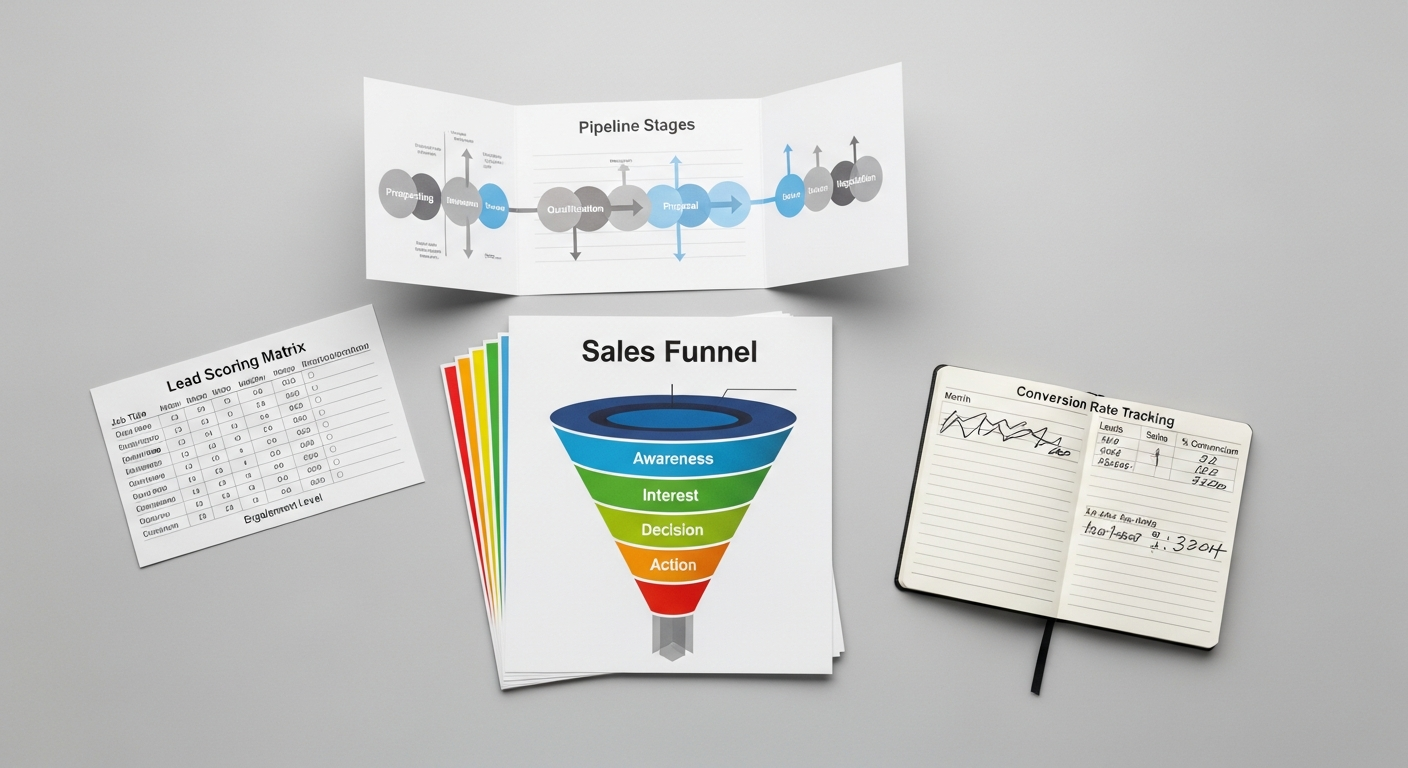
Updated March 2026. The digital landscape is ever-evolving, and for small business owners, staying ahead means mastering the art of converting prospects into loyal customers. If you’re looking for a comprehensive how to build sales funnel guide 2026, you’ve come to the right place. A well-constructed customer journey isn’t just a marketing buzzword; it’s a strategic roadmap that guides potential buyers through awareness, interest, desire, and action, ultimately driving predictable revenue.
In the competitive environment of 2026, where consumer attention is fragmented and expectations are higher than ever, a robust, optimized conversion pathway is the cornerstone of sustainable growth for any small to medium-sized business (SMB). This expert-level guide will demystify the process, providing practical, no-nonsense strategies, specific tool recommendations, and actionable insights to help you design, implement, and refine a high-converting system tailored for your business.
TL;DR: Building a high-converting sales funnel in 2026 requires understanding your customer, crafting targeted content, leveraging automation, and continuous optimization. Focus on a modern, multi-stage approach, utilizing specific tools for lead generation, nurturing, and conversion to ensure predictable growth and customer loyalty.
The Modern Sales Funnel Beyond AIDA
Shifting from Linear Paths to the Flywheel Concept
For decades, the AIDA model (Awareness, Interest, Desire, Action) served as the foundational framework for understanding the customer journey. While still relevant, the digital age, particularly in 2026, demands a more nuanced and customer-centric approach. The traditional model often depicted a linear path, but today’s customer journey is anything but. Prospects might jump stages, revisit content, or engage through multiple channels before making a decision. For SMBs, this means embracing a model that prioritizes ongoing engagement and customer delight, often represented by the “Flywheel” concept (Attract, Engage, Delight) or a continuous loop of customer experience.
The Importance of Omnichannel Engagement
The modern approach acknowledges that the relationship doesn’t end at the point of sale. Post-purchase experience, customer support, and fostering loyalty are critical for repeat business, referrals, and positive reviews—all of which feed back into the top of your pipeline. According to Gartner Sales Insights, B2B buyers now spend only 17% of their total purchase journey meeting with potential suppliers, meaning your digital presence must do the heavy lifting. In 2026, AI-driven personalization plays a significant role, allowing businesses to tailor messages and offers based on individual behavior and preferences. Multi-channel engagement, from social media to email to in-app messaging, is paramount. Prospects expect to interact with your brand on their terms, making a cohesive, omnichannel strategy vital.
For a small business, the key is not to overcomplicate things initially. Start with a clear understanding of your core customer journey and expand incrementally. The shift from a purely linear path to a more cyclical or holistic model emphasizes building trust and transparency. Customers in 2026 are savvy; they can spot inauthentic marketing from a mile away. Your strategy should reflect your brand’s values, provide genuine value at every stage, and focus on solving customer problems rather than just pushing products.
How to Define Your Target Audience for ToFu?
Developing Accurate Buyer Personas
Developing detailed buyer personas is the crucial first step. Think of your ideal customer as a real person: what “job” are they trying to get done when they seek out a solution like yours? What challenges are they facing? What questions do they have when they first become aware of a problem? If you need a deeper dive, check out our comprehensive guide on developing accurate buyer personas. This foundational work ensures your broader B2B marketing strategy aligns perfectly with your lead generation efforts.
Key ToFu Content Types for Lead Generation
The goal of the Top-of-Funnel (ToFu) is pure awareness and lead generation. This is where you cast a wide net to attract potential customers who might not even know your business exists or fully understand their need for your product or service. Your content here should be educational, informative, and problem-aware, not salesy. Examples include blog posts addressing common industry questions, “how-to” guides, infographics, or short, engaging videos.
Effective ToFu strategies in 2026 often blend organic and paid efforts. For organic reach, mastering B2B SEO strategies is paramount. Conduct keyword research using tools like Google Keyword Planner or Ahrefs to identify terms your target audience is searching for. Paid advertising, such as Google Ads or LinkedIn Ads, offers immediate visibility and precise targeting. To capture interest, offer valuable lead magnets—free resources like checklists, templates, webinars, or mini-eBooks—in exchange for an email address. Aim for a ToFu conversion rate (website visitors to lead magnet download) of 1-5% as an initial benchmark.
[INLINE IMAGE 2: buyer persona template example with demographic and psychographic data]
Types of MoFu Content and When to Apply Them
Email Nurturing Sequences
Once you’ve captured a lead at the top of the funnel, the Middle-of-Funnel (MoFu) stage is where you build trust, educate them further, and differentiate your solution from competitors. At this point, prospects are “problem-aware” and “solution-aware.” Email marketing is the backbone of effective MoFu nurturing. Develop automated email sequences (drip campaigns) that deliver targeted content over several days or weeks. Segmentation is crucial here: tailor your email content based on how the lead entered your system or what actions they’ve taken on your website.
Leveraging Case Studies and Webinars
Beyond email, MoFu content includes case studies showcasing how your product or service helped other businesses, detailed service pages that delve into features and benefits, comparison guides, and webinars. For a B2B SMB, a case study demonstrating a 20% efficiency improvement for a similar client is incredibly powerful. In fact, you can see how our clients achieved a 35% growth in qualified leads using these exact mid-funnel strategies in our recent success stories.
Integrating your lead capture with a Customer Relationship Management system is vital. Proper CRM integration for sales and marketing allows you to track lead behavior, segment your audience, and automate email sequences seamlessly. Tools like HubSpot CRM or ActiveCampaign are excellent starting points. Aim for email open rates of 15-25% and click-through rates of 2-5% as healthy benchmarks for your MoFu efforts.
What Drives Action at the Bottom of the Funnel?
High-Converting BoFu Offers
The Bottom-of-Funnel (BoFu) is where all your hard work culminates: converting nurtured leads into paying customers. At this stage, your prospects are “product-aware”; they know what they want and are actively evaluating specific options, including yours. Your BoFu content and strategies must directly address their final purchase considerations, overcome objections, and provide a clear, easy path to conversion. This includes free consultations, product demos, limited-time trials, exclusive discounts, detailed pricing pages, and comprehensive FAQs.
Frictionless Checkout and Retargeting
Your sales process must be frictionless. If you have a sales team, ensure they are well-trained, responsive, and focused on consultative selling rather than aggressive pushing. For online sales, your checkout process should be intuitive, secure, and offer multiple payment options. Any friction points, like unexpected shipping costs or complicated forms, can lead to abandoned carts.
Retargeting ads are incredibly effective at the BoFu stage. These ads target individuals who have visited your BoFu pages (e.g., pricing page, product page) but haven’t converted. Seeing your ad again on social media or other websites can provide the gentle nudge they need to return and complete their purchase. A well-optimized BoFu stage for nurtured leads can see conversion rates anywhere from 5-20%, depending on your industry and price point.
The Role of Automation and Integration in 2026
Automating Repetitive Tasks
In 2026, automation and seamless integration are not just luxuries for large enterprises; they are critical for SMBs looking to scale efficiently and deliver a personalized customer experience. The sheer volume of tasks involved in managing a multi-stage customer journey can quickly overwhelm a small team. Automation solves this by handling repetitive tasks, freeing up valuable time for strategic work and direct customer engagement. Consider automated lead scoring, CRM updates, and social media scheduling. If you are unsure where to start, our marketing automation implementation guide provides a step-by-step roadmap.
Connecting Your Tech Stack
Integration ensures that all your tools “talk” to each other, creating a unified view of your customer and preventing data silos. Your landing page builder should integrate with your email marketing platform, which should integrate with your CRM, and your CRM should ideally integrate with your payment gateway. Zapier and Make are invaluable tools for SMBs, acting as digital glue to connect hundreds of different applications without needing custom code.
The “2026” aspect of automation also heavily involves AI. While full-fledged AI-driven predictive analytics might be complex for many SMBs, readily available tools offer AI-powered personalization and intelligent chatbots for instant website support and lead qualification. Investing in a robust CRM with built-in automation capabilities can consolidate many of these functions, saving time, reducing errors, and improving customer satisfaction.
[INLINE IMAGE 5: flowchart showing automated email sequence triggered by lead magnet download]
How Do You Measure and Optimize Funnel Growth?
Tracking Key Conversion Metrics
Building a conversion pathway isn’t a one-and-done project; it’s an iterative process of continuous improvement. As the adage goes, “What gets measured gets managed.” Without robust measurement and analysis, you’re essentially flying blind. Start by tracking conversion rates at each stage:
- ToFu Conversion Rate: How many website visitors become leads (e.g., download a lead magnet)? A typical range might be 1-5%.
- MoFu Conversion Rate: How many leads engage with nurturing content (e.g., open emails, click links, view case studies)?
- BoFu Conversion Rate: How many qualified leads convert into paying customers? Target 5-20% for well-nurtured leads.
Other critical metrics include Cost Per Lead (CPL), Cost Per Acquisition (CPA), Customer Lifetime Value (CLTV), and Return on Ad Spend (ROAS). Google Analytics 4 (GA4) is a free, powerful tool for tracking website traffic, user behavior, and conversion events.
A/B Testing for Continuous Improvement
Once you have data, you can identify bottlenecks. Is your ToFu conversion rate low? Perhaps your lead magnet isn’t compelling enough. Is your MoFu to BoFu conversion struggling? Your nurturing content might not be persuasive. This is where A/B testing comes in. Test different headlines, calls-to-action (CTAs), landing page layouts, and email subject lines. Run tests for 2-4 weeks to gather statistically significant data. Don’t forget qualitative feedback—conduct customer surveys and gather testimonials to gain human insights that data alone might miss.
Essential Sales Funnel Tools and Software Categories
Navigating the vast array of marketing and sales tools can be overwhelming for small businesses. This table provides a quick comparison of essential tools and strategies across different stages, focusing on their primary use, typical SMB cost, and key benefits.
| Funnel Stage / Category | Tool/Strategy Example | Primary Use | SMB Cost Range (Monthly) | Key Benefit for SMBs |
|---|---|---|---|---|
| Lead Generation (ToFu) | Google Ads / LinkedIn Ads | Targeted traffic, brand awareness | $100 – $1,000+ | Instant visibility, precise audience targeting |
| Ahrefs / SEMrush (lite) | Keyword research, SEO analysis | $0 (basic) – $100 | Improve organic search ranking, content ideas | |
| Lead Magnet (e.g., PDF guide) | Capture contact information | $0 (DIY) – $50 (design) | Builds email list, establishes authority | |
| Lead Nurturing (MoFu) | ActiveCampaign / Mailchimp | Email marketing automation | $15 – $100 | Automated follow-ups, personalization at scale |
| HubSpot CRM / Zoho CRM | Lead tracking, basic nurturing | $0 – $50/user | Centralized customer data, sales pipeline view | |
| Webinars / Case Studies | Educate, build trust and credibility | $0 (DIY) – $500 | Positions business as an expert, engages prospects | |
| Conversion (BoFu) | Calendly / Stripe | Consultation booking, payment processing | $0 – $30 | Frictionless scheduling and secure checkout |
Frequently Asked Questions
What is the most important stage of a sales funnel?
While all stages are crucial, the Middle-of-Funnel (MoFu) is often considered the most important because it bridges the gap between initial interest and final purchase. It is where trust is built, objections are handled, and the relationship is nurtured.
How long does it take to build a functioning funnel?
A basic setup (landing page, lead magnet, and a 3-part email sequence) can be built in 1 to 2 weeks. However, optimizing it, integrating advanced CRM tools, and generating consistent traffic can take 3 to 6 months of continuous refinement.
Do I need expensive software to get started?
No. Many powerful tools offer free tiers or affordable starter plans for SMBs. You can begin with free versions of Mailchimp, HubSpot CRM, and Canva, upgrading only as your revenue and complexity grow.
Sources & References
- Gartner Sales Insights (2025) – Research on B2B buyer behavior and the modern non-linear customer journey.
- HubSpot State of Marketing Trends – Data on ToFu conversion benchmarks, CRM adoption, and email marketing statistics.
- B2B Marketing Benchmark Report – Analysis of omnichannel retention rates and automation efficiency in SMBs.
About the Author
Rachel Kim, B2B Business Strategist — Rachel is a seasoned B2B business strategist covering operations, sales, HR, and small business management. With over a decade of experience helping SMBs scale their revenue through optimized marketing systems, her work has been featured in top industry publications and she regularly consults on CRM integration and automation.
Reviewed by Julian Vance, Senior Content Strategist — Last reviewed: April 15, 2026