
Understanding Your Business Needs Before Anything Else
Before you even begin to explore the vast marketplace of business software solutions, the most critical first step is to gain a deep understanding of your own organization’s unique needs, challenges, and objectives. Skipping this foundational phase is a common pitfall that often leads to costly misalignments and underutilized software. A thorough internal assessment will serve as your compass, guiding every subsequent decision in the software selection journey.
Identify Your Pain Points and Bottlenecks
Start by pinpointing the specific operational pain points, inefficiencies, and bottlenecks that currently hinder your business. Are your sales teams struggling with disconnected data? Is customer service overwhelmed by manual processes? Are project delays frequent due to poor communication? Is financial reporting cumbersome and prone to errors? Documenting these challenges in detail will help you identify areas where software can provide tangible solutions. Involving employees from various departments in this exercise is crucial, as they are on the front lines and can offer invaluable insights into daily operational struggles. This bottom-up approach ensures that the software ultimately chosen addresses real-world problems.
Define Clear Business Objectives
Once pain points are identified, translate them into clear, measurable business objectives that the new software should help achieve. For instance, if a pain point is “slow customer response times,” the objective might be “reduce average customer response time by 30% within six months.” If “manual data entry errors” is the problem, an objective could be “automate data synchronization to reduce error rate by 50%.” These objectives should be SMART: Specific, Measurable, Achievable, Relevant, and Time-bound. Having well-defined objectives will allow you to evaluate potential software solutions against concrete metrics, rather than vague aspirations.
Involve Key Stakeholders from All Departments
Software adoption and success are heavily dependent on user buy-in. To ensure this, it’s essential to involve key stakeholders from all relevant departments early in the process. This includes representatives from sales, marketing, finance, operations, human resources, and IT. Each department will have unique requirements and perspectives that need to be considered. For example, the marketing team might prioritize integration with digital advertising platforms, while finance will focus on robust reporting and compliance features. Creating a cross-functional team ensures that the chosen software meets the diverse needs of the entire organization and helps in fostering a sense of ownership among future users.
Consider Your Future Growth and Scalability
A critical aspect of understanding your needs is to look beyond the immediate present and consider your future growth trajectory. What are your business expansion plans for 2026 and beyond? Will the software need to accommodate a larger employee base, new product lines, increased transaction volumes, or entry into new markets? Choosing a solution that is scalable and flexible enough to evolve with your business will prevent the need for another costly software overhaul in a few years. Think about modular systems that allow you to add functionalities as your business grows, rather than a monolithic solution that might be overkill now and restrictive later.
Defining Your Software Requirements and Budget
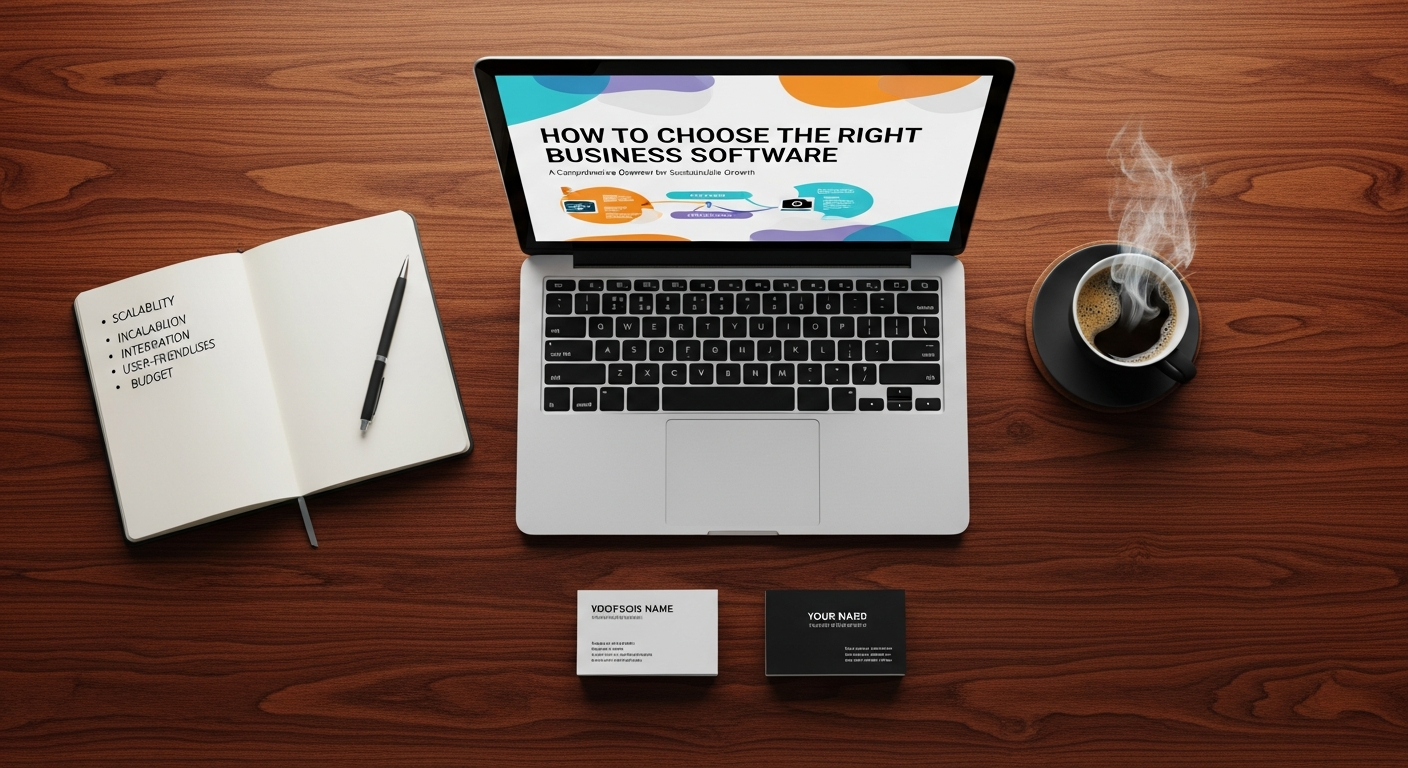
With a clear understanding of your business needs, the next step is to translate those insights into concrete software requirements and establish a realistic budget. This phase moves from the “why” to the “what” and “how much,” providing a framework for evaluating potential solutions.
Prioritize Functional and Non-Functional Requirements
Categorize your requirements into functional and non-functional. Functional requirements describe what the software must do – e.g., process invoices, manage customer contacts, track inventory, automate email campaigns. These are the core features and capabilities. Non-functional requirements describe how well the software performs its functions – e.g., ease of use, security, performance (speed), reliability, scalability, integration capabilities, and compatibility with existing systems. While functional requirements are often the focus, non-functional aspects are equally vital for long-term satisfaction and operational efficiency. Prioritize these requirements, distinguishing between “must-haves,” “should-haves,” and “nice-to-haves.” This prioritization will be crucial when evaluating trade-offs between different solutions.
Assess Integration Capabilities
In today’s interconnected business environment, software rarely operates in isolation. Your new solution will likely need to integrate seamlessly with existing systems, such as your accounting software, CRM, e-commerce platform, or HR system. Poor integration can lead to data silos, manual data entry, errors, and significant productivity drains. Investigate how potential software solutions handle integration: Do they offer native integrations? Do they have robust APIs (Application Programming Interfaces) that allow for custom connections? Is third-party middleware required? Understanding the complexity and cost of integration is paramount, as it can significantly impact the total cost of ownership and the overall effectiveness of your software stack.
Consider Security and Compliance
Data security is non-negotiable. With increasing cyber threats and stringent data privacy regulations (like GDPR or CCPA), ensuring that your chosen software meets the highest security standards is critical. Evaluate vendors on their data encryption protocols, access controls, backup and disaster recovery plans, and their compliance with relevant industry and governmental regulations. Ask about their security certifications and incident response procedures. A data breach can have devastating financial and reputational consequences, making robust security a top non-functional requirement.
Evaluate User Experience (UX) and User Interface (UI)
An intuitive and user-friendly interface is vital for successful adoption and to how to improve employee productivity. If a software is difficult to navigate or requires extensive training, employees will be reluctant to use it, negating its potential benefits. During demos and trials, pay close attention to the user experience. Is the design clean and uncluttered? Is the workflow logical? Can tasks be completed efficiently? A positive UX minimizes the learning curve, reduces support requests, and empowers employees to leverage the software effectively, directly contributing to productivity gains.
Establish a Realistic Budget
Software costs extend beyond the initial purchase or subscription fee. Your budget should encompass the total cost of ownership (TCO), which includes:
- Licensing/Subscription Fees: Monthly or annual costs per user or per feature set.
- Implementation Costs: Setup, configuration, and data migration.
- Integration Costs: Connecting with existing systems, potentially requiring custom development or middleware.
- Training Costs: Onboarding employees and ongoing education.
- Support and Maintenance Fees: Ongoing technical support and software updates.
- Hardware Upgrades: If on-premise software requires new servers or infrastructure.
- Customization Costs: Any bespoke modifications to fit unique business processes.
Be transparent about your budget with vendors, but also be prepared for some flexibility. Sometimes, a slightly higher initial investment in a more robust solution can lead to significant long-term savings through increased efficiency and reduced operational costs. Prioritize features within your budget, understanding that you might not get every “nice-to-have.”
Exploring Different Types of Business Software Solutions
Customer Relationship Management (CRM) Systems
CRM software is designed to manage and analyze customer interactions and data throughout the customer lifecycle, with the goal of improving business relationships with customers, assisting in customer retention, and driving sales growth. Key functionalities include sales automation, marketing automation, customer service, and technical support. A good CRM can centralize customer data, track interactions, manage leads, and streamline communication. For businesses focusing on inbound marketing vs outbound marketing, a robust CRM is indispensable. It can track leads generated through inbound content efforts, segment audiences for targeted outbound campaigns, and provide a unified view of all customer touchpoints, regardless of the marketing channel.
Enterprise Resource Planning (ERP) Systems
ERP systems integrate all facets of an operation, including product planning, development, manufacturing, sales, and marketing, in a single database, application, and user interface. It provides a holistic view of the business, enabling better decision-making and operational control. Core modules often include finance, human resources, supply chain management, inventory, and procurement. ERPs are typically suited for larger organizations or those with complex, interconnected processes seeking to centralize data and operations.
Project Management Software
These tools help teams plan, execute, and track projects from start to finish. They typically offer features like task management, timeline visualization (Gantt charts), resource allocation, collaboration tools, and progress reporting. Effective project management software can significantly improve team coordination, meet deadlines, and keep projects within budget, directly contributing to how to improve employee productivity by providing clarity and reducing administrative overhead.
Human Resources (HR) Software
HR software streamlines various human resources functions, from recruitment and onboarding to payroll, benefits administration, performance management, and employee self-service. These systems can automate routine HR tasks, ensure compliance, and provide valuable insights into workforce data, freeing up HR professionals to focus on strategic initiatives.
Marketing Automation Platforms
These platforms automate repetitive marketing tasks such as email marketing, social media posting, lead nurturing, and campaign management. They are particularly effective for businesses engaged in inbound marketing vs outbound marketing strategies, providing tools to create landing pages, manage SEO content, track website visitor behavior, and personalize customer journeys. They can significantly enhance lead generation and conversion rates.
Accounting and Financial Management Software
Essential for any business, this category includes tools for managing general ledger, accounts payable, accounts receivable, invoicing, payroll, financial reporting, and budgeting. From simple bookkeeping applications for small businesses to complex financial management suites for enterprises, these systems ensure financial accuracy, compliance, and provide critical insights into a company’s financial health.
Business Intelligence (BI) and Analytics Tools
BI software collects, processes, and visualizes large amounts of data from various sources to provide actionable insights. These tools help businesses understand trends, identify opportunities, and make data-driven decisions. They are invaluable for strategic planning, performance monitoring, and gaining a deeper understanding of market dynamics and customer behavior.
As you explore these categories, remember to revisit your defined requirements. Some solutions might fit multiple categories, while others are highly specialized. The goal is to find the best fit for your specific functional and non-functional needs.
Evaluating Potential Software Vendors and Demos
Once you have a shortlist of software types and potential solutions, the next crucial step is to meticulously evaluate the vendors and their offerings. This phase involves deep dives into specific products, direct interaction with sales teams, and hands-on testing.
Research Vendor Reputation and Track Record
A software solution is only as good as the company behind it. Research the vendor’s reputation, market presence, and financial stability. How long have they been in business? What do independent reviews (e.g., on G2, Capterra, Gartner Peer Insights) say about their product and customer service? Look for case studies or testimonials from businesses similar to yours. A reputable vendor is more likely to provide reliable software, consistent updates, and long-term support. Be wary of new, unproven vendors unless their innovative solution perfectly addresses a niche need and you are comfortable with potential risks.
Request and Review Detailed Proposals
Engage with shortlisted vendors and request detailed proposals that address your specific requirements. The proposals should clearly outline features, pricing (including all potential TCO components), implementation timelines, support structures, and any customization options. Compare these proposals carefully, not just on price, but on how well each solution aligns with your prioritized “must-have” and “should-have” requirements. Don’t hesitate to ask for clarification on any ambiguous terms or costs.
Schedule Comprehensive Demos and Free Trials
Demos are invaluable for seeing the software in action. Insist on personalized demos that showcase how the software will address your specific pain points and achieve your defined objectives. Provide vendors with real-world scenarios or workflows from your business so they can demonstrate how their product handles them. During the demo, involve your key stakeholders and encourage them to ask questions.
Even better than a demo is a free trial or a proof of concept (POC). This allows your team to get hands-on experience with the software in a real-world environment. Design specific tasks for your team to complete during the trial period. Pay attention to:
- Ease of Use: How intuitive is the interface? How steep is the learning curve?
- Performance: How quickly does it load and process data?
- Feature Relevance: Do the advertised features actually work as expected and meet your needs?
- Integration Capabilities: Can it connect with your existing systems as promised?
- Support Responsiveness: How quickly and effectively does the vendor’s support team respond to questions during the trial?
This hands-on evaluation is critical for assessing user adoption potential and identifying any unexpected challenges or limitations. Choosing software that is user-friendly and supported by good training directly contributes to how to improve employee productivity, as employees can quickly become proficient and leverage its capabilities.
Assess Customer Support and Training Resources
Beyond the software itself, the quality of vendor support and training is paramount. What kind of support channels do they offer (phone, email, chat, knowledge base)? What are their response times and availability? Do they offer comprehensive training materials, online tutorials, or live workshops? Good support ensures that any issues are resolved quickly, minimizing downtime and frustration. Adequate training resources are essential for ensuring that your employees can fully utilize the software’s capabilities, thereby maximizing your investment and improving overall operational efficiency.
Considering Implementation, Integration, and Data Migration
The journey doesn’t end with selecting the software; in many ways, it’s just beginning. The successful implementation, seamless integration with existing systems, and accurate migration of data are critical phases that can make or break your software investment.
Develop a Detailed Implementation Plan
A robust implementation plan is essential for a smooth rollout. This plan should outline:
- Timeline: Realistic deadlines for each phase, from initial setup to go-live.
- Roles and Responsibilities: Clearly assign tasks to internal teams and vendor representatives.
- Milestones: Define clear checkpoints to track progress.
- Communication Strategy: How will updates be shared with stakeholders and users?
- Contingency Plans: What steps will be taken if unexpected issues arise?
Consider a phased rollout for larger, more complex systems. This allows for testing, adjustments, and learning in smaller, manageable increments before a full organizational deployment. Engaging a project manager, either internal or external, who has experience with software implementations can be invaluable.
Plan for Seamless Integration with Existing Systems
As discussed earlier, integration is key. Before implementation, map out all existing systems that need to connect with the new software. Understand the data flow between these systems and identify any potential conflicts or redundancies. Work closely with the vendor’s technical team and your internal IT department (or external IT consultants) to design and execute the integration strategy.
- Native Integrations: Prioritize solutions that offer out-of-the-box integrations with your current software stack.
- APIs: If native integrations aren’t available, assess the quality and documentation of the vendor’s APIs to facilitate custom development.
- Middleware: For complex integration landscapes, consider using integration platform as a service (iPaaS) solutions that can orchestrate data flow between disparate systems.
Poorly planned integration can lead to data silos, duplicate entries, and operational chaos, undermining the very purpose of your new software investment.
Strategize Data Migration
Moving your historical data from old systems or spreadsheets into the new software is often one of the most challenging aspects of implementation. A meticulous data migration strategy is paramount to avoid data loss, corruption, or inaccuracies.
- Data Audit: Start by auditing your existing data. Identify what data needs to be migrated, what can be archived, and what needs cleaning.
- Data Cleansing: Cleanse and de-duplicate your data before migration. This is an opportune time to improve data quality.
- Data Mapping: Map fields from your old system to the new system. This can be complex, especially if data structures differ significantly.
- Testing: Perform rigorous testing of migrated data in a sandbox environment before going live. Verify accuracy, completeness, and integrity.
- Backup: Always have a complete backup of your original data before initiating migration.
For businesses that lack the internal expertise or resources for complex data migration or ongoing software management, this is an area where considering what is Business Process Outsourcing (BPO) can be highly beneficial. Outsourcing specialized tasks like data entry, data cleaning, or even ongoing IT support and maintenance for your new software can allow your internal team to focus on core competencies while ensuring the software is optimally managed and utilized. BPO providers often have the expertise and infrastructure to handle these tasks efficiently and securely.
The Importance of Training, Support, and Ongoing Optimization
Implementing new business software is not a one-time event; it’s an ongoing journey that requires continuous attention to user adoption, support, and optimization to truly unlock its full potential.
Prioritize Comprehensive User Training
Even the most advanced software is useless if your employees don’t know how to use it effectively. Comprehensive training is critical for maximizing user adoption and ensuring a return on your investment.
- Tailored Training: Develop training programs that are tailored to the specific roles and responsibilities of different user groups. A sales representative will need different training than an accountant.
- Multi-Format Resources: Offer a variety of training formats, including live workshops, online tutorials, video guides, and easy-to-access documentation.
- Hands-On Practice: Provide opportunities for hands-on practice in a non-production environment, allowing users to experiment without fear of making mistakes.
- Champions Program: Identify internal “super users” or “champions” who can become experts and assist their colleagues, fostering peer-to-peer learning and support.
Effective training directly contributes to how to improve employee productivity by reducing frustration, increasing proficiency, and empowering employees to leverage the software’s full capabilities.
Establish Robust Ongoing Support Mechanisms
No software implementation is entirely without issues. Having clear and accessible support channels is crucial for addressing user questions, troubleshooting problems, and maintaining operational continuity.
- Internal Support: Designate internal IT staff or power users as first-line support.
- Vendor Support: Understand the vendor’s support offerings, including response times, communication channels (phone, email, chat), and availability. Ensure these align with your operational hours.
- Knowledge Base: Encourage the creation and maintenance of an internal knowledge base or FAQ section specific to your company’s use of the software.
- User Community: Leverage any vendor-provided user communities or forums for shared learning and problem-solving.
Reliable support minimizes downtime and ensures that employees can quickly get back to productive work when issues arise.
Embrace Continuous Optimization and Feedback
The business environment is dynamic, and your software solution should evolve with it. Don’t treat software as a static tool; instead, view it as a living system that requires continuous optimization.
- Regular Reviews: Schedule regular reviews (e.g., quarterly or bi-annually) to assess how the software is performing against your initial objectives.
- Gather User Feedback: Actively solicit feedback from users. What’s working well? What could be improved? Are there features that are underutilized or confusing?
- Monitor KPIs: Continuously monitor key performance indicators (KPIs) that the software is intended to impact (e.g., sales conversion rates, customer satisfaction scores, operational efficiency metrics).
- Leverage New Features: Stay informed about vendor updates and new features. Many software providers release regular enhancements that can further improve your operations.
- Process Refinement: Use the insights gained from software usage to refine your business processes. Software can highlight inefficiencies that might not have been apparent before.
This iterative approach to optimization ensures that your software investment continues to deliver maximum value, adapting to new challenges and opportunities as your business grows towards 2026 and beyond.
Making the Final Decision and Future-Proofing Your Investment
After thorough research, evaluation, and piloting, it’s time to make the final decision. This step involves a comprehensive review of all collected information, careful negotiation, and a forward-looking perspective to ensure your software choice remains beneficial for years to come.
Conduct a Final ROI Analysis
Before signing any contracts, perform a final return on investment (ROI) analysis. Quantify the expected benefits (e.g., increased sales, reduced operational costs, improved customer satisfaction, time saved due to automation, enhanced data accuracy) and compare them against the total cost of ownership. While some benefits might be qualitative (e.g., improved employee morale), try to assign monetary values where possible. A positive ROI indicates a sound investment. Be realistic in your projections, but also confident in the value the right software can bring.
Negotiate Terms and Contracts Carefully
Don’t rush the contracting phase. Review all terms and conditions meticulously, ideally with legal counsel. Pay close attention to:
- Pricing Structure: Ensure all costs are clear, including renewal rates, potential price increases, and costs for additional users or features.
- Service Level Agreements (SLAs): Understand the vendor’s commitments regarding uptime, support response times, and data recovery.
- Data Ownership and Portability: Confirm that you own your data and understand the process for exporting it should you decide to switch vendors in the future.
- Exit Strategy: While you hope for a long-term partnership, understand the termination clauses and any associated costs or procedures.
- Customization and Integration Guarantees: If specific customizations or integrations are critical, ensure these are explicitly outlined and guaranteed in the contract.
Effective negotiation can secure better terms, mitigate risks, and ensure a more favorable long-term relationship with your chosen vendor.
Plan for Long-Term Strategy and Technology Roadmapping
The software you choose today should fit into your broader technology roadmap for 2026 and beyond. Consider:
- Vendor’s Roadmap: Does the vendor have a clear product development roadmap that aligns with future technological trends and your evolving business needs?
- Flexibility and Adaptability: How easily can the software adapt to new industry standards, regulatory changes, or emerging technologies (e.g., AI, machine learning)?
- Ecosystem Compatibility: Will the software integrate well with other potential future investments in your technology stack?
- Scalability: Revisit your growth projections. Can the software comfortably handle anticipated increases in users, data, and complexity?
By thinking strategically and looking ahead, you can make a decision that not only solves immediate problems but also lays a strong foundation for future innovation and sustained growth. Choosing the right business software is a significant investment, but when done thoughtfully and strategically, it becomes a powerful catalyst for efficiency, productivity, and profitability, positioning your business for success in an increasingly competitive market.
Frequently Asked Questions
Recommended Resources
For more on how to choose, see Best Ways To Save Money Every Month on AssetBar.
Learn more about this topic in How To Improve Credit Score Quickly at Trading Costs.