Understanding the “Why”: What is a Go-to-Market Strategy?
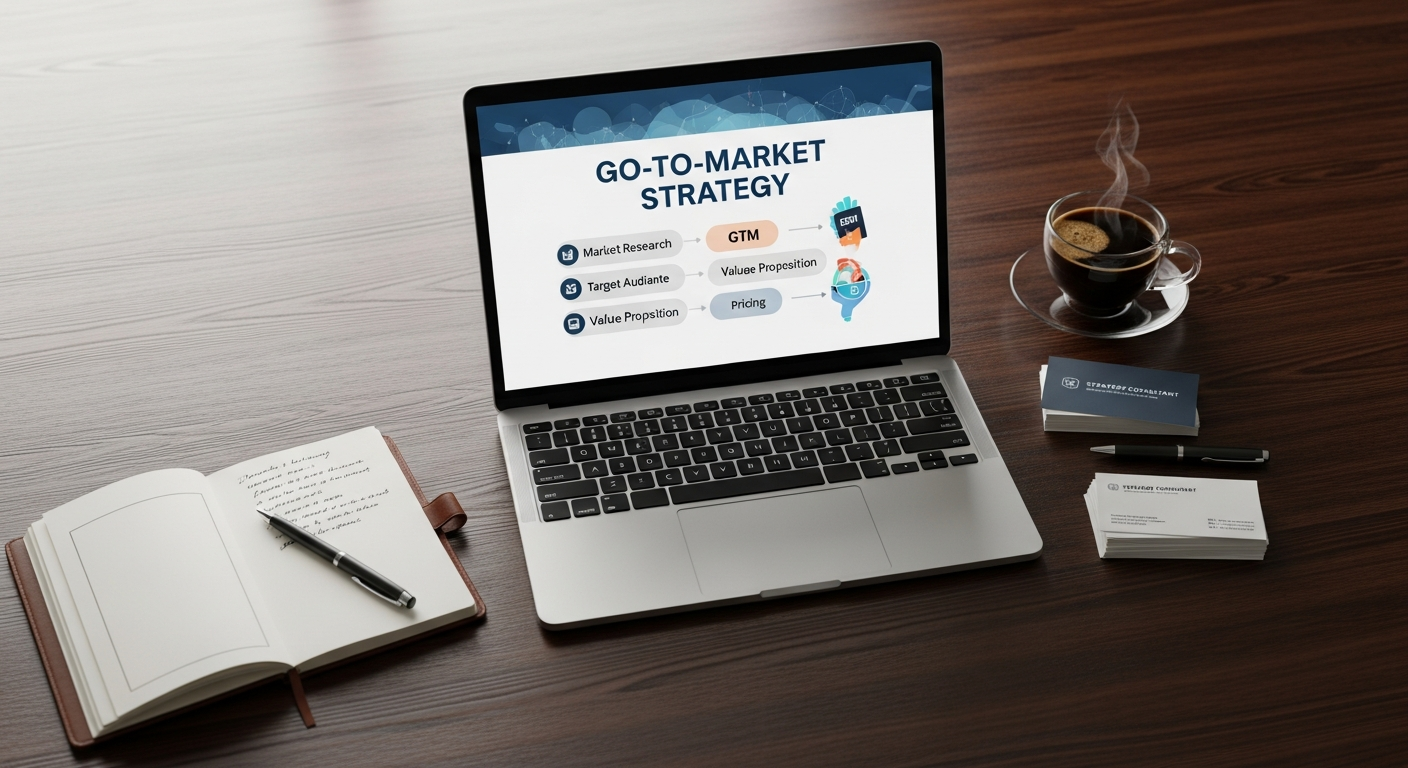
Before diving into the mechanics of creation, it’s vital to grasp the fundamental definition and purpose of a go-to-market (GTM) strategy. At its core, a GTM strategy is an action plan that specifies how a company will deliver its unique value proposition to customers to achieve competitive advantage and sales objectives. It encompasses the entire lifecycle from product conception to market launch and beyond, detailing who the customers are, what the product is, where it will be sold, how it will be priced, and how it will be promoted.
A common misconception is to conflate a GTM strategy with a general business plan or a marketing plan. While interconnected, they serve distinct purposes. A business plan provides a holistic overview of the entire business, including its mission, financial projections, and operational strategies. A marketing plan details the specific marketing activities and campaigns to promote an offering. In contrast, a go-to-market strategy is far more focused and tactical, specifically addressing the launch and scaling of a particular product, service, or entry into a new market. It’s the strategic bridge between your internal capabilities and external market opportunities.
The benefits of a well-defined GTM strategy are multifaceted and profound. Firstly, it significantly reduces market entry risks by forcing a thorough understanding of the competitive landscape and customer needs before significant investment. Secondly, it ensures cross-functional alignment within your organization, uniting product development, sales, marketing, and customer service under a single, clear objective. This alignment is crucial for operational efficiency and for ensuring that all teams are working towards the same goals, which in turn can significantly improve employee productivity by eliminating redundant efforts and clarifying roles. Thirdly, it provides a clear roadmap for revenue generation and market share capture, outlining how you will attract, convert, and retain customers. Finally, a robust GTM strategy facilitates data-driven decision-making, enabling continuous optimization and adaptation to market changes. In an increasingly complex business environment, particularly looking ahead to 2026, having this clarity and strategic direction is not just an advantage, but a necessity for survival and growth.
Phase 1: Deep Dive into Market and Customer – The Foundation

The bedrock of any successful go-to-market strategy is an exhaustive understanding of your target market and the customers within it. This foundational phase involves rigorous research and analysis to ensure that your offering genuinely addresses a market need and resonates with your ideal audience. Skipping or superficializing this step is a common pitfall that can derail even the most innovative products.
Market Sizing and Trends Analysis
Begin by meticulously defining your market. This involves sizing the market using metrics like Total Addressable Market (TAM), Serviceable Available Market (SAM), and Serviceable Obtainable Market (SOM). Understanding these figures provides a realistic scope of your potential revenue. Beyond numbers, analyze prevailing market trends, technological shifts, regulatory changes, and economic factors that might impact your offering. For example, the accelerating pace of digital transformation and the increasing demand for sustainable solutions are critical trends to consider for any GTM strategy planned for 2026. This comprehensive view helps identify opportunities and potential threats before they materialize.
Customer Segmentation and Ideal Customer Profile (ICP)
Once the broader market is understood, narrow your focus to your potential customers. Effective customer segmentation is paramount. Instead of trying to appeal to everyone, identify specific groups of customers who share common needs, behaviors, and demographic or firmographic characteristics. For B2B, this often involves segmenting by industry, company size, revenue, geographic location, or specific pain points. From these segments, develop detailed Ideal Customer Profiles (ICPs). An ICP is a description of the type of company that would get the most value from your product or service, and conversely, the company that would provide the most value to you. This includes attributes like budget, growth stage, technical sophistication, and existing technology stack.
Buyer Personas
Building upon ICPs, create comprehensive buyer personas. These are semi-fictional representations of your ideal customers, based on market research and real data about your existing customers. Personas go beyond demographics to include psychological drivers, motivations, goals, pain points, job roles, daily challenges, and how they make purchasing decisions. Understanding your buyer personas intimately allows you to tailor your product features, messaging, and sales approach to speak directly to their needs and aspirations. This level of detail ensures that your GTM strategy is customer-centric, increasing the likelihood of engagement and conversion. To effectively conduct this research and develop these profiles, internal teams must work efficiently and collaboratively, demonstrating how a clear directive and access to necessary tools can improve employee productivity within the research phase.
Competitive Analysis
Finally, a thorough competitive analysis is non-negotiable. Identify your direct and indirect competitors. Analyze their offerings, pricing strategies, market positioning, strengths, weaknesses, sales channels, and marketing tactics. What are they doing well? Where are their gaps? How do they communicate their value? This analysis will not only help you identify opportunities for differentiation but also prepare you for potential competitive responses. Understanding your competitive landscape allows you to carve out a unique space for your offering and articulate why customers should choose you over alternatives.
Phase 2: Crafting Your Core Message and Positioning
Developing Your Value Proposition
Your value proposition is the cornerstone of your GTM strategy. It’s a clear, concise statement that explains what unique benefits you offer to your target customers, how you solve their problems, and why you are better than the competition. A strong value proposition should be:
- Relevant: Addressing a core pain point or need of your target customer.
- Unique: Clearly differentiating you from competitors.
- Measurable: Ideally, quantifiable benefits that customers can expect.
- Concise: Easy to understand and remember.
This isn’t just a tagline; it’s the fundamental promise you make to your customers. Every aspect of your GTM strategy—from product features to marketing campaigns—must align with and support this core value proposition. It should be developed from the customer’s perspective, focusing on the outcomes and solutions they desire, rather than just listing features.
Defining Your Messaging Strategy
Once your value proposition is clear, you need to translate it into a consistent and compelling messaging strategy. This involves crafting the language you will use to communicate your value to different audiences across various touchpoints. Your messaging should be tailored to resonate with your specific buyer personas, addressing their particular pain points and aspirations. It should be consistent across all channels – your website, sales collateral, social media, press releases, and advertising. Key elements of a robust messaging strategy include:
- Core Message: The overarching narrative that encapsulates your brand and offering.
- Key Benefits: Specific advantages your customers will gain.
- Proof Points: Data, testimonials, case studies, or statistics that substantiate your claims.
- Call to Action (CTA): Clear instructions on what you want your audience to do next.
Consistency in messaging builds trust and reinforces your brand identity. It also ensures that your internal teams, especially sales and marketing, are all speaking the same language, which is crucial for a unified customer experience.
Establishing Your Brand Positioning
Brand positioning is about how you want your company and product to be perceived in the minds of your target customers relative to your competitors. It’s about establishing a distinct identity and a memorable place in the market. Are you perceived as the innovative leader, the cost-effective solution, the premium provider, or the reliable partner? Your positioning should be a direct outcome of your value proposition and competitive analysis. It dictates the tone of voice, visual identity, and overall brand experience. For instance, if your GTM strategy aims to position your SaaS product as the most user-friendly solution for small businesses in 2026, every visual, every piece of copy, and every interaction must reinforce that message.
Pricing Strategy
Your pricing strategy is a critical component of your GTM. It not only impacts revenue but also influences how your product is perceived in the market. Common pricing strategies include:
- Value-based pricing: Based on the perceived value to the customer.
- Competitive pricing: Benchmarking against competitors’ prices.
- Cost-plus pricing: Adding a markup to the cost of production.
- Freemium: Offering a basic version for free and charging for advanced features.
- Tiered pricing: Offering different feature sets at different price points.
The chosen strategy must align with your value proposition, target market, and overall business objectives. For B2B products, understanding the buyer’s budget cycles, ROI expectations, and procurement processes is crucial. A well-considered pricing strategy maximizes profitability while ensuring market acceptance and customer satisfaction.
Phase 3: Defining Your Distribution and Sales Channels

Once you know who your customers are and what message you want to deliver, the next step is to determine how you will actually reach them and facilitate the purchase. This phase focuses on identifying the most effective sales and distribution channels to deliver your product or service to your target market.
Sales Model and Channels
The choice of sales model is fundamental. Will you opt for a direct sales approach, an indirect channel strategy, or a hybrid model? Each has its advantages and disadvantages:
- Direct Sales: Involves your internal sales team selling directly to customers. This allows for greater control over the sales process, deeper customer relationships, and direct feedback. It’s often preferred for complex B2B solutions requiring extensive consultation.
- Indirect Sales: Utilizes partners, resellers, distributors, or agencies to sell your product. This can provide wider market reach, lower customer acquisition costs, and access to specialized expertise. Examples include channel partners, marketplaces, or original equipment manufacturer (OEM) agreements.
- Hybrid Model: Combines elements of both direct and indirect sales, allowing for flexibility and optimization across different market segments or product lines.
The selection of your primary and secondary sales channels should be driven by your ICP, product complexity, market reach objectives, and cost considerations. For a new SaaS solution launching in 2026, a direct sales team might handle enterprise accounts, while a partner network targets smaller businesses or international markets.
Leveraging Business Process Outsourcing (BPO) for Sales Support
As you scale your GTM efforts, particularly in sales, consider how What Is Business Process Outsourcing (BPO) can play a strategic role. BPO involves delegating specific business processes to external service providers. In the context of sales, BPO can be incredibly valuable for:
- Lead Generation and Qualification: Outsourcing initial research, cold calling, or inbound lead qualification can free up your core sales team to focus on closing deals.
- Customer Service and Support: Providing 24/7 customer support, technical assistance, or post-sales follow-ups through a BPO partner ensures excellent customer experience without overburdening internal resources.
- Sales Administration and Operations: Tasks like data entry, CRM management, contract processing, and sales reporting can be efficiently handled by BPO providers, improving the overall efficiency of your sales operation.
By strategically utilizing BPO, companies can enhance their sales capabilities, reduce operational costs, and improve response times, ultimately contributing to a more efficient and scalable GTM strategy. It allows your internal teams to focus on high-value activities, aligning with efforts to improve employee productivity.
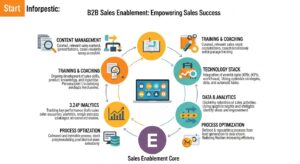
Sales Enablement
Regardless of your chosen sales model, effective sales enablement is crucial. This involves providing your sales team (or partners) with the resources, tools, content, and training they need to effectively engage with prospects and close deals. Key components include:
- Training: Comprehensive product knowledge, sales methodologies, and competitive differentiation.
- Content: Sales decks, case studies, whitepapers, demos, pricing sheets, and battlecards.
- Tools: CRM systems, sales automation platforms, communication tools.
- Processes: Defined sales stages, qualification criteria, and deal progression guidelines.
A well-enabled sales force is a productive sales force, directly impacting conversion rates and revenue growth. Ensuring they are equipped to articulate your value proposition consistently and compellingly is paramount to GTM success.
Phase 4: Executing Your Marketing and Demand Generation Plan
With your product, message, and sales channels defined, the next phase is to generate awareness and demand. This involves developing and executing a comprehensive marketing plan that aligns with your GTM strategy, drawing on both traditional and digital tactics.
The Marketing Mix: Product, Price, Place, Promotion
While the first three Ps (Product, Price, Place/Distribution) are largely covered in previous sections, the “Promotion” aspect of the marketing mix comes to the forefront here. This is where you determine how you will communicate with your target audience and entice them to engage with your offering.
Inbound Marketing Vs Outbound Marketing: A Strategic Blend
A critical consideration for your promotional strategy is the balance between Inbound Marketing Vs Outbound Marketing. Understanding the strengths of each will allow you to craft a balanced and effective approach:
- Inbound Marketing: Focuses on attracting customers by creating valuable content and experiences tailored to them. Instead of pushing a message out, inbound marketing draws customers in. Tactics include:
- Content Marketing: Blogs, whitepapers, e-books, webinars, videos that educate and inform your target audience.
- Search Engine Optimization (SEO): Optimizing your website and content to rank higher in search engine results, making it easier for prospects to find you.
- Social Media Marketing: Engaging with your audience on platforms where they spend their time, building community and thought leadership.
- Email Marketing: Nurturing leads and building relationships through targeted email campaigns.
Inbound marketing is highly effective for B2B as it positions your company as a trusted resource and thought leader, building organic trust and generating qualified leads over time.
- Outbound Marketing: Involves pushing your message out to a broad audience, often without their explicit consent. While sometimes seen as less sophisticated than inbound, outbound still has a vital role, especially for initial awareness and direct targeting. Tactics include:
- Cold Calling: Direct phone outreach to potential customers.
- Email Blasts: Sending promotional emails to purchased or compiled lists.
- Display Advertising: Banner ads on websites.
- Public Relations (PR): Securing media coverage and press mentions.
- Trade Shows and Events: Direct engagement at industry-specific gatherings.
- Paid Advertising (PPC, Social Media Ads): Targeted campaigns to reach specific demographics or firmographics quickly.
For a GTM strategy in 2026, a strategic blend is often most effective. Inbound marketing builds a sustainable pipeline, while targeted outbound efforts can accelerate initial awareness and reach specific high-value accounts that might not yet be searching for your solution.
Digital Marketing Focus
Given the digital-first nature of B2B buying cycles, a strong emphasis on digital marketing is non-negotiable for a GTM strategy. This includes:
- Website Optimization: Your website is your digital storefront. It must be user-friendly, mobile-responsive, and optimized for conversions.
- Content Strategy: Develop a content calendar that addresses buyer persona pain points at each stage of the buyer journey.
- SEO and SEM: Ensure your content is discoverable through organic search (SEO) and leverage paid search (SEM) for immediate visibility.
- Social Media Engagement: Identify the most relevant B2B platforms (e.g., LinkedIn) and develop an engagement strategy.
- Marketing Automation: Use tools to automate lead nurturing, email campaigns, and personalize customer interactions.
Budgeting and Resource Allocation
Finally, a detailed marketing budget is essential. Allocate resources across different channels and activities based on your strategic priorities, target KPIs, and expected ROI. Continuously monitor performance and be prepared to adjust your budget and tactics based on what’s working and what isn’t. This iterative approach ensures that your marketing spend is optimized for maximum impact.
Phase 5: Launch, Measure, and Iterate – The Continuous Cycle
A go-to-market strategy isn’t a static document; it’s a living plan that evolves. Once you’ve laid the groundwork and begun execution, the final phase involves the actual launch, rigorous measurement of performance, and continuous iteration based on real-world feedback and data.
Phased Launch Approach
For many B2B products and services, especially complex ones, a phased launch approach is advisable. This might involve:
- Alpha/Beta Testing: Internal testing followed by a limited release to a small group of early adopters for feedback and bug fixing.
- Pilot Programs: Partnering with key customers to implement your solution and gather case studies and testimonials before a broader rollout.
- Soft Launch: A limited market release to test messaging, sales processes, and channel effectiveness in a controlled environment.
- General Availability: The full public launch, backed by comprehensive marketing and sales efforts.
This phased approach allows you to refine your product, processes, and messaging, minimizing risks associated with a large-scale launch and ensuring a smoother transition to market. Each phase provides valuable data that can inform subsequent steps, enhancing the overall probability of success for your 2026 market entry.
Defining and Tracking Key Performance Indicators (KPIs)
Measurement is critical. Before launch, define clear, measurable Key Performance Indicators (KPIs) that align with your GTM objectives. These metrics will help you understand the effectiveness of your strategy and identify areas for improvement. Relevant KPIs for a B2B GTM strategy often include:
- Customer Acquisition Cost (CAC): The cost of acquiring a new customer.
- Customer Lifetime Value (LTV): The total revenue a customer is expected to generate over their relationship with your company.
- Conversion Rates: From lead to opportunity, opportunity to customer.
- Market Share: Your percentage of the total market.
- Sales Cycle Length: The time it takes to close a deal.
- Product Adoption Rate: How quickly customers start using your product.
- Churn Rate: The rate at which customers discontinue using your service.
- Brand Awareness: Measured through surveys, social listening, and website traffic.
Utilize analytics tools, CRM systems, and business intelligence dashboards to track these KPIs regularly. This data-driven approach is essential for making informed decisions and proving ROI on your GTM investments.
Gathering Feedback and Iteration
A GTM strategy is not a “set it and forget it” plan. Continuous feedback loops are vital for long-term success. Actively solicit feedback from:
- Customers: Through surveys, interviews, product reviews, and direct support interactions.
- Sales Team: They are on the front lines and have invaluable insights into customer objections, competitor tactics, and what resonates.
- Marketing Team: Data on campaign performance, website engagement, and content effectiveness.
- Product Team: Insights into feature usage, user experience, and areas for improvement.
Use this feedback to iterate on your product, refine your messaging, optimize your sales processes, and adjust your marketing tactics. This agile approach allows you to adapt quickly to market changes, competitive pressures, and evolving customer needs. For example, if initial feedback indicates a specific feature is highly valued, subsequent marketing efforts can highlight it more prominently. This continuous learning and adaptation ensure your GTM strategy remains relevant and effective well into 2026 and beyond.
Key Success Factors for a Robust GTM Strategy
Beyond the structured phases, several underlying factors consistently contribute to the success of a go-to-market strategy. Neglecting these can undermine even the most meticulously planned efforts.
Cross-Functional Alignment and Collaboration
Perhaps the most critical success factor is ensuring seamless alignment and collaboration across all internal departments. A GTM strategy touches product development, sales, marketing, customer service, operations, and finance. When these teams work in silos, miscommunications, conflicting priorities, and inefficient resource allocation inevitably occur. Establishing clear lines of communication, shared goals, and a unified vision from the outset is paramount. Regular cross-functional meetings, shared dashboards, and a culture of transparency can foster this alignment. This collaborative environment directly contributes to how to improve employee productivity, as everyone understands their role in the larger GTM mission and avoids duplicating efforts or working at cross-purposes.
Clear Communication and Documentation
The GTM strategy itself, along with all supporting documentation (buyer personas, value proposition, messaging guides, sales playbooks), must be clearly articulated and accessible to all relevant stakeholders. Ambiguity in strategy leads to confusion in execution. Invest time in creating concise, actionable documents and ensure they are regularly updated. This clarity empowers teams to make decisions consistent with the overall strategy and reduces the need for constant clarification.
Flexibility and Adaptability
The market is rarely static. Competitors launch new products, customer needs evolve, and technological advancements shift the landscape. A successful GTM strategy is not rigid; it is designed with inherent flexibility. Be prepared to pivot, adjust, and iterate based on market feedback, performance data, and emerging opportunities or threats. Building in review cycles and feedback mechanisms allows for strategic course corrections without derailing the entire initiative. This adaptability is especially crucial when planning for a future-facing market like 2026, where rapid technological shifts are the norm.
Strong Leadership and Ownership
Finally, a GTM strategy needs strong leadership and clear ownership. A designated leader or core team must be responsible for overseeing the entire GTM process, from planning to execution and measurement. This leadership ensures accountability, drives decision-making, resolves conflicts, and maintains momentum. Without clear ownership, even the best-laid plans can lose traction. Leaders must champion the strategy, communicate its importance, and empower their teams to execute their respective parts effectively. Ultimately, a well-executed GTM strategy is a testament to strong leadership and a cohesive organizational effort, paving the way for sustained market success.
Frequently Asked Questions
Recommended Resources
For more on how to create, see Best No Annual Fee Rewards Cards 2026 on Gold Points.
For more on how to create, see How To Increase Average Order Value Ecommerce on E-ComProfits.