Understanding the Core Principles of Small Business Marketing Budgeting
Before diving into the mechanics of building a budget, it’s crucial to grasp the foundational principles that underpin effective marketing finance for small businesses. A marketing budget is more than just a list of expenses; it’s a strategic document that reflects your business goals, target audience, and competitive landscape. Its primary purpose is to ensure that your marketing investments are aligned with your overarching business objectives, providing a clear path for resource allocation and performance measurement.
For small businesses, where resources are often limited, a well-defined budget is paramount. It helps prevent overspending in areas that yield little return and underinvesting in critical growth opportunities. Without a budget, businesses often fall into the trap of reactive spending, making ad-hoc decisions that lack cohesion and long-term vision. This can lead to a fragmented marketing approach, inconsistent brand messaging, and ultimately, an inability to accurately assess the effectiveness of your efforts.
One of the most significant shifts in mindset required is to view marketing not as an expense, but as an investment. Like any good investment, it should be expected to yield a return. This perspective encourages a more analytical approach, prompting you to constantly evaluate the ROI of each marketing activity. Understanding this principle is the first step towards building a budget that is not only financially sound but also strategically powerful.
Key benefits of a robust marketing budget include:
- Financial Control: It provides a clear picture of how much you can spend and where, preventing unexpected financial strains.
- Strategic Alignment: Ensures all marketing activities are directly tied to specific business goals, making every dollar purposeful.
- Accountability and Measurement: Allows for tracking performance against allocated funds, making it easier to identify what’s working and what isn’t.
- Resource Optimization: Helps in allocating limited resources to the most impactful channels and strategies.
- Risk Mitigation: A contingency fund within the budget can absorb unexpected costs or allow for agile responses to market changes.
- Improved Decision-Making: Data-driven budgeting informs future marketing strategies and resource allocation.
By embracing these core principles, small businesses can transform their marketing efforts from a series of hopeful attempts into a calculated, measurable, and ultimately, profitable endeavor for 2026 and beyond.
Step 1: Define Your Marketing Goals and Target Audience for 2026
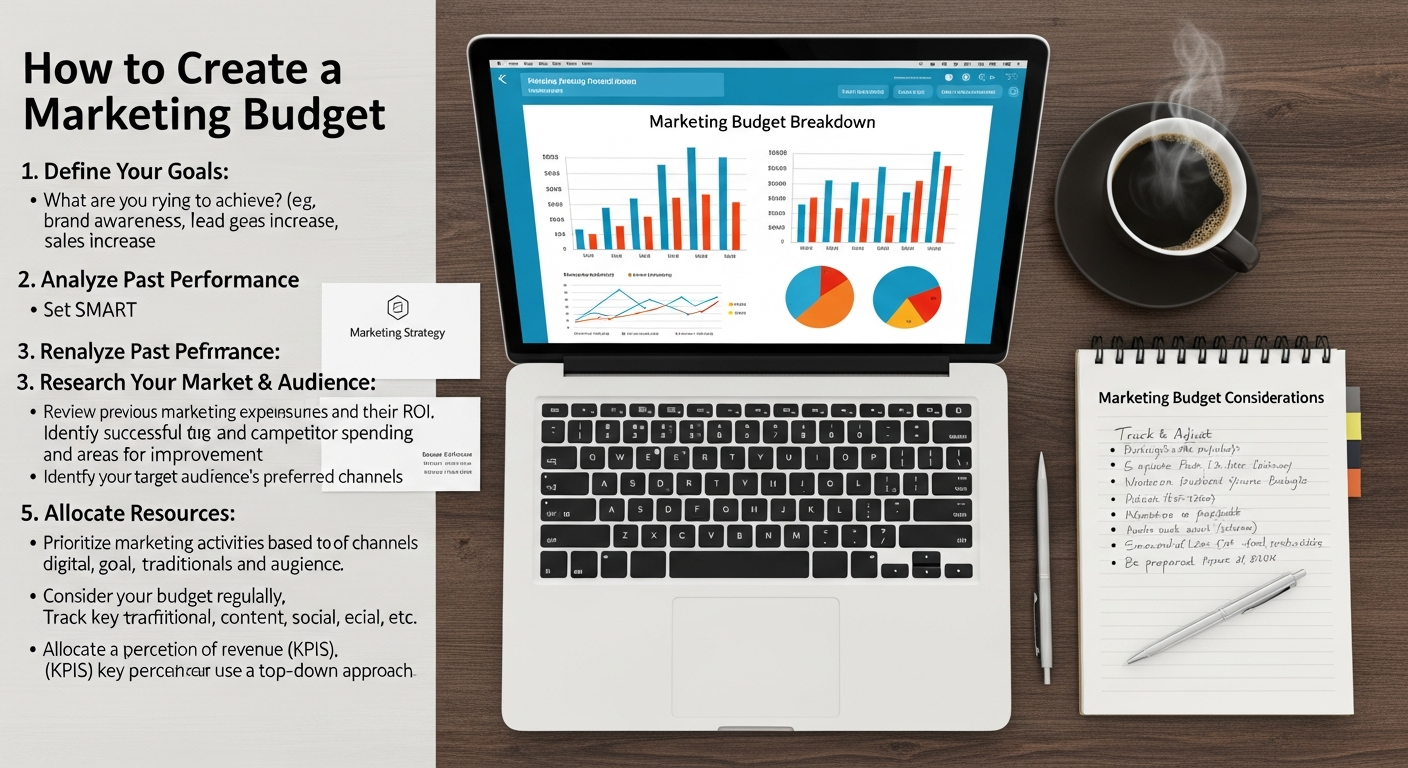
The cornerstone of any effective marketing budget is a clear understanding of what you aim to achieve. Without well-defined goals, your budget will lack direction and purpose, leading to scattered efforts and inefficient spending. Therefore, the very first step in creating your 2026 marketing budget is to articulate your marketing objectives using the SMART framework: Specific, Measurable, Achievable, Relevant, and Time-bound.
Setting SMART Marketing Goals
- Specific: Instead of “increase sales,” aim for “increase B2B software subscriptions by 15%.”
- Measurable: Ensure you can track progress. For example, “generate 200 qualified leads per month.”
- Achievable: Set realistic goals based on your resources and market conditions. Don’t aim for 1000% growth with a minimal budget.
- Relevant: Your marketing goals must align with your overall business objectives. If your business aims for market leadership, your marketing should reflect that ambition.
- Time-bound: Assign a deadline. “Improve brand awareness by 20% by the end of Q2 2026.”
Common marketing goals for small businesses often include:
- Increasing brand awareness and recognition.
- Generating high-quality leads for your sales team.
- Driving direct sales or conversions.
- Improving customer retention and loyalty.
- Expanding into new markets or launching new products.
- Enhancing website traffic and engagement.
Each of these goals will necessitate different marketing activities and, consequently, different budget allocations. For instance, a goal focused on brand awareness might prioritize content marketing, social media campaigns, and PR, while a lead generation goal might lean more heavily on paid search, email marketing, and landing page optimization. This strategic allocation is also crucial when considering how to build a B2B sales funnel effectively, as each stage of the funnel (awareness, interest, consideration, decision) requires targeted marketing efforts that need to be budgeted for appropriately.
Identifying Your Target Audience
Equally critical is a deep understanding of your target audience. Who are you trying to reach? What are their demographics, psychographics, pain points, and online behaviors? The more precisely you can define your ideal customer, the more effectively you can tailor your marketing messages and choose the right channels to reach them. This understanding directly impacts your budget decisions:
- Demographics: Age, gender, location, income, industry (for B2B).
- Psychographics: Interests, values, lifestyle, attitudes, buying motivations.
- Pain Points: What problems does your product or service solve for them?
- Online Behavior: Which social media platforms do they use? Which websites do they visit? Do they prefer email, video, or long-form articles?
Conducting thorough market research, analyzing existing customer data, and creating detailed buyer personas are invaluable exercises at this stage. By knowing your audience intimately, you can avoid wasting budget on channels or messages that won’t resonate with them. For example, if your target B2B audience primarily uses LinkedIn and industry-specific forums, allocating a large portion of your budget to TikTok ads would be inefficient. This foundational step ensures that every dollar you allocate in your 2026 marketing budget is aimed squarely at achieving your strategic objectives by reaching the right people with the right message.
Step 2: Research and Analyze Your Current Marketing Landscape
Competitor Analysis
Understanding what your competitors are doing, and how they are allocating their marketing resources, can offer invaluable insights. While you won’t have access to their exact budgets, you can infer their strategies and approximate spend by observing their activities:
- Online Presence: Analyze their website, social media activity, blog content, and SEO efforts (keywords they rank for).
- Advertising Campaigns: Look for their paid ads on search engines (Google Ads), social media platforms (Facebook, LinkedIn), and display networks. Tools like SEMrush or SpyFu can provide estimates of their PPC spend and keyword strategies.
- Content Strategy: What types of content are they producing? How frequently? What topics are they covering?
- PR and Partnerships: Are they mentioned in industry publications? Do they have strategic alliances?
- Customer Reviews and Engagement: How do customers perceive them? What are their strengths and weaknesses?
The goal here isn’t to copy your competitors but to identify opportunities and gaps. If all your competitors are heavily investing in content marketing, it signals that this channel is effective in your industry, and you might need to allocate resources there too. Conversely, if you spot an underserved niche or an underutilized channel, it could be a cost-effective opportunity for your business to stand out.
Industry Benchmarks
Industry benchmarks provide a general guideline for what businesses in your sector typically spend on marketing as a percentage of their revenue. While these are broad averages and should be adapted to your specific situation, they offer a useful starting point:
- Many small businesses typically allocate 7-10% of their gross revenue to marketing.
- New businesses or those in highly competitive markets might spend upwards of 12-20% to gain traction.
- Established businesses focused on retention might spend less, perhaps 5-7%.
These figures can vary significantly based on industry (e.g., B2C vs. B2B, product vs. service), growth stage, and revenue size. Research reports from organizations like CMO Survey or industry-specific associations can provide more granular data. This data helps you gauge if your initial budget estimates are in a reasonable ballpark for 2026.
Past Performance Review
Your own historical data is one of the most powerful tools for future budgeting. Analyze your previous marketing campaigns:
- What worked? Which campaigns generated the highest ROI, leads, or conversions?
- What didn’t work? Identify efforts that yielded poor results, and understand why.
- Cost Analysis: How much did you spend on each channel or campaign? What was the cost per lead (CPL) or cost per acquisition (CPA)?
- Resource Utilization: Were your internal teams efficient? Did you get good value from external vendors or agencies?
This internal audit provides empirical evidence to inform your 2026 budget. If email marketing consistently delivered a high ROI, it might warrant increased investment. If a particular social media platform proved ineffective, it might be scaled back or re-evaluated. This data-driven approach moves your budgeting beyond guesswork, making it a strategic exercise grounded in real-world results.
By thoroughly researching your external environment and analyzing your internal history, you build a robust foundation for the next step: choosing a budgeting method and allocating your funds strategically.
Step 3: Choose Your Budgeting Method and Allocate Funds Strategically
With your goals, audience insights, and market analysis in hand, it’s time to translate these into concrete financial allocations. Choosing the right budgeting method is crucial, as it dictates how you approach the allocation process. There are several common methods, each with its own advantages and disadvantages for small businesses.
Common Budgeting Methods
-
Percentage of Sales Method:
- How it works: You allocate a fixed percentage of your past or projected sales revenue to marketing. For example, if you project $500,000 in sales for 2026 and decide on a 10% marketing budget, you’d have $50,000.
- Pros: Simple, easy to understand, ties marketing spending directly to revenue.
- Cons: Can be restrictive; if sales are down, marketing budget shrinks, which might be when you need it most. It views marketing as a cost rather than an investment in growth.
-
Affordable Method:
- How it works: You spend what you can afford after all other business expenses are covered.
- Pros: Ensures you don’t overextend financially.
- Cons: Least strategic. Often leads to underinvestment in marketing, which can stifle growth. It’s reactive, not proactive.
-
Objective and Task Method (Goal-Oriented):
- How it works: This is the most strategic approach. You define your marketing objectives, identify the specific tasks required to achieve them, and then estimate the cost of performing those tasks.
- Pros: Directly links spending to goals, ensures adequate funding for desired outcomes, highly strategic.
- Cons: More complex, requires detailed planning and cost estimation. Can be difficult for very small businesses with limited planning resources.
-
Competitive Parity Method:
- How it works: You set your budget based on what your competitors are spending (or an estimate thereof).
- Pros: Helps maintain market share and competitive presence.
- Cons: Assumes your competitors have optimal budgets and strategies, which may not be true. Doesn’t account for your unique goals or market position.
For most small businesses, a hybrid approach often works best, perhaps starting with a percentage of sales or affordable method as a baseline, but then adjusting it significantly using an objective-and-task mindset to align with specific 2026 goals. This allows for both financial prudence and strategic growth.
Allocating Funds Strategically
Once you have a total budget figure, the real work of allocation begins. This is where your defined goals and target audience insights become critical. Think about your B2B sales funnel:
- Awareness Stage: What channels will introduce your brand to potential customers? (e.g., content marketing, SEO, social media ads, PR).
- Interest/Consideration Stage: How will you educate and engage leads? (e.g., email marketing, webinars, case studies, retargeting ads).
- Decision Stage: What helps convert leads into customers? (e.g., sales enablement materials, specific promotions, CRM tools).
Allocate funds to the channels and activities that are most likely to move your target audience through this funnel effectively. Consider the following categories:
- Digital Advertising: Google Ads, social media ads (LinkedIn, Facebook, Instagram), display ads.
- Content Marketing: Blog posts, videos, whitepapers, case studies, infographics.
- SEO (Search Engine Optimization): On-page optimization, technical SEO, link building.
- Social Media Marketing: Organic posts, community management, influencer collaborations.
- Email Marketing: Platform costs, list building, campaign creation.
- Website Development & Maintenance: Hosting, updates, new features.
- Marketing Software & Tools: CRM, analytics platforms, marketing automation.
- Personnel/Agency Fees: Salaries for in-house staff, fees for external agencies or freelancers.
- Offline Marketing: Trade shows, print ads, direct mail (if applicable to your audience).
- Contingency Fund: Always set aside 5-10% of your total budget for unexpected opportunities or challenges.
Distinguish between fixed costs (e.g., software subscriptions, agency retainers) and variable costs (e.g., PPC spend, event sponsorships). Prioritize channels that have historically delivered the best ROI for your business. For 2026, be prepared to adjust allocations as you monitor performance, ensuring your budget remains flexible and responsive to market dynamics.
Step 4: Key Marketing Channels to Consider for Your 2026 Budget
Once you’ve chosen your budgeting method and understood the strategic importance of allocation, the next step is to detail the specific channels and activities that will receive funding. The digital landscape continues to evolve rapidly, and your 2026 marketing budget must reflect the most effective ways to reach your audience and achieve your goals. A balanced approach often involves a mix of digital and, where relevant, traditional channels.
Digital Marketing Channels
For most small businesses, digital marketing will constitute the largest portion of their budget due to its measurability, targeting capabilities, and cost-effectiveness compared to many traditional methods.
- Search Engine Optimization (SEO): Investing in SEO ensures your website ranks higher in search results, driving organic (unpaid) traffic. This includes on-page optimization, technical SEO, content optimization for target keywords, and building high-quality backlinks. SEO is a long-term strategy but offers sustainable lead generation.
- Pay-Per-Click (PPC) Advertising: Platforms like Google Ads, Bing Ads, and social media ad platforms (LinkedIn Ads for B2B) allow you to bid on keywords or target specific demographics. PPC offers immediate visibility and highly targeted traffic, making it excellent for lead generation and driving immediate sales. Budget here needs to cover ad spend and potentially management fees.
- Content Marketing: Creating valuable, relevant, and consistent content (blog posts, articles, videos, whitepapers, case studies) attracts and retains a clearly defined audience, driving profitable customer action. Content marketing supports SEO, social media, and email marketing efforts. This includes costs for content creation (writers, designers, videographers) and distribution.
- Social Media Marketing (Organic & Paid):
- Organic: Building a community, engaging with followers, and sharing content across platforms like LinkedIn, Facebook, Instagram, or even TikTok depending on your audience. This requires time for content creation and community management.
- Paid: Targeted advertising campaigns on social platforms to reach specific demographics, interests, or professional roles. Offers powerful segmentation.
- Email Marketing: Building an email list and sending targeted campaigns for nurturing leads, promoting products/services, and customer retention. Costs include email marketing platform subscriptions and potentially content creation for newsletters and automated sequences.
- Website Development and Optimization: Ensuring your website is fast, mobile-friendly, secure, and provides an excellent user experience. This includes hosting fees, regular maintenance, and potentially redesigns or new feature development to improve conversion rates.
- Marketing Automation & CRM: Investing in tools like HubSpot, Salesforce, or Zoho CRM helps automate repetitive marketing tasks, manage customer relationships, and track the entire customer journey, leading to improved efficiency and better lead nurturing.
Offline Marketing & Brand Building
While digital dominates, some small businesses may still benefit from select offline activities, especially those with local customer bases or in industries that heavily rely on personal connections.
- Networking & Events: Sponsoring or attending industry trade shows, local community events, or professional networking groups can build brand awareness and generate leads. Budget for booth fees, travel, promotional materials, and staff time.
- Public Relations (PR): Securing media mentions, press releases, and thought leadership opportunities can build credibility and reach a wider audience. This might involve hiring a PR agency or allocating time for outreach.
- Print Advertising & Direct Mail: For highly targeted local audiences or specific niches, print ads in local publications or direct mail campaigns can still be effective, though they often have higher costs per impression than digital.
Personnel and Outsourcing Costs
A significant portion of your marketing budget will often be allocated to the human resources required to execute your strategies.
- In-house Team: Salaries, benefits, and training for your marketing staff. Even a single marketing generalist or specialist can be a significant line item.
- External Agencies & Freelancers: For many small businesses, what is business process outsourcing becomes a critical question. Outsourcing specific marketing functions (e.g., SEO, content writing, social media management, PPC campaign management) to agencies or freelancers can provide access to specialized expertise without the overhead of hiring full-time staff. This can be a highly cost-effective way to scale marketing efforts and leverage top-tier talent, ensuring your budget is spent efficiently on expert execution.
When considering these channels for your 2026 budget, always tie each potential investment back to your defined marketing goals and target audience. Evaluate the potential ROI, the level of effort required, and how it integrates with your overall marketing strategy. This holistic view ensures that your budget is not just a collection of expenses but a cohesive plan for growth.
Step 5: Implement, Monitor, and Adjust Your Marketing Budget
Creating a marketing budget is only half the battle; the real work begins with its implementation, rigorous monitoring, and agile adjustment. A budget is a living document, not a static decree. For your 2026 marketing efforts to succeed, you must continuously track performance, analyze results, and be prepared to pivot based on real-world data.
Implementing Your Budget
Once the budget is approved, ensure it’s clearly communicated to everyone involved in marketing activities, whether internal team members or external agencies. Each team or individual should understand their allocated funds and the specific goals associated with those expenditures. Utilize tools to help manage and track spending:
- Spreadsheets: Simple yet effective for tracking expenses against budget lines.
- Accounting Software: Integrate marketing expenses into your overall accounting system for better financial oversight.
- Project Management Tools: Tools like Asana, Trello, or Monday.com can help manage marketing tasks and associated costs.
- Marketing Dashboards: Many marketing automation platforms or analytics tools offer dashboards to visualize spending and performance.
Set up processes for expense tracking and approval to maintain control and prevent overspending. Regular check-ins with stakeholders will reinforce accountability.
Monitoring Key Performance Indicators (KPIs)
This is where the “measurable” aspect of your SMART goals comes into play. You need to identify and consistently track KPIs that directly correlate to your marketing objectives. These metrics will tell you whether your budget allocations are yielding the desired results.
- Return on Investment (ROI): Perhaps the most critical metric. How much revenue is generated for every dollar spent on marketing? (Revenue – Marketing Cost) / Marketing Cost.
- Customer Acquisition Cost (CAC): The total cost of marketing and sales efforts needed to acquire one new customer. Total Marketing + Sales Spend / Number of New Customers.
- Customer Lifetime Value (CLTV): The total revenue a business can expect to earn from a single customer over their entire relationship. This helps justify higher CAC for high-value customers.
- Conversion Rates: Percentage of visitors who complete a desired action (e.g., website visitors to leads, leads to customers).
- Website Traffic: Unique visitors, page views, time on site.
- Lead Volume & Quality: Number of leads generated and their qualification score.
- Brand Awareness Metrics: Social media mentions, press coverage, direct traffic, search volume for your brand name.
Regularly review these KPIs – ideally monthly or quarterly. Compare actual performance against your budgeted expectations. Are you spending too much for the results you’re getting in a particular channel? Are other channels outperforming expectations and deserving of more investment?
Effective monitoring also has a direct impact on how to improve employee productivity. When marketing goals are clear, and budget allocations are tied to measurable outcomes, employees can see the direct impact of their work. This clarity fosters a sense of purpose and direction, reducing wasted effort on non-performing activities and allowing teams to focus their energy on strategies that truly move the needle. Regular performance reviews and feedback loops based on budget and KPI monitoring can further enhance productivity by highlighting areas for improvement and recognizing successful efforts.
Adjusting Your Budget Agilely for 2026
The market is constantly shifting, and your marketing budget must be flexible enough to adapt. Based on your monitoring, be prepared to make adjustments throughout 2026:
- Reallocate Funds: If a campaign is underperforming, consider shifting funds to a channel or strategy that is delivering better results. For instance, if your LinkedIn Ads are generating high-quality leads at a low CAC, but your Google Ads are underperforming, reallocate some budget from Google to LinkedIn.
- Capitalize on Opportunities: A new trend might emerge, a competitor might stumble, or a new platform might gain traction. Your contingency fund can be invaluable here, allowing you to quickly invest in new, promising opportunities without derailing your core budget.
- Address Challenges: Unforeseen challenges, such as a sudden increase in ad costs or a change in platform algorithms, might require you to adjust your spending to maintain effectiveness.
- Seasonal Adjustments: Many businesses have peak seasons. Your budget should reflect these cycles, allowing for increased spending during high-demand periods and reduced spending during slower times.
Schedule quarterly budget reviews with key stakeholders. These meetings should not just be about reporting numbers, but about strategic discussions on what’s working, what isn’t, and how to optimize future spending. This iterative process of planning, implementing, monitoring, and adjusting ensures that your marketing budget remains a dynamic and effective tool for driving small business growth in 2026.
Maximizing Your Small Business Marketing ROI
For small businesses, every marketing dollar is precious. Maximizing your return on investment (ROI) isn’t just about spending less; it’s about spending smarter, focusing on strategies that deliver the most value, and continuously optimizing your efforts. A well-crafted budget, implemented with a keen eye on ROI, transforms marketing from a cost center into a powerful revenue generator.
Focus on High-Impact, Low-Cost Strategies (Initially)
When starting or operating with a tight budget, prioritize strategies that offer a strong potential return without requiring massive upfront investment:
- Organic SEO & Content Marketing: While it takes time, consistent investment in SEO-optimized content can drive highly qualified organic traffic for free in the long run. Focus on evergreen content that continues to attract visitors over time.
- Email Marketing: Building an email list is one of the most cost-effective ways to nurture leads and retain customers. The cost per send is minimal, and the conversion rates can be very high.
- Social Media Engagement: Building an organic following and engaging with your audience on relevant platforms costs time, not money. Authenticity and valuable content can build strong brand loyalty.
- Local SEO: For businesses with a physical location or serving a specific geographic area, optimizing your Google My Business profile and local citations is incredibly impactful and largely free.
- Referral Programs: Encourage existing happy customers to spread the word. A well-structured referral program can be a highly efficient way to acquire new customers.
Leverage Data and Analytics for Continuous Improvement
The beauty of digital marketing is its measurability. Don’t just collect data; analyze it and use it to inform your decisions:
- A/B Testing: Continuously test different headlines, ad copy, calls-to-action, landing page layouts, and email subject lines to see what resonates best with your audience. Even small improvements in conversion rates can significantly boost ROI.
- Audience Segmentation: Refine your targeting based on performance. If certain demographics or industries respond better to specific campaigns, allocate more budget towards reaching them.
- Channel Performance Review: Regularly compare the performance of different marketing channels. Which channels are delivering the lowest Customer Acquisition Cost (CAC) and highest Customer Lifetime Value (CLTV)? Shift budget towards these high-performing channels.
- Funnel Optimization: Analyze your B2B sales funnel at each stage. Where are prospects dropping off? Is it an issue with your awareness efforts, lead nurturing, or conversion process? Optimize the weakest links to improve overall funnel efficiency and thus, ROI.
Invest in the Right Tools and Expertise
While DIY can save money in the short term, investing in the right tools and expertise can dramatically improve efficiency and results, ultimately leading to higher ROI.
- Marketing Automation and CRM: Tools that automate email sequences, manage leads, and track customer interactions free up valuable time and ensure consistent communication.
- Analytics Platforms: Beyond Google Analytics, consider specialized tools that provide deeper insights into user behavior, SEO performance, or competitive intelligence.
- Outsourcing for Expertise: As discussed in What is Business Process Outsourcing, sometimes the most cost-effective solution is to outsource specialized marketing tasks (e.g., complex PPC management, high-level SEO strategy, professional content creation) to experts. They can often achieve better results faster than an in-house team with limited experience, thereby maximizing the impact of your marketing spend.
Focus on Long-Term Value and Customer Retention
Acquiring new customers is often more expensive than retaining existing ones. Your 2026 marketing budget should also reflect efforts to build customer loyalty:
- Customer Experience: Ensure your product/service delivery and customer support are excellent, as satisfied customers become organic marketers.
- Retention Marketing: Budget for email campaigns, loyalty programs, and personalized communications aimed at keeping existing customers engaged and encouraging repeat business.
- Brand Building: While harder to measure immediately, consistent branding and messaging build trust and recognition, leading to long-term customer relationships and higher CLTV.
By adopting a data-driven, agile, and strategic approach to your 2026 marketing budget, small businesses can move beyond simply spending money to making intelligent investments that drive sustainable growth and maximize every dollar’s potential.
Frequently Asked Questions
Recommended Resources
Related reading: How To Write Product Descriptions That Sell (E-ComProfits).
Related reading: Personal Finance Tips For Millennials (Fin3go).