How To Create A Winning Business Proposal

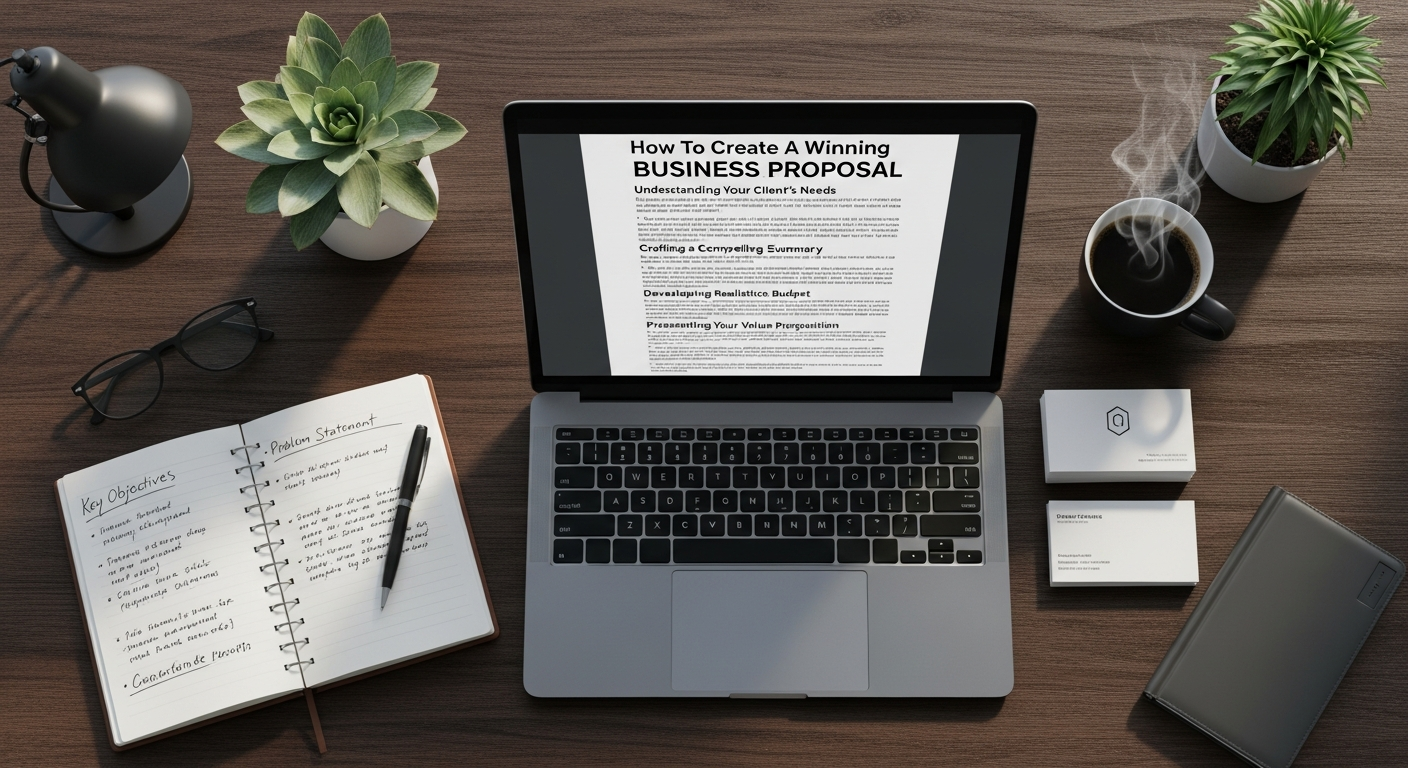
In the high-stakes arena of modern business, a compelling proposal isn’t merely a document; it’s a strategic overture, a persuasive argument, and often, the deciding factor between securing a coveted partnership or watching an opportunity slip away. Many organizations dedicate significant resources to sales and marketing, yet frequently stumble at the critical juncture of proposal creation, submitting generic templates that fail to resonate with a client’s unique challenges and aspirations. The ability to articulate value, demonstrate understanding, and present a clear path to success is paramount.

This comprehensive guide from Kacerr is meticulously designed to demystify the process of how to create a winning business proposal. We will move beyond the basic mechanics of documentation to explore the strategic thinking, psychological insights, and practical methodologies that distinguish successful proposals from their less effective counterparts. By adopting the principles outlined herein, business professionals, marketing managers, and career-focused individuals will gain the tools to craft proposals that not only fulfill requirements but also captivate, convince, and ultimately, convert prospects into partners. Prepare to transform your approach to business proposals, turning them into powerful instruments of growth and collaboration.

Understanding the Foundation: Beyond the Request for Proposal (RFP)

The journey to a winning business proposal begins long before pen meets paper or fingers touch keyboard. A common pitfall is to treat the Request for Proposal (RFP) or initial client inquiry as merely a checklist to be addressed. In reality, a truly effective proposal is built upon a deep, nuanced understanding of the prospective client, their ecosystem, and their underlying motivations. This foundational research phase is where the strategic advantage is forged.

Unearthing Client Needs and Pain Points

A client’s stated needs in an RFP are often just the tip of the iceberg. To truly win, you must identify not only what they ask for but also what they need – their latent pain points, unspoken challenges, and future aspirations. This requires proactive intelligence gathering:

  • Thorough Discovery Calls: Engage in meaningful conversations. Ask open-ended questions that uncover strategic objectives, operational inefficiencies, budget constraints, and political considerations within their organization. Listen more than you speak.
  • Leverage Public Information: Scour their website, annual reports, press releases, social media, and industry news. What are their recent successes? What challenges do they openly discuss? Who are their key competitors? What are their market trends?
  • Industry Insights: Understand the broader industry landscape. What are common challenges in their sector? What innovative solutions are emerging? Positioning your proposal within this context demonstrates foresight.
  • Stakeholder Mapping: Identify who the key decision-makers are, who influences them, and what their individual priorities might be. Tailoring specific sections or language to resonate with different stakeholders can be immensely powerful.

Example: A software development firm receiving an RFP for a new CRM system shouldn’t just list CRM features. Instead, through discovery, they might uncover the client’s actual pain point: poor sales team collaboration leading to missed revenue targets. The winning proposal would then frame the CRM solution not merely as a feature set, but as a strategic tool to enhance collaboration, streamline workflows, and directly impact revenue growth.

Analyzing the Competitive Landscape

Your client is likely evaluating multiple solutions, and understanding your competitors’ strengths and weaknesses is crucial. This isn’t about disparaging rivals but about strategically positioning your unique value proposition.

  • Competitor Research: What are your competitors known for? What kind of clients do they serve? How do their pricing models compare?
  • Differentiation Strategy: Based on your research, articulate what makes your offering superior, more suitable, or uniquely positioned to solve the client’s specific problem. Is it your specialized expertise, innovative methodology, superior customer service, or proven track record in their niche?

“A proposal without deep client understanding is a shot in the dark. A proposal informed by insight is a guided missile.”

Actionable Takeaways:

  1. Before writing, dedicate significant time to research and discovery. View the RFP as a starting point, not the entire scope of inquiry.
  2. Conduct at least one substantive discovery call to clarify needs, understand objectives, and build rapport.
  3. Perform a mini-SWOT analysis on the client and yourself relative to the client’s needs and competitors.

Crafting an Irresistible Executive Summary

The executive summary is arguably the most critical component of any business proposal. Studies indicate that busy executives often spend as little as 2-3 minutes reviewing a proposal, making the executive summary their primary, if not sole, point of engagement. This section must instantly grab attention, convey understanding, and succinctly present your solution’s core value proposition.

The “Hook, Problem, Solution, Value” Formula

A compelling executive summary follows a clear, logical flow, designed to immediately resonate with the reader:

  1. The Hook (Acknowledgement of Problem): Start by demonstrating you understand their current situation or challenge. Use language that mirrors their own. This immediately signals empathy and relevance.
    • Example: “Acme Corp. understands that ABC Solutions is currently grappling with escalating operational costs stemming from fragmented supply chain management, leading to delayed deliveries and customer dissatisfaction.”
  2. The Problem (Impact): Briefly elaborate on the negative consequences of that challenge, reinforcing its urgency and importance.
    • Example: “These inefficiencies are not only eroding profitability but also hindering market responsiveness and damaging brand reputation in an increasingly competitive landscape.”
  3. The Solution (Your Offering): Introduce your proposed solution, but critically, frame it in terms of how it directly addresses their problem. Avoid jargon; focus on clarity.
    • Example: “Our proprietary ‘Synapse Logistics Platform’ offers a fully integrated, AI-driven supply chain optimization system designed specifically to unify disparate processes and provide real-time visibility.”
  4. The Value (Unique Benefit & ROI): Conclude by articulating the unique benefits and quantifiable return on investment (ROI) your solution will deliver. This is your unique selling proposition (USP).
    • Example: “By implementing Synapse, ABC Solutions can expect a projected 15-20% reduction in operational costs within the first year, a 30% improvement in delivery times, and enhanced data-driven decision-making, ensuring sustainable growth and competitive advantage.”

Key Characteristics of an Outstanding Executive Summary:

  • Concise: Typically no more than one page, ideally half a page. Every word must earn its place.
  • Client-Centric: Uses “you,” “your organization,” and focuses on their benefits, not just your features.
  • Persuasive: It’s a sales document, not just a summary. It should compel the reader to delve deeper.
  • Self-Contained: If it’s the only part read, it must convey the full essence of your proposal and its value.
  • Free of Jargon: Use clear, accessible language. Assume the reader is busy and might not be an expert in your specific field.

Actionable Takeaways:

  1. Always write the executive summary last, after the entire proposal is complete, to ensure it accurately reflects all details.
  2. Test your executive summary: Can someone unfamiliar with your project understand the core problem, solution, and value in under 60 seconds?
  3. Focus on quantifiable benefits and ROI wherever possible, even if estimated.

The Art of Solution Design: Tailoring Value, Not Just Services

A winning business proposal doesn’t just list what you offer; it meticulously details how your offerings will specifically solve the client’s problem and deliver tangible value. This section moves beyond generic statements to present a customized, clear, and compelling solution design that resonates directly with the client’s identified needs.

Mapping Solutions to Specific Pain Points

Effective solution design is a direct consequence of excellent discovery. Each component of your proposed solution should directly address a pain point or achieve an objective identified in the foundational research phase.

  • Customization is King: Avoid boilerplate language. Explicitly state how your standard services or products have been adapted or configured to meet the client’s unique circumstances. For instance, if proposing a marketing strategy, specify how it accounts for their specific target demographic, current brand perception, and budget constraints.
  • Phased Approach (if applicable): For complex projects, breaking the solution into logical phases (e.g., discovery, planning, implementation, optimization) demonstrates methodical thinking and can make large projects seem more manageable. Outline key milestones and deliverables for each phase.
  • Clear Deliverables: What exactly will the client receive at each stage? Be explicit. If it’s a software project, list modules, features, and integration points. If it’s a consulting engagement, detail reports, workshops, and strategic recommendations. Ambiguity breeds doubt.
  • Methodology and Approach: Briefly explain your process. How do you work? What project management framework do you use? This builds confidence in your ability to execute and achieve results.

Case Study Example: A B2B content marketing agency was asked by a SaaS client to “increase organic traffic.” Instead of just proposing a blog package, the agency tailored its solution. Their proposal detailed a phased approach:

  1. Phase 1: Content Audit & Keyword Strategy (Discovery): Identifying existing content gaps and high-opportunity keywords relevant to the client’s specific software features and user pain points.
  2. Phase 2: Pillar Content & Cluster Development (Implementation): Creating comprehensive long-form guides and supporting articles, strategically interlinked to establish topical authority, directly targeting the client’s identified niche problems.
  3. Phase 3: Performance Monitoring & Optimization (Ongoing): Regular reporting on organic traffic growth, keyword rankings, and lead generation, with iterative adjustments to content strategy based on data.

This level of detail showed a deep understanding of the client’s goal (not just “more traffic,” but “more qualified traffic for specific features”) and a clear path to achieving it.

Quantifying Outcomes and Value

While some benefits are qualitative, strive to quantify the expected outcomes whenever possible. This reinforces the ROI and makes your proposal a business investment, not just an expense.

  • Financial Impact: Cost savings, revenue generation, efficiency gains, improved profitability.
  • Operational Improvements: Reduced lead times, increased throughput, fewer errors, enhanced compliance.
  • Strategic Advantages: Improved market share, enhanced brand perception, better customer retention.

“Clients don’t buy drills; they buy holes. Your proposal must describe the perfect hole, not just the features of your drill.”

Actionable Takeaways:

  1. Every proposed solution element must tie back to a specific client need or objective.
  2. Provide granular detail on deliverables, methodologies, and timelines, avoiding vague promises.
  3. Quantify expected outcomes and benefits, framing your solution as an investment with a clear return.

Demonstrating Credibility: Expertise, Experience, and Trust

Even the most perfectly tailored solution will fail to win if the client doesn’t believe you have the capability and reliability to deliver. This section of your business proposal is dedicated to building trust, showcasing your expertise, and proving your track record.

Highlighting Team Qualifications and Expertise

Your team is your greatest asset. Don’t just list names; explain why they are uniquely qualified for this specific project.

  • Key Personnel Bios: Provide concise, relevant bios for the individuals who will be directly involved in the project. Focus on their experience, qualifications, and achievements pertinent to the client’s needs.
  • Specialized Certifications/Skills: If your team members hold industry-specific certifications, unique technical skills, or have published relevant thought leadership, highlight these.
  • Organizational Structure: Briefly explain how the team will be structured for this project and how project management will ensure seamless execution and communication.

Showcasing Relevant Case Studies and Success Stories

Nothing builds confidence like proven success. Relevant case studies are powerful demonstrations of your capabilities.

  • Client Similarity: Prioritize case studies involving clients in similar industries, with similar challenges, or of a comparable size. This allows the prospect to envision their own success with you.
  • Problem-Solution-Result Format: Structure each case study clearly:
    • Problem: Describe the client’s initial challenge.
    • Solution: Detail your approach and what you implemented.
    • Result: Quantify the positive outcomes (e.g., “reduced operating costs by 20%”, “increased market share by 15%”, “improved customer satisfaction scores by 10 points”).
  • Testimonials: Incorporate short, impactful quotes from satisfied clients within or alongside your case studies. Better yet, include a dedicated “What Our Clients Say” section.

Example: A cybersecurity firm, proposing a data protection solution to a healthcare provider, should feature case studies detailing how they helped other hospitals or medical groups secure patient data and achieve HIPAA compliance, rather than generic cybersecurity success stories from unrelated industries.

Industry Recognition and Partnerships

External validation further strengthens your credibility.

  • Awards and Accolades: List any relevant industry awards, recognitions, or certifications your company has received.
  • Strategic Partnerships: If you leverage specific technologies or partner with reputable organizations that enhance your offering, mention these alliances. This signals a broader ecosystem of support and expertise.
  • Client Logos: A visual display of reputable client logos can be a powerful, at-a-glance endorsement.

“Trust is the currency of B2B relationships. Your proposal must not just sell a solution, but sell the confidence that you can deliver it.”

Actionable Takeaways:

  1. Selectively include team bios, focusing on experience directly relevant to the client’s project.
  2. Feature 2-3 highly relevant case studies that follow a clear Problem-Solution-Result narrative with quantifiable outcomes.
  3. Incorporate testimonials and mention any relevant industry recognition or strategic partnerships.

Transparent Pricing and Terms: Building Confidence, Not Confusion

After demonstrating your understanding, solution, and credibility, the client will inevitably scrutinize your pricing. This section is not just about stating a number; it’s about justifying that number, making it easy to understand, and building confidence in the value proposition. Ambiguous or confusing pricing is a leading cause of proposal rejection, regardless of how strong the preceding sections might be.

Clear Breakdown of Costs

Transparency is key. Avoid lump sums without explanation.

  • Itemized List: Break down the total cost into clear, understandable components. This could be by phase, by service module, by resource, or by time (e.g., hourly rates, monthly retainers).
  • Explanation of Inclusions/Exclusions: Explicitly state what is included in the price (e.g., “X hours of support,” “up to Y revisions,” “all software licenses for Z users”). Equally important, state what is not included to prevent future misunderstandings (e.g., “third-party integration fees are separate,” “travel expenses billed at cost”).
  • Value Justification: Connect the cost components back to the value they deliver. For example, explain how the investment in a particular software module directly contributes to the projected cost savings or revenue increase previously highlighted.

Offering Pricing Options (Optional, but Recommended)

For many services, offering tiered pricing or optional add-ons can increase conversion rates by giving clients flexibility and a sense of control.

  • Good/Better/Best: Presenting three distinct packages (e.g., “Basic,” “Standard,” “Premium”) allows clients to choose the option that best fits their budget and needs, often guiding them towards the “Better” option. Clearly differentiate the value and features of each tier.
  • Optional Add-ons: List specific services or features that can be added à la carte. This can include extended support, additional training, custom reports, or integration with specific third-party tools.

Payment Schedule and Terms & Conditions

Clarity here protects both parties and instills professionalism.

  • Payment Milestones: Clearly outline the payment schedule (e.g., “30% upfront, 30% upon phase completion, 40% upon final delivery”). This links payments to progress, which clients appreciate.
  • Invoicing Procedures: Specify how and when invoices will be issued and the accepted payment methods.
  • Standard Terms and Conditions: Include your standard T&Cs, covering intellectual property rights, confidentiality, cancellation clauses, scope change procedures, and warranty (if applicable). While often lengthy, ensure they are easily accessible and referenced. Consider a short summary for key points.

Statistic: According to a survey by the Association of Proposal Management Professionals (APMP), proposals with clear, value-based pricing are 35% more likely to be accepted than those with ambiguous cost structures.

“Pricing isn’t just a number; it’s a reflection of your solution’s value. Present it with confidence and clarity.”

Actionable Takeaways:

  1. Provide an itemized breakdown of costs, clearly explaining what is included and excluded.
  2. Consider offering tiered pricing or optional add-ons to provide flexibility and perceived choice.
  3. Clearly define payment terms, schedules, and reference your standard terms and conditions.

The Polish and Presentation: Leaving a Lasting Impression

The substance of your business proposal is paramount, but its presentation is the wrapper that determines the first impression. A poorly formatted, error-ridden, or visually unappealing proposal can undermine even the most brilliant strategy. Conversely, a polished, professional document reinforces your brand’s commitment to quality and attention to detail.

Professional Design and Layout

The visual appeal of your proposal speaks volumes about your professionalism.

  • Branding Consistency: Use your company’s official logo, color palette, and fonts consistently throughout the document. This reinforces brand identity and professionalism.
  • Clean Layout: Employ ample white space. Avoid dense blocks of text. Use headings, subheadings, bullet points, and numbered lists to break up information and improve readability.
  • Visual Aids: Incorporate relevant charts, graphs, infographics, and images to illustrate complex data, project timelines, or solution architectures. Visuals can convey information more effectively and quickly than text alone.
  • Table of Contents: For longer proposals, include a clear, clickable table of contents (in digital formats) to help readers navigate easily.

Clarity, Conciseness, and Accuracy

The written content must be impeccable.

  • Plain Language: Avoid excessive jargon or overly academic language. Write in clear, concise sentences that are easy to understand for a diverse audience.
  • Grammar and Spelling: Proofread meticulously. Errors in grammar or spelling can signal carelessness and erode trust. Consider using professional proofreading tools or having multiple team members review the document.
  • Consistency: Ensure consistent terminology, formatting, and numbering throughout the proposal.
  • Client-Specific Language: Reiterate the client’s name and key project terms where appropriate to continuously demonstrate your focus on their specific needs.

Strong Call to Action

Don’t leave the client wondering what to do next. A winning business proposal culminates in a clear, compelling call to action.

  • Define Next Steps: Clearly state what you propose as the next logical step. This could be a follow-up meeting, a demonstration, a contract review, or a request for clarification.
  • Contact Information: Provide clear contact details for the primary point of contact (name, title, email, phone number).
  • Sense of Urgency (Appropriate): While avoiding undue pressure, you might subtly convey the benefits of timely action (e.g., “to capitalize on current market opportunities,” “to initiate the implementation phase by [date]”).

“A polished proposal is a testament to your professionalism. It’s the silent ambassador of your brand’s quality.”

Actionable Takeaways:

  1. Utilize professional design templates consistent with your brand identity.
  2. Proofread rigorously for grammar, spelling, and consistency. Consider external review.
  3. Include a clear call to action, outlining the next steps and providing comprehensive contact information.

Strategic Follow-Up: Nurturing the Opportunity

Submitting a proposal is not the finish line; it’s often the beginning of the most critical phase: strategic follow-up. Many excellent proposals languish due to a lack of planned, persistent, and intelligent engagement post-submission. The goal is to maintain momentum, address concerns, and guide the prospect towards a decision.

Timely and Thoughtful Engagement

Your follow-up strategy should be proactive and value-driven, not merely checking in.

  • Scheduled Follow-Up: Establish a clear timeline for your follow-up. A general guideline is to follow up within 3-5 business days after submission, unless a specific deadline for response has been provided.
  • Add Value with Each Touchpoint: Avoid generic “checking in” emails. Instead, use follow-ups to provide additional relevant information.
    • Share an article related to their industry challenge.
    • Highlight a new case study that resonates with their situation.
    • Offer a brief, complimentary consultation or demo if they haven’t had one.
  • Confirm Receipt and Understanding: Your initial follow-up should confirm the proposal was received and offer to answer any immediate questions. Ask if they have had a chance to review the executive summary.

Addressing Objections and Clarifications

Anticipate potential questions and objections. Your follow-up is an opportunity to directly address these.

  • Prepare for Common Objections: Be ready to discuss pricing concerns, implementation timelines, integration challenges, or competitive alternatives. Have pre-prepared answers or resources (e.g., FAQs, detailed implementation plans).
  • Listen Actively: When engaging in follow-up calls or meetings, listen carefully to their concerns. Don’t immediately defend; seek to understand the root of their hesitation.
  • Offer Solutions, Not Just Answers: If they raise a concern about a specific aspect of your proposal (e.g., a tight deadline), offer a solution (e.g., “We could fast-track the initial discovery phase by bringing in an additional specialist for the first two weeks”).
  • Adapt and Refine: Be open to refining your proposal based on new information or client feedback. This demonstrates flexibility and a commitment to meeting their needs.

Real-world Example: A marketing agency submitted a proposal for a comprehensive digital campaign. During follow-up, the client expressed concern about the initial ad spend. Instead of reducing the budget across the board, the agency proposed a phased approach: start with a smaller, highly targeted campaign to prove ROI, then scale up, with clear metrics at each stage. This strategic adaptation secured the initial phase of the project and built trust for future expansion.

Maintaining Dialogue and Building Relationships

Even if the immediate opportunity doesn’t pan out, consistent, respectful follow-up can keep you top-of-mind for future projects.

  • Long-Term Nurturing: If a decision is delayed or goes another way, ask for feedback. Maintain a relationship by occasionally sharing relevant industry insights or connecting on professional networks.
  • Post-Mortem Analysis: If a proposal is rejected, always seek constructive feedback. This is invaluable for refining your process for future opportunities.

“The sale often happens in the follow-up, not in the submission. Persistence without being pushy is an art form.”

Actionable Takeaways:

  1. Plan your follow-up sequence before submitting the proposal, including specific dates and value-adding content.
  2. Prepare to address common objections and offer thoughtful solutions, demonstrating flexibility.
  3. Maintain a professional, relationship-focused dialogue, even if the immediate outcome isn’t favorable.

Conclusion: Your Blueprint for Proposal Success

Creating a winning business proposal is far more than a routine administrative task; it is a strategic imperative that demands foresight, empathy, precision, and persuasive prowess. As we’ve explored, the journey from initial inquiry to a signed agreement is paved with meticulous research, client-centric solution design, robust credibility building, transparent communication, and impeccable presentation, all underscored by a well-executed follow-up strategy.

By internalizing the principles discussed – understanding the client’s unspoken needs, crafting an irresistible executive summary, tailoring solutions with quantifiable value, unequivocally demonstrating your expertise, presenting transparent pricing, perfecting every detail of your presentation, and nurturing the opportunity through strategic follow-up – you transform your proposals from mere documents into powerful instruments of business growth. A truly winning business proposal doesn’t just respond; it inspires confidence, articulates a shared vision, and ultimately, secures a mutually beneficial future.

Embrace these insights, apply them diligently, and watch as your proposals not only meet the mark but consistently exceed expectations, turning prospects into valued partners. For more expert guidance on refining your business operations, marketing strategies, and career trajectory, continue to explore the comprehensive resources available at Kacerr. Let us empower your next success.

Frequently Asked Questions About Business Proposals

Here are answers to some common questions about creating effective business proposals.

Q: How long should a business proposal be?
A: The ideal length varies significantly based on the project’s complexity and the client’s requirements. For smaller projects, 5-10 pages might suffice. For complex, multi-phase engagements, 20-50 pages is not uncommon. The key is to be concise yet comprehensive. Prioritize clarity and value over length. The executive summary, however, should always be one page or less.

Q: What’s the biggest mistake people make in business proposals?
A: The most common and detrimental mistake is focusing too much on “us” (your company’s features, history, and capabilities) rather than “them” (the client’s specific problems, needs, and desired outcomes). A winning proposal is client-centric, directly addressing their challenges and demonstrating how your solution provides unique value for them.

Q: Should I include pricing in the first proposal?
A: Generally, yes. Most clients expect to see pricing in a formal business proposal. Omitting it can cause frustration and delays. If the project scope is highly variable, consider offering tiered pricing options or a range, clearly explaining the factors that influence the final cost. However, always aim for enough clarity to provide a meaningful estimate or firm price.

Q: How can I make my business proposal stand out from competitors?
A: To stand out, focus on deep customization based on thorough client discovery, clearly articulate your unique value proposition, quantify benefits and ROI, and present a visually appealing, error-free document. A strong executive summary, compelling case studies, and a clear call to action also contribute significantly to differentiation. Emphasize why YOU are the best fit for THEIR specific needs.

Q: What if I don’t hear back after submitting a proposal?
A: Don’t panic, but don’t assume. Plan a strategic follow-up sequence that includes timely, value-adding communications. Confirm receipt, offer to answer questions, and perhaps share a relevant insight or resource. If still no response, a polite follow-up asking for an update or feedback is appropriate. Persistence, without being pushy, is crucial in the post-submission phase.