
Decoding Operational Efficiency: More Than Just Cost-Cutting
At its core, operational efficiency refers to the capability of an organization to deliver its products or services in the most effective and resource-optimized manner possible. It’s about maximizing output while minimizing waste across all resources—time, money, materials, and human effort. While cost reduction is often a positive byproduct, true operational efficiency transcends mere penny-pinching; it’s a holistic approach to improving productivity, enhancing quality, accelerating delivery, and ultimately boosting customer satisfaction and profitability.
For businesses looking ahead to 2026, understanding operational efficiency means recognizing its systemic impact. It’s not just about one department working faster; it’s about how every department, every process, and every individual contributes to a seamless, high-performing ecosystem. An operationally efficient business is characterized by streamlined workflows, clear communication, optimal resource allocation, and a culture of continuous improvement. This foundation allows companies to adapt quickly to market changes, innovate effectively, and maintain a competitive edge, regardless of external pressures.
The benefits extend far beyond the balance sheet. Enhanced operational efficiency can lead to improved employee morale, as frustration from inefficient processes is reduced. It fosters a culture of accountability and innovation, where teams are empowered to identify problems and contribute to solutions. Furthermore, by consistently delivering high-quality products or services efficiently, businesses build stronger customer loyalty and a more reputable brand presence, paving the way for sustainable growth and expansion.
The Cornerstone: Process Analysis and Optimization
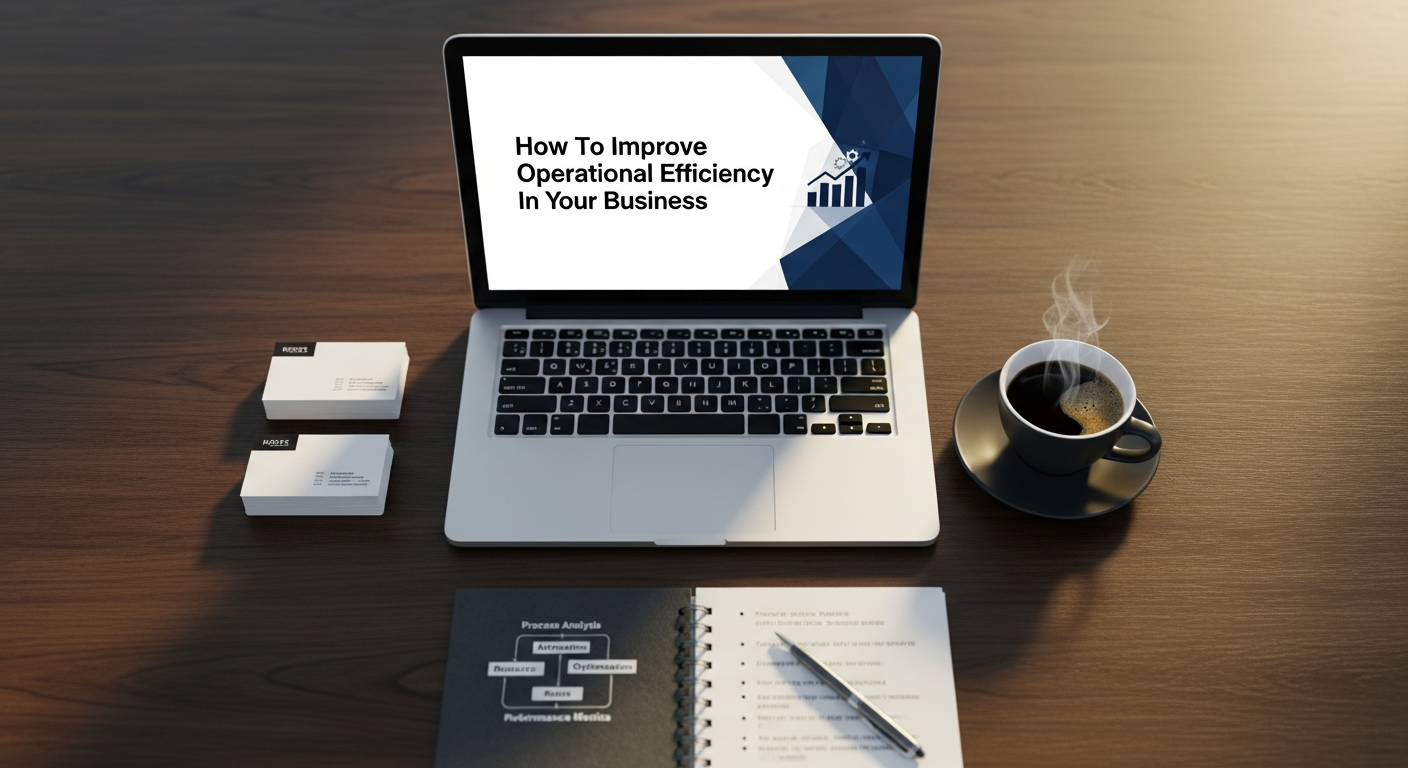
Before any meaningful improvements can be made, a business must first understand its current state. This involves a meticulous analysis of existing processes, identifying every step, every hand-off, and every decision point. Without this foundational understanding, efforts to improve efficiency are often misdirected, leading to superficial changes that fail to address root causes.
Mapping Your Current Processes
Begin by creating detailed process maps for your core operations. This can involve flowcharting, value stream mapping, or simply documenting each step from start to finish. Engage employees who are directly involved in these processes, as their insights are invaluable. Ask critical questions:
- What are the current steps involved?
- Who is responsible for each step?
- How long does each step take?
- What resources (people, software, materials) are required?
- Where are the bottlenecks, delays, or rework occurring?
- Are there redundant steps or unnecessary approvals?
- What are the common pain points for employees and customers?
This diagnostic phase often reveals surprising inefficiencies—manual data entry that could be automated, unnecessary approvals, duplicated efforts, or communication breakdowns between departments. Pinpointing these areas is the first crucial step towards a more streamlined operation.
Streamlining and Redesigning Workflows
Once inefficiencies are identified, the next step is to redesign workflows for optimal performance. This doesn’t always mean radical overhaul; sometimes, small, incremental changes can yield significant results. Consider adopting principles from Lean methodologies, focusing on eliminating waste in all its forms (overproduction, waiting, unnecessary transport, over-processing, excess inventory, unnecessary motion, and defects).
- Eliminate Non-Value-Added Steps: If a step doesn’t contribute directly to customer value or is not legally required, challenge its existence.
- Standardize Processes: Create clear, documented procedures for recurring tasks to reduce variability and error.
- Automate Repetitive Tasks: Identify tasks that are rule-based and repetitive, as these are prime candidates for automation. From email responses to data entry, automation frees up human capital for more strategic work.
- Improve Communication Channels: Ensure information flows smoothly between teams and departments, reducing delays and misunderstandings.
- Empower Employees: Give employees the authority and training to make decisions at their level, reducing reliance on management for every minor issue.
It’s during this phase of process analysis that businesses might begin to evaluate external solutions. For instance, understanding a complex, non-core process might lead to the question: “What Is Business Process Outsourcing (BPO)?” If a process is highly specialized, resource-intensive, or outside your core competency, BPO could offer a more efficient and cost-effective solution. However, this decision should only come after a thorough internal analysis, ensuring you understand the process before considering handing it over to an external provider.
Leveraging Technology for Enhanced Efficiency
Integrated Software Solutions
The days of disparate systems that don’t communicate are quickly fading. Modern businesses thrive on integration. Implementing comprehensive software solutions can centralize data, automate workflows, and provide a single source of truth across the organization.
- Enterprise Resource Planning (ERP) Systems: These systems integrate core business processes like finance, HR, manufacturing, supply chain, services, procurement, and more into a single system. An ERP can provide a holistic view of the business, eliminate data silos, and automate inter-departmental workflows, drastically improving efficiency.
- Customer Relationship Management (CRM) Platforms: Beyond sales tracking, CRMs streamline customer interactions, automate marketing campaigns, and provide valuable insights into customer behavior, leading to more efficient sales processes and improved customer service.
- Project Management Software: Tools like Asana, Monday.com, or Jira help teams plan, execute, and track projects efficiently, ensuring deadlines are met and resources are allocated effectively.
- Robotic Process Automation (RPA): RPA tools can mimic human actions to automate repetitive, rule-based tasks across various applications, from data entry and invoice processing to report generation, freeing up employees for higher-value activities.
Artificial Intelligence and Machine Learning
AI and ML are moving beyond buzzwords to become practical tools for efficiency. By 2026, their applications are more sophisticated and accessible than ever:
- Predictive Analytics: AI can analyze vast datasets to forecast demand, identify potential equipment failures, optimize inventory levels, and predict customer behavior, allowing businesses to make proactive, data-driven decisions rather than reactive ones.
- Automated Customer Service: AI-powered chatbots and virtual assistants can handle routine customer inquiries 24/7, improving response times and freeing up human agents for more complex issues.
- Data-Driven Decision Making: ML algorithms can identify patterns and insights hidden within your data, helping to optimize everything from pricing strategies to marketing campaigns.
Cloud Computing and Cybersecurity
Cloud-based solutions offer unparalleled scalability, flexibility, and accessibility, enabling businesses to operate efficiently from anywhere, at any time. They reduce the need for costly on-premise infrastructure and IT maintenance. However, with increased reliance on digital systems, robust cybersecurity measures are paramount. Investing in advanced security protocols, employee training, and regular audits is essential to protect valuable data and maintain operational continuity, especially as the threat landscape evolves by 2026.
Empowering Your Workforce and Optimizing Resource Allocation
No matter how sophisticated your technology or streamlined your processes, your workforce remains the most critical asset in achieving and sustaining operational efficiency. Empowering employees and optimizing human capital is fundamental.
Training and Development
Investing in continuous training and development ensures your employees have the skills necessary to utilize new technologies and adhere to optimized processes. This includes not only technical training but also soft skills like problem-solving, critical thinking, and adaptability. A well-trained workforce is more productive, makes fewer errors, and is more engaged, directly contributing to efficiency gains.
Fostering a Culture of Communication and Collaboration
Clear and open communication is the lifeblood of efficient operations. Implement tools and practices that facilitate seamless information exchange, whether through internal communication platforms, regular team meetings, or cross-departmental initiatives. Encourage feedback loops where employees can voice concerns and suggest improvements, fostering a sense of ownership and continuous improvement.
Delegation, Accountability, and Autonomy
Efficient organizations have clear roles, responsibilities, and accountability structures. Empower employees with appropriate levels of autonomy to make decisions within their purview. Micromanagement is an efficiency killer; trust your teams to execute their tasks, providing them with the necessary resources and support. This not only speeds up decision-making but also boosts employee morale and engagement.
Optimizing Resource Allocation
Beyond human capital, efficient resource allocation extends to all physical and financial assets. This involves:
- Equipment Utilization: Ensuring machinery and tools are used to their full potential, maintaining them proactively to prevent downtime.
- Material Management: Implementing just-in-time inventory systems (where appropriate) to reduce carrying costs and waste.
- Financial Planning: Allocating budgets strategically to areas that deliver the highest ROI and support operational goals.
Consider how strategic decisions like “What Is Business Process Outsourcing” can complement internal resource optimization. If your internal teams are stretched thin managing non-core activities, outsourcing those functions can free up your skilled employees to focus on strategic initiatives that directly drive your core business forward, thereby significantly boosting overall operational efficiency.
Strategic Partnerships and External Optimization
Operational efficiency isn’t confined to the four walls of your business. Strategic engagement with external partners, including suppliers and specialized service providers, can unlock significant efficiencies and competitive advantages.
Mastering Supply Chain Management
For any business dealing with physical products, a well-managed supply chain is critical to operational efficiency. For small businesses, in particular, understanding “What Is Supply Chain Management Small Business” is paramount. It involves the comprehensive management of the flow of goods and services, from the origin of raw materials to the delivery of the final product to the consumer. For a small business, this often includes:
- Supplier Relationships: Cultivating strong, transparent relationships with reliable suppliers can ensure timely delivery, consistent quality, and favorable pricing. Negotiate contracts that include clear performance metrics and contingency plans.
- Inventory Management: Striking the right balance between having enough stock to meet demand and avoiding excess inventory that ties up capital and incurs storage costs. Techniques like demand forecasting and inventory optimization software are crucial.
- Logistics and Distribution: Optimizing routes, choosing efficient shipping methods, and leveraging technology to track shipments and manage warehousing can significantly reduce costs and improve delivery times.
- Risk Management: Identifying potential disruptions (e.g., natural disasters, geopolitical issues, supplier failures) and developing contingency plans to mitigate their impact on your operations.
An efficient supply chain minimizes delays, reduces waste, and ensures consistent product availability, directly impacting customer satisfaction and your bottom line. For small businesses, this often means leveraging local suppliers, consolidating orders, and exploring shared logistics services to compete with larger enterprises.
Leveraging Business Process Outsourcing (BPO)
As mentioned earlier, outsourcing can be a powerful tool for efficiency. “What Is Business Process Outsourcing” refers to the practice of contracting a specific business process or function to a third-party service provider. This can range from back-office functions like accounting, payroll, and IT support to front-office operations such as customer service or telemarketing.
The primary benefits of BPO for operational efficiency include:
- Cost Reduction: Accessing lower labor costs in other regions or leveraging economies of scale from specialized providers.
- Focus on Core Competencies: Freeing up internal resources to concentrate on core business activities that drive competitive advantage.
- Access to Specialized Expertise: Gaining access to advanced skills, technologies, and best practices that might be too expensive or difficult to develop in-house.
- Increased Flexibility and Scalability: The ability to quickly scale operations up or down in response to market demands without the overhead of hiring and training permanent staff.
- Improved Service Quality: Often, BPO providers specialize in a particular function and can perform it more efficiently and with higher quality than an internal team.
Careful consideration and due diligence are required before engaging in BPO, ensuring alignment on service level agreements, data security, and cultural fit. However, when executed strategically, BPO can be a game-changer for operational efficiency, allowing businesses to remain agile and competitive towards 2026 and beyond.
Marketing Efficiency: Connecting with Your Audience Smarter
Operational efficiency isn’t solely about internal processes or product delivery; it also extends to how effectively a business attracts and retains customers. In the digital age, marketing efficiency is about maximizing the return on your marketing investment by reaching the right audience with the right message at the right time.
Targeted Marketing and Data Analytics
Gone are the days of spray-and-pray marketing. Efficient marketing in 2026 relies heavily on data analytics to understand customer demographics, behaviors, and preferences. By segmenting your audience and tailoring your messages, you ensure that your marketing efforts resonate more deeply, leading to higher conversion rates and a more efficient use of resources. Leveraging CRM systems and marketing automation platforms allows for personalized communication at scale, reducing manual effort and improving campaign performance.
Inbound Marketing Vs. Outbound Marketing for Efficiency
When discussing marketing efficiency, it’s crucial to understand the distinction and relative effectiveness of “Inbound Marketing Vs Outbound Marketing.”
- Outbound Marketing: Traditionally involves pushing messages out to a broad audience, often unsolicited. Examples include cold calling, direct mail, TV commercials, radio ads, and banner ads. While it can generate immediate leads, outbound marketing is often less targeted, potentially more expensive per lead, and can be perceived as intrusive by consumers. Its efficiency depends heavily on the accuracy of the target list and the compelling nature of the message, but it often struggles with lower engagement rates and higher acquisition costs in the long run.
- Inbound Marketing: Focuses on attracting customers by creating valuable content and experiences tailored to them. This includes SEO-optimized blog posts, helpful guides, social media content, email newsletters, and webinars. Inbound marketing “pulls” customers in by providing solutions to their problems, building trust and authority over time. It is generally considered more efficient in the long term because it attracts highly qualified leads who are already interested in your offerings, leading to higher conversion rates and lower customer acquisition costs.
For optimal operational efficiency in marketing, a strategic blend is often most effective. However, the trend towards 2026 strongly favors inbound methodologies due to their ability to generate sustainable, high-quality leads with a better return on investment. By investing in SEO and content marketing, businesses can create evergreen assets that continually attract potential customers without ongoing advertising spend, making it a highly efficient approach. Measuring the ROI of each marketing channel and continuously optimizing campaigns based on performance data is key to achieving true marketing efficiency.
Cultivating a Culture of Continuous Improvement and Agility
Achieving operational efficiency is not a one-time project but an ongoing journey. The business world is constantly evolving, and what is efficient today might be obsolete tomorrow. Therefore, fostering a culture of continuous improvement and organizational agility is paramount for sustained success towards 2026 and beyond.
Establishing Key Performance Indicators (KPIs)
You can’t improve what you don’t measure. Establish clear, measurable KPIs for all critical operational processes. These might include metrics such as production cycle time, order fulfillment rates, customer service response times, employee productivity, defect rates, or cost per unit. Regularly monitor these KPIs to track progress, identify deviations, and pinpoint areas that require further attention. Data-driven insights provide the objective basis for making informed decisions about where to invest improvement efforts.
Implementing Feedback Loops
Create systematic feedback loops throughout your organization. This means actively soliciting input from employees at all levels, as they are often closest to the processes and can identify practical improvements. Similarly, gather feedback from customers regularly to understand their pain points and areas where your service or product delivery can be enhanced. Tools like surveys, suggestion boxes, regular review meetings, and customer feedback platforms can facilitate this continuous dialogue.
Embracing Agile Methodologies
Agile principles, originally from software development, are increasingly applied across various business functions to foster adaptability and responsiveness. An agile approach encourages iterative development, cross-functional collaboration, and rapid adaptation to change. Instead of rigid, long-term plans, agile organizations break down projects into smaller, manageable sprints, allowing for frequent review, adjustment, and improvement. This flexibility is crucial for navigating unpredictable market conditions and technological shifts.
Proactive Risk Management
Efficient operations are resilient operations. Proactively identify potential operational risks—whether they are supply chain disruptions, technology failures, cybersecurity threats, or changes in regulatory compliance. Develop contingency plans and build redundancy where necessary to mitigate the impact of these risks. Regular risk assessments and scenario planning ensure that your business is prepared to maintain efficiency even in adverse circumstances.
By embedding a mindset of constant learning, adaptation, and optimization into your organizational culture, your business can not only achieve operational efficiency but also maintain it as a dynamic advantage, ensuring longevity and robust growth in the competitive landscape of 2026.
Frequently Asked Questions
Recommended Resources
Related reading: How To Use Hotel Points For Free Stays (Gold Points).
Explore Business Growth Strategies For Small Businesses for additional insights.
Operational Efficiency Frameworks and Methodologies
Lean Manufacturing and Lean Operations
Lean is a management philosophy derived from the Toyota Production System (TPS), developed by Taiichi Ohno and Shigeo Shingo at Toyota in the post-WWII era and popularized in the West by James Womack and Daniel Jones in The Machine That Changed the World (1990) and Lean Thinking (1996). Lean’s core principle: eliminate all waste (Japanese: muda) that doesn’t add customer value. Core Lean tools:
- 5S Methodology: Sort (Seiri) / Set in Order (Seiton) / Shine (Seiso) / Standardize (Seiketsu) / Sustain (Shitsuke) — foundational workplace organization system. Often the first Lean tool implemented. Creates visual management: immediately visible whether the workplace is in standard condition.
- Kaizen: Japanese for “continuous improvement” — the principle that improvement happens through many small, incremental changes rather than large transformations. Kaizen events (Kaizen blitz or rapid improvement events) are focused 3-5 day team workshops targeting a specific process. The Lean Enterprise Institute (lean.org) is the primary U.S. Lean training and research body, founded by James Womack.
- Value Stream Mapping (VSM): A Lean technique for visualizing the entire flow of materials and information for a product or service from raw material to customer delivery. Identifies value-added vs. non-value-added steps and exposes waste (delays, overproduction, excess inventory). Mapping format: current-state map → target-state map → improvement roadmap.
- Theory of Constraints (TOC): Developed by Dr. Eliyahu Goldratt (The Goal, 1984) — identifies the single biggest constraint (“bottleneck”) limiting system throughput and focuses ALL improvement efforts on that constraint. Process: Identify → Exploit → Subordinate → Elevate → Repeat. Particularly powerful for manufacturing, service delivery, and software development (applied in DevOps as “The Phoenix Project,” Kim et al., 2013).
- PDCA Cycle (Plan-Do-Check-Act): The foundational continuous improvement cycle — developed by W. Edwards Deming (also called the Deming Wheel or Shewhart cycle). Four stages: Plan (identify problem + target + plan improvement), Do (implement on small scale), Check (measure results against target), Act (standardize if successful; restart if not). Underpins Kaizen, Six Sigma, and ISO 9001 quality management.
Six Sigma: DMAIC Methodology
Six Sigma is a data-driven quality improvement methodology developed at Motorola in the 1980s by Bill Smith and Mikel Harry, popularized by Jack Welch at GE (1995 deployment). Six Sigma aims to reduce process variation to fewer than 3.4 defects per million opportunities (DPMO) — statistically 6 standard deviations from the mean. The DMAIC framework is Six Sigma’s improvement roadmap:
- Define: Define the problem, project scope, customer requirements (CTQ — Critical to Quality), and SIPOC diagram (Suppliers, Inputs, Process, Outputs, Customers). Deliverable: Project Charter.
- Measure: Baseline the current process performance — data collection plan, measurement system analysis (MSA/Gauge R&R), process capability (Cp, Cpk). Establishes the “before” state.
- Analyze: Root cause analysis — fishbone/Ishikawa diagram, 5 Whys, regression analysis, hypothesis testing, pareto analysis. Identifies the vital few (20%) causes producing 80% of defects (Pareto principle).
- Improve: Design and test solutions — DOE (Design of Experiments), FMEA (Failure Mode and Effects Analysis), pilot testing. Validates that the solution actually improves performance.
- Control: Standardize the improvement — control charts, SOPs, training, mistake-proofing (Poka-yoke), control plan. Ensures gains are sustained.
Certifications: ASQ (American Society for Quality, asq.org) is the leading Six Sigma and quality certification body in the U.S. — certifications include Six Sigma Black Belt (CSSBB), Green Belt (CSSGB), Yellow Belt (CSSYB). IASSC (International Association for Six Sigma Certification, iassc.org) provides vendor-neutral Lean Six Sigma certification (ICBB, ICGB, ICYB). Lean Enterprise Institute (lean.org) for Lean-specific training.
Operational Efficiency Tools and Technology Stack
Operational improvement requires the right technology to eliminate manual work, improve visibility, and enable data-driven decisions:
- Process Automation:
- UiPath — enterprise RPA for automating repetitive rule-based processes (invoice processing, data migration, reporting). 41% RPA market share (IDC 2023).
- Microsoft Power Automate — included in Microsoft 365; accessible for SMBs and mid-market. 50M+ users. Connects 1,000+ apps including Office, Dynamics, Salesforce.
- Zapier — no-code automation for SMBs — connects 7,000+ apps. Ideal for marketing and sales workflow automation without IT dependency.
- ERP / Integrated Operations:
- SAP S/4HANA — enterprise ERP for large organizations; real-time embedded analytics
- Oracle NetSuite — cloud ERP for growth-stage companies ($5M-$500M revenue), strong multi-entity consolidation
- Microsoft Dynamics 365 — flexible ERP + CRM stack, deeply integrated with Azure and Microsoft 365
- Process Mapping & Documentation: Lucidchart (cloud-native, 30M+ users, 100+ templates), Miro (collaborative whiteboard, VSM templates), Microsoft Visio (enterprise standard). Critical for VSM and process redesign projects.
- Business Intelligence (BI) / Analytics:
- Microsoft Power BI — market leader (30M+ users, Gartner Magic Quadrant Leader 2024); free desktop version
- Tableau (Salesforce) — preferred for complex data visualization; strong in larger enterprises
- Looker (Google Cloud) — embedded analytics and data modeling for technical teams
Key Operational Efficiency KPIs and Benchmarks
Define what you’ll measure before starting improvement initiatives. Key metrics with benchmarks from APQC (American Productivity and Quality Center, apqc.org — the world’s foremost benchmarking organization):
- OEE (Overall Equipment Effectiveness): The manufacturing standard for operational efficiency. OEE = Availability × Performance × Quality. OEE of 100% = perfect production (no downtime, no speed loss, no defects). World-class OEE = 85%+ (SEMI). Most manufacturers operate at 60-65% OEE, meaning significant improvement potential exists. Formula: If a machine runs 8 hrs with 1 hr downtime (Availability = 87.5%), at 90% of design speed (Performance = 90%), with 2% defect rate (Quality = 98%) → OEE = 87.5% × 90% × 98% = 77.2%.
- Cycle Time: Total time from start to finish of a process. APQC benchmarks vary significantly by industry. For order-to-cash: top quartile companies close the cycle in <3 days vs. median of 5+ days.
- Process Efficiency Ratio: Value-added time ÷ Total elapsed time. Most processes are only 10-30% value-added — the remainder is waiting, transport, inspection, or correction (Lean waste categories).
- Cost per Unit Processed (F&A): APQC 2024 benchmark: median cost to process a single invoice = $10.18 (all-in); top quartile = $2.94. Companies implementing AP automation typically target the top quartile.
Related Business Operations Guides
Change Management and Continuous Improvement Excellence
Change Management Models for Operational Improvement Programs
Technical process improvements fail when people resist change. Two leading change management frameworks help ensure adoption:
- Prosci ADKAR Model: Developed by Jeff Hiatt, Founder of Prosci (prosci.com) — the most widely used change management methodology globally (Prosci benchmarks 6,000+ organizations). ADKAR identifies five sequential change requirements:
- Awareness — of the need for change. Why is efficiency improvement necessary? What happens without it?
- Desire — to participate and support the change. People must choose to change; awareness alone isn’t sufficient.
- Knowledge — of how to change. Training, job aids, SOPs. This is where most organizations over-invest relative to the earlier steps.
- Ability — to implement required skills and behaviors. Practice time, coaching, removing barriers.
- Reinforcement — to sustain the change. Recognition, performance management, measurement. Without reinforcement, people revert to old habits.
- Kotter’s 8-Step Change Model: Developed by Dr. John Kotter (Harvard Business School emeritus) in Leading Change (1996, Harvard Business Review Press) — one of the most cited business books on organizational change. The eight steps:
- Create a sense of urgency
- Build a guiding coalition
- Form a strategic vision and initiatives
- Enlist a volunteer army
- Enable action by removing barriers
- Generate short-term wins
- Sustain acceleration
- Institute change
Kotter’s model emphasizes leading change vs. managing change — and the critical importance of steps 1-4 before attempting implementation. Most improvement programs fail because organizations skip directly to implementation (step 5-6) without building the coalition and urgency first.
Balanced Scorecard: Strategic Operational Measurement
The Balanced Scorecard, developed by Robert Kaplan (Harvard Business School) and David Norton in their landmark Harvard Business Review article (1992) and book The Balanced Scorecard: Translating Strategy Into Action (1996), provides a framework for measuring operational performance across four perspectives rather than financial metrics alone:
- Financial Perspective: How do we look to shareholders? (Revenue, cost, EBITDA, ROI, EVA)
- Customer Perspective: How do customers see us? (NPS, CSAT, retention rate, market share)
- Internal Process Perspective: What must we excel at? (OEE, cycle time, defect rate, process efficiency ratio)
- Learning & Growth Perspective: Can we continue to improve and create value? (Employee training hours, innovation metrics, system capabilities)
The Balanced Scorecard prevents the common failure mode of organizations improving on one dimension (e.g., cost reduction) while destroying another (e.g., customer satisfaction). BSC is certified through the Balanced Scorecard Institute (balancedscorecard.org). Kaplan-Norton Strategy Execution Group provides implementation consulting.
ISO 9001 for Operational Excellence
ISO 9001:2015 (Quality Management Systems — Requirements) is the international quality management standard published by ISO — over 1M organizations certified globally. ISO 9001 requires organizations to establish a documented quality management system with these key elements: customer focus, leadership commitment, process approach, risk-based thinking, and continual improvement (PDCA cycle). Relevant operational sections:
- Clause 8 (Operations): Operational planning and control, requirements for products/services, design and development, control of externally provided processes
- Clause 9 (Performance Evaluation): Monitoring, measurement, analysis — requires organizations to determine what to measure, at what frequency, and how to analyze results
- Clause 10 (Improvement): Nonconformity/corrective action, continual improvement. Audited via internal audits and periodic external certification audits by accredited certification bodies (e.g., BSI, Bureau Veritas, TUV Rheinland)
Shingo Institute: Operational Excellence Recognition
The Shingo Institute (Utah State University, shingo.org) — named after Shigeo Shingo, one of the architects of the Toyota Production System — awards the Shingo Prize, recognized as the Nobel Prize for Operational Excellence. The Shingo Model focuses on cultural enablers (leadership behaviors, drive continuous improvement) as the foundation for sustainable operational results. Shingo workshops and certification programs are widely used by manufacturing and service organizations as a framework beyond Lean implementation to embed operational excellence into organizational culture. Past Shingo Prize recipients include Boeing, Goodyear, and Nestlé plants.
Statistical Analysis Tools for Process Improvement
- Minitab: Industry-standard statistical software for Six Sigma and quality improvement — Minitab is used in over 90% of DMAIC projects and quality courses. Features: control charts, capability analysis, regression, DOE, ANOVA, hypothesis testing. Used by 4,000+ higher education institutions globally as the primary statistical tool for quality courses. Free 30-day trial at minitab.com; individual licenses ~$1,500/year.
- JMP (SAS): Interactive statistical software for data exploration — strong for designed experiments and visual analytics. Common in pharmaceutical manufacturing quality applications.
- LeanKit (Planview): Enterprise Kanban/Lean management platform — work in progress limits, flow analytics, cycle time tracking. Used by teams applying Lean principles to knowledge work and software development. Supports VSM-based workflow visualization.
For leveraging BPO to outsource non-core operational functions while retaining efficiency gains internally, see our Business Process Outsourcing guide. For the technology platform that integrates operational data across your business, see our Enterprise Resource Planning for SMBs guide.
From Our Network
- grocery couponing for beginners guide (en Goldpoints)
- best online banks 2025 (en Fin3go)
- what is dollar cost averaging (en Assetbar)