Understanding Data-Driven Marketing in the B2B Context
At its core, data-driven marketing is a strategic approach that utilizes customer data and analytics to inform and optimize marketing efforts. Instead of relying on intuition, marketers make decisions based on verifiable facts and trends extracted from various data sources. In the B2B realm, this takes on particular significance due to longer sales cycles, complex decision-making units, and higher-value transactions. B2B data-driven marketing focuses on understanding the entire buyer journey, from initial awareness to post-purchase advocacy, identifying key touchpoints, pain points, and opportunities for engagement.
The essence of this approach lies in its iterative nature: collect data, analyze it, make informed decisions, implement changes, measure results, and then repeat the cycle. This continuous feedback loop ensures that marketing strategies are constantly refined and optimized for maximum impact. For B2B companies, this means a deeper understanding of target accounts, individual stakeholders within those accounts, their industry challenges, and how your solutions directly address their needs. It moves beyond generic messaging to highly personalized and relevant communications, building trust and demonstrating value at every stage.
Crucially, data-driven marketing empowers B2B organizations to:
- Identify High-Value Prospects: Pinpoint companies and decision-makers most likely to convert, allowing for more focused sales efforts.
- Personalize Customer Experiences: Tailor content, offers, and communication based on specific buyer behaviors, preferences, and firmographic data.
- Optimize Resource Allocation: Direct marketing budgets towards channels and campaigns that yield the highest return on investment (ROI).
- Forecast Future Trends: Predict market shifts and customer needs, enabling proactive strategy adjustments.
- Measure Campaign Effectiveness Accurately: Understand which elements of a campaign are working and which need improvement, providing clear metrics for success.
Embracing a data-driven mindset requires a cultural shift within an organization, moving towards a culture of continuous learning and evidence-based decision-making. It’s about empowering teams with the right tools and insights to make their efforts more impactful and ultimately, to grow faster.
The Pillars of Data Collection for Accelerated Growth
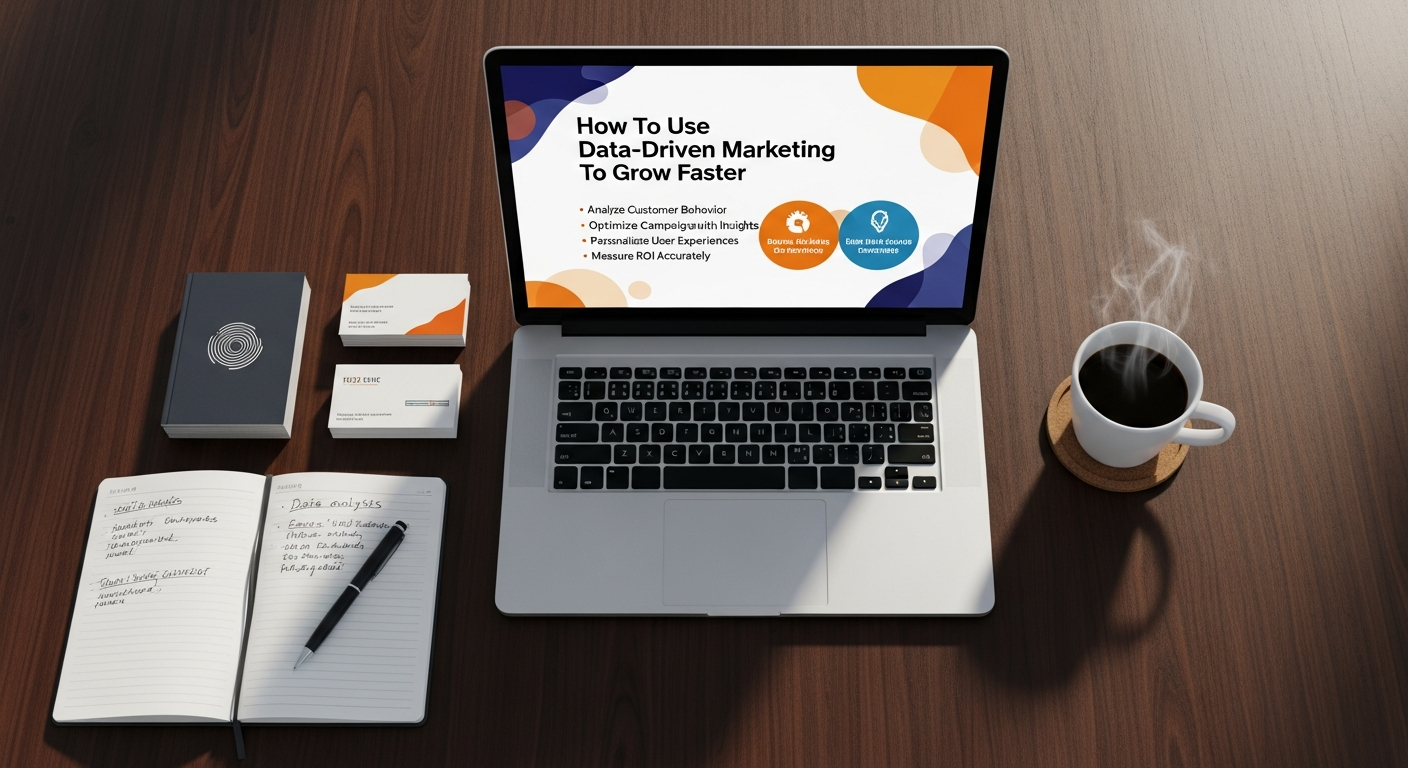
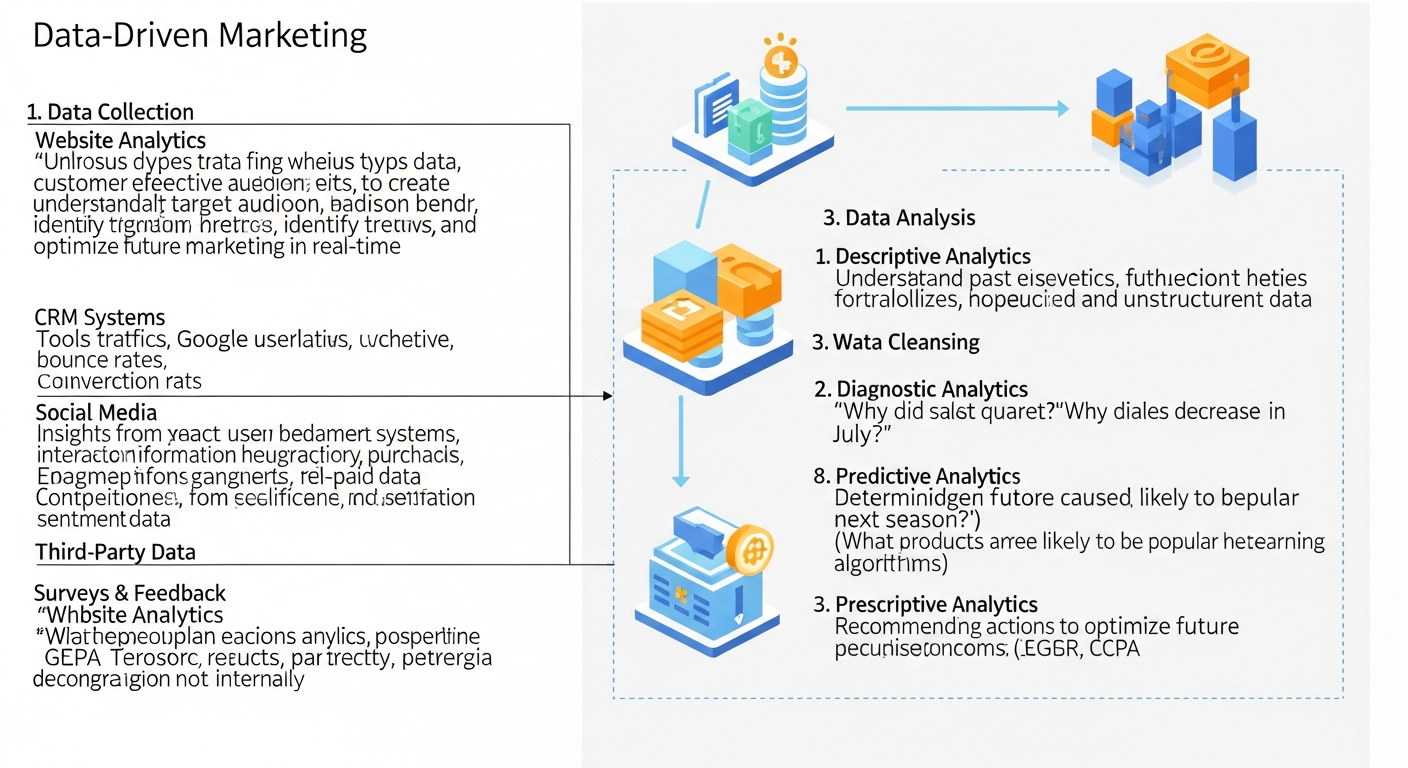
The foundation of any successful data-driven marketing strategy is robust and intelligent data collection. Without accurate, comprehensive, and relevant data, even the most sophisticated analytics tools are useless. For B2B companies aiming to grow faster, data collection must be strategic, focusing on insights that directly inform marketing and sales efforts. It’s not just about accumulating data; it’s about acquiring the right data from the right sources and ensuring its quality.
Key data sources for B2B marketers include:
- Customer Relationship Management (CRM) Systems: Your CRM is a goldmine of first-party data. It stores details about leads, accounts, opportunities, sales interactions, communication history, and customer service records. Analyzing CRM data can reveal patterns in customer behavior, sales cycle lengths, and the effectiveness of sales touchpoints.
- Web Analytics Platforms (e.g., Google Analytics): These tools track website visitor behavior, including pages visited, time spent on site, referral sources, conversion paths, and bounce rates. This data is critical for understanding content engagement, user experience, and the effectiveness of digital campaigns.
- Marketing Automation Platforms (MAPs): Integrated with CRMs, MAPs collect data on email opens, click-through rates, form submissions, content downloads, and lead scores. This behavioral data is invaluable for nurturing leads and personalizing outreach.
- Social Media Analytics: Insights from platforms like LinkedIn, Twitter, and industry-specific forums can provide data on brand mentions, sentiment, audience demographics, and content performance. This helps in understanding market perception and identifying engagement opportunities.
- Market Research and Third-Party Data: External data sources, such as industry reports, competitor analysis, economic indicators, and purchased firmographic or technographic data, provide broader market context and help identify new opportunities or refine target audiences.
- Customer Feedback (Surveys, Interviews, Reviews): Direct feedback from customers and prospects offers qualitative insights that quantitative data often misses. Understanding their pain points, satisfaction levels, and suggestions is crucial for product development and service improvement.
- Sales Data: Beyond the CRM, detailed sales reports on conversion rates by product, territory, or sales rep can highlight areas of strength and weakness, informing marketing’s lead qualification criteria and content needs.
Ensuring data quality is paramount. This involves regular data cleansing, de-duplication, and validation to prevent errors and inconsistencies that could lead to flawed insights. Implementing robust data governance policies and investing in data integration tools are essential steps to create a unified, accurate view of your customers and prospects. For many organizations, the sheer volume and complexity of data collection and initial processing can be overwhelming. This is where considering What Is Business Process Outsourcing (BPO) can be beneficial. Outsourcing data entry, data cleansing, or even initial data aggregation tasks to specialized BPO providers allows your internal teams to focus on higher-value activities like strategic analysis and campaign execution, rather than getting bogged down in repetitive data management chores.
Leveraging Data for Strategic Insights and Personalization
One of the most powerful applications of data analysis in B2B is personalization. Generic marketing messages are increasingly ineffective. B2B buyers expect content and offers that are highly relevant to their industry, company size, role, and specific challenges. Data allows you to segment your audience with precision, creating micro-segments based on firmographics (industry, revenue, employee count), technographics (technology stack), psychographics (values, attitudes), and behavioral data (website visits, content downloads, email engagement).
Here’s how data can drive strategic insights and personalization:
- Customer Segmentation: Analyze data to identify distinct groups within your target market. For example, you might segment by companies actively researching a specific solution versus those just beginning to explore general industry challenges. This allows for tailored messaging and content strategies for each segment.
- Buyer Journey Mapping: Use data from web analytics, CRM, and marketing automation to map the typical buyer journey for different segments. Identify common touchpoints, content consumption patterns, and decision-making criteria at each stage. This helps in pinpointing where prospects might drop off and how to re-engage them.
- Content Performance Analysis: Which whitepapers are downloaded most? Which webinars have the highest attendance? Which blog posts drive the most leads? Data reveals what content resonates with your audience, informing your content strategy and ensuring you produce valuable, high-performing assets.
- Lead Scoring and Qualification: Develop sophisticated lead scoring models based on demographic data (e.g., company size, industry fit) and behavioral data (e.g., website activity, email engagement). This helps sales teams prioritize leads most likely to convert, improving efficiency and closing rates.
- Predictive Analytics: Leverage historical data to predict future outcomes. For instance, identify characteristics of past customers who churned to proactively address potential issues with current customers. Or, predict which leads are most likely to convert within a certain timeframe, allowing sales to focus their efforts.
- Competitor Analysis: While direct competitor data can be hard to obtain, public data, market reports, and social listening can provide insights into competitor strategies, strengths, and weaknesses, helping you differentiate your offerings.
By transforming raw data into these strategic insights, B2B marketers can move beyond reactive campaigns to proactive, highly targeted, and immensely effective strategies. The ability to personalize at scale significantly enhances the customer experience, builds stronger relationships, and directly contributes to faster growth by improving conversion rates and customer lifetime value.
Implementing Data-Driven Campaigns and Optimizing the B2B Sales Funnel
With data collected and insights generated, the next critical step is to translate these findings into actionable, data-driven marketing campaigns that effectively optimize your B2B sales funnel. This involves designing, executing, and continuously refining campaigns based on real-time performance metrics, ensuring every marketing dollar contributes directly to accelerating growth. Understanding How To Build B2b Sales Funnel is intrinsically linked to data-driven strategies, as data informs every stage from awareness to conversion.
Here’s how data-driven marketing fuels campaign implementation and funnel optimization:
- Awareness Stage:
- Targeting: Use demographic, firmographic, and technographic data to precisely target ideal prospects on platforms like LinkedIn, industry-specific ad networks, and through account-based marketing (ABM) strategies. Data on competitor audiences can also inform where your prospects are spending their time online.
- Content Strategy: Data from web analytics and content performance reports guides the creation of top-of-funnel content (blog posts, infographics, webinars) that addresses broad industry challenges and pain points identified through market research.
- Channel Optimization: A/B test different ad creatives, messaging, and landing pages to see which resonate most with your target audience, using click-through rates and impression data to optimize spend.
- Consideration Stage:
- Lead Nurturing: Leverage marketing automation platforms fueled by behavioral data. If a prospect downloads an e-book on “Cloud Security Solutions,” subsequent emails and content offers can focus on related topics or case studies showcasing your security expertise. Personalization here is key.
- Content Gating and Forms: Optimize form fields based on conversion data. Shorter forms might yield more leads, but longer forms can provide richer data for lead qualification. A/B test different form lengths and questions.
- Retargeting: Use website visitor data to retarget prospects who have engaged with specific content but haven’t converted, offering them relevant next-step content or direct calls to action.
- Decision Stage:
- Sales Enablement: Provide sales teams with data-rich insights about each lead – their website activity, content consumption, questions asked, and engagement history. This empowers sales reps to have highly relevant and personalized conversations, significantly improving their productivity and closing rates.
- Offer Optimization: A/B test different pricing models, trial offers, or implementation packages. Data on conversion rates for various offers can inform your sales strategy.
- CRM Integration: Ensure seamless data flow between marketing automation and CRM. This allows sales to see the complete history of a lead’s interaction with marketing, fostering better alignment between the two departments.
- Post-Purchase & Advocacy:
- Customer Success: Use data on product usage, support tickets, and satisfaction surveys to proactively address potential issues, identify upsell/cross-sell opportunities, and foster long-term customer relationships.
- Referral Programs: Identify satisfied customers through Net Promoter Score (NPS) data or usage patterns and engage them in referral programs, turning them into advocates for your brand.
Continuous monitoring and measurement are non-negotiable. Key performance indicators (KPIs) such as lead-to-opportunity conversion rates, opportunity-to-win rates, customer acquisition cost (CAC), and customer lifetime value (CLTV) must be tracked meticulously. These metrics provide the feedback loop necessary to identify bottlenecks in the funnel, refine messaging, and reallocate resources effectively, ensuring your data-driven marketing efforts consistently contribute to faster, sustainable growth.
Measuring Success and Iterating for Continuous Growth
The journey of data-driven marketing doesn’t end with campaign launch; it’s a continuous cycle of measurement, analysis, and iteration. To truly grow faster, B2B organizations must establish robust mechanisms for tracking performance, understanding attribution, and using insights to refine future strategies. This commitment to continuous improvement ensures that marketing efforts become progressively more efficient and effective over time, maximizing ROI and driving sustainable business expansion.
Key components of measuring success and iterating for continuous growth include:
- Defining Clear KPIs: Before launching any campaign, establish measurable Key Performance Indicators (KPIs) that align with your overall business objectives. These might include:
- Marketing-Qualified Leads (MQLs) and Sales-Qualified Leads (SQLs): Tracking the volume and conversion rates between these stages.
- Customer Acquisition Cost (CAC): How much it costs to acquire a new customer through specific channels or campaigns.
- Customer Lifetime Value (CLTV): The total revenue a business can reasonably expect from a single customer account over the duration of their relationship.
- Return on Marketing Investment (ROMI): The financial return generated from marketing expenditures.
- Website Traffic and Engagement Metrics: Unique visitors, time on page, bounce rate, conversion rates on landing pages.
- Email Marketing Metrics: Open rates, click-through rates, unsubscribe rates, conversion rates from emails.
- Implementing Robust Attribution Models: Understanding which touchpoints contributed to a conversion is crucial for optimizing budget allocation. Common attribution models include:
- First-Touch Attribution: Credits the first interaction a prospect had with your brand.
- Last-Touch Attribution: Credits the final interaction before conversion.
- Linear Attribution: Distributes credit equally across all touchpoints.
- Time Decay Attribution: Gives more credit to touchpoints closer to the conversion.
- U-Shaped or W-Shaped Attribution: Assigns more credit to the first interaction, lead creation, and conversion, with some credit distributed to mid-funnel interactions.
Choosing the right model (or a custom one) provides a clearer picture of which marketing efforts are truly driving results across the complex B2B sales funnel.
- Regular Reporting and Dashboard Creation: Develop comprehensive dashboards that visualize key metrics in an easily digestible format. These should be accessible to relevant teams (marketing, sales, leadership) and reviewed regularly. Dashboards should offer both high-level overviews and the ability to drill down into specific campaign performance.
- A/B Testing and Experimentation: Continuously test different elements of your marketing campaigns – headlines, calls to action, ad copy, landing page layouts, email subject lines, content formats. Data from these tests provides direct feedback on what works best for your audience, allowing for incremental but significant improvements over time.
- Feedback Loops with Sales: Establish strong communication channels between marketing and sales. Marketing needs feedback from sales on the quality of leads, the effectiveness of sales enablement materials, and insights from direct customer interactions. This collaborative approach ensures that marketing efforts are truly supporting sales goals. This also directly impacts How To Improve Employee Productivity across both departments as they work in unison, leveraging shared data and insights.
- Predictive Analytics for Future Planning: Beyond understanding past performance, leverage data to predict future trends. Analyze historical data to forecast lead volume, sales pipeline, and potential market shifts. This proactive approach enables strategic planning and resource allocation for 2026 and beyond.
By diligently measuring, attributing, reporting, and iterating, B2B companies can transform their marketing from an art to a science, ensuring every decision is data-backed and every effort contributes to accelerating sustainable growth.
Overcoming Challenges and Building a Data-Driven Culture
While the benefits of data-driven marketing are clear, implementing and sustaining such an approach within a B2B organization is not without its challenges. Overcoming these hurdles requires strategic planning, investment in technology and talent, and a commitment to fostering a truly data-driven culture. Addressing these issues proactively is crucial for any company aiming to leverage data to grow faster.
Common challenges include:
- Data Silos and Integration Issues: Many organizations have data scattered across disparate systems (CRM, MAP, ERP, analytics platforms) that don’t communicate effectively. This leads to an incomplete view of the customer and inconsistent data.
- Data Quality and Accuracy: Inaccurate, incomplete, or outdated data can lead to flawed insights and misguided strategies. Maintaining data hygiene is an ongoing effort.
- Lack of Data Literacy and Skills: Not all marketing or sales professionals are adept at interpreting complex data or using analytics tools. There can be a significant skill gap in data analysis, visualization, and strategic application.
- Resistance to Change: Shifting from intuition-based decision-making to data-driven approaches can meet resistance from employees accustomed to traditional methods.
- Choosing the Right Technology Stack: The market is flooded with marketing technology (MarTech) solutions. Selecting the right combination of tools that integrate seamlessly and meet specific business needs can be daunting.
- Privacy and Compliance Concerns: With increasing data privacy regulations (e.g., GDPR, CCPA), ensuring compliance while still collecting valuable data is a complex challenge.
Strategies for overcoming these challenges and building a data-driven culture:
- Invest in Data Integration and Management Tools: Prioritize platforms that allow for seamless data flow between different systems. A robust Customer Data Platform (CDP) can unify customer data from various sources into a single, comprehensive profile.
- Prioritize Data Governance and Quality: Implement clear policies and processes for data collection, storage, maintenance, and usage. Regular data audits and cleansing initiatives are essential to ensure accuracy and reliability.
- Upskill and Train Employees: Provide comprehensive training programs for marketing, sales, and even leadership teams on data literacy, analytics tools, and how to interpret insights. Empowering employees with these skills directly addresses How To Improve Employee Productivity by enabling them to make more informed decisions independently.
- Foster Cross-Departmental Collaboration: Break down silos between marketing, sales, IT, and product teams. Encourage shared goals, data access, and regular communication to ensure everyone is working from the same factual foundation.
- Start Small and Demonstrate ROI: Begin with pilot projects that clearly demonstrate the value of data-driven approaches. Showcase tangible results and ROI to build internal champions and overcome resistance.
- Build a Culture of Experimentation: Encourage A/B testing, hypothesis formulation, and a willingness to learn from failures. Emphasize that data provides a safe environment for experimentation and continuous improvement.
- Leverage Strategic Partnerships: Consider partnering with analytics consultants or specialized agencies who can provide expertise in data strategy, implementation, and analysis, especially if internal resources are limited. This can also tie back into the discussion on What Is Business Process Outsourcing, where specialized BPO firms can handle complex data analytics or reporting tasks, allowing internal teams to focus on core strategic activities.
Building a data-driven culture is an ongoing journey, not a destination. It requires persistent effort, leadership buy-in, and a commitment to continuous learning and adaptation. However, the reward – the ability to make smarter decisions, optimize efforts, and achieve faster, more sustainable growth – makes it an indispensable endeavor for any B2B organization aiming for success in 2026 and beyond.
The Role of Technology and Strategic Partnerships in Data-Driven Growth
In the pursuit of data-driven growth, technology serves as the indispensable backbone, enabling the collection, processing, analysis, and activation of vast amounts of information. However, the sheer volume and complexity of available MarTech solutions can be overwhelming. Strategic partnerships, including leveraging services like Business Process Outsourcing (BPO), further enhance an organization’s capability to maximize its data potential and accelerate growth.
Key Technologies for Data-Driven Marketing:
- Marketing Automation Platforms (MAPs): Tools like HubSpot, Marketo, and Pardot are crucial for automating lead nurturing, email campaigns, lead scoring, and tracking prospect behavior across multiple channels. They are central to personalizing the buyer journey at scale.
- Customer Relationship Management (CRM) Systems: Platforms such as Salesforce, Microsoft Dynamics, or Zoho CRM act as the central repository for customer and prospect data, providing a unified view for sales and marketing teams. A well-maintained CRM is the heart of data-driven operations.
- Web Analytics Tools: Google Analytics 4 (GA4) provides deep insights into website traffic, user behavior, conversion paths, and content performance. Understanding how users interact with your digital properties is fundamental.
- Customer Data Platforms (CDPs): CDPs are designed to unify customer data from various sources (online, offline, behavioral, transactional) into a single, persistent, and comprehensive customer profile. This ‘single source of truth’ eliminates data silos and empowers hyper-personalization across all touchpoints.
- Business Intelligence (BI) & Data Visualization Tools: Tableau, Power BI, Looker, and similar tools transform complex datasets into digestible reports and interactive dashboards. They enable marketers to quickly grasp trends, identify insights, and communicate performance effectively to stakeholders.
- Artificial Intelligence (AI) and Machine Learning (ML): AI/ML are increasingly integrated into MarTech stacks, offering capabilities like predictive analytics (e.g., predicting lead conversion likelihood), personalized content recommendations, dynamic pricing, and optimizing ad spend in real-time. These technologies amplify human analytical capabilities, allowing for faster and more accurate insights.
- A/B Testing & Optimization Platforms: Tools like Optimizely or VWO facilitate systematic testing of website elements, landing pages, and campaign creatives, enabling continuous optimization based on user response data.
The Strategic Advantage of Partnerships, Including BPO:
Even with the right technology, internal teams might face limitations in expertise, capacity, or specialized knowledge. This is where strategic partnerships come into play:
- Marketing Agencies: Specialized agencies can offer expertise in specific areas like SEO, paid media, content marketing, or advanced analytics. They bring external perspectives, industry benchmarks, and often more robust toolsets.
- Technology Vendors and Consultants: Engaging directly with technology vendors or specialized consultants can help with the implementation, customization, and ongoing optimization of complex MarTech stacks.
- Business Process Outsourcing (BPO) Providers: As discussed earlier, BPO can be a game-changer for data-driven marketing. For example, if your internal team struggles with the volume of data entry, data cleansing, or lead qualification, outsourcing these repetitive yet critical tasks to a BPO provider can significantly enhance efficiency. A BPO partner specializing in data analytics can also take on the burden of complex data modeling, report generation, or even routine campaign monitoring, freeing up your internal marketing strategists to focus on high-level strategy and creative development. This specialization allows your core team to accelerate growth by focusing on what they do best, while the BPO partner handles the foundational data heavy-lifting. This directly contributes to How To Improve Employee Productivity within your organization by offloading tasks that are not core to their strategic roles.
By strategically investing in the right technologies and forging smart partnerships, B2B companies can build a robust data ecosystem that supports comprehensive data collection, insightful analysis, and agile campaign execution. This synergistic approach ensures that organizations are not just data-aware but truly data-driven, positioning them to grow faster and maintain a competitive edge in 2026 and beyond.
Frequently Asked Questions
Recommended Resources
Explore Business Growth Strategies For Small Businesses for additional insights.
Check out How To Rebalance Investment Portfolio on Fin3go for a deeper dive.