In the dynamic and often complex world of B2B marketing, businesses are constantly seeking the most effective strategies to attract, engage, and convert their ideal customers. For decades, the debate between inbound marketing and outbound marketing has been at the forefront of this quest, a fundamental choice that shapes everything from budget allocation to team structure. As we navigate towards 2026, the lines between these two philosophies, once starkly drawn, have become increasingly blurred, yet understanding their core distinctions remains paramount. This comprehensive guide delves deep into the essence of inbound versus outbound marketing, dissecting their methodologies, evaluating their strengths and weaknesses, and ultimately helping B2B enterprises determine which approach, or combination thereof, is truly better for sustainable growth and unparalleled success.
Understanding Inbound Marketing: Attracting Your Audience Organically
Inbound marketing is a strategic approach that focuses on attracting customers by creating valuable content and experiences tailored to them. Instead of pushing products or services onto potential buyers, inbound marketing pulls them in by providing solutions to their problems and answering their questions. This methodology is deeply rooted in understanding the modern B2B buyer’s journey, which typically begins with research and problem identification long before engaging with a sales representative.
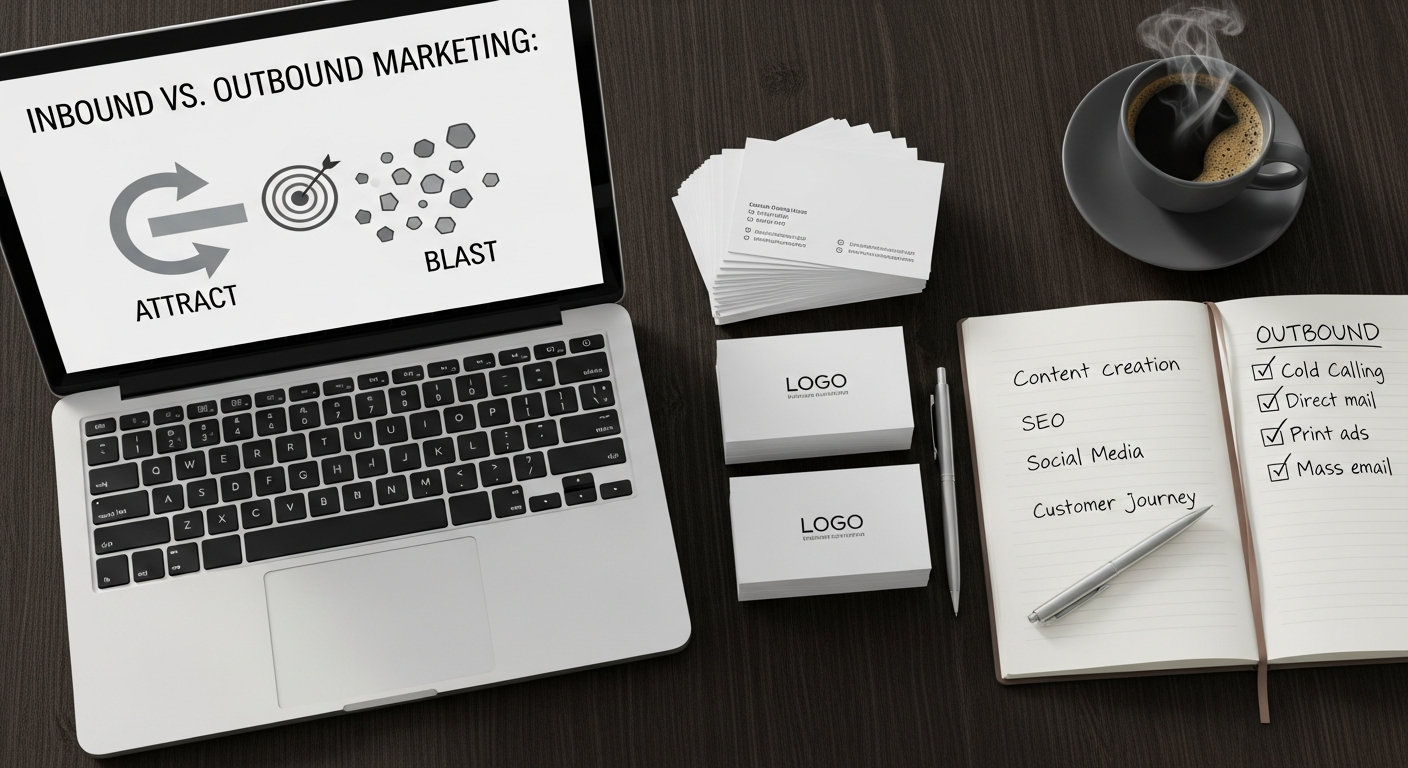
The core philosophy of inbound marketing revolves around three key stages: attract, engage, and delight. In the attract stage, businesses create relevant and helpful content that resonates with their target audience. This includes tactics such as blog posts, SEO optimization, social media marketing, and video content. The goal here is to establish your brand as a thought leader and a reliable source of information. By optimizing content for search engines, for instance, businesses ensure that when potential clients search for solutions related to their pain points, their content appears prominently, drawing organic traffic to their website.
Once attracted, the engage stage focuses on building relationships and demonstrating how your solution can address the prospect’s needs. This involves interactive content, email nurturing campaigns, and personalized communication. For a B2B company, this might mean offering downloadable whitepapers, case studies, or free consultations. The objective is to convert website visitors into qualified leads by providing continuous value and guiding them through the sales funnel. Effective lead nurturing, often powered by marketing automation tools, ensures that leads receive timely and relevant information, gradually moving them closer to a purchasing decision. This process is crucial when you are considering how to build a B2B sales funnel that is both efficient and effective, as inbound strategies excel at filling the top and middle of the funnel with engaged prospects.
Finally, the delight stage is about providing outstanding customer service and support even after a sale has been made. This fosters customer loyalty, encourages repeat business, and turns satisfied clients into promoters of your brand. Testimonials, user-generated content, and ongoing customer support are vital components here. The long-term benefits of inbound marketing are substantial: lower cost per lead, higher quality leads, increased brand authority, and a sustainable growth model that continues to generate results over time. It’s a strategy that pays dividends by building trust and authentic relationships, making it a powerful engine for businesses aiming for enduring success in 2026 and beyond.
Understanding Outbound Marketing: Reaching Out Directly to Prospects
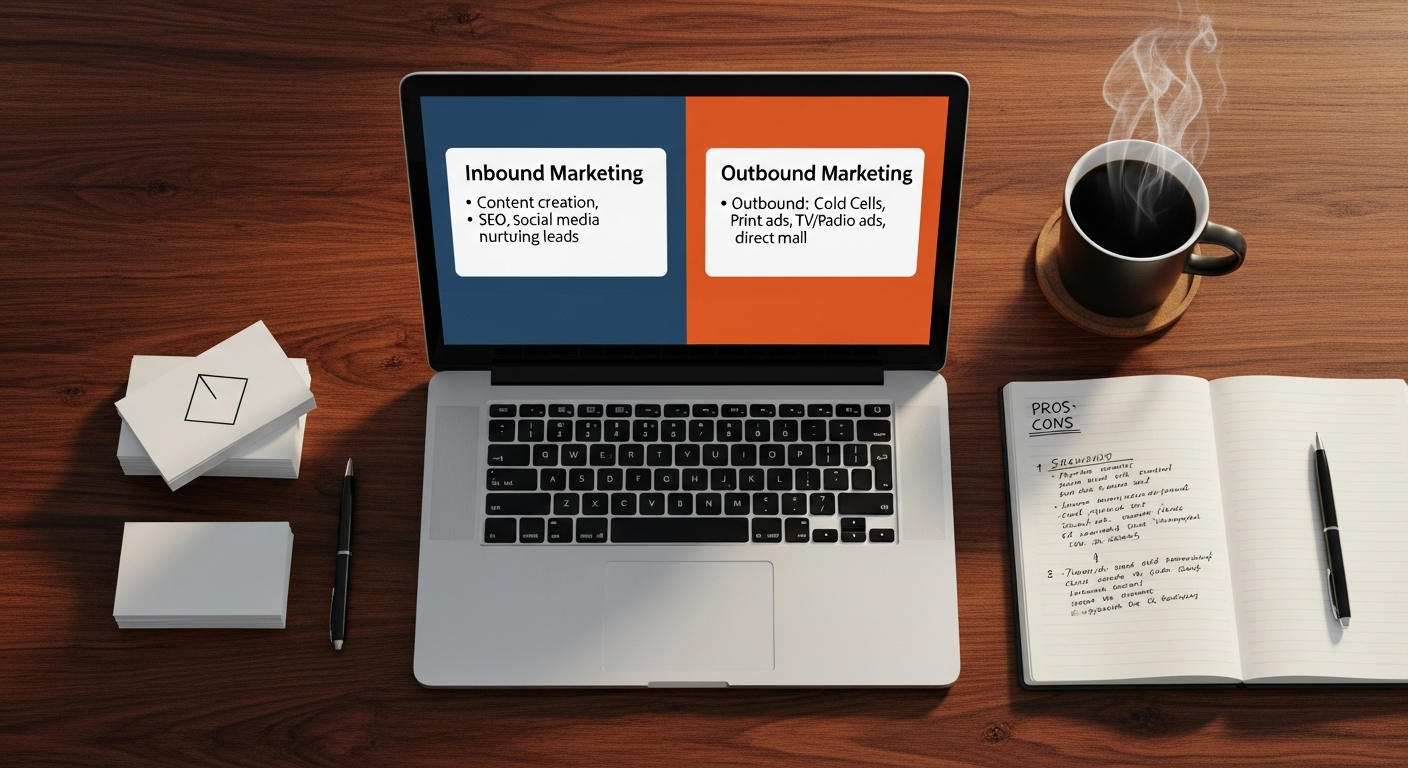
Outbound marketing, often referred to as “interruption marketing,” encompasses traditional methods where marketers initiate contact with potential customers. Unlike inbound, which waits for customers to come to them, outbound marketing actively pushes messages out to a broad audience, hoping to capture the attention of those who might be interested. This approach has been a cornerstone of marketing for centuries, evolving from town criers to modern digital advertising.
The tactics employed in outbound marketing are diverse and typically include methods such as cold calling, direct mail campaigns, email blasts to purchased lists, trade show participation, television and radio advertisements, print ads in industry publications, and paid digital ads (e.g., display ads, search engine marketing). The common thread among these tactics is their proactive nature: the marketer is reaching out, often unsolicited, to a large group of individuals in the hope of generating interest and leads. For example, a B2B company might purchase a list of decision-makers in a specific industry and launch an extensive cold email campaign, or they might invest in a prominent booth at a major industry trade show to meet potential clients face-to-face.
One of the primary advantages of outbound marketing is its ability to generate immediate reach and, potentially, immediate results. If a product launch requires rapid market penetration, outbound tactics can quickly disseminate information to a vast audience. It also offers a high degree of control over the message and its delivery. Businesses can precisely craft their advertisements or sales scripts to highlight specific features and benefits, ensuring a consistent brand message across all channels. Moreover, for niche markets where potential customers might not actively search online for solutions, outbound methods like targeted direct mail or industry-specific trade shows can be highly effective in reaching specific segments.
However, outbound marketing also presents significant challenges. It can be considerably more expensive, with costs associated with ad space, list purchases, printing, and event participation. The return on investment (ROI) can sometimes be harder to track accurately compared to the data-rich environment of inbound marketing. Furthermore, many outbound tactics are perceived as interruptive by consumers, leading to lower engagement rates and, in some cases, negative brand perception. With the proliferation of ad blockers, spam filters, and caller ID, the effectiveness of traditional outbound methods has diminished over time. Prospects are increasingly empowered to filter out unwanted solicitations, making it more challenging for outbound messages to cut through the noise and resonate effectively in 2026.
A Deeper Dive into Key Differences: Philosophy, Cost, and ROI
The fundamental divergence between inbound and outbound marketing extends far beyond their tactical execution; it lies in their core philosophies, impacts their cost structures, and dictates how their return on investment (ROI) is measured. Understanding these deeper distinctions is crucial for any B2B organization crafting its marketing strategy for the coming years.
Philosophical Approach: Pull vs. Push
- Inbound Marketing (Pull Strategy): This approach is analogous to a magnet. It aims to pull customers towards your brand by creating valuable content and experiences that naturally attract them when they are actively seeking information or solutions. The philosophy is customer-centric, focusing on building trust and rapport by being helpful and informative. It respects the buyer’s journey, providing content at each stage, from awareness to decision. The ultimate goal is to nurture relationships, establish authority, and foster organic growth.
- Outbound Marketing (Push Strategy): This approach is like a megaphone. It aims to push your message out to a broad audience, often irrespective of whether they are actively looking for your product or service. The philosophy is product-centric, focusing on broadcasting brand messages and features to generate immediate leads or sales. It operates on the premise that if you reach enough people, a certain percentage will convert. While it can be effective for mass awareness, it often comes at the cost of personalization and can be perceived as intrusive.
Cost Structures and Resource Allocation
- Inbound Marketing: Initial investment often involves creating high-quality content, optimizing for SEO, setting up marketing automation platforms, and establishing social media presence. While these initial costs can be significant, the long-term cost per lead often decreases over time as content assets continue to attract traffic and generate leads without ongoing per-impression or per-click fees. Resources are heavily invested in content creators, SEO specialists, data analysts, and community managers. This strategy benefits from ongoing refinement and iteration rather than massive one-time expenditures.
- Outbound Marketing: Costs are typically more direct and often recurring. They include expenses for advertising space (TV, radio, print, digital ads), purchasing lead lists, trade show booth fees, direct mail printing and postage, and salaries for sales development representatives (SDRs) focused on cold outreach. While some outbound efforts, like brand advertising, can build long-term equity, many tactics require continuous spending to maintain visibility. The cost per lead can fluctuate significantly based on channel effectiveness and market saturation, and can quickly escalate if campaigns are not tightly managed.
Measuring ROI and Long-term Impact
- Inbound Marketing: ROI is generally highly measurable due to the digital nature of most inbound tactics. Businesses can track website traffic, lead generation, conversion rates at each stage of the B2B sales funnel, cost per lead, customer acquisition cost (CAC), and customer lifetime value (CLTV). The impact is often long-term, building sustainable assets like SEO rankings, brand authority, and a loyal customer base that continues to generate value without constant additional spending. Content created today can still attract leads years from now.
- Outbound Marketing: Measuring ROI can be more challenging, particularly for traditional channels like TV or print ads where direct attribution is difficult. For digital outbound (e.g., PPC), metrics like click-through rates (CTR), impressions, and cost per click (CPC) are trackable. However, tying these directly to qualified B2B leads and closed deals requires robust CRM integration and meticulous tracking. The impact of outbound is often more immediate but can be short-lived; once the ad campaign ends or the cold calling ceases, the lead generation often stops. While it can quickly fill the top of the funnel, sustaining that flow requires continuous investment.
Ultimately, the choice or blend of strategies hinges on a B2B company’s specific goals, budget, target audience, and desired timeline for results, all while considering the evolving landscape of buyer behavior in 2026.
The Modern B2B Buyer Journey: Why Context Matters More Than Ever
The landscape of the B2B buyer journey has undergone a profound transformation, shifting dramatically from a sales-driven process to a buyer-led one. In 2026, the typical B2B prospect is highly informed, self-sufficient, and often completes a significant portion of their research independently before ever engaging with a vendor. This evolution underscores why context, relevance, and value are not just desirable but absolutely essential in contemporary marketing strategies.
Today’s B2B buyers have unprecedented access to information. Before making a purchasing decision, they typically conduct extensive online research, consuming various forms of content such as industry reports, expert articles, competitor analyses, product reviews, and case studies. They seek solutions to their specific problems and want to understand the potential ROI before committing to a conversation with a sales representative. This means that a company’s digital footprint – its website content, social media presence, and online reputation – plays a crucial role in shaping initial perceptions and influencing early-stage decision-making.
This self-directed research phase highlights the inherent alignment of inbound marketing with the modern buyer’s journey. By proactively creating and distributing valuable content that addresses common pain points and questions, B2B businesses can organically attract prospects who are actively seeking solutions. When a potential client searches for “how to improve employee productivity in a remote team,” for example, a well-optimized blog post or whitepaper from your company can position you as an authoritative resource. This early engagement builds trust and establishes credibility, gently guiding the prospect through their research process rather than interrupting it.
Data and analytics have become indispensable tools in understanding and optimizing this journey. By tracking website visitor behavior, content consumption patterns, and engagement metrics, B2B marketers can gain deep insights into what information prospects value most, which stages of the funnel they are in, and what triggers them to move forward. This data-driven approach allows for continuous refinement of content strategies, personalization of outreach, and more efficient resource allocation. Understanding these metrics is also vital for improving employee productivity within the marketing team itself, as it allows them to focus on high-impact activities and content that genuinely resonates with the target audience.
Conversely, outbound marketing, when executed without an understanding of this modern context, risks being perceived as irrelevant or intrusive. Cold calls or generic email blasts that don’t acknowledge the buyer’s current stage or specific needs are likely to be ignored or even resented. However, when outbound tactics are informed by inbound insights – for instance, a sales development representative reaching out to a prospect who has already downloaded a specific whitepaper – they become far more effective. The key is to provide value at every touchpoint, respecting the buyer’s journey and offering helpful information and solutions rather than simply pushing a product. In 2026, the most successful B2B marketing strategies will be those that deeply understand and cater to the nuanced, self-service nature of the modern buyer’s path.
Strategic Integration: When to Use Both for Maximum Impact
While the debate often frames inbound and outbound marketing as opposing forces, the most sophisticated and effective B2B marketing strategies in 2026 recognize the immense power of integrating both approaches. This blended marketing strategy, sometimes referred to as ‘smarketing’ when marketing and sales teams are closely aligned, leverages the strengths of each methodology to create a more robust, comprehensive, and ultimately more successful B2B sales funnel.
The core idea behind strategic integration is to use inbound to build awareness, attract, and nurture leads, and then to strategically deploy outbound tactics to accelerate conversions, engage high-value prospects, or penetrate new markets. It’s about creating a seamless experience for the prospect, where their self-initiated research is complemented by timely and relevant direct outreach.
Consider these examples of how inbound and outbound can work in harmony:
- Inbound-Informed Outbound Sales: Instead of blind cold calling, sales teams can use inbound analytics to identify prospects who have shown interest (e.g., downloaded a whitepaper, attended a webinar, spent significant time on specific product pages). An outbound call or personalized email to such a “warm” lead is far more effective than a cold one, as the salesperson can reference their specific engagement and offer relevant, next-step value. This significantly improves conversion rates and reduces the perception of intrusion.
- Content Amplification with Paid Promotion: Inbound content (blog posts, videos, infographics) can be given an outbound boost through targeted paid advertising on social media platforms (LinkedIn being particularly effective for B2B), search engines, or industry-specific websites. This expands the reach of valuable content beyond organic search and social channels, ensuring it reaches a wider, yet still relevant, audience.
- Retargeting and Nurturing: Website visitors who have engaged with certain content but haven’t converted can be retargeted with display ads or specific email sequences. While retargeting is an outbound ad delivery method, the content it delivers is often inbound-focused, reminding prospects of the value proposition and guiding them further down the funnel.
- Trade Shows and Follow-up: Attending a trade show (outbound) provides an excellent opportunity to meet prospects face-to-face. However, the follow-up process should integrate inbound principles. Instead of generic sales pitches, new contacts can be segmented and entered into an email nurture sequence that provides them with relevant content based on their conversations at the show, reinforcing the value proposition and building a relationship over time.
- Account-Based Marketing (ABM): ABM is a prime example of integration. It identifies high-value target accounts (outbound strategy) and then uses highly personalized inbound content and tailored outreach (both inbound and outbound tactics) to engage key decision-makers within those accounts. This ensures that every piece of communication, whether it’s a personalized email, a specific ad, or a piece of custom content, is highly relevant to the target account’s unique needs.
The critical factor for successful integration is a deep alignment between marketing and sales teams. Shared goals, clear communication, and integrated CRM systems are essential to ensure that leads are seamlessly handed off, and that both teams are working towards the same objectives. By leveraging the strengths of both inbound’s nurturing power and outbound’s direct reach, B2B companies can create a dynamic, adaptable, and highly effective marketing ecosystem that maximizes lead generation, accelerates sales cycles, and ultimately drives superior business outcomes in the competitive market of 2026.
Measuring Success: KPIs and Analytics for Both Approaches
Regardless of the marketing strategy employed, the ability to accurately measure success is paramount for B2B businesses. In 2026, data-driven decision-making is not just a best practice; it’s a necessity for optimizing campaigns, demonstrating ROI, and securing future budget allocations. While both inbound and outbound marketing aim to generate leads and drive sales, the key performance indicators (KPIs) and analytical approaches for each can differ significantly.
Key Performance Indicators for Inbound Marketing
Inbound marketing, by its very nature, is highly trackable due to its strong digital footprint. KPIs are typically focused on attracting visitors, converting them into leads, and nurturing them into customers.
- Website Traffic: Metrics like unique visitors, page views, and time on site indicate how effectively your content is attracting an audience. Monitoring traffic sources (organic search, social, referral) helps identify high-performing channels.
- Search Engine Rankings: Tracking keyword positions and organic visibility directly reflects the success of your SEO efforts, a cornerstone of inbound.
- Lead Generation: This includes the number of new leads generated, lead conversion rates (visitors to leads), and marketing qualified leads (MQLs) and sales qualified leads (SQLs) passed to sales.
- Cost Per Lead (CPL): Calculating the total cost of inbound efforts divided by the number of leads generated provides insight into efficiency. Over time, a strong inbound strategy should see CPL decrease.
- Conversion Rates: From landing page conversions (form submissions) to email click-through rates and content download rates, these metrics indicate how effectively you are engaging and converting prospects at various stages of the B2B sales funnel.
- Customer Acquisition Cost (CAC): This comprehensive metric includes all marketing and sales expenses divided by the number of new customers acquired, providing a holistic view of the investment required to gain a customer.
- Customer Lifetime Value (CLTV): Measures the total revenue a business can expect from a single customer account over the entire period of their relationship. High CLTV often indicates strong customer delight, a key inbound goal.
- Engagement Metrics: Social media shares, comments, email open rates, and content consumption rates (e.g., video watch time) reflect how well your audience is connecting with your brand and content.
Key Performance Indicators for Outbound Marketing
Outbound marketing KPIs often focus on reach, immediate response, and the efficiency of direct outreach campaigns.
- Reach/Impressions: For advertising campaigns, this measures the total number of people exposed to your message.
- Response Rates: For direct mail or email blasts, this is the percentage of recipients who respond to your call to action (e.g., calling a number, visiting a specific URL).
- Click-Through Rate (CTR): For digital ads (PPC, display), this measures the percentage of people who click on your ad after seeing it.
- Cost Per Click (CPC) / Cost Per Impression (CPM): These metrics assess the cost-efficiency of digital ad placements.
- Lead Volume and Quality: How many leads are generated through cold calling, trade shows, or purchased lists, and what is their conversion rate to MQL/SQL?
- Sales Accepted Leads (SALs): The number of leads generated by marketing that are deemed viable by the sales team.
- Meeting/Appointment Set Rate: For cold outreach teams, this measures the percentage of calls or emails that result in a scheduled meeting.
- Return on Ad Spend (ROAS): A direct measure of revenue generated for every dollar spent on advertising.
Tools and Attribution Modeling
Modern B2B marketing relies heavily on sophisticated tools for tracking and analysis. CRM systems (e.g., Salesforce, HubSpot), marketing automation platforms (e.g., Pardot, Marketo), web analytics tools (e.g., Google Analytics), and social media analytics provide the necessary data. However, simply collecting data isn’t enough; robust attribution modeling is essential to understand which touchpoints, both inbound and outbound, contribute to conversions. Multi-touch attribution models can help allocate credit across various marketing efforts throughout the customer journey, providing a more accurate picture of ROI for both integrated and standalone campaigns. This level of insight is crucial for how to improve employee productivity within marketing teams, enabling them to focus on the most impactful activities.
By meticulously tracking these KPIs and leveraging advanced analytics, B2B businesses can gain a clear understanding of what is working, where to optimize, and how to effectively justify their marketing investments in an increasingly competitive and data-driven marketplace.
Making the Right Choice for Your Business in 2026
Deciding between inbound and outbound marketing, or more realistically, determining the optimal blend of both, is a strategic decision that no B2B business should take lightly. There’s no one-size-fits-all answer, as the “better” approach is entirely dependent on your specific circumstances, objectives, and market dynamics as we head into 2026. To make an informed choice, consider the following critical factors:
1. Your Budget and Resources
- Inbound: Typically requires an initial investment in content creation, SEO, and marketing automation software. While costs per lead tend to decrease over time as assets generate evergreen value, it demands consistent effort and a long-term perspective. If you have a smaller, dedicated marketing team capable of creating high-quality content and managing digital channels, inbound can be highly cost-effective in the long run.
- Outbound: Can require significant upfront and ongoing costs for advertising space, list purchases, trade show fees, and sales development representative salaries. If you have a larger budget and need immediate market penetration or brand awareness, outbound can deliver rapid results, but often at a higher, sustained cost.
2. Your Target Audience and Industry
- Inbound: Thrives when your target audience actively researches solutions online. Industries with complex products, longer sales cycles, or highly specialized needs often benefit from inbound’s educational approach, which allows prospects to self-qualify and become informed buyers.
- Outbound: Can be effective for highly niche markets where prospects might not be actively searching online, or for reaching decision-makers who are less digitally engaged. It’s also suitable for industries where direct personal outreach is customary or expected. For example, some legacy industries might still respond well to direct mail or cold calling.
3. Your Sales Cycle Length and Urgency
- Inbound: Best suited for B2B businesses with longer sales cycles, where trust and education are paramount. It builds relationships over time, nurturing leads through multiple stages of consideration.
- Outbound: Can be more appropriate for businesses needing to generate immediate leads or push time-sensitive offers. If your sales cycle is shorter or you have a strong need for rapid market entry, targeted outbound campaigns can accelerate the process.
4. Your Internal Capabilities and Expertise
- Inbound: Requires expertise in content creation, SEO, social media management, data analytics, and marketing automation. If your team lacks these skills, investing in training or hiring specialists will be necessary.
- Outbound: Demands strong sales skills, objection handling, and potentially experience in media buying or event management.
The Role of Business Process Outsourcing (BPO)
For many B2B companies, especially those with limited in-house resources or specialized skill gaps, what is Business Process Outsourcing becomes a highly relevant consideration. Marketing BPO services can provide access to specialized talent and technology, enabling businesses to implement sophisticated inbound or outbound strategies without the overhead of building an entire in-house team. Whether it’s outsourcing content creation, SEO management, lead generation, or even entire digital marketing campaigns, BPO can offer scalability, cost-efficiency, and access to expertise that might otherwise be unattainable. This allows your core team to focus on strategic oversight and high-value tasks, thereby contributing to how to improve employee productivity overall.
Embracing Adaptability
The marketing landscape is constantly evolving. What worked perfectly last year might be less effective in 2026. Therefore, your marketing strategy must be adaptable. Start by clearly defining your goals, understand your audience deeply, and then experiment. Implement a strategy, meticulously track its performance using the KPIs discussed earlier, and be prepared to iterate and adjust. The most successful B2B companies will be those that embrace a flexible, data-driven approach, continuously optimizing their marketing mix to align with changing buyer behaviors and technological advancements. Often, this means a thoughtful integration of both inbound and outbound tactics, leveraging the strengths of each to create a powerful, unified marketing engine.
Frequently Asked Questions About Inbound vs. Outbound Marketing
Is inbound marketing always cheaper than outbound marketing?
Not necessarily. While inbound marketing often boasts a lower cost per lead (CPL) in the long run due to evergreen content assets and organic reach, it requires a significant initial investment in content creation, SEO, and marketing automation infrastructure. Outbound marketing can have higher immediate costs for advertising space, cold outreach tools, or event participation, but some highly targeted outbound campaigns can also be cost-effective for specific niches. The key is to analyze the Customer Acquisition Cost (CAC) and Customer Lifetime Value (CLTV) for both approaches over time to determine true cost-effectiveness for your specific business.
Can outbound marketing still be effective in 2026 for B2B businesses?
Absolutely. While traditional, untargeted outbound methods have decreased in effectiveness due to ad fatigue and digital filters, strategic and personalized outbound marketing remains highly potent. This includes highly targeted account-based marketing (ABM) campaigns, personalized cold outreach informed by data, participation in niche industry trade shows, and carefully placed advertisements in industry-specific publications or digital channels. When integrated with inbound insights (e.g., reaching out to prospects who have shown interest), outbound can be incredibly effective in accelerating sales cycles and penetrating new markets.
How does Business Process Outsourcing (BPO) relate to marketing strategy?
Business Process Outsourcing (BPO) plays a crucial role by allowing B2B companies to outsource specific marketing functions or even entire campaigns to specialized third-party providers. For example, a company might outsource content creation, SEO management, lead generation, social media management (inbound), or cold calling and email outreach (outbound). This enables businesses to access specialized expertise, scale operations quickly, reduce operational costs, and free up internal teams to focus on core strategic initiatives. It’s an excellent way to implement complex inbound or outbound strategies without building a large in-house team.
What’s the biggest challenge in implementing an inbound strategy?
One of the biggest challenges in implementing an inbound strategy is the time and consistent effort required to see significant results. Building organic authority through SEO, creating high-quality content, and nurturing leads takes time. Many businesses struggle with the patience and sustained commitment needed before seeing a substantial return on investment. Additionally, inbound requires a diverse skill set (content creation, SEO, analytics, automation) which can be challenging to assemble in-house, making BPO an attractive option for some.
How can I measure the ROI of my marketing efforts effectively?
Measuring ROI effectively involves clearly defining your marketing goals, establishing relevant Key Performance Indicators (KPIs), and utilizing robust analytics and attribution models. For inbound, focus on metrics like website traffic, lead conversion rates, cost per lead, and customer lifetime value. For outbound, track response rates, qualified leads generated, cost per acquisition, and return on ad spend. Integrate your CRM and marketing automation platforms to track leads throughout the entire B2B sales funnel, and consider multi-touch attribution models to understand how different touchpoints contribute to a conversion. Regular reporting and analysis are key to continuous optimization.
Which approach is better for a new B2B startup in 2026?
For a new B2B startup in 2026, a blended approach is often the most strategic, but with an initial strong emphasis on inbound foundations. Building brand awareness and credibility through valuable content (inbound) is crucial for long-term growth and establishing thought leadership. However, to generate initial traction and accelerate early sales, targeted outbound tactics (e.g.,
Recommended Resources
For more on inbound marketing vs, see Facebook Ads For Ecommerce Beginners on E-ComProfits.
You might also enjoy How To Market A Small Business On Social Media from AssetBar.