
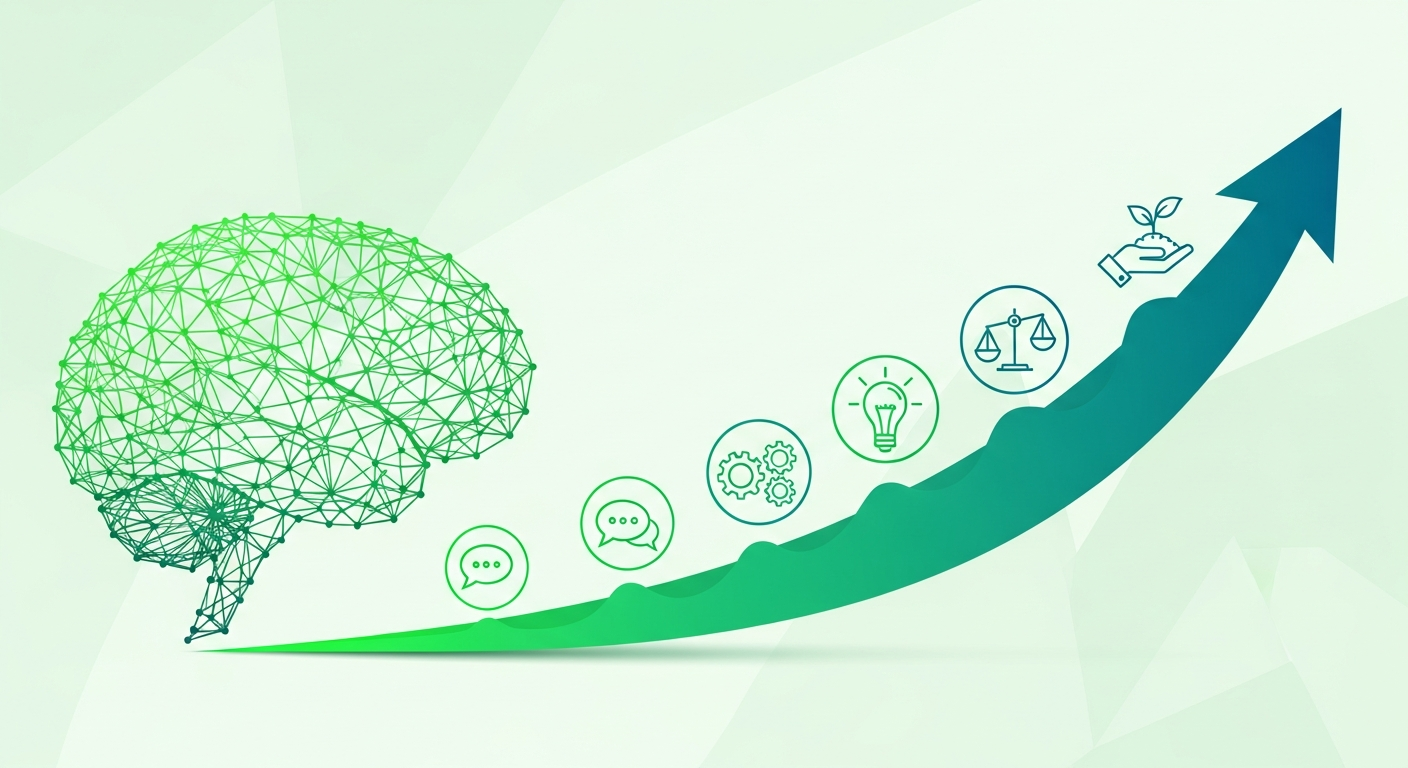
Mastering Soft Skills for the Workplace: Your Ultimate Guide to Career and Financial Success
In the modern professional landscape, the technical abilities listed on your resume—your “hard skills”—are often what get your foot in the door. However, in 2026 and beyond, it is your soft skills that determine how far you climb and how much you earn. Soft skills are the interpersonal attributes, communication abilities, and character traits that dictate how you interact with others and manage your workload. For young adults looking to stabilize their finances and build a meaningful life, mastering these “human” skills is no longer optional; it is the most significant investment you can make in your future self.
While a coding certification or a degree in accounting provides the foundation for your job, soft skills like emotional intelligence, adaptability, and negotiation are what lead to promotions, raises, and long-term career security. As automation and artificial intelligence continue to handle more technical tasks, the value of human-centric skills has skyrocketed. This guide explores the essential soft skills you need to master to thrive in the workplace, boost your income, and navigate the complexities of adult life with confidence.
Why Soft Skills Are the New Hard Currency in 2026
The professional world has undergone a radical transformation. We have moved from an era where technical expertise was the sole driver of success to a “relationship economy” where your ability to collaborate and influence determines your trajectory. In 2026, employers are increasingly hiring for “potential” and “culture fit,” both of which are rooted in soft skills.
From a financial perspective, the ROI on soft skills is undeniable. Studies consistently show that professionals with high emotional intelligence and strong communication skills earn significantly more over their lifetimes than those who rely solely on technical prowess. This is because soft skills make you “un-fireable” and highly promotable. When a company faces a downturn, they don’t let go of the person who resolves conflicts and keeps the team motivated; they let go of the person who, despite being brilliant, is impossible to work with. For a young adult focused on wealth building, these skills act as a hedge against economic volatility.
Furthermore, mastering soft skills reduces the “invisible costs” of your career. Poor communication leads to mistakes that take hours to fix. Lack of time management leads to burnout and health expenses. By refining your interpersonal toolkit, you aren’t just becoming a better employee; you are optimizing your life for efficiency and peace of mind.
Communication: The Foundation of Influence and Negotiation
If there is one skill that serves as the bedrock for all others, it is communication. In the workplace, communication is about more than just talking; it is about the effective exchange of information, the ability to listen actively, and the art of persuasion.
For young adults, the most lucrative application of communication is negotiation. Whether you are negotiating your starting salary, asking for a raise, or pitching a new project, your ability to articulate your value is directly tied to your bank account. To master this, you must learn the difference between “assertive” and “aggressive.” Assertive communication involves stating your needs clearly while respecting the needs of others.
Active listening is another critical component. In 2026, the loudest person in the room is rarely the most influential. The person who listens, synthesizes information, and asks the right questions is the one who leads. By truly hearing what your manager or clients are saying, you can identify “pain points” and offer solutions that make you indispensable. Additionally, in our digital-first world, written communication—via email, Slack, or project management tools—must be concise and professional. Misunderstandings in text can derail projects and damage reputations, so learning to write with clarity and tone-awareness is vital.
Emotional Intelligence (EQ): Navigating Workplace Dynamics Like a Pro
Emotional Intelligence, or EQ, is the ability to recognize, understand, and manage your own emotions while also influencing the emotions of others. While IQ might get you through the door, EQ is what keeps you in the room. High EQ involves four main pillars: self-awareness, self-management, social awareness, and relationship management.
In a high-pressure work environment, self-management is a financial lifesaver. It prevents you from making impulsive decisions—like quitting a job in a heat of passion or lashing out at a coworker—that could jeopardize your income. By staying calm under pressure, you project leadership qualities that are often rewarded with higher-level responsibilities.
Social awareness and empathy allow you to read the “unspoken” rules of your office. Every workplace has a political landscape; understanding the motivations and stressors of your colleagues helps you navigate this landscape without getting caught in the crossfire. When you show empathy, you build trust. Trust leads to a stronger professional network, and as the saying goes, “your network is your net worth.” Young adults who prioritize building genuine relationships early in their careers often find that their best financial opportunities—referrals, partnerships, and high-paying roles—come through the people they’ve treated with respect and understanding.
Adaptability and Continuous Learning: Future-Proofing Your Career
The pace of change in the mid-2020s is staggering. Technological shifts that used to take decades now happen in months. Because of this, “adaptability” has become one of the most sought-after soft skills in 2026. Employers are looking for individuals who don’t just tolerate change but embrace it.
Adaptability means having a “growth mindset”—the belief that your abilities can be developed through dedication and hard work. For young adults, this is the ultimate life skill. If your current industry faces a decline, an adaptable mindset allows you to pivot your skills into a new, more lucrative field without the paralysis of fear. It’s about being “liquid” in your career path.
Continuous learning is the action-oriented side of adaptability. This doesn’t necessarily mean going back to university for another degree. It means staying curious. It means spending thirty minutes a day learning how to use new AI tools, understanding market trends, or improving your public speaking. By positioning yourself as a lifelong learner, you ensure that your skills never become obsolete. In terms of personal finance, this is known as “human capital.” The more you know and the more ways you can apply that knowledge, the more valuable you are to the marketplace.
Time Management and Personal Organization: The Engine of Productivity
You can have the best ideas in the world, but if you cannot manage your time to execute them, your financial growth will stall. Time management is often categorized as a “life skill,” but in the professional world, it is a high-level soft skill that separates the high-performers from the rest.
Mastering time management involves understanding the difference between “busy” and “productive.” Many young professionals fall into the trap of performing “shallow work”—answering emails and attending unnecessary meetings—while neglecting the “deep work” that actually moves the needle on their goals. Tools like the Eisenhower Matrix, which helps you categorize tasks by urgency and importance, can be transformative for your productivity.
Furthermore, being organized and punctual builds a reputation for reliability. When your boss knows that a task given to you will be completed on time and with high quality, you become the “go-to” person for important (and often higher-paying) projects. From a life-skills perspective, good time management also ensures you have space for “work-life harmony.” Burnout is a massive financial drain; it leads to medical bills, lost wages, and decreased motivation. By managing your time effectively, you protect your most valuable asset: your energy.
Problem-Solving and Critical Thinking: Becoming Indispensable
In 2026, the most successful employees are not the ones who just follow instructions; they are the ones who solve problems before they even reach the manager’s desk. Critical thinking involves analyzing facts, evidence, and arguments to form a judgment. It is about looking at a process and asking, “How can we make this better, faster, or cheaper?”
Problem-solving is a proactive soft skill. Instead of bringing a problem to your supervisor, bring a problem *and* three potential solutions. This simple shift in behavior changes your perceived value from a “worker” to a “strategist.” Strategists earn more than workers because they contribute directly to the company’s bottom line or efficiency.
To develop these skills, start by practicing “root cause analysis.” When something goes wrong, don’t just fix the surface issue; dig deeper to find out why it happened and how to prevent it in the future. This logical approach to workplace challenges reduces stress and creates a smoother path to career advancement. For young adults, applying critical thinking to their personal finances—analyzing spending habits, researching investment vehicles, and planning for the future—is equally important. The same mental muscles you use to solve a logistics issue at work will help you navigate the complexities of wealth management.
FAQ: Mastering Soft Skills in the Modern Workplace
#
1. What are the most important soft skills to focus on in 2026?
The “big three” for 2026 are Emotional Intelligence (EQ), Adaptability, and Communication. EQ is essential for navigating hybrid and remote work environments, Adaptability is required to keep up with rapid technological changes, and Communication remains the primary tool for leadership and negotiation.
#
2. Can soft skills really be learned, or are you just born with them?
Soft skills are absolutely learnable. While some people may have a natural inclination toward empathy or organization, these are “muscles” that can be strengthened with practice. Just as you would train for a marathon, you can train yourself to be a better listener or a more effective public speaker through intentional effort and feedback.
#
3. How do I demonstrate soft skills on a resume?
Instead of just listing “good communicator” in a skills section, show it through your achievements. Use phrases like, “Led a cross-functional team of five to complete a project 20% ahead of schedule by implementing new communication protocols,” or “Negotiated with vendors to reduce annual costs by 15%.”
#
4. How do soft skills directly impact my salary?
Soft skills impact your salary by making you eligible for leadership roles, which almost always pay more than technical roles. Additionally, strong negotiation skills allow you to advocate for higher pay, while high EQ helps you build the internal alliances necessary for promotions.
#
5. What is the difference between soft skills and “power skills”?
In recent years, many industry leaders have started calling soft skills “power skills.” The term “soft” can imply that they are easy or secondary, but “power skills” reflects the reality that these abilities—like leadership and critical thinking—are the most powerful tools in a professional’s arsenal for driving results and achieving success.
Conclusion: Investing in the “Human” Side of Business
As we navigate the complexities of 2026, it is clear that the human element of work is more valuable than ever. For young adults, mastering soft skills is the ultimate “life hack.” It provides a clear path to financial stability by ensuring you remain relevant in an ever-changing job market. It empowers you to build a network of mentors and peers who will support your growth. Most importantly, it gives you the tools to manage your own life with intention and resilience.
While learning a new software or earning a technical certification is important, don’t neglect the “soft” side of your professional development. Focus on your ability to communicate, empathize, adapt, and lead. These are the skills that cannot be automated, and they are the skills that will carry you to the top of your field. By investing in your interpersonal mastery today, you are securing a wealthier, more fulfilling tomorrow. Start small—practice active listening in your next meeting or offer a solution to a nagging problem—and watch how these subtle shifts transform your career and your life.