
Master Your Future: A Comprehensive Guide to Setting SMART Goals for 2026
The transition into a new year is more than just a calendar flip; it is a psychological threshold that offers a rare opportunity for a total life reset. As we look toward 2026, the landscape for young adults is shifting rapidly. With the integration of AI in the workplace, the evolving gig economy, and the increasing importance of financial literacy, simply “wishing” for a better life is no longer enough. To truly move the needle on your net worth and your personal capabilities, you need a blueprint.
Setting SMART goals for 2026 is about bridge-building—creating a sturdy path between the person you are today and the high-achieving individual you intend to become. Whether you are looking to crush your student debt, master a new technical skill, or finally establish a fitness routine that sticks, the SMART framework provides the structural integrity your ambitions need. In this guide, we will break down how to design a year of unprecedented growth, ensuring that 2026 becomes your most transformative year yet.
—
1. Deconstructing the SMART Framework for 2026
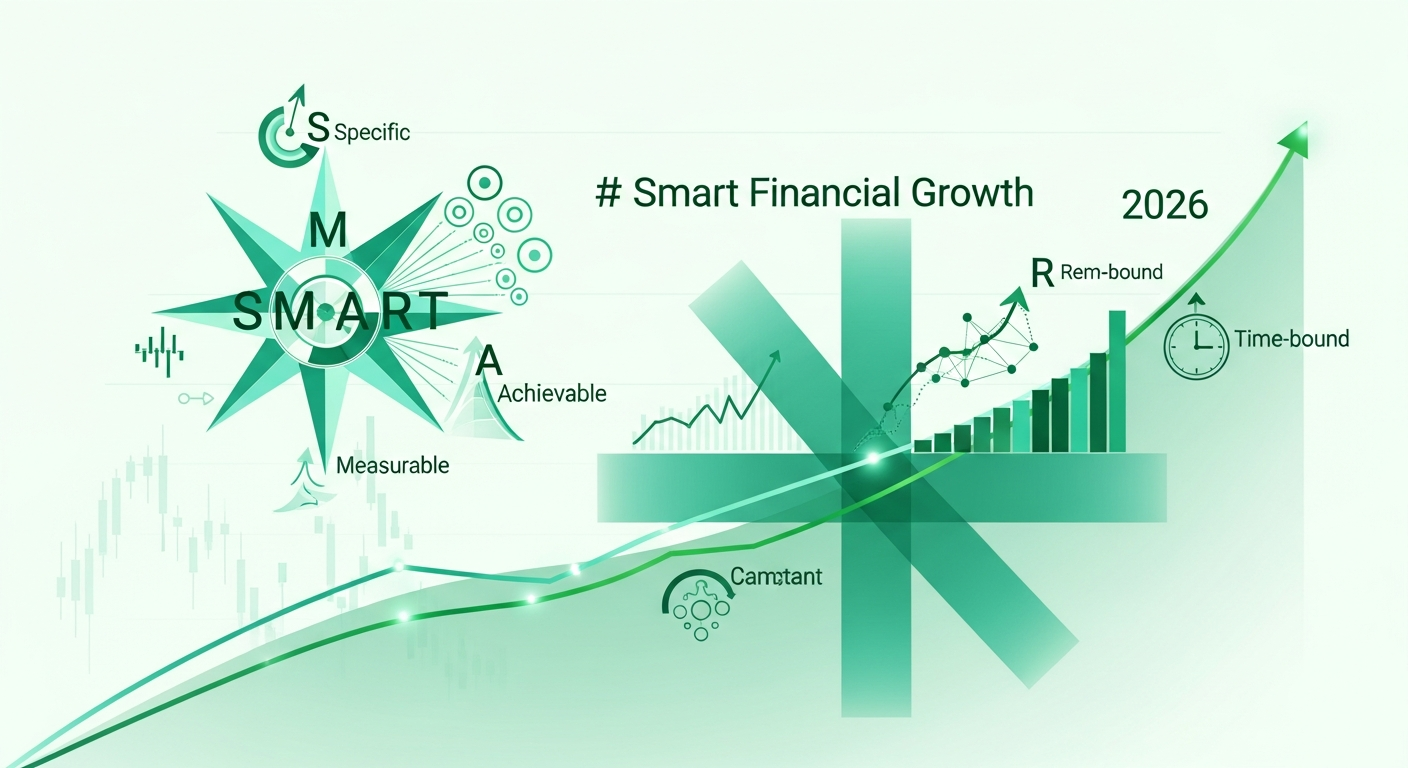
Before we dive into the specifics of finances and life skills, we must master the methodology. The SMART acronym is a classic for a reason: it forces you to move from the abstract to the concrete.
* **Specific:** Vague goals like “save money” or “get smarter” are where dreams go to die. For 2026, your goals must be laser-focused. Instead of “improving your career,” try “earning a Junior Project Management certification.”
* **Measurable:** If you can’t track it, you can’t manage it. This involves numbers. Are you saving $5,000? Are you reading 12 books? Are you networking with 50 new people?
* **Achievable:** While it is great to aim high, setting a goal to become a billionaire in 2026 is likely setting yourself up for burnout. Your goals should stretch your abilities but remain within the realm of possibility based on your current resources and time.
* **Relevant:** This is the “Why.” Does this goal actually align with your long-term vision? If you hate coding, setting a goal to learn Python just because it’s popular isn’t relevant to your personal fulfillment.
* **Time-bound:** Every goal needs a deadline. Without an end date, there is no urgency. In this context, we are looking at the 12-month window of 2026, but you should also set quarterly milestones.
By applying this filter to every ambition, you transform a New Year’s resolution into a strategic execution plan.
2. Financial SMART Goals: Building Wealth in 2026
For many young adults, financial stress is the primary barrier to personal freedom. In 2026, the goal shouldn’t just be “making more money,” but rather “managing money better.” The economy is unpredictable, but your personal financial systems don’t have to be.
#
Establishing an Anti-Fragile Emergency Fund
A common SMART goal for the first half of 2026 should be the creation of a three-to-six-month emergency fund.
* **Specific:** Build a $10,000 emergency fund in a High-Yield Savings Account (HYSA).
* **Measurable:** Save $833 per month.
* **Achievable:** This may require cutting subscriptions or taking on a side hustle.
* **Relevant:** Provides a safety net so you can take career risks later in the year.
* **Time-bound:** Achieve the full balance by December 31, 2026.
#
Strategic Debt Reduction
If you are carrying high-interest credit card debt, 2026 is the year to eliminate it. Use the “Debt Snowball” or “Debt Avalanche” method. A SMART goal here would be: “I will pay off $4,000 of my credit card balance by July 2026 by allocating an extra $600 monthly from my primary salary.”
#
Automated Investing
Don’t just save; invest. For 2026, aim to automate your contributions to a Roth IRA or 401(k). A relevant goal would be: “Invest 15% of every paycheck into a low-cost index fund starting January 1st to take advantage of compound interest.”
3. Mastering Life Skills: The “Adulting” Toolkit
Financial success is often a byproduct of your “soft” and “hard” skills. As we navigate 2026, the ability to communicate, manage time, and learn quickly will be your most valuable assets.
#
High-Income Skill Acquisition
The job market in 2026 will reward those who can bridge the gap between human creativity and technological efficiency.
* **Goal:** “I will become proficient in AI-driven data analysis by completing two specialized online courses by May 2026.”
* **Why it works:** This is specific and highly relevant to the modern workforce, making you more indispensable to employers.
#
The Art of Networking
They say your network is your net worth. Instead of a vague “meet more people,” set a SMART goal: “I will attend one industry-specific networking event and conduct two informational interviews per month throughout 2026.” This builds a measurable pipeline of professional relationships.
#
Emotional Intelligence and Resilience
Life skills aren’t just professional; they are personal. Setting a goal to “practice mindfulness” is too soft. Instead: “I will complete a 10-minute daily meditation streak for 90 days to improve focus and stress management.” This measurable habit builds the mental stamina required to pursue your larger 2026 objectives.
4. Systems Over Goals: The Psychology of 2026 Success
A goal is a destination, but a system is the vehicle that gets you there. Many people fail their 2026 resolutions because they focus on the outcome rather than the daily habit.
To succeed in 2026, you must build “Choice Architecture.” This means designing your environment to make your goals the path of least resistance.
* **Want to save money?** Set up an automatic transfer to your savings account the day after payday.
* **Want to learn a skill?** Leave your laptop open to your course dashboard before you go to bed.
The psychology of success in 2026 lies in “Identity-Based Habits.” Instead of saying “I want to run a 5k,” say “I am a runner.” When you shift your identity, the SMART goals become a natural expression of who you are, rather than a chore you have to complete. Use the first quarter of 2026 to focus solely on habit installation. Once the systems are running on autopilot, the goals will largely take care of themselves.
5. Essential Tools and Apps for Your 2026 Journey
You don’t have to do this alone. The digital landscape of 2026 offers incredible tools to keep you on track.
* **For Financial Tracking:** Use apps like **YNAB (You Need A Budget)** or **Empower**. These allow you to set specific spending categories and track your net worth in real-time. A SMART goal for January 2026 could be: “I will log every expense for 30 days to identify $200 in monthly leaks.”
* **For Project Management:** **Notion** and **Trello** are excellent for breaking down large life goals into smaller, manageable tasks. Create a “2026 Master Dashboard” where you can visualize your progress across different life pillars.
* **For Habit Tracking:** **Streaks** or **Way of Life** provide the visual satisfaction of “not breaking the chain.”
* **For Skill Building:** **Coursera**, **Udemy**, and **LinkedIn Learning** remain the gold standards for measurable skill acquisition.
By integrating these tools, you remove the cognitive load of “remembering” to work on your goals. The tools provide the prompts, and you provide the action.
6. Overcoming Hurdles: Staying Resilient Throughout 2026
No year goes perfectly according to plan. The “Achievable” part of SMART goals involves acknowledging that setbacks will happen. Whether it’s an unexpected medical expense or a dip in motivation, resilience is the secret sauce of goal achievement.
#
The Mid-Year Pivot
By June 2026, you should conduct a “Half-Year Audit.” If you find that a goal you set in January is no longer relevant, **change it.** There is no prize for finishing a goal that no longer serves your vision. A pivot is not a failure; it is an optimization.
#
Dealing with Burnout
Young adults often fall into the trap of “hustle culture,” trying to achieve ten SMART goals at once. This leads to paralysis. If you feel overwhelmed in 2026, prune your list. Focus on the “Vital Few” (the 20% of goals that will yield 80% of your results).
#
Accountability Partners
The success rate of reaching a goal increases by up to 65% if you have an accountability partner. In 2026, find a friend or mentor with similar ambitions. Set a monthly “sync-up” to discuss wins, losses, and strategies for the upcoming month.
—
FAQ: Frequently Asked Questions About 2026 Goal Setting
**Q1: How many SMART goals should I set for 2026?**
**A:** Quality over quantity is key. Aim for 3 to 5 major SMART goals across different areas of your life (e.g., one financial, one career, one health, and one personal skill). Setting ten or more goals usually leads to fragmented focus and a higher likelihood of quitting by March.
**Q2: What is the biggest mistake people make when setting goals for 2026?**
**A:** The biggest mistake is making goals that are “Results-Oriented” without being “Action-Oriented.” For example, “Lose 20 pounds” is a result. “Walk 10,000 steps a day and eat 2,000 calories” is the action. Always focus your SMART criteria on the behaviors you can control.
**Q3: Can I set SMART goals mid-way through 2026?**
**A:** Absolutely. The “New Year” is a social construct. You can start a SMART goal journey on any Tuesday in July. The best time to start was yesterday; the second best time is today.
**Q4: How do I know if my 2026 goals are “Achievable”?**
**A:** Look at your past data. If you’ve never saved $100 in a month, setting a goal to save $2,000 a month in 2026 might be unrealistic. Aim for a 10-20% increase over your previous best performance to ensure the goal is a “stretch” but not impossible.
**Q5: What should I do if I fail a SMART goal deadline in 2026?**
**A:** Analyze the “why.” Was the timeline too aggressive? Did an external factor intervene? Did you lose interest? Use the failure as data, adjust the parameters (the “T” in SMART), and reset the clock. Failure is only permanent if you stop trying.
—
Conclusion: Making 2026 Your Defining Year
As you stand on the precipice of 2026, remember that time will pass regardless of whether you have a plan or not. The difference between a year of “stagnation” and a year of “transformation” lies in the intentionality of your actions. By using the SMART framework, you are essentially writing a letter of intent to your future self.
Finances, career skills, and personal habits are the pillars of a successful adult life. By making these areas specific, measurable, and time-bound, you remove the guesswork and the anxiety of the unknown. 2026 holds immense potential for those willing to do the work of planning. Start small, stay consistent, and use the tools available to you. By the time December 2026 rolls around, you won’t just be looking at a list of completed goals—you’ll be looking at a completely upgraded version of yourself. Now, grab a notebook or open your digital planner, and let’s get to work on your 2026 blueprint.