
The Definitive Guide to Webinar Marketing: How to Maximize Attendance in 2026
In the ever-evolving landscape of digital marketing, webinars remain a powerful, indispensable tool for B2B professionals, entrepreneurs, and marketers seeking to educate, engage, and generate high-quality leads. As we look towards 2026, the demand for authentic, valuable online interactions will only intensify. Simply hosting a webinar isn’t enough; the true challenge lies in cutting through the noise to attract and secure a robust audience. This comprehensive guide, crafted from a senior advisor’s perspective, unpacks the strategic frameworks, practical tactics, and data-backed insights you need to significantly boost your webinar attendance and transform your virtual events into lead-generating powerhouses.
Laying the Foundation: Strategic Planning for High-Impact Webinars
Before you even think about promotion, a meticulously planned webinar strategy is paramount. Haphazard execution leads to mediocre results. In 2026, attendees expect nothing less than highly relevant, expertly delivered content. Your foundational planning phase dictates everything from topic resonance to speaker credibility, directly impacting your registration and show-up rates.
The 7-Point Webinar Strategy Blueprint
- Define Clear Objectives: What do you want to achieve? Is it lead generation, brand awareness, product education, customer retention, or thought leadership? Specific, measurable, achievable, relevant, and time-bound (SMART) goals will guide every subsequent decision. For example: “Generate 200 qualified leads for Product X within Q3 2026,” or “Increase brand awareness by 15% among target audience Y.”
- Identify Your Target Audience: Who are you trying to reach? What are their pain points, challenges, and aspirations? Deeply understanding your audience allows you to tailor your topic, content, and promotional messaging for maximum impact. Conduct surveys, analyze past webinar data, and consult with your sales team.
- Select a Compelling, Problem-Solving Topic: Your topic must address a specific pain point or offer a unique solution that resonates directly with your target audience. Avoid generic themes. Focus on actionable insights, emerging trends relevant to 2026, or practical “how-to” guides. A strong topic often includes numbers, promises a benefit, or uses strong verbs (e.g., “Unlock,” “Master,” “Dominate”).
- Choose the Right Format: Will it be a solo presentation, an interview, a panel discussion, a live demo, or a workshop? Each format has its strengths. Panel discussions often attract more attendees due to multiple speakers promoting the event, while workshops offer deeper engagement. Consider a hybrid approach in 2026, blending pre-recorded segments with live Q&A for production quality and real-time interaction.
- Secure an Engaging Speaker(s): Your speaker is the face and voice of your webinar. They must be knowledgeable, charismatic, and capable of holding an audience’s attention. Industry experts, thought leaders, or even internal subject matter experts with strong presentation skills can significantly boost credibility and draw. Co-hosting with a complementary business or influencer can amplify reach.
- Determine Optimal Date and Time: Research suggests Tuesdays, Wednesdays, and Thursdays are generally the best days. Mid-morning (10 AM – 11 AM local time) or early afternoon (1 PM – 2 PM local time) often yield the highest attendance. If your audience is global, consider offering multiple sessions or making a high-quality recording available promptly.
- Select Robust Technology: Invest in a reliable webinar platform like Zoom Webinar, GoToWebinar, Webex Events, Demio, or Livestorm. Ensure it offers features critical for engagement (polls, Q&A, chat), seamless registration, analytics, and easy recording capabilities. Test your technology thoroughly well in advance.
Practical Insight: According to ON24, nearly 75% of B2B marketers say webinars are the most effective way to generate high-quality leads. This effectiveness starts with strategic planning that aligns with audience needs and business objectives.
Crafting Irresistible Content and an Engaging Value Proposition
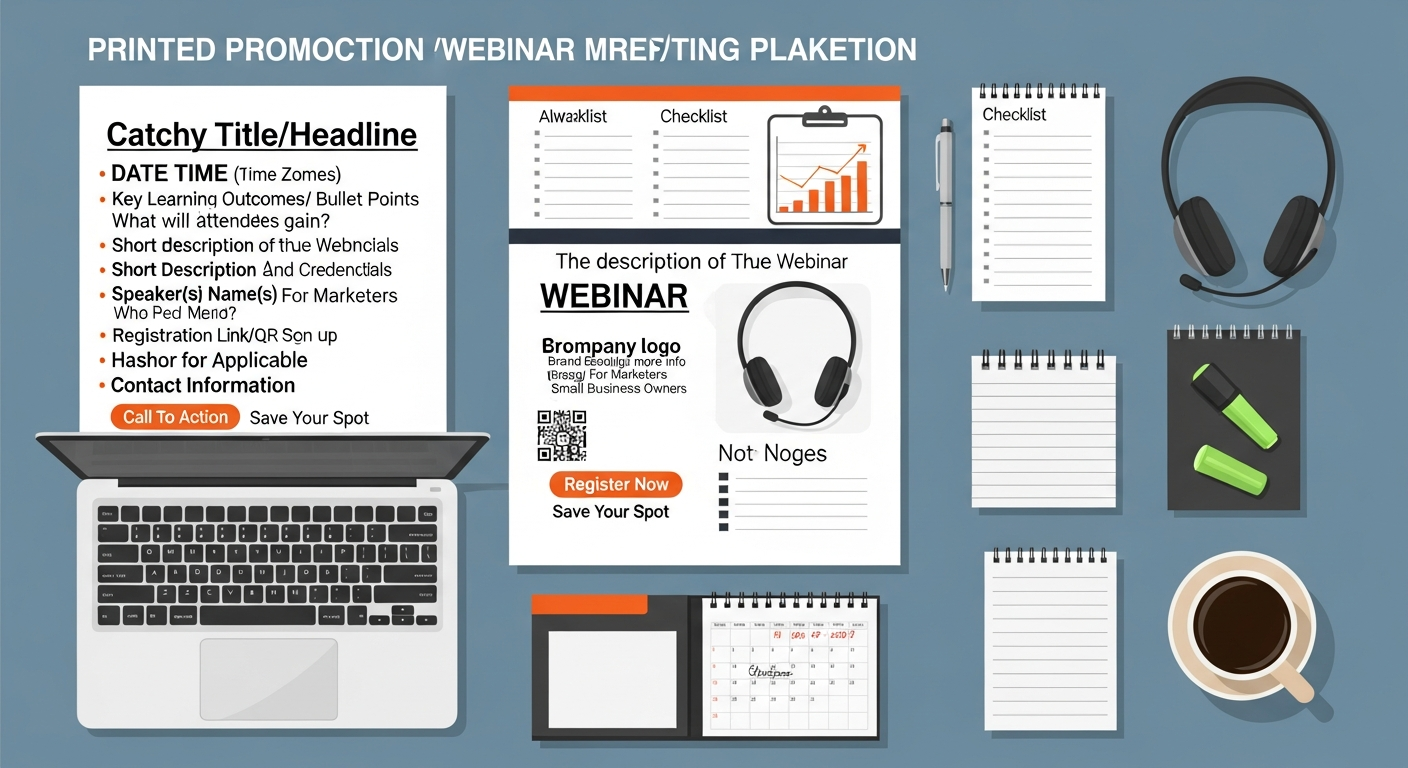
Once your foundational strategy is solid, your next critical step is to articulate the undeniable value of attending your webinar. This isn’t just about your presentation content; it’s about how you package and communicate that value through your title, description, and promotional materials. In a crowded digital space, your webinar needs to instantly convey why it’s worth an attendee’s precious time.
The “Hook, Value, Action” Content Formula
Every piece of promotional content, from your webinar title to your social media posts, should adhere to this formula:
- Hook: Grab attention immediately by highlighting a pressing problem or an exciting opportunity.
- Value: Clearly explain what attendees will learn or gain, focusing on benefits, not just features.
- Action: Provide a clear, compelling call to action (CTA) to register.
Crafting Your Value Proposition:
- Compelling Title: Your title is your first, and often only, chance to make an impression. It should be clear, benefit-driven, and include keywords relevant to your topic.
- Template: “[Number] Ways to [Achieve Desired Outcome] in [Timeframe/Specific Context]” or “Mastering [Skill/Strategy]: A [Your Company/Expert] Guide to [Key Benefit]”
- Example: “7 Proven Strategies to Double Your B2B Lead Generation by Q4 2026” or “Mastering AI-Driven Content: A Kacerr Guide to Future-Proofing Your Marketing”
- Engaging Description: Expand on your title, detailing the specific pain points you’ll address and the solutions you’ll provide. Use bullet points to highlight key takeaways and learning objectives. Emphasize the unique insights your speaker brings.
- Speaker Credibility: Briefly introduce your speaker(s), highlighting their expertise, relevant experience, and why they are uniquely qualified to deliver this content. A strong speaker bio builds trust and excitement.
- Clear Call to Action (CTA): Make it explicitly clear what you want people to do: “Register Now,” “Save Your Seat,” “Claim Your Spot.” Use prominent buttons and repeat the CTA in various places.
- Visual Appeal: Use high-quality, professional imagery or a short promotional video. Visuals significantly increase engagement and shareability. Tools like Canva or Adobe Express can help create compelling graphics.
Practical Insight: A webinar landing page with a clear value proposition, compelling headline, and concise description can see registration rates upwards of 30-40%. Test different headlines and descriptions to see what resonates most with your audience.
The Pre-Registration Blitz: Multi-Channel Promotion Strategies
With a solid plan and compelling content, it’s time to execute a robust, multi-channel promotional campaign. Maximizing attendance in 2026 demands a diverse approach, reaching your audience where they already are. Start promoting at least 3-4 weeks in advance, with a concentrated push in the final week.
The 6-Week Promotional Playbook:
- Email Marketing (Weeks 6-1): This remains your most powerful tool.
- Week 6: Announcement Email: Soft launch to your segmented lists.
- Week 4: Detailed Invitation: Highlight key benefits, speaker, agenda.
- Week 2: Urgency & Benefit Reminder: Emphasize limited-time offer or crucial insights.
- Week 1: Last Chance/Final Reminder: Create FOMO (Fear Of Missing Out).
- Tools: HubSpot, Mailchimp, ActiveCampaign, Constant Contact.
- Tips: Use compelling subject lines (e.g., “Exclusive Invitation,” “Don’t Miss Out,” “Free Masterclass”). Personalize emails. Include direct registration links and “Add to Calendar” options.
- Statistic: Email marketing yields an average ROI of $42 for every $1 spent, making it crucial for webinar promotion.
- Social Media Campaigns (Continuous):
- Organic Posts: Share engaging visuals, speaker quotes, questions related to the topic on LinkedIn, X (formerly Twitter), Facebook, and Instagram. Use relevant hashtags. Encourage shares.
- Paid Social Ads: Target specific demographics, job titles, and interests on LinkedIn (highly effective for B2B), Facebook, and Instagram. A/B test ad creatives and copy.
- Speaker & Partner Promotion: Encourage your speakers and any co-hosting partners to promote the webinar to their networks. Provide them with ready-to-use social media kits.
- Tools: Buffer, Hootsuite, Sprout Social for scheduling; LinkedIn Ads, Facebook Ads Manager.
- Website & Blog Integration (Continuous):
- Prominent Banners/CTAs: Place highly visible banners and CTAs on your website’s homepage, relevant blog posts, and product pages.
- Dedicated Blog Post: Write a blog post expanding on the webinar’s topic, positioning the webinar as the ultimate solution and linking directly to the registration page.
- Content Syndication & Partnerships (Weeks 5-2):
- Guest Posts/Mentions: Explore opportunities to mention your webinar in guest posts on industry blogs or newsletters.
- Industry Publications/Calendars: Submit your webinar details to relevant industry event calendars.
- Strategic Partnerships: Collaborate with non-competing businesses whose audience aligns with yours. They can promote your webinar to their email lists and social channels, and vice-versa.
- Public Relations (Optional, Weeks 6-3): If your webinar features high-profile speakers or groundbreaking content, consider pitching it to industry journalists or publications.
- Retargeting Campaigns (Weeks 3-1): Target individuals who have visited your webinar landing page but haven’t registered. Remind them of the value proposition.
Practical Insight: A multi-touch promotional strategy can increase registration rates by up to 20-30% compared to a single-channel approach. LinkedIn, in particular, drives a significant portion of B2B webinar registrations.
Optimizing the Registration Experience and Nurturing Leads
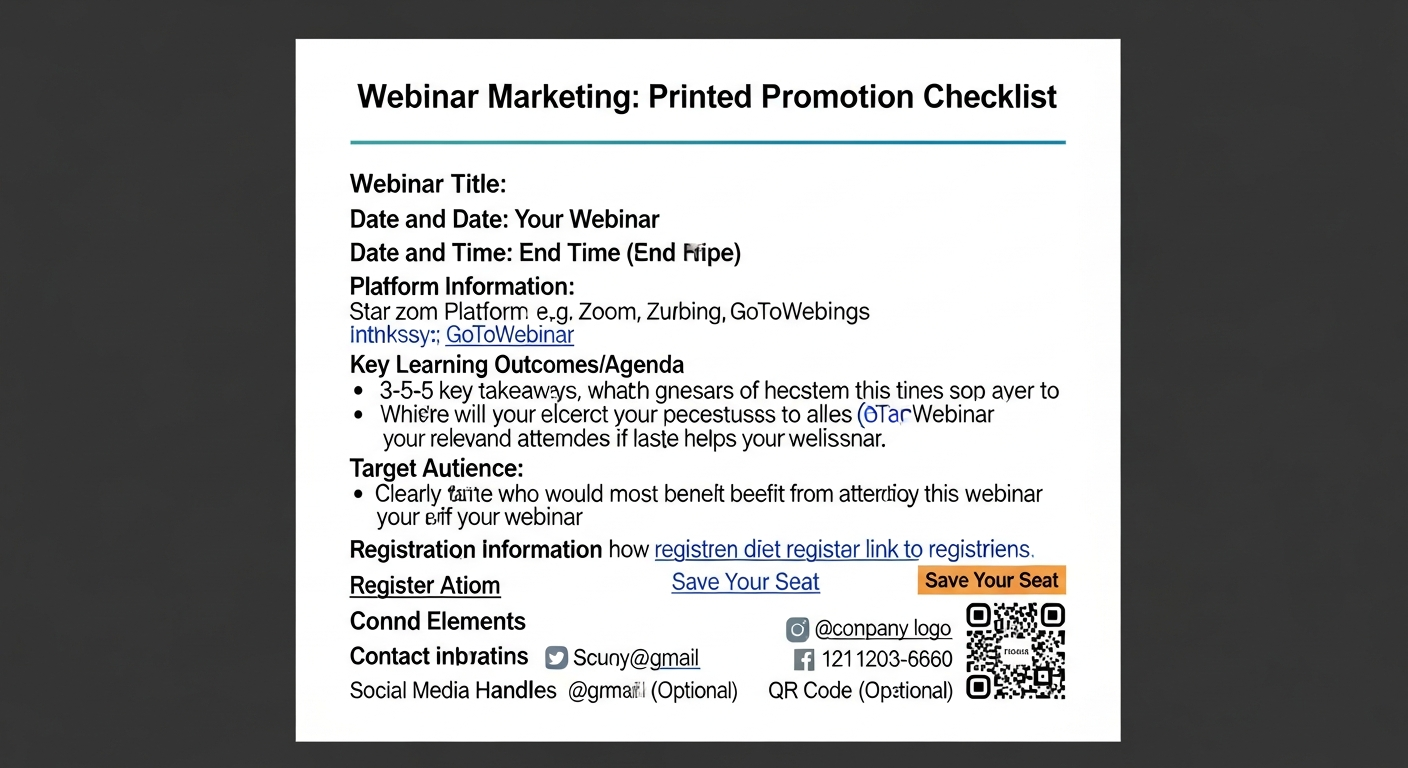
Even with a stellar promotional campaign, a clunky registration process can derail your efforts. The goal is to make registration as frictionless as possible, while simultaneously capturing essential lead data. Post-registration, your work isn’t done; nurturing these registrants is crucial for maximizing show-up rates.
The High-Converting Landing Page & Registration Funnel Checklist:
- Dedicated Landing Page:
- Clear & Concise: All critical information (title, date, time, speaker, key takeaways, CTA) above the fold.
- Mobile-Optimized: Over 50% of web traffic comes from mobile devices. Ensure a seamless experience.
- Minimal Distractions: Remove navigation menus or excessive links that could divert visitors.
- Social Proof: Include testimonials from past attendees or logos of companies that trust your brand (if applicable).
- Tools: Unbounce, Leadpages, Instapage, HubSpot Landing Pages.
- Streamlined Registration Form:
- Keep it Short: Ask only for essential information (Name, Email, Company, Job Title). Every additional field decreases conversion rates.
- Auto-fill: If possible, leverage browser auto-fill or CRM integrations to pre-populate fields for returning visitors.
- GDPR/CCPA Compliance: Include clear privacy policy links and opt-in checkboxes for marketing communications.
- Practical Tip: A/B test form length. Sometimes, asking one or two more strategic questions (e.g., “What’s your biggest challenge with X?”) can qualify leads better without significantly impacting conversion if framed correctly.
- Instant Confirmation Email:
- Send immediately after registration.
- Include all webinar details: date, time, unique access link, speaker info.
- Crucially, provide an “Add to Calendar” link (iCal, Google Calendar, Outlook). This is a game-changer for show-up rates.
- Set expectations for follow-up emails.
- CRM Integration:
- Integrate your webinar platform with your CRM (e.g., Salesforce, HubSpot, Zoho CRM). This automatically logs registrants, allowing your sales and marketing teams to track and nurture leads effectively.
- This integration enables personalized follow-up and segmentation for future campaigns.
Practical Insight: According to research, conversion rates drop by nearly 50% when you increase the number of form fields from 3 to 6. Prioritize data capture versus ease of registration.
Post-Registration Engagement: Keeping Attendees Hooked Until Go-Time
Registering for a webinar is often an impulse. Converting that registration into attendance requires a strategic post-registration nurturing sequence. This phase is about building anticipation, reinforcing value, and ensuring registrants remember to show up.
The Pre-Webinar Nurture Sequence (Automated Email Series):
- Confirmation Email (Immediately after registration):
- Reiterate date, time, access link.
- Emphasize “Add to Calendar” button.
- Briefly restate key benefits.
- Value-Add Email (3-5 days before):
- Send a relevant piece of content (blog post, infographic, short video) that preps them for the webinar or offers a sneak peek.
- Re-emphasize the webinar’s value and what specific problem it will solve.
- Remind them of the speaker’s expertise.
- Include the access link and “Add to Calendar” again.
- “What to Expect” Email (1-2 days before):
- Provide a brief agenda or a list of questions that will be answered.
- Encourage them to prepare their own questions for the Q&A.
- Reiterate the unique access link and “Add to Calendar.”
- Final Reminder Email (1 hour before):
- A concise, urgent reminder.
- “Your session starts in 60 minutes!”
- Large, clear access link.
Enhancing Engagement and Reducing No-Shows:
- Calendar Invites are Non-Negotiable: Ensure your confirmation email includes options for Google Calendar, Outlook, and iCal. This places the event directly in their schedule.
- Pre-Webinar Polls/Surveys: Ask registrants what they hope to learn or what challenges they face. This not only gathers valuable data but also makes them feel heard and invested. Address these points during the live session.
- Community Building: If appropriate, create a dedicated (private) LinkedIn group or Slack channel for registrants to introduce themselves and discuss the topic before the event.
- Brief, Engaging Video Teasers: A short video from the speaker teasing key insights can significantly boost excitement.
- Personalized Communication: Leverage your CRM to segment registrants and send more personalized reminders or content based on their job role or stated interests.
Practical Insight: Webinars that send 2-3 reminder emails typically see higher show-up rates (around 35-45%) compared to those sending just one (20-25%). The “add to calendar” feature alone can boost attendance by 10-15%.
Leveraging Analytics and Iteration for Continuous Improvement
Your work doesn’t end when the webinar does. The true power of modern webinar marketing lies in its iterative nature. By meticulously analyzing performance data, gathering feedback, and A/B testing, you can continuously refine your strategy and significantly improve attendance rates for future events. This data-driven approach is critical for staying competitive in 2026.
Key Performance Indicators (KPIs) to Track:
- Registration Rate: (Number of Registrants / Number of Page Views) * 100. This indicates the effectiveness of your landing page and promotional efforts.
- Attendance Rate (Show-up Rate): (Number of Attendees / Number of Registrants) * 100. This is a crucial metric, reflecting the effectiveness of your pre-webinar nurturing.
- Lead Conversion Rate: (Number of Qualified Leads / Number of Attendees) * 100. Measures the quality of your audience and content.
- Engagement Rate: Track poll participation, Q&A activity, and chat engagement. High engagement suggests a captivated audience.
- Post-Webinar Conversion Rate: (Number of attendees who took a desired action, e.g., downloaded an asset, requested a demo / Number of Attendees) * 100.
- Cost Per Registrant (CPR) & Cost Per Attendee (CPA): Helps evaluate the efficiency of your promotional spend.
The A/B Testing Blueprint for Webinars:
Don’t guess; test! Implement A/B testing across various elements of your webinar marketing strategy:
- Promotional Channels: Which channels (email, LinkedIn, Google Ads) deliver the most cost-effective registrants?
- Email Subject Lines: Test different subject lines for your invitation and reminder emails.
- Landing Page Headlines & Copy: Experiment with different value propositions and CTAs.
- Registration Form Fields: Test shorter versus slightly longer forms to find the optimal balance between conversion and lead quality.
- Webinar Title Variations: Run small ad campaigns with different titles to see which generates more interest.
- Reminder Email Timing & Content: Does a reminder 1 hour before work better than 15 minutes? What content in the reminder boosts show-ups?
Gathering Feedback & Iterating:
- Post-Webinar Surveys: Send a short survey immediately after the event to attendees and even no-shows. Ask about content relevance, speaker quality, technical experience, and suggestions for future topics.
- Analyze Q&A: The questions asked during your webinar are a goldmine of insights into your audience’s biggest challenges and interests.
- Review Analytics: Dive deep into your webinar platform’s analytics. When did attendees drop off? Which polls had the most interaction?
- Host a Post-Mortem Meeting: Gather your team (marketing, sales, speakers) to discuss what went well, what could be improved, and actionable steps for your next webinar.
Practical Insight: Tools like Google Analytics for your landing page, your email marketing platform’s reports, and your webinar platform’s built-in analytics dashboard are essential for this phase. Don’t just collect data; act on it.
FAQ: Your Top Webinar Attendance Questions Answered
Q1: What’s a good webinar attendance rate to aim for?
A1: While industry averages vary, a good attendance rate typically falls between 30% and 40% of your total registrants. However, highly targeted, niche webinars with strong pre-webinar engagement can achieve 50% or higher. Focus on quality registrants over sheer quantity, as a smaller, highly engaged audience is more valuable than a large, disengaged one.
Q2: How far in advance should I start promoting my webinar?
A2: We recommend starting your primary promotional efforts at least 3-4 weeks before the webinar date. This allows sufficient time to reach your audience across multiple channels, build anticipation, and send reminder sequences. For major events or those with high-profile speakers, you might even start 6-8 weeks out.
Q3: What’s the single most effective tactic for boosting show-up rates?
A3: Providing and emphasizing an “Add to Calendar” option (for Google Calendar, Outlook, iCal) in your confirmation and reminder emails is arguably the single most effective tactic. It places the event directly into the registrant’s schedule, significantly reducing the chances of them forgetting. Coupled with a strong reminder sequence, it’s a powerful combination.
Q4: Should I offer my webinar on-demand after the live session?
A4: Absolutely. Offering an on-demand recording is a best practice. It caters to those who couldn’t attend live due to scheduling conflicts or time zone differences, extends the content’s lifecycle, and serves as a valuable lead magnet for future registrations. Ensure you promote the on-demand version just as effectively as the live event.
Q5: How can I encourage registrants to share the webinar with their network?
A5: Make it easy and incentivize them! Include social share buttons directly on your confirmation page and in your confirmation emails. Provide pre-written social media copy they can use. Consider running a referral contest (e.g., “Refer 3 colleagues, get a special resource guide”) or simply asking them politely to share the valuable content with anyone who might benefit.
Conclusion
In the dynamic digital landscape of 2026, webinars remain a cornerstone of effective B2B marketing, but their success hinges on a sophisticated, data-driven approach to attendee acquisition. This guide has provided you with the strategic frameworks, tactical blueprints, and actionable advice to not just attract registrants, but to convert them into engaged attendees and, ultimately, valuable leads. From meticulous planning and compelling content creation to multi-channel promotion and post-registration nurturing, every step is critical. Embrace an iterative mindset, leveraging analytics to continuously refine your approach. By committing to these principles, you will transform your webinars from mere presentations into powerful engines for growth, driving meaningful engagement and measurable results for your business.
“`json
{
“@context”: “https://schema.org”,
“@graph”: [
{
“@type”: “Article”,
“headline”: “The Definitive Guide to Webinar Marketing: How to Maximize Attendance in 2026”,
“image”: “https://kacerr.com/blog/images/webinar-marketing-guide.jpg”,
“author”: {
“@type”: “Organization”,
“name”: “Kacerr”
},
“publisher”: {
“@type”: “Organization”,
“name”: “Kacerr”,
“logo”: {
“@type”: “ImageObject”,
“url”: “https://kacerr.com/logo.png”
}
},
“datePublished”: “2024-07-30T08:00:00Z”,
“dateModified”: “2024-07-30T08:00:00Z”,
“mainEntityOfPage”: {
“@type”: “WebPage”,
“@id”: “https://kacerr.com/blog/webinar-marketing-guide-attendees-2026”
},
“description”: “Discover the definitive guide to webinar marketing for 2026, packed with strategic frameworks, practical tactics, and data-backed insights to maximize your webinar attendance and generate high-quality leads. Learn how to plan, promote, and optimize your webinars for unprecedented success.”
},
{
“@type”: “FAQPage”,
“mainEntity”: [
{
“@type”: “Question”,
“name”: “What’s a good webinar attendance rate to aim for?”,
“acceptedAnswer”: {
“@type”: “Answer”,
“text”: “A good attendance rate typically falls between 30% and 40% of your total registrants. However, highly targeted, niche webinars with strong pre-webinar engagement can achieve 50% or higher. Focus on quality registrants over sheer quantity, as a smaller, highly engaged audience is more valuable than a large, disengaged one.”
}
},
{
“@type”: “Question”,
“name”: “How far in advance should I start promoting my webinar?”,
“acceptedAnswer”: {
“@type”: “Answer”,
“text”: “We recommend starting your primary promotional efforts at least 3-4 weeks before the webinar date. This allows sufficient time to reach your audience across multiple channels, build anticipation, and send reminder sequences. For major events or those with high-profile speakers, you might even start 6-8 weeks out.”
}
},
{
“@type”: “Question”,
“name”: “What’s the single most effective tactic for boosting show-up rates?”,
“acceptedAnswer”: {
“@type”: “Answer”,
“text”: “Providing and emphasizing an \”Add to Calendar\” option (for Google Calendar, Outlook, iCal) in your confirmation and reminder emails is arguably the single most effective tactic. It places the event directly into the registrant’s schedule, significantly reducing the chances of them forgetting. Coupled with a strong reminder sequence, it’s a powerful combination.”
}
},
{
“@type”: “Question”,
“name”: “Should I offer my webinar on-demand after the live session?”,
“acceptedAnswer”: {
“@type”: “Answer”,
“text”: “Absolutely. Offering an on-demand recording is a best practice. It caters to those who couldn’t attend live due to scheduling conflicts or time zone differences, extends the content’s lifecycle