What Exactly is B2B eCommerce?
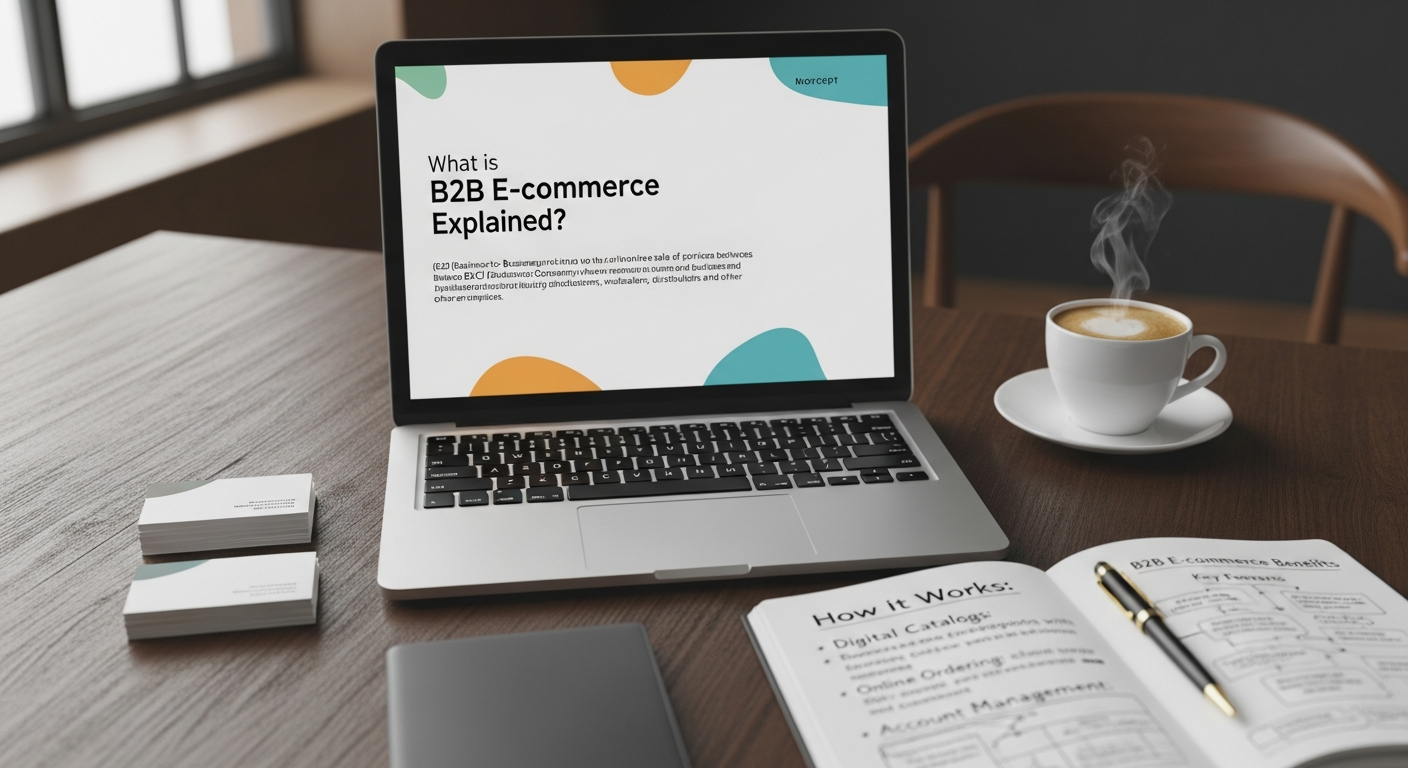
At its core, B2B eCommerce refers to the online sale of products or services between businesses. Unlike B2C eCommerce, which caters to individual consumers purchasing goods for personal use, B2B eCommerce facilitates transactions where one business (the seller) provides goods or services to another business (the buyer). This distinction introduces a unique set of complexities, requirements, and opportunities that set it apart from its B2C cousin.
Think of a manufacturer selling industrial parts to an assembly plant, a wholesaler distributing inventory to retail stores, or a software company licensing its solutions to enterprises. In each scenario, the transaction is not just about a simple purchase; it often involves intricate pricing structures, bulk orders, negotiated contracts, specific credit terms, multi-user accounts, and complex approval workflows. B2B eCommerce platforms are specifically designed to manage these nuances, providing a digital environment that mirrors and often improves upon traditional B2B sales processes.
Traditionally, B2B sales relied heavily on direct sales teams, phone calls, faxes, email exchanges, and in-person meetings. Orders were often placed manually, catalog updates were cumbersome, and pricing varied significantly based on customer relationships and volume. While these methods still hold relevance in certain high-touch scenarios, the digital age demands greater efficiency, transparency, and accessibility. B2B eCommerce platforms automate these processes, offering a self-service portal that empowers business buyers to research products, check inventory, place orders, manage their accounts, and track shipments – all at their convenience, 24/7.
The essence of B2B eCommerce lies in its ability to digitalize the entire sales cycle, from product discovery and quotation to order placement, invoicing, and post-sale support. It transforms the buyer-seller relationship by offering a sophisticated, personalized, and efficient online experience that meets the evolving expectations of today’s business purchasers. Understanding this fundamental difference is the first step towards successfully implementing and leveraging a B2B eCommerce strategy.
Why B2B Businesses Are Embracing eCommerce Now
The momentum behind B2B eCommerce isn’t a fleeting trend; it’s a fundamental shift driven by evolving buyer behaviors, technological advancements, and the relentless pursuit of operational excellence. Businesses across industries are recognizing the undeniable advantages of moving their sales operations online. Here are the primary reasons why B2B businesses are embracing eCommerce with such fervor:
- Meeting Evolving Buyer Expectations: The lines between B2B and B2C buying experiences have blurred. Today’s B2B buyers are often the same individuals who shop on Amazon or other consumer-facing websites in their personal lives. They expect the same level of convenience, intuitiveness, personalization, and self-service in their professional purchasing decisions. A modern B2B eCommerce platform delivers this “B2C-like” experience, offering easy navigation, detailed product information, real-time inventory, and streamlined ordering processes.
- Increased Efficiency and Cost Reduction: Automating sales processes significantly reduces the manual effort involved in order taking, processing, and fulfillment. This leads to fewer errors, faster order cycles, and reduced administrative overhead. Sales teams can shift their focus from transactional tasks to high-value activities like strategic account management and relationship building. For instance, a well-implemented B2B eCommerce solution can drastically cut down on the need for extensive phone support for routine orders, thereby lowering operational costs.
- Expanded Reach and Market Access: A digital storefront removes geographical barriers, allowing businesses to reach new markets and customers that were previously inaccessible through traditional sales channels. It enables companies to operate globally without the immediate need for a physical presence in every region, opening doors to unprecedented growth opportunities.
- Enhanced Customer Experience and Loyalty: By providing a convenient, personalized, and always-on platform, businesses can significantly improve customer satisfaction. Self-service options empower buyers, giving them control over their orders and account management. Features like personalized product recommendations, easy reordering, and transparent order tracking build trust and foster long-term loyalty.
- Data-Driven Insights: B2B eCommerce platforms generate a wealth of data on buyer behavior, product popularity, sales trends, and customer preferences. This data is invaluable for making informed business decisions, optimizing inventory, refining marketing strategies, and identifying new product development opportunities. Analytics can reveal patterns that traditional sales methods simply couldn’t capture.
- Scalability and Agility: As businesses grow, their traditional sales operations can become bottlenecks. An eCommerce platform is inherently scalable, capable of handling increased order volumes and a growing customer base without a proportional increase in manual effort. It also offers the agility to quickly introduce new products, adjust pricing, and adapt to market changes.
- Competitive Advantage: In a market where digital presence is increasingly expected, businesses without a robust B2B eCommerce solution risk falling behind competitors who have already made the leap. Offering a superior online buying experience can be a significant differentiator, attracting new clients and retaining existing ones.
- Support for Hybrid Sales Models: Rather than replacing traditional sales teams entirely, B2B eCommerce often complements them. It frees up sales representatives from mundane tasks, allowing them to focus on complex deals, strategic accounts, and nurturing high-value relationships. The platform can serve as a powerful tool for reps to showcase products, generate quotes, and manage customer interactions more effectively.
The shift to B2B eCommerce is not merely an option but a strategic necessity for businesses aiming for efficiency, growth, and a superior customer experience in 2026 and beyond.
Key Features and Functionalities of a B2B eCommerce Platform
- Account-Specific Pricing and Catalogs:
- Tiered Pricing & Volume Discounts: The ability to offer different prices based on customer groups, order volume, or negotiated contracts is fundamental.
- Custom Catalogs: Displaying only relevant products and pricing to specific customers or companies, ensuring a personalized and streamlined shopping experience.
- Negotiated Prices & Quotes: Support for requesting quotes, managing negotiations, and converting accepted quotes into orders directly on the platform.
- Robust User and Company Account Management:
- Multi-User Accounts: Allowing multiple users from the same company to access and manage orders under a single master account, with varying roles and permissions (e.g., buyer, approver, administrator).
- Purchase Order (PO) Management: Facilitating orders placed using PO numbers, a common practice in B2B transactions, and integrating these with internal accounting systems.
- Credit Terms & Payment Options: Support for various payment methods beyond credit cards, including net terms (Net 30, Net 60), invoicing, and ACH payments.
- Approval Workflows: Implementing customizable order approval processes within a buyer’s organization, ensuring purchases comply with internal policies before submission.
- Advanced Product Information Management (PIM):
- Rich Product Content: Capability to handle extensive product data, including detailed specifications, technical drawings, multiple images, videos, and compliance documents.
- Complex Product Configurations: Support for configurable products (e.g., build-to-order, customizable options) where buyers can select specific components or features.
- Bundle and Kit Creation: Ability to offer product bundles or kits, simplifying purchasing for related items.
- Seamless Integration Capabilities:
- ERP Integration: Crucial for synchronizing inventory levels, order data, customer information, and financial data with enterprise resource planning (ERP) systems. This is vital for accurate stock levels and efficient fulfillment.
- CRM Integration: Connecting with customer relationship management (CRM) systems to provide a holistic view of customer interactions, sales history, and preferences for both sales teams and customer service.
- Inventory Management System (IMS): Real-time synchronization of stock levels to prevent overselling and provide accurate availability information to buyers.
- Shipping & Logistics Providers: Integration with carriers for real-time shipping rates, tracking, and streamlined fulfillment. This ties directly into effective What Is Supply Chain Management Small Business strategies, ensuring smooth movement of goods.
- Payment Gateways: Secure integration with various payment processors.
- Self-Service Functionality:
- Order History & Reordering: Easy access to past orders, invoices, and the ability to quickly reorder previous purchases.
- Account Management: Buyers can update their profile, shipping addresses, payment methods, and manage sub-users independently.
- Returns Management: A clear and efficient process for initiating returns and managing RMAs (Return Merchandise Authorizations).
- Search and Navigation:
- Powerful Search: Advanced search capabilities with filters, facets, and predictive text to help buyers quickly find specific products, especially within large catalogs.
- Intuitive Navigation: Clear category structures and user-friendly interfaces to enhance product discovery.
- Marketing and Sales Tools:
- SEO Capabilities: Built-in features to optimize product pages and content for search engines, crucial for driving organic traffic.
- Personalization Engines: Recommendations based on past purchases, browsing history, and account type.
- Promotional Tools: Ability to run promotions, discounts, and loyalty programs tailored to B2B customers.
- Content Management System (CMS): Flexibility to create and manage rich content, blogs, and resources that support inbound marketing efforts.
- Mobile Responsiveness:
- Ensuring the platform is fully functional and easy to use on any device, from desktops to tablets and smartphones, reflecting how modern B2B buyers access information.
Choosing a platform with these robust features ensures that your B2B eCommerce solution can not only meet current business demands but also scale and adapt to future growth and evolving market needs.
The Step-by-Step Guide to Getting Started with B2B eCommerce
Launching a B2B eCommerce platform is a strategic undertaking that requires careful planning, execution, and ongoing optimization. It’s more than just setting up an online store; it’s about transforming your sales operations. Here’s a step-by-step guide to help you get started:
1. Define Your Strategy and Goals
Before diving into platform selection, articulate your vision. What do you aim to achieve with B2B eCommerce?
- Identify Business Objectives: Are you looking to increase sales, reduce operational costs, enter new markets, improve customer satisfaction, or all of the above? Quantify these goals (e.g., “increase online sales by 20% in the first year,” “reduce order processing time by 30%”).
- Understand Your Target Audience: Who are your buyers? What are their pain points, purchasing habits, and technical proficiencies? Persona development can be highly beneficial here.
- Assess Your Current Processes: Document your existing sales, ordering, and fulfillment workflows. Identify bottlenecks and areas where automation can bring the most value.
- Budget and Resources: Determine your financial investment capacity and the internal resources (IT, marketing, sales) you can dedicate to the project.
2. Select the Right B2B eCommerce Platform
This is a critical decision. The platform you choose will dictate your capabilities and scalability.
- Consider Platform Types:
- SaaS (Software-as-a-Service): Cloud-based, managed by the provider, lower upfront costs, faster deployment, but less customization. Examples include Shopify Plus, BigCommerce, Adobe Commerce (Magento) Cloud.
- Open Source: High flexibility and customization, but requires significant technical expertise and infrastructure management. Examples include Magento Open Source.
- Headless Commerce: Decouples the frontend (what customers see) from the backend (logic and data), offering ultimate flexibility for custom user experiences across various touchpoints.
- Feature Checklist: Refer to the “Key Features and Functionalities” section above. Ensure the platform can handle your specific pricing models, account types, integration needs, and scalability requirements.
- Scalability: Choose a platform that can grow with your business, accommodating increased product catalogs, customer numbers, and transaction volumes without performance degradation.
- Vendor Support and Ecosystem: Evaluate the provider’s support, documentation, and the availability of third-party apps and development partners.
3. Data Migration and Content Development
Populating your new platform with accurate and comprehensive data is paramount.
- Product Data: Gather and cleanse all product information, including SKUs, descriptions, specifications, pricing, inventory levels, and high-quality images. This is an opportune time to enrich your product content.
- Customer Data: Migrate existing customer accounts, including contact information, purchase history, and any special pricing agreements.
- Order History: Decide whether to import historical order data. This can be valuable for customer service and reordering.
- Website Content: Develop compelling website content, including “About Us,” FAQs, terms and conditions, and any educational resources relevant to your buyers.
4. Integration with Existing Systems
Seamless integration is the backbone of an efficient B2B eCommerce operation.
- ERP Integration: Connect your eCommerce platform with your ERP system for real-time synchronization of inventory, orders, customer data, and financial transactions. This is crucial for accurate stock visibility and efficient order fulfillment.
- CRM Integration: Link with your CRM to provide a unified view of customer interactions for sales and customer service teams.
- Inventory & Warehouse Management: Ensure your platform communicates effectively with your inventory and warehouse systems for accurate stock counts and streamlined picking and packing. This is directly related to effective What Is Supply Chain Management Small Business, especially for small to medium-sized businesses looking to optimize their logistics.
- Payment Gateways & Shipping Carriers: Integrate secure payment processing solutions and connect with your preferred shipping providers for automated shipping rate calculations and label generation.
5. Marketing and Launch Strategy
Once your platform is ready, you need to attract and onboard your customers.
- Pre-Launch Communication: Inform existing customers about the upcoming platform, highlighting its benefits and how it will improve their purchasing experience.
- Pilot Program: Consider a soft launch with a select group of trusted customers to gather feedback and iron out any issues before a full public launch.
- Digital Marketing: Implement a robust digital marketing strategy. This involves both Inbound Marketing Vs Outbound Marketing tactics.
- Inbound Marketing: Focus on SEO to ensure your products and site pages rank high on search engines. Create valuable content (blog posts, guides, case studies) that addresses buyer pain points and attracts organic traffic. Utilize social media and email marketing to nurture leads.
- Outbound Marketing: While digital, consider targeted advertising campaigns on professional networks like LinkedIn, direct email campaigns to existing leads, or even traditional outreach where appropriate to announce your new platform.
- Customer Onboarding: Provide clear instructions, tutorials, and support to help customers transition to the new platform. Offer incentives for early adoption.
6. Post-Launch Optimization and Support
The launch is just the beginning. Continuous improvement is key.
- Monitor Analytics: Track key performance indicators (KPIs) such as conversion rates, average order value, customer retention, and website traffic. Use this data to identify areas for improvement.
- Gather Feedback: Actively solicit feedback from customers and internal teams. Implement changes based on their suggestions.
- Ongoing SEO: Continuously optimize your site for search engines, refreshing content and adapting to algorithm changes to maintain visibility.
- Customer Support: Ensure your customer service team is well-trained on the new platform and can assist buyers effectively. Consider implementing What Is Business Process Outsourcing for customer support if internal resources are stretched, allowing specialized teams to handle inquiries efficiently.
- Security Updates: Regularly update your platform and integrations to maintain security and performance.
By following these steps, businesses can effectively launch and grow their B2B eCommerce presence, transforming their operations for the digital age.
Navigating Common Challenges and Ensuring Success
While the benefits of B2B eCommerce are substantial, the journey to implementation and sustained success is not without its hurdles. Businesses must anticipate and strategically address common challenges to ensure a smooth transition and maximize their return on investment. Here’s how to navigate these obstacles and lay the groundwork for long-term success:
- Internal Resistance to Change:
- Challenge: Employees, particularly sales teams, may view the new platform as a threat to their roles or a complex new system to learn.
- Solution: Foster a culture of change management. Clearly communicate the benefits of the platform for employees (e.g., freeing up sales reps for strategic tasks). Involve key stakeholders from sales, marketing, and operations in the planning process. Provide comprehensive training and highlight how the platform complements, rather than replaces, human interaction.
- Data Migration and Accuracy:
- Challenge: Transferring vast amounts of product, customer, and pricing data from legacy systems can be complex, time-consuming, and prone to errors. Inaccurate data can lead to customer frustration and operational inefficiencies.
- Solution: Prioritize data cleansing and standardization before migration. Use automated tools where possible, but also allocate dedicated resources for manual review. Implement a robust Product Information Management (PIM) system to centralize and manage data effectively. This foundational step is critical for the credibility of your online store.
- Integration Complexities:
- Challenge: Connecting the eCommerce platform with existing ERP, CRM, inventory, and accounting systems can be technically challenging, requiring custom development and ongoing maintenance.
- Solution: Choose a platform known for its integration capabilities and API flexibility. Work with experienced integration specialists, either internal or external. Prioritize critical integrations first and phase in others. Regular testing of integrated systems is crucial to ensure data flow is smooth and accurate.
- Security Concerns:
- Challenge: B2B transactions often involve sensitive financial data and proprietary information, making security a paramount concern.
- Solution: Select a platform with robust security features, including SSL encryption, PCI compliance, and regular security audits. Implement strong access controls and multi-factor authentication. Educate your team on security best practices. Consider leveraging cloud-based solutions from reputable providers who invest heavily in security infrastructure.
- Customer Onboarding and Adoption:
- Challenge: Even with a superior platform, convincing existing B2B customers to switch from familiar ordering methods can be difficult.
- Solution: Launch with a clear communication plan outlining the benefits for customers (e.g., 24/7 ordering, easy reordering, transparency). Provide easy-to-follow tutorials, dedicated support, and possibly incentives for early adoption. A smooth, intuitive user experience is your best advocate. Offer a hybrid approach initially, allowing customers to use both old and new methods until they are comfortable.
- Optimizing Supply Chain Management:
- Challenge: For small businesses, effectively managing inventory, logistics, and fulfillment when transitioning to online sales can be overwhelming, especially with increased order volumes and varying customer demands.
- Solution: Invest in tools that integrate your eCommerce platform with inventory management and shipping solutions. For What Is Supply Chain Management Small Business, focus on establishing clear processes for order fulfillment, selecting reliable shipping partners, and using data to forecast demand accurately. Consider drop-shipping or third-party logistics (3PL) providers to offload some of the burden.
- Providing High-Quality Customer Support:
- Challenge: As self-service options increase, the nature of customer inquiries may shift to more complex issues, requiring a highly trained support team.
- Solution: Empower your support team with comprehensive knowledge of the new platform and access to customer data. Implement live chat, detailed FAQs, and a robust ticketing system. For specialized tasks or to scale support operations efficiently, consider What Is Business Process Outsourcing (BPO) for customer service. A BPO partner can provide trained agents, handle peak volumes, and offer multi-channel support, allowing your internal team to focus on strategic customer relationships.
- Driving Traffic and Conversions:
- Challenge: Simply launching a site doesn’t guarantee sales. You need to attract the right business buyers and convert them.
- Solution: Implement a comprehensive digital marketing strategy blending Inbound Marketing Vs Outbound Marketing. Focus on SEO to ensure your products and content are discoverable. Use content marketing (blogs, whitepapers, webinars) to educate and attract prospects. Leverage email marketing for nurturing leads and existing customers. Invest in targeted paid advertising on professional platforms. Continuously analyze site performance and user behavior to optimize conversion funnels.
By proactively addressing these challenges with strategic planning and resource allocation, businesses can navigate the complexities of B2B eCommerce and build a resilient, profitable online sales channel.
Future Trends and Staying Ahead in B2B eCommerce
The B2B eCommerce landscape is dynamic, constantly evolving with technological advancements and shifting buyer expectations. To maintain a competitive edge and ensure long-term success, businesses must not only adapt to current trends but also anticipate future developments. Here’s a look at some key future trends shaping B2B eCommerce and how to stay ahead in 2026 and beyond:
- Hyper-Personalization Driven by AI and Machine Learning:
- Trend: AI and ML will move beyond basic recommendations to provide truly hyper-personalized experiences. This includes dynamic pricing based on a buyer’s history, real-time inventory adjustments, tailored product catalogs, and proactive customer support.
- Staying Ahead: Invest in platforms with robust AI/ML capabilities or integrate third-party AI tools. Focus on collecting and analyzing rich customer data to feed these engines. The goal is to make every interaction feel bespoke and intuitive, anticipating buyer needs before they even articulate them.
- Headless Commerce and API-First Architectures:
- Trend: The decoupling of the frontend (customer-facing interface) from the backend (eCommerce logic and data) offers unparalleled flexibility. This allows businesses to deliver consistent experiences across various touchpoints – web, mobile apps, IoT devices, voice assistants – using a single backend.
- Staying Ahead: Consider a headless approach from the outset or plan for a transition if your current monolithic platform restricts innovation. This empowers you to rapidly deploy new features and adapt to emerging channels without rebuilding your entire system.
- The Rise of B2B Marketplaces:
- Trend: Similar to Amazon for B2C, specialized B2B marketplaces are gaining traction, offering a centralized hub for buyers to find multiple suppliers. These can be industry-specific or broader platforms.
- Staying Ahead: Evaluate the relevance of existing or emerging B2B marketplaces in your industry. Consider integrating your product catalog with these platforms to expand your reach and diversify your sales channels. This can be a significant avenue for customer acquisition.
- Voice Commerce and Conversational AI:
- Trend: As voice assistants become more sophisticated, B2B buyers will increasingly use voice commands for product search, reordering, and even customer service inquiries. Conversational AI chatbots will handle more complex interactions.
- Staying Ahead: Optimize your product data for voice search (focus on natural language queries). Explore integrating voice capabilities into your platform or developing voice-enabled applications. Implement advanced chatbots to handle routine inquiries, freeing up human agents for more complex issues.
- Advanced Visual Commerce (AR/VR and 3D):
- Trend: Augmented Reality (AR) and Virtual Reality (VR) will enable B2B buyers to visualize products in their own environments or inspect complex machinery in 3D, reducing the need for physical samples and improving confidence in purchases.
- Staying Ahead: Invest in creating 3D models of your products. Explore AR integrations that allow customers to “place” products virtually. This is particularly impactful for industries dealing with large equipment, complex components, or customizable items.
- Increased Focus on Sustainability and Ethical Sourcing:
- Trend: B2B buyers are increasingly prioritizing suppliers with strong environmental, social, and governance (ESG) practices. Transparency in supply chains will be crucial.
- Staying Ahead: Highlight your sustainability efforts and ethical sourcing practices on your eCommerce platform. Provide clear information about product origins, certifications, and environmental impact. Ensure your What Is Supply Chain Management Small Business practices reflect these values, as buyers will be scrutinizing this more heavily.
- Subscription and Servitization Models:
- Trend: B2B businesses are moving towards offering products as a service (XaaS) or through subscription models, shifting from one-time sales to recurring revenue.
- Staying Ahead: Design your eCommerce platform to support various billing models, subscription management, and recurring payments. Explore how your products or services can be packaged into subscription offerings to build more predictable revenue streams and stronger customer relationships.
- Embedded Finance and Seamless Payments:
- Trend: Financial services will become more integrated into the B2B purchasing journey, offering embedded credit lines, instant financing, and streamlined payment options directly within the platform.
- Staying Ahead: Partner with fintech providers to offer flexible payment terms and financing options directly at the point of purchase. Simplify invoicing and reconciliation processes to reduce friction for buyers.
Staying ahead in B2B eCommerce means embracing continuous innovation. Regularly review market trends, experiment with new technologies, and always prioritize the evolving needs of your business customers. By doing so, you’ll ensure your B2B eCommerce strategy remains robust and relevant in 2026 and beyond.
Frequently Asked Questions
Recommended Resources
For more on what is B2B, see Financial Planning Guide For Couples on Trading Costs.
For more on what is B2B, see Money Saving Challenges 2025 on Fin3go.