
Understanding Business Process Outsourcing (BPO)
Business Process Outsourcing (BPO) refers to the contractual delegation of specific business processes to a third-party service provider. These processes are typically non-core to the company’s primary mission but are essential for its day-to-day operations. The fundamental premise of BPO is to allow organizations to concentrate their internal resources on their core competencies—those activities that create unique value for customers and differentiate them in the marketplace—while external specialists handle the auxiliary functions with greater efficiency and expertise.
Historically, BPO began primarily as a cost-reduction strategy, with companies moving manufacturing or basic administrative tasks to regions with lower labor costs. However, its scope has expanded dramatically. Today, BPO encompasses a vast array of services, from customer support and human resources to finance, accounting, IT services, and even complex data analytics. It’s important to distinguish BPO from Information Technology Outsourcing (ITO), which specifically deals with IT-related processes like software development or infrastructure management, and Knowledge Process Outsourcing (KPO), which involves highly specialized, knowledge-intensive tasks requiring advanced analytical and technical skills, such as legal research or intellectual property research. While there can be overlaps, BPO generally refers to the broader delegation of repeatable business functions, often focused on optimizing routine processes rather than pure IT or deep knowledge creation.
The drivers for BPO have diversified beyond mere cost savings. Businesses now leverage BPO to gain access to specialized skills and advanced technologies that might be too expensive or complex to develop in-house. It offers unparalleled scalability, allowing companies to quickly ramp up or down operations in response to market demands without the overhead of hiring and training permanent staff. Furthermore, BPO providers often bring best practices and industry-specific insights, helping clients to improve their operational efficiency and service quality. This strategic evolution means BPO is no longer just about doing things cheaper, but about doing them better and more strategically.
In essence, BPO is about smart delegation. It’s about recognizing that while every business function is important, not every function needs to be performed internally. By entrusting non-core processes to dedicated experts, businesses can unlock significant value, foster innovation, and maintain agility in an increasingly competitive global landscape. This strategic choice allows a business to focus its energy and capital where it truly matters, enhancing its ability to adapt and thrive.
What is BPO in 2026?
As we look towards 2026, Business Process Outsourcing (BPO) is set to evolve significantly with the integration of Generative AI, Agentic AI, and a Digital Workforce. These technologies will transform BPO from basic automation to comprehensive end-to-end process redesigns. The role of AI will expand to include operational copilots and autonomous agents with human oversight, enhancing efficiency and innovation. Additionally, the composition of the digital workforce will explicitly include AI-enabled workers and automation bots, forming a core part of the BPO delivery model.
Managed Services will adopt an integrated operational model, combining finance, HR, procurement, and technology into a single platform. This cross-functional approach will be governed as a unified entity, enhancing service delivery and operational coherence. The pricing model will shift towards outcome-based and value-based delivery, moving beyond traditional FTE or SLA transactional pricing.
Global In-house Centers (GICs) will serve as strategic complements or alternatives within a multidimensional sourcing model, offering flexibility and strategic alignment. The focus on omnichannel customer service will necessitate unified CRM systems, intelligent routing, and seamless continuity across voice, chat, email, SMS, and social channels.
In terms of compliance, the EU AI Act will play a pivotal role, emphasizing transparency and key obligations for AI deployers by 2026. Information security governance will adhere to ISO/IEC 27001 standards, ensuring robust data protection and compliance with GDPR controller/processor obligations.
Key Types of Business Process Outsourcing
The landscape of Business Process Outsourcing is incredibly diverse, categorized primarily by the geographical location of the service provider and the functional area of the outsourced tasks. Understanding these distinctions is crucial for selecting the right BPO strategy for your organization.
Categorization by Location:
- Onshore BPO (Domestic Outsourcing): This occurs when a company outsources processes to a provider located within the same country. The primary advantages include ease of communication due to shared language and culture, minimal time zone differences, and often simpler regulatory compliance. While labor costs may not be as low as in offshore locations, onshore BPO can still offer cost savings through economies of scale and specialized expertise, alongside reduced logistical complexities. For example, a tech company in California might outsource its customer support to a call center in Texas.
- Nearshore BPO: Nearshore outsourcing involves delegating processes to a service provider in a neighboring country or one in a similar time zone. This approach often strikes a balance between cost savings and cultural/linguistic proximity. For instance, a U.S. company might outsource to Mexico or Canada, benefiting from lower labor costs than onshore options while maintaining relatively easy communication and oversight due as time zones overlap significantly. This can be particularly attractive for functions requiring frequent real-time collaboration.
- Offshore BPO: This is perhaps the most well-known form, where processes are outsourced to a provider in a distant country, often across different continents and significant time zones. Countries like India, the Philippines, and various Eastern European nations are popular offshore destinations due to their competitive labor costs, large talent pools, and often high English proficiency. The main driver for offshore BPO is typically substantial cost reduction. However, it requires careful management of communication challenges, cultural differences, and data privacy regulations across borders. A common example is an American company outsourcing its data entry or back-office accounting to a firm in India.
Categorization by Function:
- Back-Office BPO: This involves outsourcing internal business functions that are not client-facing but are critical for the company’s operation. These processes are often standardized, repetitive, and transaction-oriented.
- Examples include:
- Human Resources (HR): Payroll processing, benefits administration, recruitment process outsourcing (RPO), HR analytics.
- Finance and Accounting (F&A): Accounts payable/receivable, general ledger, tax preparation, financial reporting, auditing.
- IT Services: Help desk support, network management, data center operations (distinct from core IT development but often part of BPO service offerings).
- Data Entry and Management: Digitization of records, data processing, database management.
- Supply Chain Management: Procurement support, logistics coordination, inventory management for small businesses. For companies asking “What Is Supply Chain Management Small Business?”, outsourcing certain operational aspects of their supply chain can bring expert oversight and efficiency without significant internal investment.
- Examples include:
- Front-Office BPO: This category encompasses customer-facing services that directly interact with clients or prospects. The quality of these services directly impacts customer satisfaction and brand reputation.
- Examples include:
- Customer Service: Inbound and outbound call center services, email support, live chat support, technical support.
- Sales: Lead generation, telemarketing, appointment setting, sales support.
- Marketing Services: Digital marketing (SEO, SEM, social media management), content creation, market research. This can span both “Inbound Marketing Vs Outbound Marketing” strategies, where BPO providers can execute campaigns for lead generation (outbound) or content marketing (inbound) on behalf of the client.
- Technical Support: Providing assistance for product usage, troubleshooting, and software issues.
- Examples include:
The choice between these types depends on a company’s specific goals, budget, risk tolerance, and the nature of the processes being outsourced. A careful analysis of these factors will guide businesses toward the most effective BPO solution.
The Strategic Advantages of Implementing BPO
One of the most compelling benefits is significant cost reduction and efficiency gains. BPO providers often operate at economies of scale, possess specialized infrastructure, and can leverage lower labor costs in certain regions. This allows them to perform tasks more cheaply and efficiently than an in-house department might. By outsourcing, businesses can convert fixed operational costs into variable costs, reducing capital expenditure and improving cash flow. Furthermore, BPO providers are typically experts in the processes they handle, continuously refining workflows and adopting best practices. This inherent efficiency directly contributes to How To Improve Operational Efficiency within the client organization, streamlining processes and reducing waste that might be inherent in a less specialized internal department.
A crucial strategic advantage is the ability to focus on core competencies. Every organization has unique activities that define its market position and drive its primary value proposition. Non-core functions, while necessary, can divert valuable internal resources, management attention, and capital away from these essential activities. By outsourcing functions like HR, accounting, or customer support, companies can free up their internal teams to concentrate solely on innovation, product development, strategic planning, and customer relationship management – the areas where they can truly differentiate themselves and create competitive advantage.
BPO also provides unparalleled access to specialized expertise and cutting-edge technology. It can be cost-prohibitive for many businesses, especially small to medium-sized enterprises, to invest in the latest software, hardware, or highly specialized talent for non-core functions. BPO providers, whose core business is these outsourced services, continually invest in advanced technologies and employ experts in their respective fields. This means clients can leverage sophisticated tools and highly skilled professionals without the substantial upfront investment or ongoing maintenance costs. For instance, an outsourced finance department might use advanced analytics software that a small business couldn’t justify purchasing internally.
Enhanced scalability and flexibility represent another powerful advantage. Business demands can fluctuate dramatically due to seasonality, market trends, or rapid growth. Building an internal team to accommodate peak demand can lead to underutilization during slower periods, while understaffing can result in missed opportunities. BPO providers are structured to handle these fluctuations, allowing businesses to quickly scale operations up or down as needed. This agility is vital for responding to market changes without the typical overhead associated with hiring, training, and potentially laying off staff.
Finally, BPO often leads to improved service quality and compliance. Reputable BPO firms specialize in their fields and are committed to delivering high-quality services, often adhering to stringent Service Level Agreements (SLAs). They are also typically well-versed in industry-specific regulations and compliance requirements, helping clients navigate complex legal and ethical landscapes. This can be particularly beneficial for functions like data privacy, financial reporting, or specialized customer support, where expertise and adherence to standards are paramount. By delegating to experts, companies can often achieve a higher standard of service and reduce compliance risks.
Navigating the Challenges and Risks of BPO
While Business Process Outsourcing offers compelling strategic advantages, it is not without its challenges and potential risks. A clear-eyed understanding and proactive mitigation of these factors are crucial for successful BPO implementation. Ignoring them can lead to significant operational disruptions, financial losses, and reputational damage.
One of the foremost challenges lies in vendor selection and management. Choosing the right BPO partner is paramount. A poor choice can result in subpar service, missed deadlines, and a lack of alignment with business objectives. Due diligence must extend beyond price, encompassing a thorough evaluation of the vendor’s experience, reputation, technological capabilities, security protocols, financial stability, and cultural fit. Ongoing vendor management requires clear communication, regular performance reviews against Service Level Agreements (SLAs), and a mechanism for dispute resolution.
Communication and cultural differences pose significant hurdles, particularly in nearshore and offshore BPO arrangements. Language barriers, differing work ethics, and cultural nuances can lead to misunderstandings, delays, and friction. Effective communication strategies, including dedicated points of contact, standardized reporting, and potentially cultural sensitivity training for both internal and outsourced teams, are essential to bridge these gaps. Time zone differences can also complicate real-time collaboration and issue resolution, necessitating careful planning of workflows and communication schedules.
Data security and privacy concerns are perhaps the most critical risks in an era dominated by cyber threats and stringent regulations like GDPR and CCPA. When sensitive business or customer data is transferred to a third party, the potential for breaches, unauthorized access, or misuse increases. Companies must ensure their BPO partners have robust cybersecurity measures, adhere to international data protection standards, and implement strict access controls. Comprehensive data processing agreements and clear clauses on liability in the event of a breach are non-negotiable elements of any BPO contract.
A perceived loss of control is another common concern. Delegating a business function means relinquishing direct daily oversight. This can be challenging for managers accustomed to hands-on involvement. To mitigate this, clear performance metrics, transparent reporting mechanisms, and regular feedback loops must be established. The goal is to maintain strategic control and ensure accountability without micromanaging the operational execution, trusting the BPO provider’s expertise while verifying their performance.
Quality control issues can arise if expectations are not clearly defined or if the BPO provider’s standards differ from the client’s. Inconsistent service quality can negatively impact customer satisfaction, brand reputation, and overall business performance. This underscores the importance of meticulously drafted SLAs that specify key performance indicators (KPIs), quality benchmarks, and penalties for non-compliance. Regular audits and quality checks are vital to ensure the outsourced processes meet the desired standards.
Finally, there can be integration challenges and hidden costs. Integrating outsourced processes with existing internal systems and workflows can be complex, requiring careful planning and potentially IT adjustments. Furthermore, while BPO is often pursued for cost savings, hidden costs can emerge from poor contract negotiation, scope creep, unexpected fees for additional services, or the resources required for internal oversight and vendor management. A comprehensive total cost of ownership (TCO) analysis, factoring in all potential direct and indirect costs, is essential before committing to a BPO partnership.
Successfully navigating BPO requires a strategic approach, meticulous planning, robust contracts, and ongoing proactive management to harness its benefits while mitigating inherent risks.
When to Strategically Utilize Business Process Outsourcing
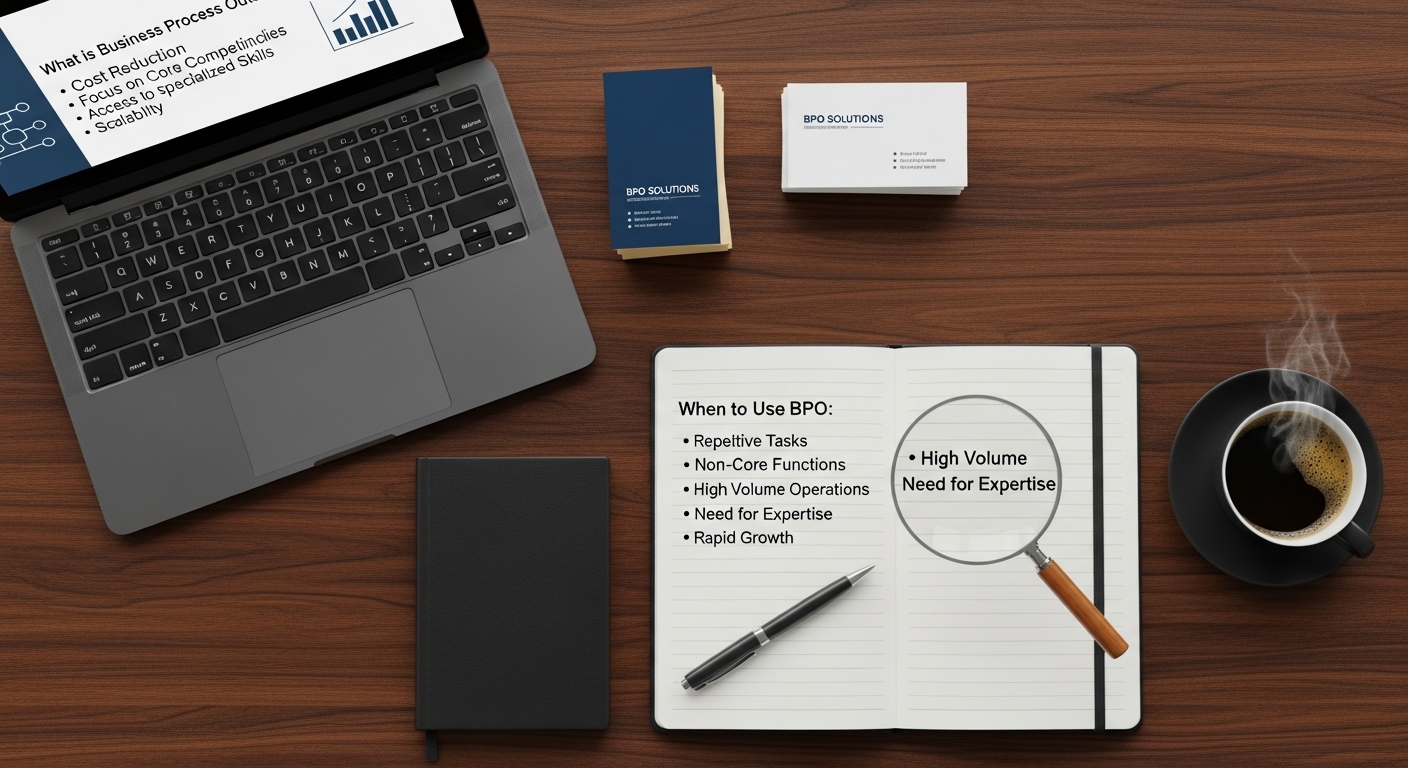
The decision to utilize Business Process Outsourcing should be a deliberate, strategic one, driven by a clear understanding of an organization’s objectives, challenges, and long-term vision. While BPO offers broad applicability, certain scenarios and business functions are particularly well-suited for externalization, maximizing the potential for improved efficiency and strategic focus.
One of the most obvious triggers for BPO is when facing cost-sensitive operations. If an internal department’s operational costs (labor, infrastructure, technology) are disproportionately high compared to its value contribution, or if there’s significant pressure to reduce overall expenditures, BPO can offer a cost-effective alternative. This is especially true for highly standardized, repeatable tasks where economies of scale can be achieved by a specialized provider.
BPO is ideal for non-core functions that do not directly contribute to a company’s competitive advantage. These are typically essential administrative or support tasks that, while necessary, do not define the business’s unique offering. Examples include payroll processing, basic IT helpdesk support, general accounting, or routine data entry. By outsourcing these, internal teams can redirect their energy and expertise towards core activities like product innovation, strategic sales, or customer experience design, thereby strengthening the company’s competitive edge.
Organizations experiencing rapid growth or significant seasonal fluctuations often find BPO invaluable for addressing scalability needs. Instead of incurring the significant fixed costs and time associated with hiring, training, and housing a large internal team to meet peak demand, BPO allows businesses to quickly scale up or down their operational capacity. This flexibility ensures that customer service levels remain high during busy periods and that resources are not underutilized during slower times, optimizing How To Improve Operational Efficiency across the board.
When a business requires accessing niche expertise or advanced technology that is either unavailable internally or too expensive to develop, BPO becomes a powerful solution. This could range from highly specialized compliance knowledge, advanced data analytics capabilities, or specific IT security expertise, to sophisticated customer relationship management (CRM) systems. BPO providers, specializing in these areas, can offer best-in-class solutions and skilled professionals without requiring the client to make substantial capital investments or undertake lengthy internal training programs.
BPO can also facilitate geographic expansion. For companies looking to enter new markets, outsourcing customer support or local compliance functions can provide immediate in-market presence and expertise without the need to establish a physical office or navigate complex local labor laws. This accelerates market entry and reduces initial investment risks.
For small businesses, BPO can be a game-changer. Startups and SMEs often lack the resources to build comprehensive internal departments for every necessary function. Outsourcing allows them to access professional-grade services in areas like HR, accounting, or even specialized aspects of their supply chain. For instance, a small business grappling with “What Is Supply Chain Management Small Business” complexities can outsource its logistics coordination, procurement support, or inventory management to a BPO provider specializing in these areas, gaining expert-level support that would otherwise be out of reach.
Specific functional areas that are frequently outsourced include:
- Customer Support: Both inbound (technical support, order processing) and outbound (telemarketing, lead generation).
- Finance & Accounting: Payroll, accounts payable/receivable, financial reporting.
- Human Resources: Benefits administration, recruitment support, HR analytics.
- IT Helpdesk & Support: Tier 1 & 2 support, network monitoring.
- Digital Marketing: This is a prime area for BPO, encompassing a broad range of activities. Whether it’s managing SEO campaigns, creating engaging content for inbound strategies, or executing targeted email blasts and social media ads for outbound marketing, BPO providers offer specialized expertise. They can help businesses craft and execute comprehensive marketing strategies, optimizing reach and conversion without the need for a large in-house marketing department.
- Data Management: Data entry, data cleansing, database management.
Ultimately, BPO is a tool for strategic alignment. It’s most effective when used to offload functions that detract from core mission, require specialized skills, or demand flexible scaling, thereby empowering the organization to achieve its strategic objectives more efficiently and effectively.
Implementing BPO Successfully: Best Practices
The success of a Business Process Outsourcing initiative hinges on meticulous planning, thorough execution, and continuous management. Simply signing a contract with a vendor is not enough; a strategic, phased approach incorporating best practices is essential to realize the full benefits of BPO and mitigate potential risks.
The first best practice is to define clear objectives and scope. Before even considering vendors, organizations must precisely articulate why they are outsourcing and what they expect to achieve. Is it cost reduction, access to expertise, scalability, or improved service quality? What specific processes or sub-processes will be outsourced? Clear, measurable goals and a well-defined scope prevent scope creep, ensure alignment with strategic business objectives, and provide a benchmark for evaluating success.
Thorough vendor due diligence is non-negotiable. This goes beyond checking references and looking at pricing. Evaluate potential partners based on their industry experience, technological infrastructure, security protocols, financial stability, talent pool, and cultural compatibility. Request detailed case studies, conduct site visits (if feasible), and engage in robust discussions about their understanding of your specific needs and challenges. A strong, trustworthy partnership is the foundation of successful BPO.
Developing a robust contract and Service Level Agreements (SLAs) is critical. The contract should clearly outline all terms and conditions, including pricing models, payment schedules, intellectual property rights, confidentiality clauses, and dispute resolution mechanisms. SLAs must be specific, measurable, achievable, relevant, and time-bound (SMART), defining key performance indicators (KPIs) such as response times, accuracy rates, and uptime guarantees. Penalties for non-compliance and incentives for exceptional performance should also be included to ensure accountability and drive continuous improvement.
An effective communication strategy is vital, especially for offshore or nearshore arrangements. Establish clear communication channels, regular meeting schedules, and dedicated points of contact on both sides. Implement tools for collaborative work and information sharing. Transparency and open dialogue help to build trust, resolve issues quickly, and ensure both parties are aligned on goals and progress. Cultural sensitivity training for internal teams can also facilitate smoother interactions with international partners.
Change management within the client organization is often overlooked but is crucial for success. Outsourcing can evoke concerns among internal employees about job security, changes in roles, or disruption to established routines. A proactive communication plan that explains the rationale for outsourcing, addresses employee concerns, and outlines new roles and opportunities can significantly ease the transition and maintain employee morale. Involving key internal stakeholders from the outset helps foster buy-in.
Performance monitoring and feedback must be continuous. Regularly track the KPIs defined in the SLAs and conduct periodic performance reviews with the BPO provider. Provide constructive feedback, acknowledge successes, and address any areas needing improvement. This ongoing dialogue ensures that the outsourced processes remain aligned with business needs and that the provider is consistently meeting or exceeding expectations. Establishing a feedback loop allows for iterative improvements and strengthens the partnership.
Finally, consider starting with a pilot program for complex or large-scale BPO initiatives. Outsourcing a smaller, less critical process first can provide valuable insights into the vendor’s capabilities, the integration process, and potential challenges, allowing for adjustments before a full-scale rollout. This phased approach reduces risk and builds confidence in the BPO strategy.
By adhering to these best practices, organizations can navigate the complexities of BPO more effectively, transforming it from a mere operational decision into a powerful strategic asset that drives efficiency, growth, and competitive advantage well into 2026 and beyond.
Security, Privacy & AI Compliance
As BPO evolves, ensuring security, privacy, and compliance becomes paramount. By 2026, BPO providers must adhere to the EU AI Act, focusing on transparency and key obligations for AI deployers. Information security governance will align with ISO/IEC 27001 standards, ensuring robust data protection. Additionally, GDPR controller/processor obligations will be critical for managing data privacy and security, ensuring that data is handled responsibly and ethically.
Conclusion
In the dynamic and competitive business landscape of today, Business Process Outsourcing (BPO) has transcended its origins as a simple cost-cutting measure to become a sophisticated, strategic imperative for companies striving for agility, efficiency, and sustained growth. As we look towards 2026, the relevance and impact of BPO are only set to intensify, driven by technological advancements, evolving global talent pools, and the ever-present need for businesses to focus on their core differentiators.
From freeing up invaluable internal resources to concentrate on strategic innovation, to providing access to specialized expertise and cutting-edge technology without prohibitive upfront investment, the advantages of BPO are manifold. It offers unparalleled scalability, enabling businesses to adapt swiftly to market fluctuations, and significantly contributes to How To Improve Operational Efficiency by entrusting non-core functions to dedicated experts. Whether it’s a small business seeking to optimize its supply chain management or a large enterprise looking to enhance its marketing efforts through specialized providers, BPO presents a flexible and powerful solution.
However, realizing these benefits demands a strategic approach. Success in BPO hinges on meticulous planning, rigorous vendor selection, robust contractual agreements, effective communication, and continuous performance monitoring. Organizations must proactively address potential challenges related to data security, cultural differences, and quality control to forge truly productive and resilient partnerships.
Ultimately, BPO is not just about delegating tasks; it’s about making a strategic choice to optimize resource allocation, leverage global talent, and enhance operational excellence. For businesses ready to embrace this strategic paradigm, BPO offers a clear pathway to innovation, increased competitiveness, and a stronger position in the global market. Embraced thoughtfully, it is an indispensable tool for navigating the complexities of the modern economy and building a robust foundation for future success.
Frequently Asked Questions
Recommended Resources
Related reading: How To Track Your Spending (Fin3go).
Explore How To Manage Cash Flow For Ecommerce for additional insights.
The Global BPO Market: Key Players and Market Data
Major BPO Service Providers
The global BPO market reached approximately $280 billion in 2023 and is projected to grow at 8.5% CAGR through 2028 (IDC, “Worldwide Business Process Outsourcing Services Forecast,” 2023). Key providers span multiple tiers:
- Accenture Operations: World’s largest outsourcing provider — $29.8B operations revenue (FY2023). Offers Finance & Accounting BPO, HR BPO, and intelligent operations using AI/automation. Known for “domain + technology + intelligence” service delivery model. Client examples: major banking, insurance, and consumer goods companies globally. Accenture’s Intelligent Operations framework uses AI to automate routine BPO tasks and continuously optimize performance.
- Cognizant Business Process Services: Strong in banking/financial services (BFS), healthcare, and technology BPO. Revenue ~$19B (2023). Cognizant’s TriZetto platform dominates healthcare claims processing for U.S. payers. BPO delivered from India (primary), Philippines, and nearshore hubs in Eastern Europe and Latin America.
- Genpact: Originally spun out of GE in 2005 — deep finance/accounting and supply chain BPO heritage. Revenue ~$4.5B (2023). Genpact Cora AI platform powers intelligent automation across BPO delivery. Strong in CPG (consumer packaged goods), banking, and insurance verticals. India-headquartered with global delivery.
- Teleperformance: Global leader in customer experience (CX) BPO — 410,000+ employees in 91 countries. Handles approximately 10% of global call center outsourcing. Acquired TELUS International (2023). Serves 75% of Fortune Global 100 companies. Specializes in multilingual customer support, technical support, and digital CX.
- Concentrix (formerly SYNNEX): Second-largest CX outsourcer globally — 440,000+ employees, 70+ countries. Merged with Webhelp (2023) to expand European coverage. Strong automotive, tech, and financial services CX delivery.
- Tata Consultancy Services (TCS), Wipro, Infosys: The “Big Three” Indian IT/BPO providers — combined revenue $60B+. Primarily IT outsourcing but significant BPO operations (finance, HR, procurement). Wipro’s BPO arm covers F&A, HR, procurement, customer care. All three hold ISO 27001, SOC 2 Type II, and PCIDSS certifications as standard.
BPO Pricing Models: FTE, T&M, and Outcome-Based
Understanding pricing models is critical for ROI calculations and vendor contracts:
- FTE (Full-Time Equivalent) model: You pay for dedicated headcount — typically $8-25/hour for offshore FTEs (India/Philippines) vs. $25-60/hour for nearshore (Eastern Europe, Latin America). Predictable monthly cost. Best for stable, well-defined processes with consistent volume. Most common in customer service, data entry, and back-office processing BPO.
- T&M (Time & Materials): Pay for actual hours worked. Flexible for variable volume. Suitable during ramp-up/ramp-down periods or for project-based BPO work. Risk: costs can spike unexpectedly without volume controls.
- Outcome-based / Transaction pricing: Pay per output — per invoice processed, per call handled, per application reviewed. Aligns vendor incentives with performance. Example: $0.50-$2.00 per invoice processed for F&A BPO. Best for mature, standardized processes with measurable outputs. Requires robust quality measurement systems.
- Hybrid: Most enterprise contracts combine FTE base staffing + transaction fees for volume above a baseline. Provides stability with scalability.
BPO SLA Metrics: What to Mandate in Contracts
| Function | Key SLA Metric | Industry Benchmark |
|---|---|---|
| Customer Service (voice) | AHT (Average Handle Time) | 4-6 minutes (industry average); <4 min for simple queries |
| Customer Service (all) | CSAT (Customer Satisfaction) | Target: 85%+ (best-in-class: 90%+) |
| Customer Service | FCR (First Contact Resolution) | 70-79% average; 80%+ = top quartile (SQM Group) |
| F&A BPO | Invoice processing accuracy | 99.5%+ (APQC benchmark) |
| HR BPO | Payroll accuracy rate | 99.9%+ (SHRM standard) |
BPO Regulatory and Security Compliance Requirements
- GDPR (General Data Protection Regulation): Any BPO provider handling EU personal data must execute a Data Processing Agreement (DPA) under GDPR Article 28. The vendor must implement appropriate technical and organizational measures (ToMs), honor data subject rights, and report breaches within 72 hours. Failure to vet BPO vendors for GDPR compliance transfers significant legal and financial risk to the client.
- SOC 2 Type II: The standard security audit for U.S. B2B BPO engagements — covers Security, Availability, Processing Integrity, Confidentiality, and Privacy. Type II verifies controls over a 6-12 month period (vs. Type I which is point-in-time). Require SOC 2 Type II reports from all BPO vendors handling sensitive data.
- ISO/IEC 27001: International ISMS certification — global BPO providers typically maintain ISO 27001 certification at their delivery centers. Verify certification currency and scope (which sites are in scope).
- HIPAA: U.S. healthcare data regulation — BPO vendors handling protected health information (PHI) must sign a Business Associate Agreement (BAA) and demonstrate HIPAA Security Rule compliance (Administrative, Physical, Technical safeguards). Audit rights must be contractually secured.
Geographic BPO Hubs: Onshore, Nearshore, Offshore
- Philippines (offshore): Largest CX/customer service BPO destination — 1.7M BPO employees, $35B+ industry (IBPAP 2023). Strong English proficiency (ranked 22nd globally, EF EPI). Strong in U.S. voice customer service, healthcare revenue cycle management, insurance back-office. City hubs: Metro Manila, Cebu, Davao.
- India (offshore): Dominant in IT/BPO for technical functions — F&A, HR, analytics, IT help desk. Home to TCS, Wipro, Infosys, Cognizant, Genpact. 5.4M BPO employees. Strong in complex processes requiring technical expertise. NASSCOM estimates $250B+ IT/BPO export industry (2024).
- Poland / Romania (nearshore, EU): Growing European nearshore hubs — EU legal framework compliance, strong multilingual capabilities (30+ EU languages collectively), GDPR compliance infrastructure. Major multinational BPO centers in Warsaw, Krakow, Bucharest, Cluj-Napoca. 30-50% cost advantage vs. Western Europe.
- Mexico / Costa Rica (nearshore, Americas): Primary nearshore destinations for U.S./Canada — same or adjacent time zones, strong Spanish + English bilingual capabilities. Mexico: 700k+ BPO employees (AMOFAC). Costa Rica: high education levels, tech/finance BPO specialization, CAFTA trade agreement.
RPA and AI-Enhanced BPO: The Automation Layer
Modern BPO increasingly combines human workforce with Robotic Process Automation (RPA) and AI to reduce costs and improve accuracy:
- UiPath: Market-leading RPA platform (41% market share, IDC 2023). Enterprise-grade software bots that automate rule-based, repetitive processes (invoice processing, data extraction, claims adjudication). NYSE-listed (PATH). Typical ROI: 200-800% for well-implemented back-office automation (UiPath ROI studies). Customers: 10,000+ including Xerox, Deloitte, HP.
- Automation Anywhere: Second largest RPA platform — cloud-native “AARI” digital worker platform. Known for IQ Bot (intelligent document processing) for unstructured data. Strong in financial services and healthcare BPO automation.
- Blue Prism: Enterprise-grade RPA now part of SS&C Technologies — traditionally strong in highly regulated industries (banking, insurance, public sector) where governance and audit trails are critical.
- Microsoft Power Automate: Included in Microsoft 365 licensing — accessible RPA for SMBs and mid-market. 50M+ users. Integrated with Office apps, Teams, and Azure services. Lower per-process ROI than enterprise RPA but significantly lower implementation costs.
Related Business Operations Guides
Advanced BPO Topics: Quality Standards, Delivery Models, and Buyer Personas
BPO Quality Standards and Frameworks
- COPC Inc. (Customer Operations Performance Center): The leading customer experience (CX) quality management standard — COPC CX Standard is used by 1,400+ organizations in 90+ countries to benchmark and improve contact center and back-office operations. COPC defines specific performance standards for: service level (telephone, email, chat), quality, accuracy, productivity, and customer satisfaction. COPC-certified organizations typically achieve 15-25% improvement in CX metrics vs. their baseline (COPC data). The COPC Inc. framework is particularly relevant for evaluating third-party BPO CX vendors — you can require COPC certification as part of vendor qualification.
- ISO 9001:2015 (Quality Management Systems): The world’s most widely adopted quality management standard — 1M+ certified organizations in 170+ countries (ISO Survey 2022). ISO 9001 requires organizations to demonstrate a documented quality management system, continuous improvement processes, and customer satisfaction measurement. For BPO vendor qualification: ISO 9001 certification indicates the vendor has a documented quality management system, but it does not guarantee specific performance outcomes — verify the scope of the certification (which processes/sites are in scope).
- CMMI (Capability Maturity Model Integration): Developed by Carnegie Mellon University’s Software Engineering Institute — provides a framework for improving organizational processes. CMMI levels 1-5 (Initial → Managed → Defined → Quantitatively Managed → Optimizing). For IT/software development BPO: CMMI Level 3 (Defined) is a common vendor qualification requirement; Level 5 indicates best-in-class process maturity. Maintained by the CMMI Institute (cmmiinstitute.com).
BPO Delivery Models: Beyond Simple Outsourcing
- Build-Operate-Transfer (BOT): A hybrid model where the BPO provider builds and operates a dedicated delivery center on behalf of the client for a defined period (typically 2-5 years), then transfers ownership, assets, and employees to the client. Benefits: client gets the efficiency of outsourcing during the build phase without permanently losing operational control. Popular for: offshore captive centers in India/Philippines where the client wants to eventually control the operation. Risk: complexity of the transfer transaction and knowledge dependency during the build phase.
- Center of Excellence (CoE) Model: A dedicated team (internal or outsourced) that centralizes expertise in a specific business function — typically finance, HR, procurement, or analytics. An outsourced CoE provides specialized expertise, best practices, and technology without requiring the client to develop these capabilities internally. Often used in combination with BPO: CoE provides expertise/governance while BPO handles transactional volume. Major BPO providers (Accenture, Genpact, Cognizant) often propose CoE models for higher-value functions like financial planning & analysis (FP&A) or supply chain optimization.
- Managed Services Model: Vendor takes end-to-end accountability for a function or process outcome — not just headcount delivery. The vendor owns process design, technology, workforce management, and performance. Client pays for outcomes (SLA performance) rather than activities. More sophisticated than traditional BPO; often includes technology-driven transformation as part of the contract. Example: a managed services provider handles the entire accounts payable function using their own AP automation software, and the client pays per invoice processed at a guaranteed accuracy rate.
BPO Buyer Personas: Who Decides and What They Care About
Understanding the BPO buying committee helps frame your business case and vendor discussions correctly:
- CFO (Chief Financial Officer): Primary financial decision-maker. CFO concerns: total cost of ownership (TCO), year-1 vs. steady-state savings, working capital impact, transition costs, contractual penalties for non-performance, and P&L impact (OpEx vs. CapEx). Speak in IRR, payback period, and cost-per-unit-processed. CFOs often require >20% savings over 3 years to approve offshore BPO and 10-15% for nearshore.
- CHRO (Chief Human Resources Officer): Key decision-maker for HR BPO. CHRO concerns: employee experience impact, talent retention during transition, employment law compliance in jurisdictions where employees will be transferred (TUPE in UK/EU), and employer brand risk. Also manages internal change management and communications.
- CIO (Chief Information Officer): Controls IT and information security decisions. CIO concerns: data security, integration architecture, vendor SOC 2/ISO 27001 compliance, cloud vs. on-premises delivery, RPA/AI technology roadmap, and exit/transition risk (vendor lock-in, data repatriation). CIOs frequently own the final sign-off on security and technology requirements.
- CPO / VP Procurement: Vendor contracting, SLA definition, pricing model negotiation, contract terms (IP, confidentiality, data residency), and vendor performance governance. Procurement typically owns the RFP process and establishes vendor qualification requirements.
BPO Adjacent Models: KPO, LPO, RPO, and Global Capability Centers
Knowledge Process Outsourcing (KPO) and Legal Process Outsourcing (LPO)
BPO exists on a spectrum of outsourcing sophistication. Understanding the adjacent models clarifies when to choose each:
- KPO (Knowledge Process Outsourcing) — Involves outsourcing highly specialized, knowledge-intensive processes requiring advanced analytical skills, domain expertise, and judgment. Examples: investment research, pharmaceutical R&D support, market intelligence, patent analysis, actuarial analysis. KPO vendors include Evalueserve, WNS Knowledge Services, and Genpact’s analytics practices. Unlike BPO’s focus on process efficiency, KPO focuses on intellectual output quality. Day rates are significantly higher ($30-80/hour offshore) but deliver strategic insights unavailable from process-only BPO.
- LPO (Legal Process Outsourcing) — Outsourcing legal support functions: document review, e-discovery, contract management, legal research, patent drafting, compliance monitoring. LPO market reached ~$35B in 2023 (HFS Research). Major providers: Integreon (now part of Genpact), QuisLex, Axiom, Elevate Services. Typically used by law firms and corporate legal departments to reduce cost per document review hour ($25-50/hour offshore vs $200-400/hour for partner time). GDPR and attorney-client privilege implications require specialized data handling agreements beyond standard BPO DPAs.
- RPO (Recruitment Process Outsourcing) — Outsourcing some or all of an organization’s recruitment function to an external provider. RPO provider acts as an extension of the internal HR/talent acquisition team. Major RPO providers: Manpower Group Solutions, Korn Ferry RPO, Cielo Talent, Allegis Global Solutions. RPO SLAs typically cover time-to-fill, quality-of-hire, offer acceptance rate, and cost-per-hire. The global RPO market reached $7.9B in 2023 (Everest Group).
Global Capability Centers (GCCs) vs. Traditional BPO
A Global Capability Center (GCC) — also called a Global In-house Center (GIC) or captive center — is a wholly-owned subsidiary that performs work for the parent organization from a lower-cost geography. Unlike BPO, where a third-party vendor provides services, a GCC is an extension of the company itself:
- BPO: Third-party vendor, shared talent pool, shared infrastructure, vendor-managed risk. Lower setup cost, faster to deploy. Exit risk if relationship fails.
- GCC/GIC: Wholly-owned entity, dedicated talent, full data control, direct management. Higher setup cost (typically $2-5M to establish), 12-18 months to become productive. Higher long-term control and IP protection.
- BOT (Build-Operate-Transfer): Hybrid — BPO provider builds and operates the center for 2-5 years, then transfers ownership to the client. Common for companies wanting GCC control without upfront setup complexity.
The GCC model is growing rapidly — India alone hosts 1,600+ GCCs employing 1.9M professionals (NASSCOM, 2024). Companies like Walmart, JPMorgan Chase, and Goldman Sachs operate significant GCCs in India and Eastern Europe. The choice between BPO and GCC depends on: volume/scale (BPO for <100 FTEs, GCC for 200+ FTEs), IP sensitivity, required level of process customization, and management bandwidth.
SIAM, MSP, and Multi-Vendor Service Governance
As organizations engage multiple BPO and technology vendors, governance complexity increases. Two models address this:
- SIAM (Service Integration and Management) — A management framework for organizations that source services from multiple external providers. SIAM coordinates service delivery across the multi-vendor ecosystem — ensuring consistent service quality, clear accountability, and integrated reporting even when different processes are handled by different vendors. The “service integrator” role (either an internal function or a fourth-party provider) owns the cross-vendor SLA performance. SIAM is particularly relevant for organizations with 5+ service providers. Framework maintained by EXIN and BCS.
- MSP (Managed Services Provider) — A company that remotely manages a client’s IT infrastructure and/or end-user systems on a proactive basis under a subscription model. Unlike traditional BPO (transactional, process-focused), MSPs take end-to-end responsibility for system availability, security monitoring, and performance. The global MSP market reached $299B in 2023 (MarketsandMarkets). Key distinction: BPO = process delivery; MSP = technology/infrastructure management with proactive service model.
BPO Transition Governance: Knowledge Transfer and Exit Management
The transition phase — moving processes to a new BPO provider or bringing them back in-house — is where most BPO failures occur. Best-practice governance requires:
- Transition Manager: Dedicated role (either client-side or jointly resourced) responsible for sequencing knowledge transfer, managing parallel-run periods, and tracking transition milestones. Transition typically runs 3-6 months for complex processes.
- Knowledge Transfer Plan (KTP): Documented process for transferring institutional knowledge from the client or outgoing vendor to the incoming provider. Includes process documentation, SOPs (Standard Operating Procedures), system access, and training materials. Failure to execute KTP is the single most common cause of BPO transition failure.
- Exit Management provisions in SLA: Contractual clauses requiring the outgoing provider to cooperate with knowledge transfer for a defined period (typically 6-12 months) post-termination notice. Should specify data repatriation timelines, data destruction/return requirements, staff transition rights (TUPE in UK/EU contexts), and IP handover procedures.
Global Data Privacy: Brazil LGPD and India DPDP Act
BPO contracts increasingly require compliance with country-specific data privacy laws beyond GDPR and CCPA:
- Brazil LGPD (Lei Geral de Proteção de Dados, effective 2020): Brazil’s comprehensive data protection law modeled on GDPR. Applies to any processing of Brazilian personal data regardless of where the processor is located. The ANPD (Autoridade Nacional de Proteção de Dados) enforces it. BPO vendors processing Brazilian customer data must establish an LGPD Data Processing Agreement (equivalent to GDPR Art. 28 DPA). Fines up to 2% of Brazil revenue (max R$50M per violation).
- India DPDP Act (Digital Personal Data Protection Act, 2023): India’s first comprehensive data privacy law — enacted August 2023. Applies to processing of digital personal data in India and data of Indian citizens processed abroad. Establishes Data Fiduciary (controller) and Data Processor obligations. Significant Harm (data breach) notification required to DPBI (Data Protection Board of India). Cross-border data transfer rules still being finalized. Critical for BPO vendors operating in India (which hosts 5.4M BPO employees).
BPO Transition & Governance Frameworks
Transition Manager / Knowledge Transfer Plan (KTP): Standard BPO transitions run 6–12 months post-contract. The Knowledge Transfer Plan documents process workflows, exception handling, tribal knowledge, and technology dependencies. TUPE (Transfer of Undertakings Protection of Employment) regulations in the UK/EU require employee transfer protections when labor moves to a BPO provider. Exit Management clauses — covering IP handover, data migration, and reverse knowledge transfer — are critical contract provisions; typical notice periods run 6–12 months.
COPC CX Standard: The COPC Customer Experience Standard is the leading performance management framework for BPO contact centers — covers KPIs (FCR, AHT, CSAT, NPS), item monitoring, and management system requirements. COPC-certified organizations demonstrate measurable performance improvement against baseline. Used by AT&T, Convergys, Teleperformance, and TTEC.
CMMI for Services (CMMI-SVC): Capability Maturity Model Integration for Services — five maturity levels (Initial/Managed/Defined/Quantitatively Managed/Optimizing). BPO buyers frequently require Level 3 (Defined) or Level 4 (Quantitatively Managed) from enterprise suppliers. ISACA and CMMI Institute administer certifications.
BOT Model (Build-Operate-Transfer): A structured offshore engagement model where the provider builds and operates a GCC/GIC for 2–5 years, then transfers ownership back to the client. Popular in India (NASSCOM reports 30%+ of new GCC setups in 2023 used BOT structures). Combines BPO flexibility with long-term captive control. Cognizant, Infosys BPM, and Wipro BPS all offer BOT engagements.
BPO Market Size & Analyst Coverage
Market sizing: The global BPO market reached approximately $280B in 2024 (Grand View Research; Everest Group). ITO (IT Outsourcing) accounts for ~60% of total outsourcing spend; BPO accounts for ~40%. KPO is the fastest-growing sub-segment at 12–15% CAGR (Everest Group PEAK Matrix 2024).
Everest Group PEAK Matrix: The authoritative analyst framework for evaluating BPO providers — rates vendors as Leaders, Major Contenders, or Aspirants across vision/capability vs. market impact dimensions. Major 2024 Leaders: Accenture, Infosys BPM, Genpact, WNS, EXL Service, Teleperformance.
HfS Research Blueprint: HfS (Horses for Sources) Research provides independent BPO market analysis — particularly strong on GBS (Global Business Services) transformation and intelligent automation adoption rates in BPO. HfS “OneOffice” framework tracks BPO evolution from labor arbitrage to intelligent operations.
For implementing the operational improvements that BPO partnerships enable, see our How to Improve Operational Efficiency guide. For the technology platforms that support BPO governance and data management, see our Enterprise Resource Planning for SMBs guide.
From Our Network
- lead generation strategies for B2B (en Pagerelease)
- cash envelope budgeting method (en Fin3go)
- peer to peer lending guide 2026 (en Tradingcosts)