Understanding Customer Lifetime Value (CLV): The Cornerstone of Sustainable Growth
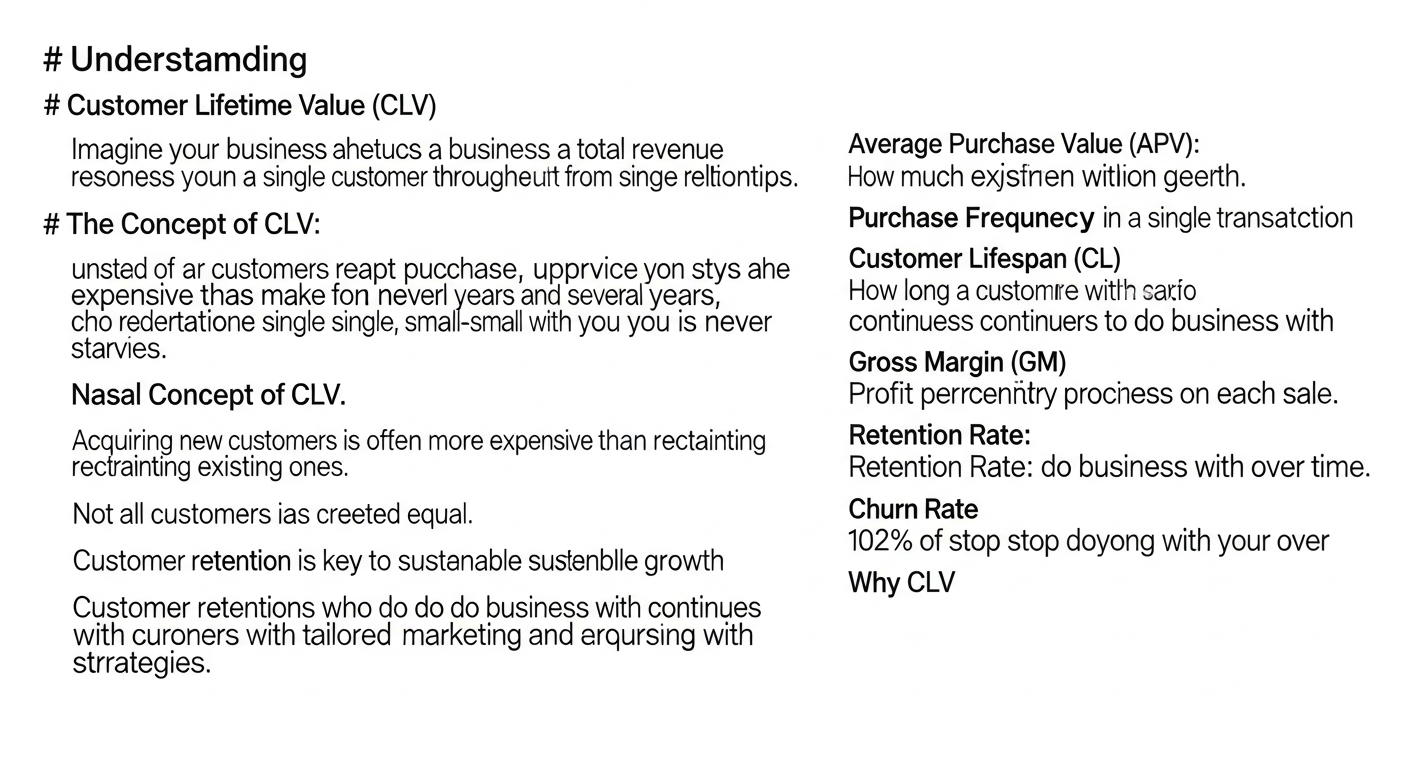
At its core, Customer Lifetime Value (CLV) is a prediction of the net profit attributed to the entire future relationship with a customer. It’s a forward-looking metric that transcends the immediate revenue generated by a single purchase, urging businesses to consider the cumulative financial contribution a customer will make over their engagement with a company. In an era where customer acquisition costs (CAC) are steadily rising, understanding and optimizing CLV has become paramount. Businesses that fixate solely on acquiring new customers without nurturing existing ones often find themselves on a costly and unsustainable treadmill.
The concept of CLV signals a fundamental shift in business philosophy – from a transactional mindset to a relationship-centric approach. Instead of viewing each sale as an isolated event, CLV encourages businesses to see every customer interaction, every product delivery, and every support ticket as an opportunity to deepen loyalty and extend the customer’s lifespan with the company. This perspective is vital because loyal customers tend to purchase more frequently, spend more per transaction, are less price-sensitive, and often act as organic brand advocates through word-of-mouth referrals.
Consider the stark difference: a business with a low CLV might constantly scramble for new leads, spending heavily on marketing and sales efforts to replace churned customers. Conversely, a business with a high CLV invests wisely in customer retention, personalization, and experience enhancement, knowing that these efforts yield compounding returns. A robust CLV metric allows businesses to:
- Identify their most valuable customer segments.
- Allocate marketing and customer service budgets more effectively.
- Design products and services that resonate deeply with their target audience.
- Forecast future revenue streams with greater accuracy.
- Justify investments in customer success initiatives.
In essence, CLV is not just a number; it’s a strategic compass that guides decision-making across sales, marketing, product development, and customer service. It illuminates the path towards sustainable profitability by emphasizing the enduring value of strong customer relationships.
How to Calculate Customer Lifetime Value: Essential Formulas and Metrics

Calculating Customer Lifetime Value can range from simple estimations to complex predictive models, depending on the available data and desired accuracy. While advanced analytics tools can automate much of this, understanding the underlying formulas is crucial for interpreting the results and identifying areas for improvement. Here, we’ll explore some common approaches.
The Simple CLV Formula
For a quick, foundational understanding, the most straightforward CLV formula is:
CLV = Average Purchase Value × Average Purchase Frequency × Average Customer Lifespan
- Average Purchase Value: The average amount of money a customer spends per transaction. (Total Revenue / Total Number of Purchases)
- Average Purchase Frequency: How often a customer makes a purchase within a given period (e.g., annually). (Total Number of Purchases / Total Number of Unique Customers)
- Average Customer Lifespan: The average duration (in years or months) a customer remains active with your business. (1 / Customer Churn Rate)
Example: If a customer spends $50 per purchase, buys 4 times a year, and remains a customer for 3 years, their CLV would be $50 × 4 × 3 = $600.
The Traditional CLV Formula (More Robust)
This formula incorporates profit margins, offering a more realistic view of the value:
CLV = (Average Purchase Value × Average Purchase Frequency) × Average Customer Lifespan × Profit Margin
Alternatively, it can be expressed as:
CLV = Average Customer Value × Average Customer Lifespan
Where:
- Average Customer Value: The average revenue a customer generates per period. (Average Purchase Value × Average Purchase Frequency)
- Profit Margin: The percentage of revenue retained as profit after accounting for direct costs.
This approach moves beyond gross revenue to focus on the actual profitability derived from a customer, which is critical for strategic planning. Data accuracy for each component – transaction records, customer IDs, purchase dates, and cost of goods sold – is paramount for these calculations to be meaningful.
Predictive CLV Models
For more sophisticated businesses, particularly those with subscription models or extensive historical data, predictive CLV models utilize machine learning and statistical analysis to forecast future customer behavior. These models consider variables like customer demographics, engagement patterns, past purchase history, and even external market factors to predict the likelihood of future purchases and churn. While complex, predictive CLV offers the most accurate and actionable insights, enabling proactive interventions to retain at-risk customers or target high-potential segments.
Regardless of the formula chosen, the goal remains the same: to gain a quantifiable understanding of customer value to inform strategic decisions. Regular calculation and tracking of CLV, segmented by customer type or product line, can reveal invaluable trends and opportunities for growth.
The Strategic Importance of CLV for Your Business
Informed Budget Allocation
A clear understanding of CLV allows businesses to allocate their marketing and customer service budgets far more effectively. If you know the average CLV of your customers, you can determine how much you can afford to spend on acquiring a new one (Customer Acquisition Cost – CAC) while remaining profitable. Ideally, your CLV should significantly outweigh your CAC. This insight can help you optimize campaigns, prioritize channels, and cease investing in unprofitable acquisition strategies. For instance, CLV strongly influences the choice between Inbound Marketing Vs Outbound Marketing. Businesses with high CLV often find inbound strategies (content marketing, SEO, social media engagement) more sustainable, as they focus on building relationships and attracting customers who are already seeking solutions, naturally leading to higher retention and value over time. Outbound marketing might bring immediate leads, but without a strong CLV focus, these customers might prove less profitable in the long run.
Enhanced Customer Segmentation and Personalization
CLV enables businesses to segment their customer base not just by demographics, but by their actual and potential value. Identifying high-CLV customers allows for tailored engagement strategies, exclusive offers, and VIP treatment that reinforces their loyalty. Conversely, understanding the characteristics of low-CLV or at-risk customers can prompt targeted retention efforts, personalized interventions, and adjustments to service delivery. This level of personalization, driven by CLV insights, significantly improves customer experience and fosters deeper relationships.
Optimized Resource Allocation and Product Development
When you understand which customer segments contribute the most to your long-term profitability, you can direct product development efforts, feature enhancements, and service improvements towards meeting the needs of those high-value groups. This ensures that your valuable resources are invested in areas that yield the highest return. For example, if your top-tier customers consistently request a particular feature, prioritizing its development directly supports CLV growth.
Improved Profitability Forecasting and Business Valuation
CLV provides a more stable and reliable basis for forecasting future revenue than transactional metrics alone. By predicting the future value of your customer base, you can make more accurate financial projections, better assess the health of your business, and even increase its valuation for potential investors. It demonstrates a predictable revenue stream and a sustainable growth model.
Justifying Investment in Customer Retention
Perhaps one of the most significant strategic benefits of CLV is its ability to quantify the value of customer retention. It is widely acknowledged that retaining an existing customer is significantly cheaper than acquiring a new one. CLV puts a monetary figure on this truism, making a compelling case for investing in customer success teams, loyalty programs, and proactive customer support. These investments, which might appear as costs in the short term, are revealed as powerful drivers of long-term profitability when viewed through the lens of CLV.
In summary, CLV transforms a business from a reactive entity chasing sales into a proactive organization building lasting customer relationships. It’s the strategic bedrock for sustainable growth, guiding decisions from marketing to product development, and ultimately defining the long-term success of your enterprise.
Proven Strategies to Increase Customer Lifetime Value
Increasing Customer Lifetime Value is a multi-faceted endeavor that requires a holistic approach, touching nearly every department within a business. It’s about consistently delivering value, fostering loyalty, and anticipating customer needs. Here are some proven strategies:
1. Enhance Customer Experience (CX) at Every Touchpoint
A superior customer experience is the bedrock of high CLV. Every interaction, from the initial contact to post-purchase support, contributes to a customer’s perception of your brand. Focus on:
- Seamless Onboarding: Make it easy for new customers to understand and use your product or service. A strong first impression can significantly reduce early churn.
- Proactive Support: Don’t wait for problems to arise. Anticipate potential issues and offer solutions or guidance before they become frustrations. This can involve personalized tips, tutorials, or check-ins.
- Personalization: Tailor communications, recommendations, and offers based on customer data, purchase history, and preferences. Generic experiences rarely build lasting loyalty.
- Efficient Problem Resolution: When issues do occur, resolve them quickly and effectively. A negative experience handled well can often turn a detractor into a loyal advocate.
- Gather and Act on Feedback: Implement robust feedback mechanisms (surveys, reviews, direct channels) and, critically, demonstrate that you listen and act on customer input.
Improving CX often directly correlates with How To Improve Employee Productivity. Empowered, well-trained, and motivated employees are more likely to deliver exceptional service, which in turn elevates customer satisfaction and CLV. Investing in employee training, better tools, and a positive work environment indirectly contributes to customer retention.
2. Build Stronger Relationships Through Loyalty Programs and Community
Moving beyond transactional interactions to genuine relationships is key:
- Loyalty Programs: Reward repeat purchases, referrals, and engagement. Points systems, tiered memberships, exclusive access, or discounts can incentivize continued interaction.
- Community Building: Create forums, social media groups, or events where customers can connect with each other and your brand. This fosters a sense of belonging and shared identity.
- Exclusive Content and Offers: Provide subscribers or loyal customers with early access to new products, special content, or members-only promotions.
3. Optimize Cross-selling and Upselling Strategies
Once a customer trusts your brand, they are more open to exploring additional offerings. This isn’t about aggressive sales tactics but about intelligently identifying and recommending products or services that genuinely add value to their existing experience.
- Understand Needs: Use data to identify complementary products or upgrades that solve additional customer pain points or enhance their current usage.
- Timing is Everything: Offer upsells or cross-sells at logical points in the customer journey, not immediately after a purchase, but perhaps when they’ve demonstrated satisfaction with their initial buy.
- Value-Driven Messaging: Clearly articulate the benefits of the additional purchase, focusing on how it further enhances their life or business operations.
4. Leverage Data and Analytics for Deeper Insights
Data is your most powerful tool for increasing CLV. Regularly analyze customer behavior, purchase patterns, engagement metrics, and feedback to:
- Identify Churn Predictors: Spot early warning signs that a customer might be disengaging and intervene proactively.
- Personalize Marketing: Use insights to craft highly relevant marketing messages and offers.
- Optimize Product Roadmaps: Understand which features or services are most valued by your high-CLV customers.
5. Implement Strategic Business Process Outsourcing (BPO)
Efficient internal operations directly impact customer satisfaction and, consequently, CLV. Consider how What Is Business Process Outsourcing can be leveraged:
- Customer Support: Outsourcing non-core but critical functions like customer service can ensure 24/7 availability, multi-channel support, and specialized expertise, leading to faster resolution times and improved CX.
- Data Entry and Management: Accurate and timely data is essential for personalization and CLV analysis. Outsourcing data processing can improve data quality and free up internal teams to focus on strategic initiatives.
- Back-Office Operations: Streamlining administrative tasks through BPO can reduce operational costs and allow your core team to dedicate more resources to customer-facing activities and product innovation, directly contributing to a better customer experience and higher CLV.
By strategically outsourcing, businesses can enhance efficiency, reduce costs, and redirect internal talent towards core competencies that directly drive customer value and loyalty.
6. Continuously Improve Product/Service Quality
Ultimately, the foundation of lasting customer relationships is a high-quality product or service that consistently meets or exceeds expectations. Invest in R&D, continuous improvement, and quality assurance. A reliable, effective offering reduces churn and makes all other CLV strategies more impactful.
By integrating these strategies, businesses can systematically cultivate a customer-centric culture that not only increases individual customer value but also builds a resilient and profitable enterprise for the long term.
Measuring and Monitoring CLV: Tools and Best Practices
Calculating Customer Lifetime Value is just the first step; its true power lies in continuous measurement, monitoring, and iterative improvement. Without ongoing analysis, CLV remains a static number rather than a dynamic strategic asset. To effectively leverage CLV, businesses need to establish robust tracking mechanisms and integrate it into their performance metrics.
Key Performance Indicators (KPIs) Related to CLV
While CLV itself is a KPI, several other metrics contribute to its health and should be monitored in conjunction:
- Customer Acquisition Cost (CAC): Always compare CLV to CAC. A healthy business typically has a CLV:CAC ratio of 3:1 or higher.
- Churn Rate: The percentage of customers who stop doing business with you over a given period. A lower churn rate directly increases average customer lifespan and thus CLV.
- Retention Rate: The inverse of churn, representing the percentage of customers retained over a period.
- Average Order Value (AOV): The average amount spent per transaction. Increasing AOV through upselling and cross-selling directly boosts CLV.
- Purchase Frequency: How often customers buy from you. Strategies to encourage repeat purchases enhance CLV.
- Customer Satisfaction (CSAT) & Net Promoter Score (NPS): While not financial metrics, high CSAT and NPS scores are strong indicators of customer loyalty and future purchasing behavior, correlating with higher CLV.
- Engagement Metrics: For digital products, track active users, feature adoption, time spent on platform, etc. High engagement often precedes higher CLV.
Regular Reporting and Analysis
CLV should not be a once-a-year calculation. Integrate it into your regular business intelligence dashboards and reporting cycles. Monitor CLV trends over time, segmenting by customer cohorts (e.g., customers acquired in Q1 2024 vs. Q1 2025), marketing channels, product lines, or geographic regions. This allows you to identify which segments are most profitable and which strategies are most effective at driving long-term value.
A/B Testing Strategies for CLV Improvement
Every strategy implemented to increase CLV – from onboarding improvements to loyalty program changes – should be treated as a hypothesis. A/B test different approaches and measure their impact on relevant CLV-contributing metrics (e.g., test two different onboarding flows and see which leads to lower early churn). This data-driven approach ensures that your efforts are genuinely moving the needle.
Leveraging Technology: CRM and Analytical Platforms
Modern Customer Relationship Management (CRM) systems are indispensable for tracking customer interactions, purchase history, and demographics. Integrated with analytics platforms (like Google Analytics, Tableau, or specialized CLV tools), they provide the infrastructure for comprehensive CLV measurement. These tools can:
- Automate CLV calculations and predictions.
- Segment customers based on their value.
- Track customer journeys and touchpoints.
- Generate actionable insights and recommendations.
- Facilitate personalized communication and marketing automation.
Investing in the right technology not only streamlines the measurement process but also empowers teams to act on CLV insights more effectively, turning data into tangible business growth.
By consistently measuring, analyzing, and acting upon CLV and its related KPIs, businesses can cultivate a culture of continuous improvement, ensuring that every customer interaction contributes to the long-term health and profitability of the organization.
The Future of CLV in 2026 and Beyond
As we look towards 2026 and the subsequent years, the significance of Customer Lifetime Value is only set to amplify. The business landscape is rapidly evolving, driven by technological advancements, shifting consumer behaviors, and an increasing emphasis on ethical and sustainable practices. CLV will remain a central pillar, but its calculation, application, and strategic implications will become even more sophisticated and integrated.
Hyper-Personalization Driven by AI and Predictive Analytics
The rise of artificial intelligence and advanced machine learning will revolutionize predictive CLV. By 2026, businesses will move beyond historical CLV to highly accurate, real-time predictive models that can forecast individual customer value with unprecedented precision. This will enable hyper-personalization at scale – not just in marketing messages, but in product recommendations, service interactions, and even proactive problem-solving. AI will help identify at-risk customers before they churn and suggest optimal interventions, significantly boosting retention and CLV.
Emphasis on Experiential Value and Emotional Connection
Beyond transactional value, the future of CLV will heavily weigh the emotional and experiential value a brand delivers. Customers in 2026 will increasingly choose brands that align with their values, offer unique experiences, and foster genuine connections. This means CLV calculations might evolve to incorporate metrics related to brand sentiment, community engagement, and perceived value of non-monetary interactions. Building an emotional connection will become a direct driver of customer loyalty and extended lifespan.
The Role of Data Privacy and Trust
As data collection becomes more sophisticated, so too does consumer awareness and regulation around data privacy. In 2026, businesses that prioritize transparency, ethical data handling, and privacy-by-design will build greater trust, which is a critical component of long-term customer relationships and CLV. Customers will be more willing to share data with brands they trust, enabling more accurate personalization and, consequently, higher CLV. Conversely, breaches of trust due to mishandled data will severely impact customer loyalty and lifetime value.
Subscription Models and Recurring Revenue
The proliferation of subscription-based services across various industries (SaaS, media, retail, even automotive) underscores the importance of recurring revenue models. For these businesses, CLV is not just a metric; it is the business model. In 2026, more businesses will explore subscription elements, making CLV crucial for understanding customer viability, churn management, and growth potential within these models.
Integration with Environmental, Social, and Governance (ESG) Initiatives
Customers are increasingly evaluating brands based on their ESG performance. A company’s commitment to sustainability, social responsibility, and ethical governance will influence customer choice and loyalty. By 2026, a strong ESG profile could directly contribute to higher CLV by attracting and retaining a segment of customers who value these attributes, enhancing brand reputation and fostering deeper customer bonds.
In essence, the future of CLV is about deeper understanding, ethical engagement, and leveraging technology to create unparalleled customer experiences. Businesses that proactively adapt to these trends, focusing on genuine value creation and trust, will be well-positioned to maximize their CLV and secure sustainable growth in the years to come.
Frequently Asked Questions
Recommended Resources
Explore Affiliate Marketing For Beginners 2026 for additional insights.
For more on what is customer, see How To Invest 1000 Dollars Wisely on Trading Costs.