What Exactly is Growth Hacking?
At its core, growth hacking is a methodology for rapid experimentation across marketing channels and product development to identify the most efficient ways to grow a business. It’s not simply a subset of marketing; rather, it’s a mindset, a cross-disciplinary approach that prioritizes growth above all else. The term, coined by Sean Ellis in 2010, emerged from the startup world where resources were scarce, and the need for explosive growth was paramount. Growth hackers are essentially scientists of growth, tirelessly searching for untapped opportunities and leveraging unconventional tactics to achieve their objectives.
Unlike traditional marketing, which often relies on established playbooks and larger budgets for brand awareness, growth hacking is characterized by its obsessive focus on metrics, scalability, and innovation. A growth hacker’s primary question is always: “How can we grow?” Every decision, every experiment, every initiative is evaluated through the lens of its potential impact on key growth metrics. This often involves a deep understanding of user psychology, product mechanics, and the intricate interplay between various digital channels. They are not confined by the boundaries of conventional departments; instead, they operate at the intersection of product, marketing, engineering, and sales, using a holistic perspective to uncover levers for exponential expansion. This means they might be optimizing landing pages one day, developing viral features the next, and analyzing user onboarding flows the day after. The goal is always to find the most cost-effective and fastest routes to acquire, activate, and retain customers, ultimately driving revenue and market share.
This approach inherently encourages agility and a willingness to challenge the status quo. Instead of massive, long-term campaigns, growth hacking favors small, rapid experiments designed to yield quick insights. These insights then inform subsequent iterations, creating a continuous loop of learning and optimization. It’s about doing more with less, identifying bottlenecks, and unlocking hidden potential within a product or service. For businesses navigating competitive markets, understanding what is growth hacking becomes crucial for carving out a sustainable path to success in 2026 and beyond.
The Core Principles and Mindset of Growth Hacking

Understanding growth hacking goes beyond its definition; it requires an internalization of its underlying philosophy. This methodology is built upon several foundational principles that guide every decision and action within a growth-focused organization. Adopting this mindset is perhaps the most critical step for any business looking to leverage growth hacking effectively.
- Data-Driven Everything: The bedrock of growth hacking is an unwavering commitment to data. Every hypothesis is formed based on existing data, every experiment is measured meticulously, and every conclusion is drawn from empirical evidence. Gut feelings and assumptions are replaced by A/B tests, user analytics, and conversion rates. This ensures that resources are allocated to strategies that genuinely move the needle, rather than those based on conjecture.
- Rapid Experimentation and Iteration: Growth hacking thrives on speed. Instead of lengthy planning cycles, growth hackers favor rapid experimentation, deploying multiple small tests simultaneously or in quick succession. The idea is to “fail fast, learn faster.” Each experiment, whether successful or not, provides valuable data that informs the next iteration. This iterative process allows teams to quickly pivot away from ineffective strategies and double down on those that show promise.
- Scalability and Automation: A core objective of growth hacking is not just to grow, but to grow efficiently and scalably. This means identifying channels and tactics that can be automated or replicated with minimal additional cost as the user base expands. Leveraging technology and smart process design to automate repetitive tasks is key, allowing the team to focus on higher-level strategic experimentation.
- Customer-Centricity: While data is crucial, growth hacking is fundamentally about understanding and serving the customer. Growth hackers deeply analyze user behavior, feedback, and pain points to identify opportunities for improving the product, enhancing the user experience, and ultimately increasing retention. They understand that sustainable growth comes from delivering exceptional value.
- Cross-Functional Collaboration: Growth hacking breaks down traditional departmental silos. Instead of separate marketing, product, and engineering teams, growth hacking fosters an environment where these functions collaborate closely. Engineers might suggest marketing tactics, marketers might influence product features, and product managers might analyze sales funnels. This interdisciplinary approach ensures that all aspects of the business are aligned towards the singular goal of growth.
- Lean Methodology: Drawing inspiration from the lean startup movement, growth hacking emphasizes building minimum viable products (MVPs) or running minimum viable experiments to test hypotheses with the least amount of resources. This prevents significant investment in ideas that haven’t been validated by real-world data.
Embracing these principles fundamentally changes how a business operates, fostering an agile, learning-oriented culture that is constantly seeking new avenues for expansion. This growth mindset is what truly differentiates a growth hacking approach from more traditional business strategies.
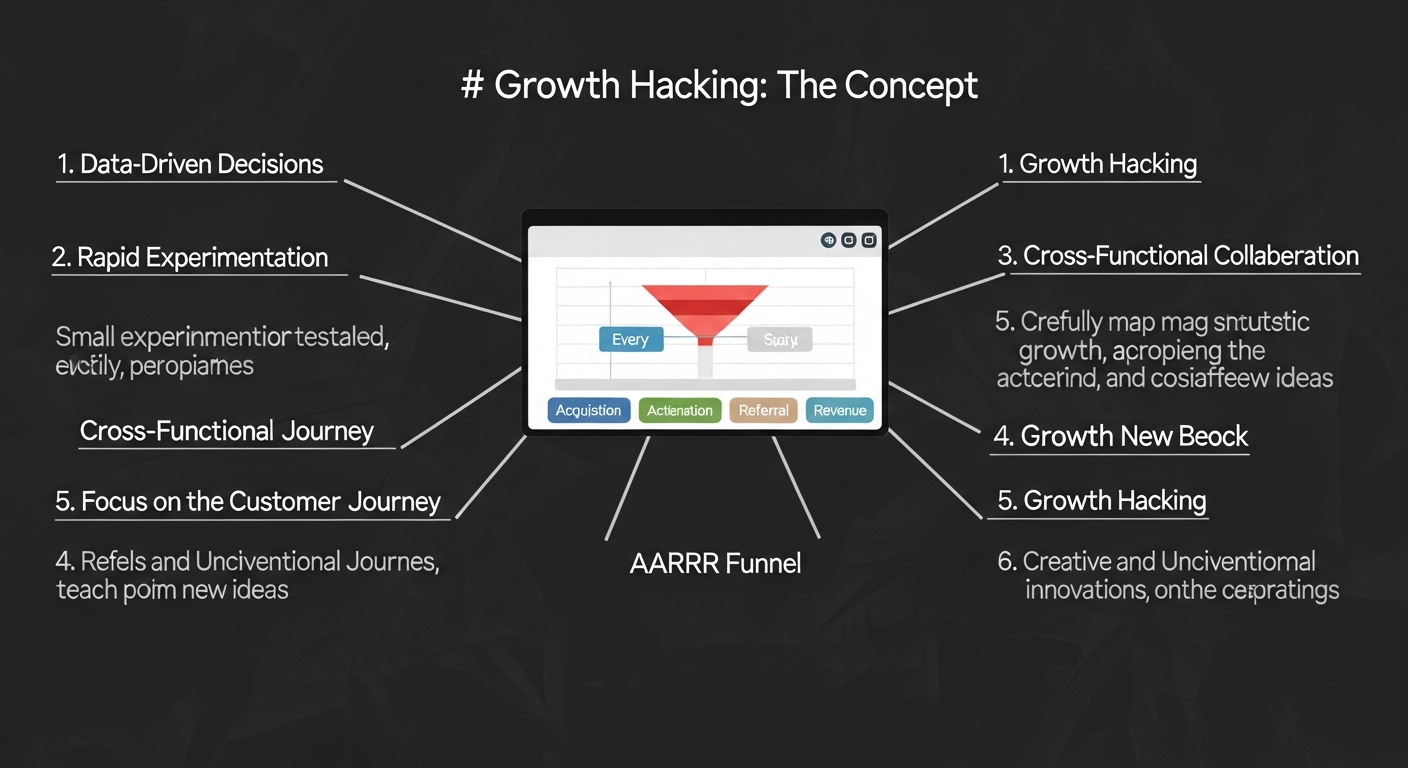
The Growth Hacking Funnel: AARRR!
Acquisition
This is the first stage, focusing on how users find and arrive at your product or service. Growth hackers explore a wide array of channels to attract potential customers. This might include search engine optimization (SEO), content marketing, social media marketing, paid advertising (PPC), viral marketing, public relations, and more. The goal here is to get as many relevant eyeballs on your offering as possible. Growth hacking acquisition often involves unconventional or highly targeted methods beyond standard advertising, such as leveraging niche communities, creating highly shareable content, or partnering with influencers. Metrics at this stage include website visits, app downloads, lead generation, and cost per acquisition (CPA).
Activation
Once users are acquired, the next step is to get them to experience the “Aha! Moment” – that point where they understand the value of your product and become an active user. Activation is about the user’s first positive experience. This could be completing an onboarding process, making their first purchase, sending their first message, or achieving a specific goal within the product. Growth hackers obsess over reducing friction in the onboarding process, optimizing initial user experience, and guiding users to experience core features quickly. Metrics include sign-up completion rates, tutorial completion rates, and conversion to first-time user status.
Retention
Acquiring new users is expensive; retaining existing ones is far more cost-effective and crucial for long-term growth. The retention stage focuses on keeping users engaged and coming back to your product or service over time. Growth hackers employ strategies like personalized email campaigns, push notifications, in-app messaging, new feature releases, community building, and exceptional customer support to foster loyalty. Understanding why users churn and addressing those pain points is paramount. Metrics include daily/weekly/monthly active users (DAU/WAU/MAU), churn rate, and repeat purchase rates.
Referral
Happy, retained users are your best advocates. The referral stage is about encouraging existing users to spread the word about your product or service, bringing in new users through word-of-mouth. This often involves implementing referral programs, incentivizing sharing, creating viral loops within the product, or simply providing such an outstanding experience that users naturally want to tell others. Growth hackers look for ways to bake virality directly into the product itself. Metrics include referral rate, viral coefficient, and the number of invites sent/accepted.
Revenue
Ultimately, sustainable growth must translate into revenue. This stage focuses on monetizing the user base effectively. Growth hackers experiment with pricing models, upsell strategies, cross-selling opportunities, premium features, and subscription tiers to maximize the lifetime value (LTV) of a customer. This isn’t just about raising prices; it’s about finding the optimal balance between value delivered and revenue generated. Metrics include Average Revenue Per User (ARPU), Customer Lifetime Value (CLTV), and conversion rates from free to paid tiers.
By systematically analyzing and optimizing each stage of the AARRR funnel, growth hackers can pinpoint specific areas for improvement, design targeted experiments, and ultimately drive sustainable, measurable growth for the business. It’s a holistic view of the customer journey that ensures no potential for growth is left unexamined.
How Growth Hacking Works in Practice: Strategies and Tactics
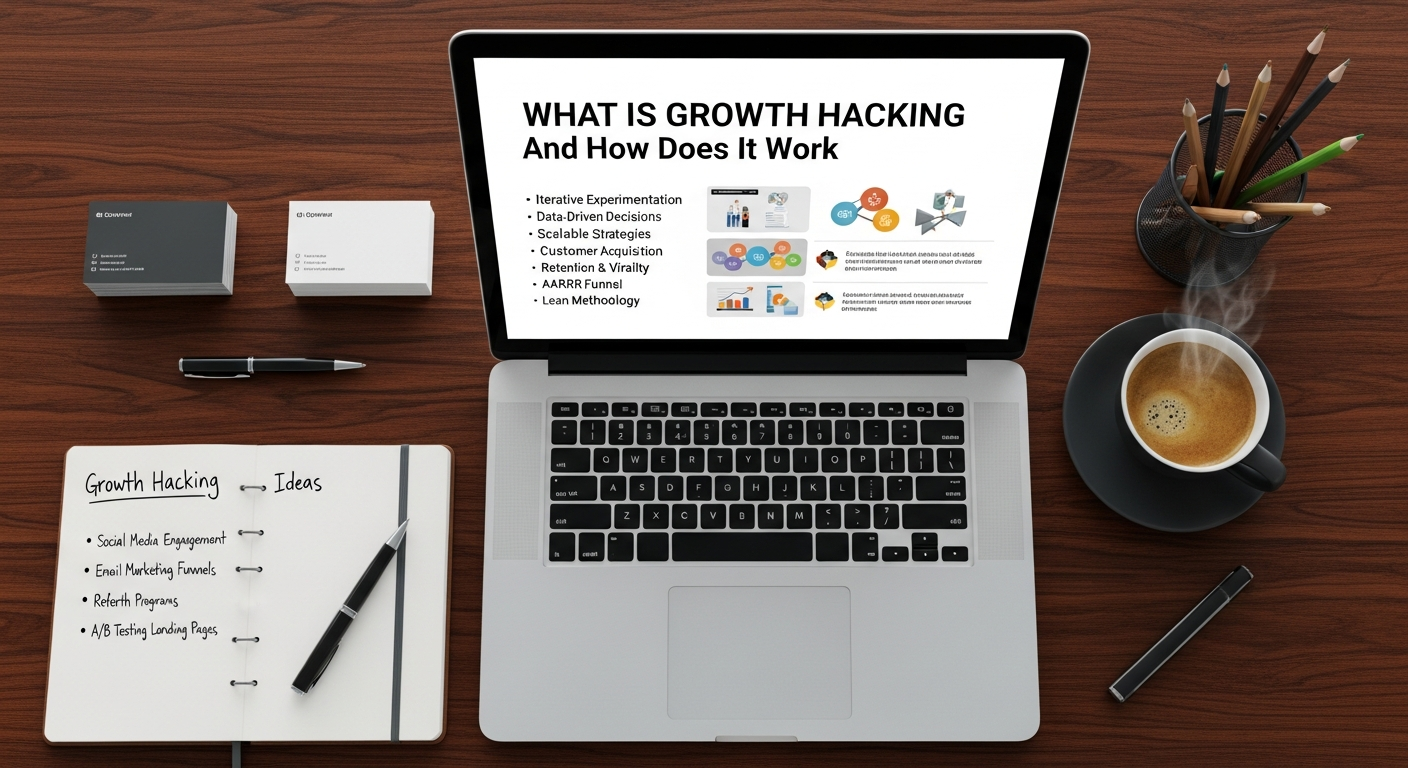
The theoretical framework of growth hacking comes alive through a blend of strategic thinking and practical, data-driven tactics. Understanding how growth hacking works involves looking at the specific actions and methodologies growth teams employ to achieve their objectives. It’s a dynamic process, constantly evolving with new technologies and user behaviors, but certain core approaches remain consistent.
One of the most defining characteristics is the emphasis on data-driven experimentation. Growth hackers don’t guess; they test. This involves designing experiments (like A/B tests on landing pages, email subject lines, or product features), collecting data, analyzing results, and applying the learnings. Tools for analytics, user tracking, and A/B testing are indispensable here, allowing for precise measurement of impact and rapid iteration. Every element, from the call-to-action button color to the onboarding flow, is a candidate for optimization.
Another crucial aspect is the adoption of a lean methodology. Inspired by the lean startup movement, growth teams prioritize building minimum viable products (MVPs) or running minimum viable experiments (MVEs) to validate hypotheses quickly and with minimal resource expenditure. This prevents significant investment in ideas that haven’t been proven effective, allowing for faster pivots and more efficient allocation of resources.
Cross-functional teams are central to the operational success of growth hacking. These teams typically comprise individuals with diverse skill sets – marketers, engineers, data analysts, product managers, and designers – all working together towards a shared growth metric. This collaboration breaks down silos, fostering a holistic approach where product changes can inform marketing campaigns, and marketing insights can lead to product improvements. For example, an engineer might suggest a viral loop feature, while a marketer might identify a segment of users for whom a particular product feature resonates most strongly.
Specific tactics employed by growth hackers are vast and varied, often blurring the lines between traditional disciplines:
- SEO & Content Marketing: Optimizing websites for search engines, creating compelling blog posts, guides, and videos that attract organic traffic, and building authority in a niche.
- Social Media Marketing: Leveraging platforms for awareness, engagement, and direct conversions through organic posts, targeted ads, and community building.
- Email Marketing: Crafting personalized email sequences for onboarding, nurturing leads, re-engagement, and customer retention.
- Viral Loops & Referral Programs: Designing features or incentives that encourage users to invite new users, creating self-perpetuating growth. Think of Dropbox’s referral bonus for extra storage.
- Product-led Growth: Embedding growth mechanisms directly into the product itself, making the product its own marketing engine. Examples include freemium models, easy sharing features, and gamification.
- Community Building: Fostering active user communities around a product or brand to increase engagement, provide support, and generate user-generated content.
- Scrappy & Unconventional Marketing: This might involve leveraging public relations, partnering with complementary businesses, or even using guerrilla marketing tactics to get noticed.
When considering Inbound Marketing Vs Outbound Marketing, growth hacking often leans heavily into inbound strategies, as they are typically more cost-effective and scalable in the long run. Content marketing, SEO, and social media engagement are prime examples of inbound tactics that attract customers who are already looking for solutions. However, growth hackers are not strictly limited to inbound. They creatively leverage outbound tactics, such as highly targeted cold email campaigns, strategic partnerships, or even unconventional ad placements, as part of their rapid experimentation process. The distinction for a growth hacker isn’t about choosing one over the other, but rather identifying which channels, whether inbound or outbound, will yield the fastest, most scalable growth for a specific experiment or stage of the AARRR funnel. They’re not afraid to blend methodologies to achieve their objectives, constantly pushing the boundaries of what’s considered “traditional” marketing.
The success of growth hacking lies in this iterative, experimental, and multidisciplinary approach, always challenging assumptions and seeking the most efficient path to exponential growth.
Key Benefits of Adopting a Growth Hacking Approach
Embracing a growth hacking methodology offers a multitude of tangible benefits that can significantly impact a business’s trajectory, moving beyond mere incremental improvements to fostering truly disruptive growth. For organizations striving for efficiency, innovation, and market leadership, the advantages are compelling.
Firstly, growth hacking leads to faster and more efficient growth cycles. By prioritizing rapid experimentation and iteration, businesses can quickly identify what works and what doesn’t. This agile approach minimizes wasted resources on ineffective strategies and allows for swift pivots, accelerating the pace at which a company can scale. Instead of waiting for lengthy campaign results, insights are gained in days or weeks, directly informing subsequent actions.
Secondly, it fosters a culture of innovation and continuous learning. The constant pursuit of new growth avenues encourages creativity and out-of-the-box thinking. Teams are empowered to challenge conventional wisdom, experiment with novel ideas, and learn from both successes and failures. This continuous feedback loop creates an environment where adaptability is key, ensuring the business remains responsive to market changes and emerging opportunities.
A significant benefit is optimized resource allocation and cost-effectiveness. Growth hacking’s data-driven nature ensures that marketing and product development budgets are directed towards strategies with proven ROI. By focusing on scalable and measurable tactics, businesses can achieve significant growth without necessarily requiring massive advertising spends typically associated with traditional campaigns. This lean approach is particularly valuable for startups and businesses with limited budgets, enabling them to compete effectively against larger, more established players.
Moreover, growth hacking cultivates a deeper understanding of the customer. Through meticulous data analysis, user feedback loops, and A/B testing, growth teams gain profound insights into user behavior, preferences, and pain points. This customer-centric approach not only helps in optimizing acquisition and retention but also informs product development, leading to products and services that truly resonate with the target audience.
Perhaps one of the most powerful benefits is its impact on How To Improve Employee Productivity. The growth hacking framework inherently promotes clarity, autonomy, and impact-driven work. When employees are part of a growth team, they have clear, measurable goals (e.g., improve activation rate by X%). They are empowered to design experiments, execute them, and analyze the results directly, fostering a sense of ownership and responsibility. This direct line between effort and measurable outcome is a powerful motivator. The iterative nature of growth hacking, where small, rapid experiments lead to quick feedback, means employees see the impact of their work much faster, leading to higher engagement and a more productive environment. Furthermore, the cross-functional nature of growth teams encourages knowledge sharing and collaboration, breaking down silos and enabling employees to learn new skills, making them more versatile and productive contributors to the organization’s overall success in 2026.
Finally, adopting a growth hacking approach provides a significant competitive advantage. Businesses that can grow faster, learn quicker, and adapt more readily to market demands are better positioned to capture market share and sustain long-term success. It moves a company from merely reacting to market forces to proactively shaping its own destiny.
Growth Hacking and Business Process Optimization
The principles of growth hacking, while primarily focused on customer acquisition and retention, extend naturally into the realm of internal operations and business process optimization. The same data-driven, iterative, and experimental mindset that drives external growth can be powerfully applied to streamline internal workflows, enhance efficiency, and ultimately create a more robust foundation for scalable expansion. When a business understands how growth hacking works, it realizes that optimizing internal processes is not separate from growth, but an integral part of it.
Growth hacking methodologies can be used to identify bottlenecks within existing business processes. Just as a growth hacker analyzes conversion funnels for users, they can analyze internal operational funnels – from lead handoff processes to customer support workflows. By applying A/B testing to different internal tools or process steps, and measuring the impact on metrics like task completion time or error rates, organizations can make data-backed decisions to optimize their operations. This could involve standardizing procedures, implementing new software, or redesigning communication flows to improve efficiency and reduce friction.
Consider the role of technology in automating growth processes. Growth hackers often leverage automation tools for email marketing, social media scheduling, data collection, and analytics. Extending this automation mindset to internal processes can free up valuable employee time, allowing teams to focus on higher-value, strategic growth initiatives rather than repetitive administrative tasks. This is where the synergy between growth hacking and operational excellence becomes particularly evident.
Furthermore, the cross-functional nature of growth teams can directly inform process optimization. When product, marketing, and sales teams collaborate closely on growth experiments, they often uncover inefficiencies in how information flows between their departments. A growth hacker might identify that a sales team isn’t adequately briefed on new product features, leading to missed opportunities. By collaboratively redesigning the internal communication process, the entire organization becomes more agile and effective at achieving growth objectives.
This brings us to the critical consideration of What Is Business Process Outsourcing and its relationship with growth hacking. For growth-focused companies, the decision to outsource certain business processes can be a strategic growth hack in itself. By delegating non-core, yet essential, functions to external specialists (e.g., customer support, specific data analytics tasks, payroll, or IT management), internal teams are freed up to concentrate entirely on core growth hacking experiments and strategic initiatives. This allows the internal growth team to dedicate their intellectual capital and time to identifying new acquisition channels, optimizing conversion funnels, or developing viral features, rather than being bogged down by operational overhead. Outsourcing can also provide access to specialized skills and technologies more quickly and cost-effectively than building them in-house, enabling faster iteration and implementation of growth strategies. For instance, a startup might outsource its initial lead qualification process to a BPO provider, allowing its internal sales and growth teams to focus solely on converting high-quality leads into active customers. This strategic allocation of resources, facilitated by outsourcing, directly supports the lean and agile principles inherent in growth hacking, ensuring that every internal effort is aligned with the overarching goal of rapid, scalable growth for 2026.
In essence, growth hacking provides a framework for continuous improvement, not just for external customer-facing elements, but for the very internal machinery that supports and sustains that growth. By applying its principles to business process optimization, companies can ensure their operations are as lean, efficient, and growth-oriented as their external strategies.
Building a Growth Hacking Team and Culture
Successfully implementing growth hacking within an organization goes beyond adopting a few tactics; it requires cultivating a specific team structure and fostering a pervasive culture that champions experimentation, data, and continuous learning. Building this infrastructure is as crucial as understanding what is growth hacking itself.
The ideal growth hacking team is inherently cross-functional. It typically comprises individuals with diverse skill sets who can collectively cover the breadth of the AARRR funnel. Key roles often include:
- Growth Lead/Manager: Oversees the entire growth strategy, prioritizes experiments, manages the team, and ensures alignment with business goals.
- Data Analyst: Responsible for tracking metrics, analyzing experiment results, identifying trends, and providing data-driven insights.
- Marketer (Digital/Content/SEO): Focuses on acquisition channels, campaign execution, and messaging.
- Product Manager/Engineer: Integrates growth features into the product, optimizes user experience, and builds necessary tools for experiments.
- Designer (UI/UX): Creates compelling user interfaces and experiences for landing pages, product features, and marketing assets.
This interdisciplinary composition ensures that ideas can be generated, built, launched, and measured rapidly without significant handoffs or delays between departments. The team operates as a self-contained unit, empowered to make decisions and execute experiments swiftly.
Beyond the team structure, fostering a growth hacking culture is paramount. This culture is characterized by several key elements:
- Experimentation Mindset: Employees are encouraged to propose hypotheses, design experiments, and embrace both successes and failures as learning opportunities. The fear of failure is replaced by the pursuit of knowledge.
- Data Centrality: Every decision is backed by data. Metrics are transparent, and everyone understands how their work contributes to key growth indicators. This fosters accountability and objectivity.
- Customer Obsession: A deep empathy for the customer and a relentless focus on solving their problems underpins all growth efforts. User feedback and behavior analysis are prioritized.
- Agility and Speed: The culture values quick iterations over lengthy perfectionism. The goal is to get experiments out, gather data, and learn fast.
- Collaboration: Silos are dismantled. Teams from different departments (product, engineering, marketing, sales) work together seamlessly, sharing insights and resources for collective growth.
- Ownership and Autonomy: Team members are given significant autonomy to pursue growth opportunities, fostering a sense of ownership and driving proactive problem-solving.
Leadership plays a critical role in nurturing this culture. Senior management must champion the growth hacking philosophy, provide the necessary resources, and protect the team from bureaucratic hurdles. They need to understand that not every experiment will succeed, but every experiment provides valuable learning that ultimately contributes to long-term growth. By 2026, businesses that have successfully integrated this growth-centric culture will be far better positioned to adapt to market shifts and maintain a competitive edge.
Ultimately, building a growth hacking team and culture is about transforming an organization into a learning machine, constantly seeking, testing, and implementing new ways to expand its reach and impact. It’s an investment not just in specific tactics, but in a sustainable, future-proof approach to business growth.
Frequently Asked Questions
Recommended Resources
Check out How To Use Credit Card Rewards Effectively on Gold Points for a deeper dive.
You might also enjoy How To Reduce Monthly Expenses from Fin3go.