What is Lean Management? A Foundation for Operational Excellence
At its heart, Lean Management is a systematic approach to identifying and eliminating waste (Muda) within a production or service process, thereby maximizing customer value. Originating from the Toyota Production System (TPS) in post-World War II Japan, Lean was conceived to produce vehicles with the same or better quality, in less time, and with fewer resources than its Western counterparts. It challenges the traditional mass production paradigm by focusing on continuous flow, customer pull, and relentless pursuit of perfection.
The core idea is simple yet profound: any activity or resource consumption that does not add value from the customer’s perspective is considered waste and should be eliminated. This doesn’t just mean physical waste; it encompasses wasted time, effort, talent, and overproduction. By systematically rooting out these inefficiencies, organizations can streamline operations, reduce costs, improve quality, and accelerate delivery times.
Historically, Lean’s principles were primarily associated with manufacturing. However, its universal applicability quickly became apparent. Today, Lean methodologies are successfully deployed in healthcare, software development, government, education, and various service industries. The fundamental principles transcend specific industry boundaries because waste exists everywhere. Whether it’s redundant steps in a software development cycle, excessive waiting times in a hospital, or unnecessary inventory in a retail supply chain, Lean provides the tools and mindset to address these issues head-on.
A common misconception is that Lean is solely about cost-cutting. While cost reduction is a significant outcome, it’s a byproduct of the primary goal: delivering maximum value to the customer with minimum waste. This customer-centricity is crucial. Value is defined by what the customer is willing to pay for. Anything else, no matter how ingrained in current processes, is a candidate for elimination or optimization.
The Five Core Principles of Lean Management
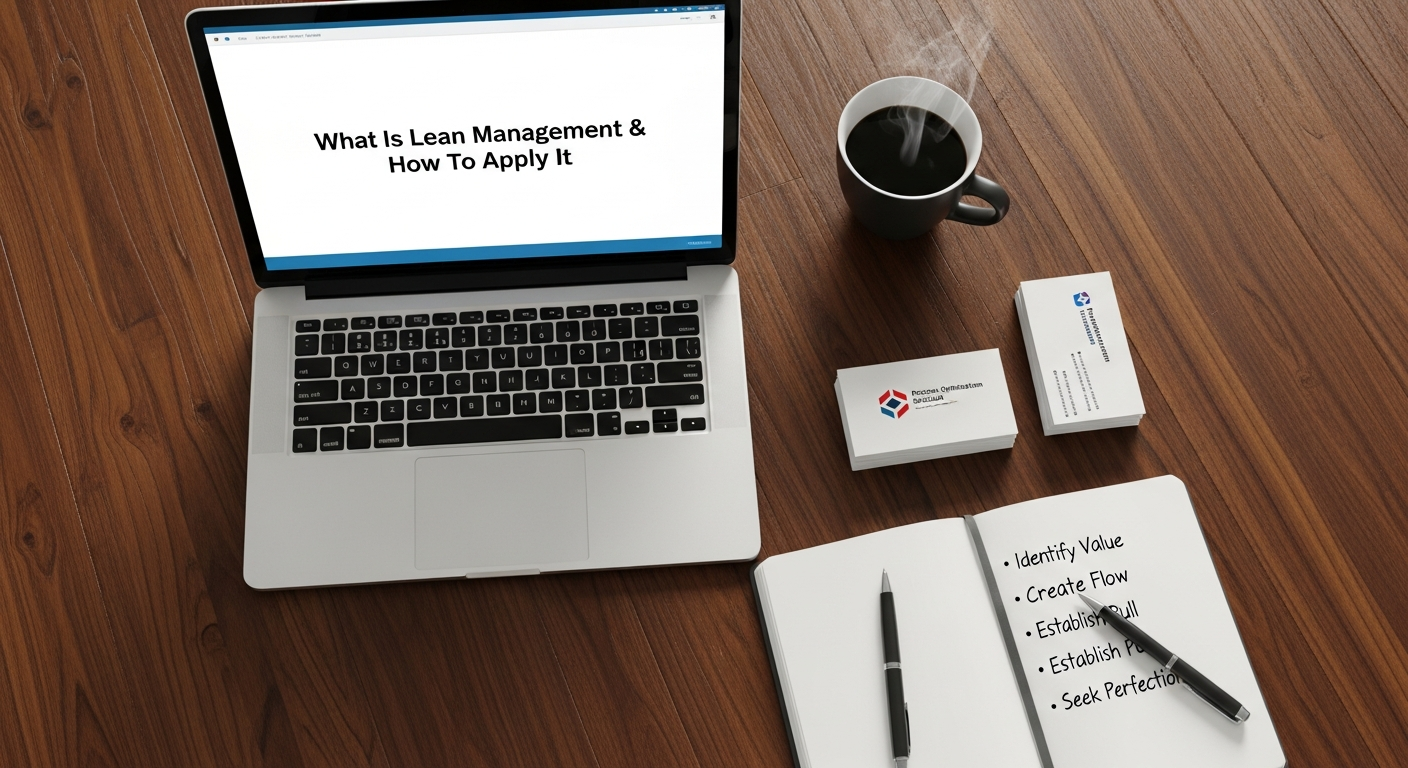
Understanding Lean requires grasping its five fundamental principles, articulated by James Womack and Daniel Jones in their seminal book, “Lean Thinking.” These principles form a continuous cycle, guiding organizations toward ever-increasing efficiency and value creation:
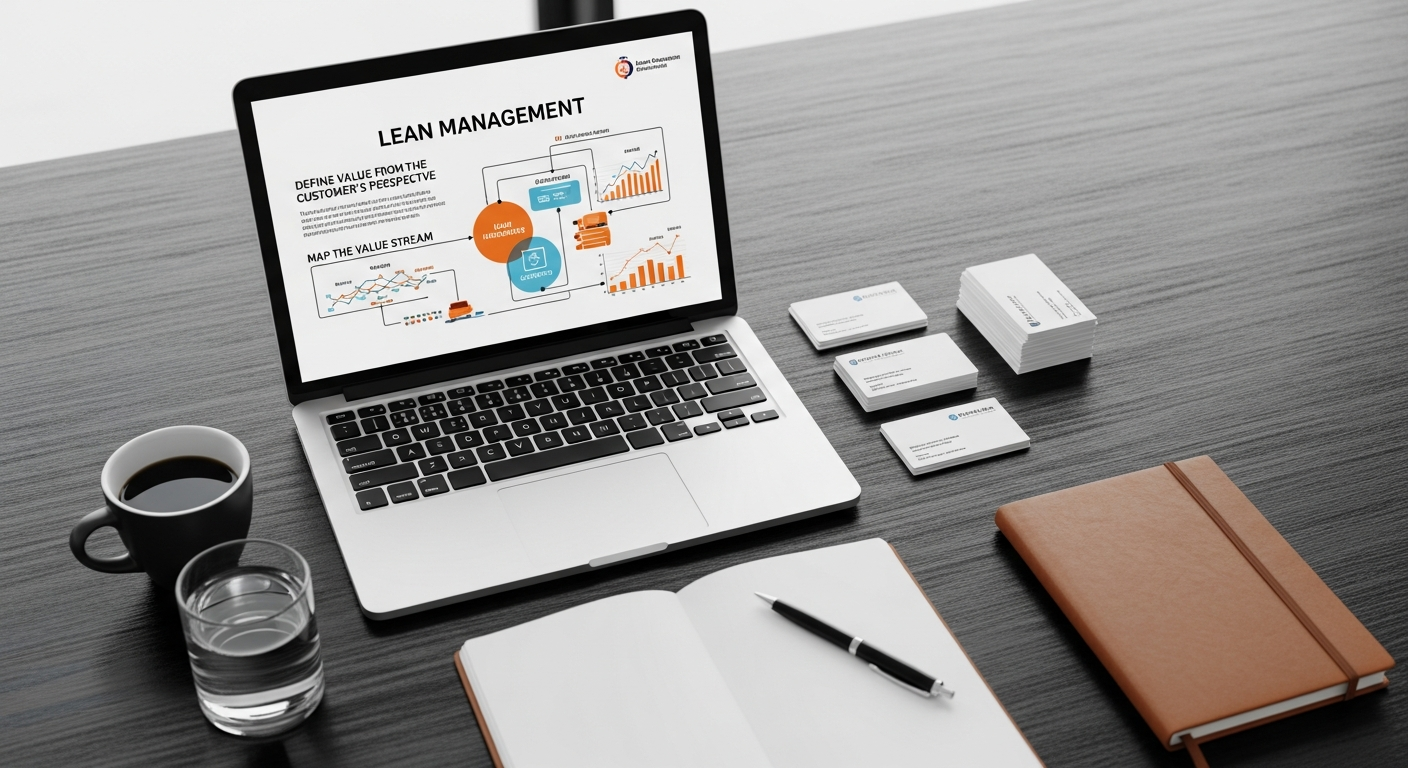
1. Define Value
- This is the critical starting point. Value must always be defined from the perspective of the end customer. What problem are they trying to solve? What specific features or services are they willing to pay for?
- It requires a deep understanding of customer needs and expectations, often involving direct feedback, market research, and empathy mapping.
- Activities that do not contribute to this defined value are considered waste. For instance, in a service business, if a customer is paying for a specific report, the time spent on internal, non-customer-facing approval processes for that report might be considered waste if it doesn’t add to the report’s quality or utility for the customer.
2. Identify the Value Stream
- The value stream encompasses all actions – both value-adding and non-value-adding – required to bring a product or service from concept to launch, from order to delivery, or from raw materials to the hands of the customer.
- This step involves mapping out the entire process, identifying every step, decision point, and hand-off. Tools like Value Stream Mapping (VSM) are indispensable here, visually representing the flow of materials and information.
- The goal is to pinpoint areas where waste occurs (e.g., waiting, overprocessing, defects, unnecessary movement) and distinguish between value-adding activities, non-value-adding but necessary activities (like regulatory compliance), and pure waste. This is particularly insightful when examining complex processes, such as those involved in What Is Business Process Outsourcing, where identifying waste across different service providers and internal teams can significantly improve overall efficiency.
3. Create Flow
- Once waste is identified, the next step is to eliminate obstacles so that the product or service can flow smoothly through the value stream without interruptions, delays, or backtracking.
- Achieving flow often means breaking down silos between departments, redesigning layouts, and simplifying processes. It’s about ensuring work progresses continuously from one value-adding step to the next, much like a river flowing unimpeded to the sea.
- Batch processing, a common source of waste, is replaced by single-piece flow or small batches, reducing lead times and allowing for quicker defect detection.
4. Establish Pull
- In a “pull” system, production or service delivery is initiated only when there is a customer demand for it. This is in contrast to a “push” system, where production is based on forecasts or schedules, often leading to overproduction and excessive inventory.
- Think of it like a supermarket: shelves are restocked only when customers purchase items, not because the store anticipates future sales (though forecasting plays a role in initial stocking).
- Implementing pull systems minimizes work-in-progress (WIP), inventory, and the associated costs and risks. Kanban systems are a classic example of a pull mechanism, signaling when new work is needed. This principle is extremely relevant for What Is Supply Chain Management Small Business, where optimizing inventory and responding to actual demand rather than speculative forecasts can dramatically reduce carrying costs and improve cash flow.
5. Seek Perfection
- Lean is not a one-time project; it’s a journey of continuous improvement (Kaizen). The pursuit of perfection means constantly striving to eliminate all forms of waste, improve quality, and reduce costs.
- This principle fosters a culture where everyone, from the front line to senior leadership, is empowered and encouraged to identify problems, propose solutions, and implement improvements.
- Regular review, measurement, and adaptation are crucial. Organizations must continuously challenge existing processes and seek innovative ways to deliver more value with less.
Key Methodologies and Tools in Lean Management
Value Stream Mapping (VSM)
- A visual tool that maps the entire flow of materials and information required to bring a product or service to a customer. It helps identify value-adding, non-value-adding but necessary, and pure waste steps. VSM provides a holistic view, enabling teams to see the big picture and pinpoint bottlenecks and waste.
5S Methodology
- A systematic approach to workplace organization and standardization to improve efficiency, safety, and visual management. The 5S stand for:
- Sort (Seiri): Remove unnecessary items from the workplace.
- Set in Order (Seiton): Organize necessary items for easy access.
- Shine (Seiso): Clean the workplace regularly.
- Standardize (Seiketsu): Create standards for the first three S’s.
- Sustain (Shitsuke): Maintain the standards and continuously improve.
Kanban
- A visual system for managing workflow, limiting work-in-progress, and implementing a pull system. Kanban boards (physical or digital) visualize tasks, their status, and bottlenecks, allowing teams to manage capacity and prioritize effectively.
Kaizen (Continuous Improvement)
- A philosophy and practice focused on making small, incremental improvements on an ongoing basis. It encourages all employees to identify and solve problems, leading to significant cumulative gains over time. Kaizen events are focused, short-term improvement projects.
Gemba Walk
- “Gemba” means “the actual place” in Japanese, referring to where the work is done. A Gemba Walk involves leaders going to the actual workplace to observe processes, talk to employees, and identify problems and opportunities for improvement firsthand, rather than relying solely on reports.
Poka-Yoke (Mistake-Proofing)
- Designing processes or products in such a way that errors are impossible or immediately obvious. Examples include connectors that only fit one way or warning lights that activate when a step is missed.
Total Productive Maintenance (TPM)
- A holistic approach to equipment maintenance that aims to achieve perfect production: no breakdowns, no small stops, no defects. It involves all employees in maintaining equipment, not just maintenance staff.
While often discussed separately, Lean and Six Sigma are highly complementary. Six Sigma focuses on reducing variation and defects to near-perfection (3.4 defects per million opportunities), typically using a data-driven DMAIC (Define, Measure, Analyze, Improve, Control) methodology. Lean, on the other hand, focuses on speed and waste reduction. Combining Lean Six Sigma leverages the strengths of both, creating powerful synergies for process optimization.
Benefits of Adopting Lean Principles in Your Organization
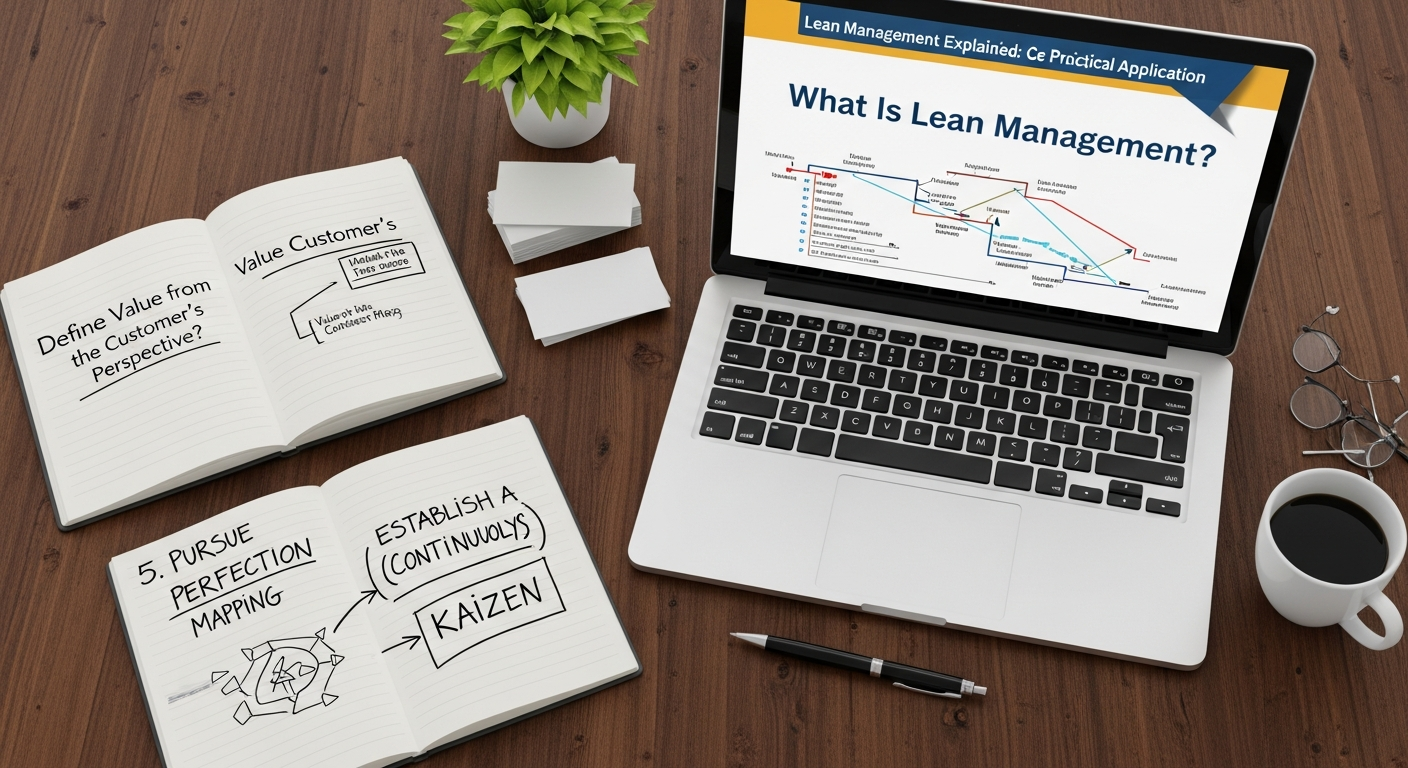
Implementing Lean Management is not just about adopting a set of tools; it’s about fostering a culture of continuous improvement that yields profound and sustainable benefits across the organization:
1. Enhanced Efficiency and Productivity
- By systematically eliminating waste (overproduction, waiting, transportation, overprocessing, inventory, motion, defects, and unused talent), Lean processes become smoother and faster. This directly translates to higher output with the same or fewer resources.
- Reduced lead times mean products or services reach customers faster, improving responsiveness and competitive edge.
2. Significant Cost Reduction
- Less waste inherently means lower costs. Reduced inventory, less rework, optimized resource utilization, and streamlined operations all contribute to a healthier bottom line.
- For instance, in areas like What Is Supply Chain Management Small Business, Lean can cut warehousing costs, minimize spoilage, and reduce expedited shipping fees by optimizing inventory levels and improving logistics flow.
3. Improved Quality and Customer Satisfaction
- Lean’s focus on identifying and eliminating defects at their source, combined with a continuous improvement mindset, leads to higher quality products and services.
- When processes are smoother and more reliable, customers receive what they want, when they want it, with fewer errors. This directly enhances customer satisfaction and loyalty.
4. Boosted Employee Engagement and Morale
- Lean empowers employees at all levels to identify problems and contribute to solutions. This sense of ownership and involvement can significantly boost morale, job satisfaction, and a feeling of purpose.
- By removing frustrating inefficiencies and providing clearer processes, Lean reduces stress and allows employees to focus on value-adding work.
5. Greater Agility and Adaptability
- Lean organizations are inherently more flexible. With shorter lead times and less work-in-progress, they can respond more quickly to changes in customer demand, market shifts, or unforeseen challenges.
- This agility is crucial in today’s rapidly evolving business environment, allowing companies to pivot faster than their competitors.
6. Sustainable Growth and Innovation
- By creating a culture of continuous improvement, Lean fosters an environment ripe for innovation. Teams are always looking for better ways to do things, which can lead to breakthrough ideas.
- The efficiencies gained free up resources (time, money, talent) that can be reinvested into growth initiatives, research, and development, ensuring long-term viability and competitiveness into 2026 and beyond.
How to Apply Lean Management in Your Organization: A Step-by-Step Guide
Implementing Lean Management is a journey, not a destination. It requires commitment, patience, and a structured approach. Here’s a practical guide:
Step 1: Secure Leadership Commitment and Build a Vision
- Top-Down Buy-In: Lean must be championed from the executive level. Leaders need to understand, advocate for, and actively participate in the transformation.
- Articulate the Vision: Clearly define why Lean is being adopted, what problems it aims to solve, and what the desired outcomes are for the organization and its customers.
- Allocate Resources: Provide the necessary budget, time, and personnel for training, pilot projects, and ongoing support.
Step 2: Educate and Train Your Workforce
- Foundational Training: Provide comprehensive training on Lean principles, methodologies (5S, VSM, Kanban, Kaizen), and tools for all employees, from the shop floor to management.
- Role-Specific Training: Tailor training for different roles. For instance, process owners might need deeper dives into VSM, while front-line staff might focus on 5S and problem-solving techniques.
- Develop Internal Experts: Identify and train key individuals to become Lean champions or facilitators who can guide and mentor others.
Step 3: Conduct a Current State Assessment and Define Value
- Identify a Pilot Area: Start with a specific process or department that has clear pain points, visible waste, and a manageable scope. Success here builds momentum.
- Define Customer Value: Work with stakeholders and customers to precisely understand what value means for the chosen process.
- Map the Current State Value Stream: Use VSM to visually represent the chosen process, identifying all steps, lead times, inventory points, and information flows. Quantify waste (e.g., waiting time, rework percentage).
Step 4: Design the Future State and Plan Improvements
- Brainstorm Solutions: Based on the current state VSM, engage teams in brainstorming sessions to identify opportunities for waste elimination and flow improvement.
- Design the Future State: Create a new VSM that illustrates the ideal, waste-free process. This is where you apply the Lean principles of flow and pull.
- Develop an Implementation Plan: Break down the future state design into actionable projects or Kaizen events. Prioritize improvements based on impact and feasibility.
Step 5: Implement, Measure, and Iterate
- Execute Improvement Projects: Roll out the planned changes. This might involve reorganizing workstations, implementing Kanban systems, redesigning forms, or automating manual steps.
- Measure Performance: Continuously track key performance indicators (KPIs) relevant to the improvements (e.g., lead time, defect rate, cost, customer satisfaction).
- Iterate and Adjust: Lean is iterative. Not every change will work perfectly the first time. Be prepared to learn from results, make adjustments, and try again. This continuous feedback loop is crucial.
Step 6: Standardize and Sustain the Gains
- Standardize Best Practices: Once an improvement proves effective, standardize the new process to ensure consistency. This might involve updated standard operating procedures (SOPs), visual aids, or checklists.
- Regular Audits and Reviews: Implement routines (like Gemba Walks) to ensure adherence to new standards and to identify new areas for improvement.
- Foster a Culture of Continuous Improvement: Embed Kaizen into the organizational DNA. Encourage problem-solving at all levels, recognize efforts, and celebrate successes to maintain momentum.
Lean Management Beyond Manufacturing: Service and Digital Sectors
The beauty of Lean is its adaptability. While born in manufacturing, its principles are universally applicable to any process. Here’s how Lean translates to other sectors:
Lean in Service Industries
- Healthcare: Reducing patient waiting times, optimizing surgical schedules, streamlining administrative processes, and improving diagnostic workflows.
- Finance: Accelerating loan application processes, minimizing errors in transactions, and optimizing back-office operations.
- Hospitality: Enhancing check-in/check-out efficiency, optimizing kitchen operations, and improving guest service delivery.
- Business Process Outsourcing (BPO): For companies considering What Is Business Process Outsourcing, applying Lean principles to BPO relationships can ensure that outsourced processes are as efficient and waste-free as internal ones. This involves clearly defining value from the client’s perspective, mapping the outsourced value stream, and working collaboratively with BPO providers to eliminate waste in data entry, customer support, or IT services.
Lean in Digital and Knowledge Work
- Software Development (Agile/Scrum): Agile methodologies heavily borrow from Lean, focusing on delivering value in small increments, continuous feedback, limiting WIP, and empowering self-organizing teams.
- Marketing: Applying Lean to marketing means optimizing campaign workflows, reducing time-to-market for content, and focusing marketing efforts on channels that deliver the most customer value with the least waste. When considering Inbound Marketing Vs Outbound Marketing, a Lean approach would analyze the value stream of each, eliminating wasteful steps in lead generation, content creation, or campaign execution, ultimately focusing on strategies that efficiently attract and convert customers. For inbound marketing, this might mean optimizing SEO content creation and distribution, while for outbound, it could involve streamlining sales call scripts and lead qualification processes.
- Human Resources: Streamlining onboarding processes, optimizing recruitment workflows, and improving employee feedback mechanisms.
- Supply Chain Management: Beyond traditional manufacturing, Lean is crucial for optimizing the entire supply chain, from procurement to final delivery. For What Is Supply Chain Management Small Business, applying Lean means reducing inventory, improving logistics efficiency, enhancing supplier relationships to ensure timely and quality deliveries, and using pull systems to manage stock, thereby minimizing obsolescence and storage costs.
In these contexts, “waste” might manifest as redundant approvals, excessive meetings, unnecessary documentation, communication silos, context switching, or waiting for information. The principles remain the same: identify what the customer (internal or external) values, eliminate non-value-adding activities, and create a smooth, continuous flow of work.
Overcoming Challenges and Sustaining Lean Success
While the benefits are clear, implementing and sustaining Lean is not without its challenges. Awareness and proactive measures can help overcome them:
1. Resistance to Change
- Challenge: People are naturally resistant to new ways of working, fearing job losses, increased workload, or loss of autonomy.
- Solution: Emphasize job security and growth opportunities, involve employees in the process from the start, communicate transparently about the “why,” and celebrate small wins to build momentum and show positive impact.
2. Lack of Sustained Leadership Commitment
- Challenge: Initial enthusiasm from leaders can wane, especially when facing setbacks or competing priorities.
- Solution: Ensure Lean is integrated into strategic objectives. Leaders must continuously model Lean behaviors, participate in Gemba Walks, and consistently reinforce the importance of continuous improvement.
3. Insufficient Training and Resources
- Challenge: Without proper training, employees may not understand Lean concepts or how to apply them effectively, leading to frustration and superficial implementation.
- Solution: Invest adequately in comprehensive, ongoing training. Provide dedicated resources (time, tools, facilitators) to support Lean initiatives.
4. Focusing on Tools Rather Than Principles
- Challenge: Some organizations adopt Lean tools (like 5S or Kanban) without internalizing the underlying principles of value, flow, and pull, leading to temporary gains that don’t stick.
- Solution: Reinforce the five core principles constantly. Ensure that every tool implementation is tied back to a specific principle and contributes to customer value.
5. Lack of a Continuous Improvement Culture
- Challenge: Lean can be seen as a one-time project rather than an ongoing philosophy, causing improvements to degrade over time.
- Solution: Embed Kaizen into daily operations. Create structures for problem-solving (e.g., daily stand-ups, suggestion systems), recognize and reward improvement efforts, and make continuous learning a core organizational value.
6. Measuring the Wrong Things
- Challenge: Focusing solely on cost reduction without considering quality, lead time, or employee satisfaction can lead to suboptimal outcomes.
- Solution: Develop a balanced set of KPIs that reflect all aspects of Lean success: quality, cost, delivery, safety, and morale (QCDSM). Regularly review these metrics and adjust strategies accordingly.
By proactively addressing these potential pitfalls, organizations can build a resilient Lean culture that drives sustained operational excellence and positions them for long-term success, adapting confidently to market shifts and technological advancements well into 2026 and beyond.
Conclusion
Lean Management is more than a set of tools or a cost-cutting exercise; it is a profound business philosophy centered on maximizing customer value by systematically eliminating waste. Its five core principles – defining value, mapping the value stream, creating flow, establishing pull, and seeking perfection – provide a powerful framework for operational excellence across any industry, from traditional manufacturing to the most innovative digital services. By embracing Lean, companies can achieve remarkable improvements in efficiency, quality, cost reduction, and customer satisfaction, while simultaneously fostering a culture of continuous improvement and employee empowerment. The journey to Lean is ongoing, demanding commitment and adaptability, but the rewards of a more agile, efficient, and customer-centric organization are invaluable in today’s dynamic business landscape. Embarking on this journey will not only optimize your current operations but also future-proof your business, ensuring its relevance and competitiveness for years to come.
Frequently Asked Questions
Recommended Resources
You might also enjoy How To Write And Sell An Ebook Online from Trading Costs.
Check out How To Start A Consulting Business on AssetBar for a deeper dive.