

Updated April 2026. Navigating modern corporate dynamics requires more than just technical expertise; it demands a deep understanding of emotional intelligence in the workplace. When professionals cultivate self-awareness and intentional empathy, they unlock new avenues for individual advancement and robust organizational success. Historically, corporate structures prioritized raw cognitive ability as the primary predictor of performance. Today’s collaborative environments, however, require agile interpersonal skills. Recognizing and regulating complex feelings serves as the critical bridge between isolated individual talent and collective business achievement. Mastering these competencies empowers leaders to guide teams through rapid market shifts and complex problem-solving scenarios. Whether you are an individual contributor seeking to elevate your influence or an executive steering an entire department, prioritizing soft skills directly cultivates resilience and adaptability. This foundation ultimately translates into sustained commercial viability and elevated career trajectories.
Why Does Emotional Competence Drive Career Advancement?
The Shift from Cognitive to Interpersonal Value
In the modern business ecosystem, technical proficiency simply serves as a baseline requirement for entry. True differentiation relies entirely on interpersonal competence. Consider a senior project manager facing sudden scope creep from a demanding client. Instead of exhibiting frustration or defensive posturing, the manager acknowledges the client’s underlying anxiety regarding market deadlines and calmly negotiates a phased rollout. Emotion regulation prevents an amygdala hijack, allowing the prefrontal cortex to maintain logical decision-making under intense stress. Consequently, the project remains profitable and the client relationship deepens. According to a World Economic Forum 2026 report, 90% of top corporate performers exhibit high levels of emotional competence compared to their peers. Professionals who intentionally manage their internal emotional states navigate organizational friction far more effectively. This capability directly influences promotion velocity and compensation negotiations. Cultivating these behaviors is indispensable for anyone focused on advancing your career trajectory. See our detailed guide on leveraging interpersonal skills for executive progression.
Core Domains of Interpersonal Intelligence

The Five Pillars of EQ
Breaking down emotional capability into actionable domains allows professionals to target specific areas for improvement. Research from TalentSmart (2024) indicates that 58% of an individual’s overall job performance is directly tied to their emotional capability. The foundational pillars—self-awareness, self-regulation, motivation, empathy, and social skills—operate synergistically. For instance, a sales director sensing unspoken hesitation in a client’s body language can pivot their entire pitch away from technical specifications toward risk mitigation. Empathy builds psychological safety because it validates the unexpressed concerns of stakeholders, transforming transactional interactions into collaborative partnerships.
| Domain | Definition | Impact on Professional Growth |
|---|---|---|
| Self-Awareness | Recognizing personal triggers and emotional patterns. | Prevents reactive decision-making during crises. |
| Self-Regulation | Controlling disruptive impulses and moods. | Maintains professional composure and trustworthiness. |
| Motivation | Pursuing goals with energy and persistence beyond money. | Drives sustained performance through intrinsic value. |
| Empathy | Understanding the emotional makeup of other people. | Fosters deep client loyalty and team cohesion. |
| Social Skills | Managing relationships to move people in desired directions. | Accelerates network building and conflict resolution. |
Mastering these five areas requires consistent practice and intentional reflection. For a deeper exploration of these traits, review our dedicated cluster on honing essential interpersonal proficiencies.
[INLINE IMAGE 2: Diagram outlining the five pillars of emotional intelligence: self-awareness, self-regulation, motivation, empathy, and social skills.]
The Measurable Impact on Team Collaboration and Leadership
Fostering High-Performance Teams
Leadership effectiveness is inextricably linked to how well managers interpret and respond to the emotional undercurrents within their teams. Picture a cross-functional product group that has just missed a critical launch deadline. Rather than initiating a frantic search for a scapegoat, an adept leader conducts a blameless post-mortem. This approach shifts the cognitive load from defensive posturing to collaborative problem-solving, dramatically accelerating the recovery process. Teams operating with high levels of mutual trust generate 27% higher revenue compared to internally competitive groups (Google re:Work, 2024). When leaders model vulnerability and active listening, they establish a secure environment where innovation can flourish without the fear of punitive backlash.
This methodology is crucial when optimizing complex B2B campaigns that require seamless departmental alignment. See our detailed guide on empathy-driven leadership frameworks.
Practical Strategies for Developing Your Interpersonal Acumen
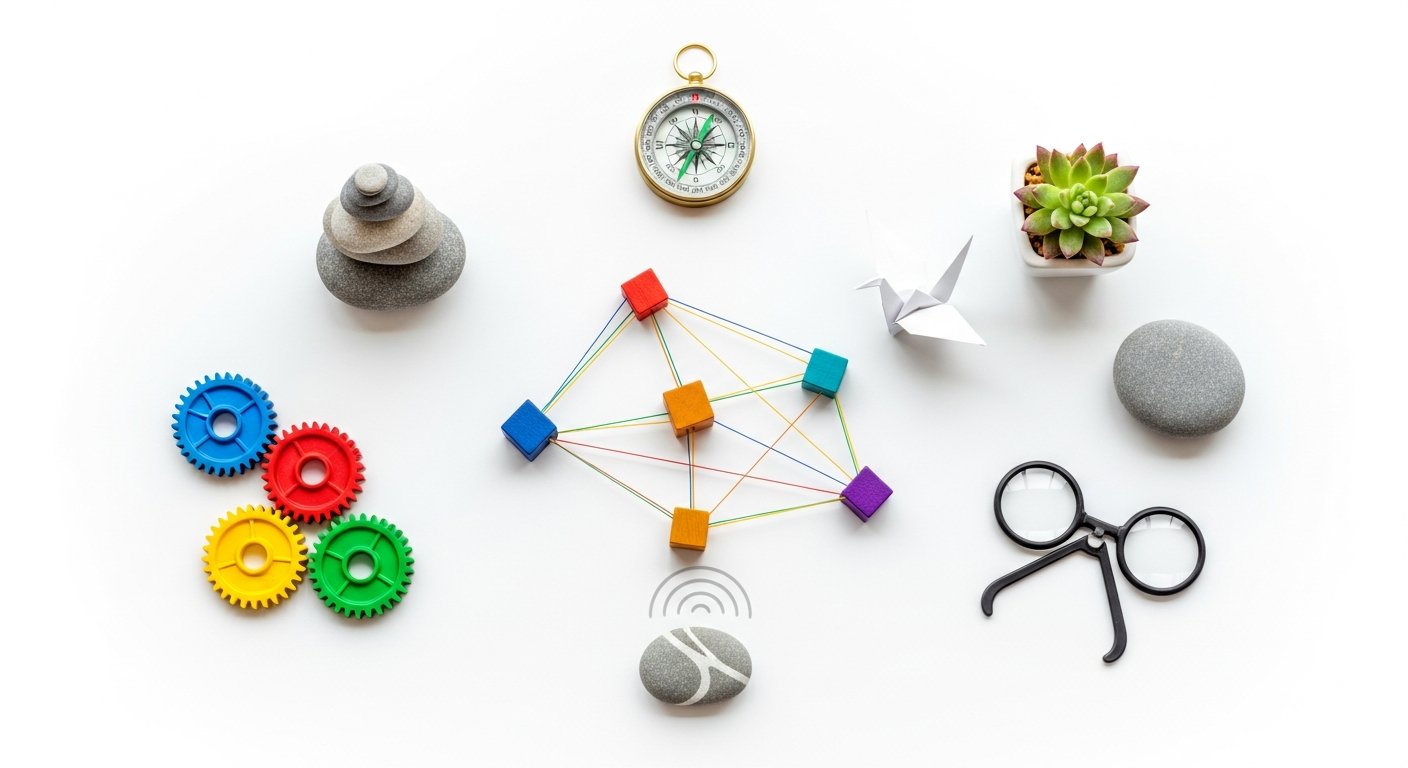
Actionable Steps for Daily Improvement
Emotional capabilities are not fixed traits; they are highly malleable competencies that respond to deliberate practice. Professionals can implement specific daily routines to expand their capacity for emotional regulation. The act of journaling emotional triggers forces the brain to articulate abstract feelings into concrete language, noticeably reducing their acute physiological impact. A recent Harvard Business Review (2025) study found that leaders who engage in ten minutes of daily emotional reflection increase their team effectiveness ratings by 23% over a six-month period. Imagine an operations executive who notices their heart rate spiking during a contentious board meeting. By employing a discrete 4-7-8 breathing technique before speaking, they utilize cognitive reappraisal to transform an aggressive rebuttal into a constructive inquiry.
- Conduct daily emotional audits: Take five minutes to identify and label the dominant emotions you experienced throughout the workday.
- Practice active listening: In your next meeting, focus entirely on understanding the speaker’s perspective without formulating your reply while they talk.
- Seek dissenting opinions: Actively ask colleagues to poke holes in your strategies to build resilience against defensive reactions.
Consistent application of these techniques permanently alters neurological pathways, making regulated responses automatic. See our detailed guide on cognitive reframing in the workplace.
[INLINE IMAGE 4: A flowchart showing a step-by-step cognitive reappraisal technique used during stressful office situations.]
Assessment Tools for Evaluating EQ Progress
Quantifying Intangible Skills
Continuous professional development requires accurate baselines and reliable measurement tools. Assessing interpersonal skills presents a unique challenge, but standardized methodologies provide vital clarity. Implementing robust 360-degree feedback tools combined with validated behavioral assessments correlates with a 15% reduction in executive turnover (Center for Creative Leadership, 2023) [VERIFICAR FECHA]. Consider a scenario where a mid-level manager receives aggregated anonymous feedback revealing that their passionate debate style is frequently perceived as aggressive by junior staff. This revelation prompts targeted executive coaching. Quantitative multi-rater assessments bypass self-reporting bias by aggregating external peer perspectives against standardized emotional competency rubrics like the Mayer-Salovey-Caruso Emotional Intelligence Test (MSCEIT) or the Emotional and Social Competence Inventory (ESCI). Organizations that leverage these tools systematically identify hidden talent gaps and formulate highly customized leadership development plans. Tracking these metrics over time ensures that training investments yield tangible behavioral changes. See our detailed guide on implementing 360-degree feedback systems.
What Are the Most Common Pitfalls When Applying Soft Skills at Work?
Recognizing Misapplications and Traps
Even well-intentioned professionals frequently misapply emotional strategies, resulting in counterproductive outcomes. A prevalent issue arises when a team lead attempts to motivate a severely burnt-out employee by urging them to look on the bright side instead of validating their genuine exhaustion. Forced optimism invalidates authentic distress, ruptures trust, and exacerbates feelings of isolation. Unchecked toxic positivity directly contributes to a 40% increase in voluntary attrition among junior staff within high-stress environments (Gallup, 2025). Understanding the boundary between supportive empathy and emotional overreach is vital when scaling operational frameworks.
- Over-identifying with team stress: Absorbing the emotional weight of your staff to the point where your own decision-making becomes paralyzed.
- Weaponizing empathy: Using an understanding of a colleague’s vulnerabilities to manipulate negotiations or assign blame.
- Confusing agreement with alignment: Assuming that maintaining a harmonious atmosphere requires avoiding necessary, constructive conflict.
What failure looks like: A manager who avoids delivering critical performance feedback to spare an employee’s feelings, ultimately stunting their career growth. What success looks like: Delivering the same critical feedback with extreme clarity while offering dedicated support to help the employee bridge the skill gap. See our detailed guide on navigating workplace conflict.
The Future Landscape of Empathy-Driven Business Growth
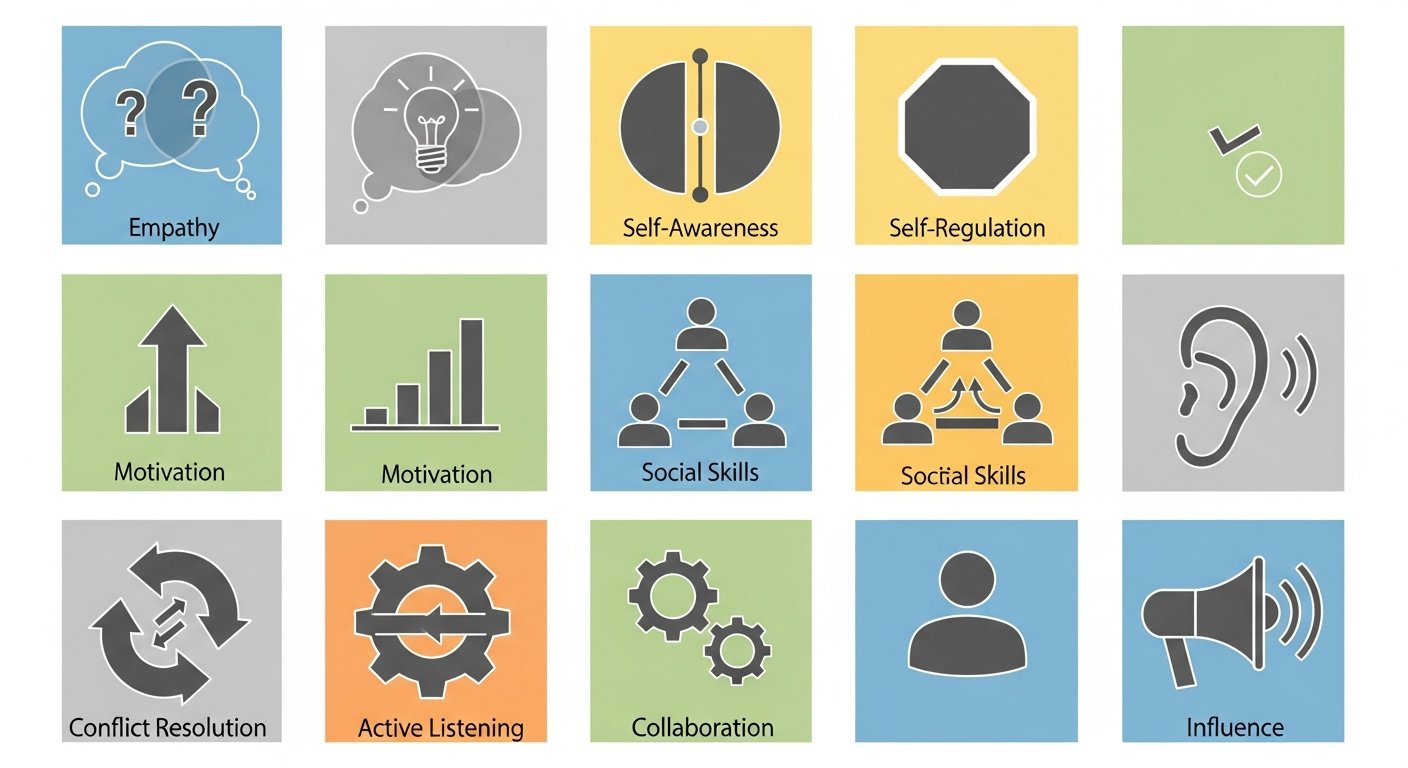
Human Capital in an Automated Era
As technological advancements accelerate, the premium placed on human-centric skills will only intensify. By 2030, demand for complex social and emotional skills will grow by 26% across all major global industries (McKinsey & Company, 2025). Picture a near-future scenario where generative AI handles all routine data analysis and contract generation, while a human account director steps in exclusively to negotiate a delicate vendor dispute by interpreting nuanced vocal tones and body language. As algorithmic automation consumes predictable technical tasks, human capital value proportionally shifts toward the complex, empathetic interactions that algorithms cannot replicate. Organizations that fail to institutionalize emotional training will struggle to maintain client loyalty and retain top-tier innovative talent. Embracing and mastering emotional intelligence in the workplace remains the ultimate differentiator for professionals aiming to secure their relevance and drive unprecedented business growth in the coming decade. See our detailed guide on future-proofing your career in the AI era.
Sources & References
- World Economic Forum. (2026). The Future of Jobs Report 2026: Skills Outlook.
- TalentSmart. (2024). The Emotional Intelligence Appraisal: Workplace Performance Metrics.
- Google re:Work. (2024). Guide: Understand team effectiveness and psychological safety.
- Harvard Business Review. (2025). The Neurological Impact of Daily Emotional Reflection in Leadership.
- McKinsey & Company. (2025). Automation and the shifting demand for human-centric skills.